|
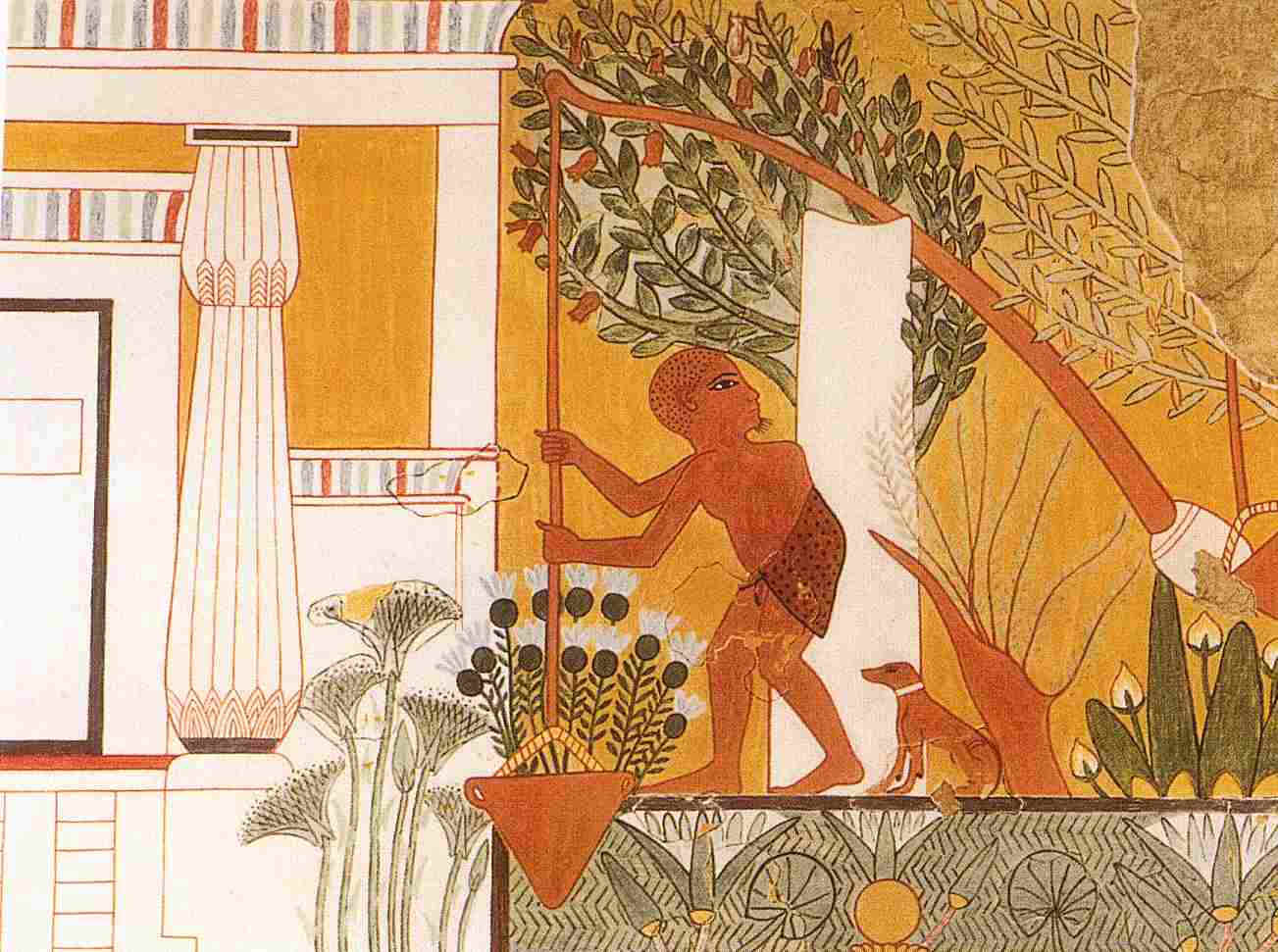
Egypt in many ways is synomamous with the Nile River. Egypt as the other great ancient civilizations developed in river valleys. This was of course the advantages to agriculture in such vallys eased the transition from hunter gathering to more settled agricultural societies which could generate the wealth needed for civilization. Precipitation is mininimal, almost not non-existent in Egypt. The Nile River from time immemorial has been virtually the only source of water for agriculture and animal husbandry. Egyptian civilization was based on the Nile River and the annual flooding determined the patterns of daily life in ancient Egypt. The Nile is one of the great rivers of the world. It is the longest river in the world and one of the few which flow north. The Nile headwaters rise in the hear of Africa and were a mystery to the West until the 19th century. The River is fed by the tropical rains of central Africa and flow north through the Sahara dessert, finally exiting into the Mediterranean Sea. The long, narrow flood plain was a slender green sliver slicing through the parched desert. The Nile first attracted nomadic hunters seeking the animals watering along the River. Gradually these nomads settled in the valley and began to grow crops to supplement what they were able to hunt and gather. The annual Nile floods came like clockwork and seemed a bountiful gift from the gods. The Nile floods each year deposited nutrient rich silt over the land, creating nearly perfect conditions for growing wheat, flax and other crops. Gradually these people began to build build irrigation canals to support their agriculture. The construction and maintenace of these canals required the development of social structures which led to the Egyptian civilization as we know it today.
Egypt in many ways is synomamous wit the Nile River. Egypt as the other great ancient civilizations developed in river valleys. This was of course the advantages to agriculture in such vallys eased the transition from hunter gathering to more settled agricultural societies which could generate the wealth needed for civilization. Precipitation is mininimal, almost not non-existent in Egypt. The Nile River from time immemorial has been virtually the only source of water for agriculture and animal husbandry. Egyptian civilization was based on the Nile River and the annual flooding determined the patterns of daily life in ancient Egypt.
The Nile is one of the great rivers of the world. It is the longest river in the world and one of the few which flow north. The Nile headwaters rise in the hear of Africa and were a mystery to the West until the 19th century. The River is fed by the tropical rains of central Africa and flow north through the Sahara dessert, finally exiting into the Mediterranean Sea. The long, narrow flood plain was a slender green sliver slicing through the parched desert.
The Nile first attracted nomadic hunters seeking the animals watering along the River. Gradually these nomads settled in the valley and began to grow crops to supplement what they were able to hunt and gather. The annual Nile floods came like clockwork and seemed a bountiful gift from the gods. The Nile floods each year deposited nutrient rich silt over the land, creating nearly perfect conditions for growing wheat, flax and other crops. Gradually these people began to build build irrigation canals to support their agriculture. The construction and maintenace of these canals required the development of social structures which led to the Egyptian civilization as we know it today.
The annual Nile flood covered the fields. In many areas only the towns and village remained above water. The Greek historian Herodotus writing in the 5th century BC decribed the flooded fields which looked "like the islands of the Aegean".
The famed cataracts of the Nile are shallow depths compared to the deeper depths through most of Egypt. . They exist between Aswan and Khartoum. Here as the rains further south slacken, the surface of the water is broken by countless small boulders and stones jutting out from the river bed. There are many rocky islets. The Nile south of Aswan in some places breaks into whitewater while at other points the water flow is fairly smooth even though shallow. The cataracts are not just a natural phenonenon. They are of economic and historical importance. Which is why they determined the border between Upper and Lower Egypt, meaning ancient Egypt and Nubia. It is no accident that here lies the border betwen modern Egypt and Sudan.
The characteristics makk the point that the Nile which is navigable from the Mediterrabean/Deltarea all the way to Aswan suddenly sto[s riverine commerce. Some of the cataracts can be navigated with careful boatmanship during the flood season, angerous, but possible. As a result ancient Egypt as we now it extended from south of the Nile Delta to the first cataract. Further upstream (meaning south), the land was controlled by Numbia (Kush). How far south Egyptian control extended dependent of the power of the various dynasties. The more powerful the dynasty, the further south controled usually extended. Numbia was the weaker state and at times was controlled by Egypt. The cataracts enabled the weaker Nubians to dominate Egypt's trade with Africa. During one relatively short period, however, the Numbians conquered Egypt north of the cataracts (760-656 BC).
Demands for the Nile water are invreasingg, including the upstream countries where the Nile origintes. And while the profuctivity of the Nile could fed the Egyptian pople and allow for exports, the Nile can no longer feed the emense modern population of Egypt.
Sladen, Douglas. Queer Things About Egypt (J.B. Lippincott Company: Philadelphia and Hurst & Blackett, Limited: London, 1911).

Navigate the Children in History Page:
[Return to the Main ancient Egyptian page]
[Return to the Main ancient Egyptian agriculture page]
[Return to the Main Egyptian Geography page]
[Introduction]
[Biographies]
[Chronology]
[Climatology]
[Clothing]
[Disease and Health]
[Economics]
[Geography]
[History]
[Human Nature]
[Law]
[Nationalism]
[Presidents]
[Religion]
[Royalty]
[Science]
[Social Class]
[Bibliographies]
[Contributions]
[FAQs]
[Glossaries]
[Images]
[Links]
[Registration]
[Tools]
[Children in History Home]