
|
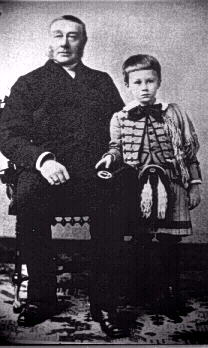
Many famous and not so famous men remember the clothing and hair styles they wore as boys. Or they are recorded in family photographs. The boyhood experiences of these individuals are often recorded better than those of ordinary people. Thus their boyhood experiences are an important vsource of sociological information a well as offering important biographical insights. Not so many years ago it was all up to mom how junior was dressed. In some cases, especially in the late 19th and early 20th Century, moms in Europe and America let their imaginations run wild, choosing elaborate Fauntleroy and kilt outfits for their darling sons. The wife in affluent families rarely worked and thus she had a great deal of time, and in some cases the assistance of nannies and governesses, to see to the care and dressing of their children. The results were very little boys kept in dresses. Ever after they passed out of dresses, little and not little boys done up in dress-like tunics and kilts and lacy Fauntleroy suits and kilts as well as more manly sailor suits.
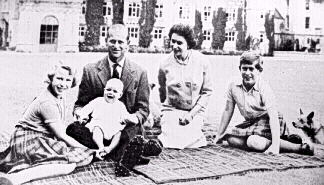
Considerable information is available on the clothing worn by political leaders, writers, musicians, actors, scientists, soldiers, artists, ballet dancers, the children of celebrities, and many other famous people. President Franklin Roosevelt wore dresses, Fauntleroy, and kilts until he was quite old. Earnest Hemingway and his sister were put into matching dresses. Thomas Wolfe remembers his long curls. Many famous people from well to do families had similar experiences. While dresses and elaborate Fauntleroy suits generally disappeared after the First World War, British mothers still were partial to kilts and most European and some American boy grew up in short pants. Prince Charles and even presidential candidate Malcolm Forbes Jr. were dressed in kilts. A search of biographical material provides many interesting details on how boys were dressed in different historical periods. This page is still being developed. If you have any historical information to add, do let me hear from you.
Many of the individuals in our HBC biography section have been the subject of extensive biographical works. Some have numerous biographies written about them. Here in our site we have can not begin to address these individuals in such detail. We are attmpting, however, to stress the childhood of these individuals which is often not dealt with in detail by some biographers. Not only does the childhood informastion provide interesting details about fashion, but also fascinating details about the formation of an individuals character. As Milton wrote, "Childhood shows the man as morning shows the day."
Details on the clothing worn by selected individuals can be found at:
Other biographical information is available on other individuals at other HBC-sponsored web sites.
|
European and American Children's fashions, especially in the 19th and early 20th centuries were strongly influenced by the way royal families dressed their children. Queen Victoria was especially influential as so many of her children and grandchildren maired into royal familes throught Europe. Kaiser Wilhelm II, for example, was the Queen's grandson. While the British House of Windsor was the most influential in this regard, other royal families also had great influence, at least in their own countries. The geneology of European royalty is a huge under taking, given the large number of countries and principalities. Major changes have ocurred over time with countries created, dismantleted, and reappearing. Some royal lines extend more than a millenium, others only a few generations.
The clothing worn by presidents as children and the clothing worn by their children are a good reflection of contemporary children's clothing. America of course has no royal family to help set fashion standards as was the case in Europe. The American president and his family have in part played this role. Thus a review of the American presidents provide glimpses on popular children's fashions of the day. In addition, the clothing of the presidents themselves provide additional glimpses. Very limited information is available on the childhood of many presidents, especially the childhood of presidents like Abraham Lincoln that grew up in modest circumstances.
Information about child actors also provodes a great deal of fashion information. Both clothes these children wore as well as the costumes they wore in their films and shows provide much valuable information. These childrens often dressed very fashionably so information about them provides insights into contemprary fashions. The costumes they wore in films also provides useful information--although it must be treated more cautiously.HBC is preparing an alphabetical listing of child actors in movies, plays, and television. Most of the actors listed are American. HBC would be very interested in suggestions from our European and Asian readers.
There are many famous child music prodigies. The most famous is certainly Mozart in the 18th Century, but there have been many others in the 19th and 20th Century. The clothing they wore for their performances were often examples of contemporary formal boys' clothing. Often as they began to grow up their parents liked to keep dressing them in juvenile clothes to emphasize that they were childhood prodigies. I've just begun this page, but would be interested in any comments or contributions by HBC viewers.
The HBC biography section is for people or families that have achieved some degree of notariety or fame. HBC readers in many cases have submitted family portraits. HBC has until now not added them to the biography section. We believe now that this is a mistake. Many of the HBC readers contributing family portraits can also provide details about the boy and him family. This background information help us to assess soocial trends and put the fashiions involved in perspective. This is just why the biographical section is an important part of HBC. As a result, HBC has decided to create pages for these relatively unknown people, when some basic family data is available.

Navigate the Children in History Website:
[About Us]
[Introduction]
[]
[Chronology]
[Climatology]
[Clothing]
[Disease and Health]
[Economics]
[Geography]
[History]
[Human Nature]
[Law]
[Nationalism]
[Presidents]
[Religion]
[Royalty]
[Science]
[Social Class]
[Bibliographies]
[Contributions]
[FAQs]
[Glossaries]
[Images]
[Links]
[Registration]
[Tools]
[Children in History Home]