|
Religion is an organized set of beliefs explaining the cause, operation, an purpose of life and the uiverse. The development of religion is one of the distinguishing characteristics of mandkind. Most religions have associated moral codes. Religion has been a major force in history. It is unclear at what stage in human history religion developed. Early religions were normally animistic and polytheistic in nature. The adoption of monotheism is seen as an advanced important stage in human development. It is unclear at what stage in human history religion developed. It is difficult to assess the religious beliefs of early man because so little archeological evidence exists. It may well be that even earlier hominids may have had what may be called religious beliefs. The conscionness of being that marked early man from other animals may the point a rich primitive religious beliefs developed. This suggests that religion is a basic part of humanity. There are of course stone-age people that still exist in remote corners of the globe. And these peoples no matter how primitive have religious beliefs. So it may well be that religion is an essential element in the development of humanity. The religions of Neolithic peoples were almost certainly the basic animistis religion of promitive people encountered in the 20th century. While we can only speculate about prehistoric times. We know a great deal with the advent of civilization. Religions involve ritual and devotional behavior . Distinctive clothes and costumes are adopted by many religions.
Religion is an organized set of beliefs explaining the cause, operation, an purpose of life and the universe. The development of religion is one of the distinguishing characteristics of mandkind. Because man from the point of consciouness has began to ask questions like why am I here? and What is the purpose of life?, religion developed to answer those and other questions.
It is unclear at what stage in human history religion developed. It is difficult to assess the religious beliefs of early man because so little archeological evidence exists. It may well be that even earlier hominids may have had what may be called religious beliefs. The conscionness of being that marked early man from other animals may the point a rich primitive religious beliefs developed. This suggests that religion is a basic part of humanity. There are of course stone-age people that still exist in remote corners of the globe. And these peoples no matter how primitive have religious beliefs. So it may well be that religion is an essential element in the development of humanity. The religions of Neolithic peoples were almost certainly the basic animistis religion of promitive people encountered in the 20th century.
The next chronological question becomes when did man make the jump from primitive animism to more complex religious beliefs with a priesthood and temples or other religious structures. The traditional answer provided by archeologists was the development of agriculture. Agriculture provided the wealth to support a priesthood and monumental construction. Recent archeologicl work has found a temple and other religious facilities built by a nomadic people--G�bekli Tepein in Anatolia. The monumental structures three are the earlies monumental religious site found to date (9,000 BC). his predates the development of agricultyre by several milenia. There is no doubt that agriculture was a major step in transforming religious thought (5,000 BC). But it seems to have accelerated religious trends akready set in motion during te neolithic era. Agriclture made possible the development of a wide range of polythesitic cults througout the ancient world. The importance of agriculture can be seen by the distinctive religious believes of more war-like hunting and herding barbarian people on the perifery of richer agricultural-based civilizations.
The next step in the evolution of religion was the development of monothesism. Here the first people to accept monotheism was the Jews. Monotheism remained a a minor religius concept until Christianity conquered the Roman world (4th century AD). Within a relatively short period, Christianity and new monotheistic religions (Zoroastrism, Buddhism, and Islam) became the dominant religious force in much of the world (5th-7th centuries). (Hinduism is more difficult to summarize.) While this huge step toward monotheism occurred during a relatively short period of time is unclear. The rise of monoism while commonly thought to be an important step in cultural development also led to religious strife, especially the coinflict oif Islam with the other major religious traditions. And there were conflicts between different sects of Islam and Christianity.
The next major steps in religious development was the rise of science. The basic changes were inagurated by two deeply religious men--IsSaC Newton (1647-1727) and Charles Darwin (1809-82). Newton is commonly credited with describing gravity. In fact he did much more and surely must be deceived as not only the first, but the greatest cscientist of all time. Newton explained how the solar system operated. This had profound religious implications. It meant essentially that God was not needed to operate the universe. He may have created the universe, but it operate by natural laws which were capable of rational explanation. It is no accident that the Age of Reason with anti-clerical elements followed Newton. At least in the West, God began go be seen as a kindly watch maker. Darwin completed what Newton started by providing a rational explanation for the development of man and his followers extended this to creatin itself.
We today tend to think of God as not only all powerful, but also compasionate, rightious, and just. But that is not the only possible concept of God and the god or gods worshiped by men have not always been concepulized along such lines. The Greeks who laid the foundation of Western society had a very different concept. Their gods were much more like people--capricious, quarelsome, petty, avaracious, and, often vengeful. There are two basic possibilities for God and creation. First, creation was an
arbitrary act, the product of an indifferent will guided by no objective values and subject to no independent canons, reason, or moral values. Second, the other option is that creation was based on wisdom and intelligble to its core, based on both ratioinality and core moral values. There are of course many refinements and complexities of these basic alternatives, but ultimately these are the two basic choices that any religion must take. The great modern religious traditions have pusued the second alternative. The third alternative of course is atheism which postualates that there is no god and the universe oprtates purely on natural laws that can be understood through science. For the atheist, moral values are purely human creations. And there is considerable variance in how aethists view moral valies, ranging from a belieft in certain core absolute values to a belief in cultural relativity.
Religion since the dawn of civilization has been a major force in history. in many historical eras, civilization was ordered around religion. Many in the 20th century have seen religion as a spent force, buffeted by both nationalism and socialism. Certainly the force of religion has declined in Western Europe, but less so in America. Events in the late 20th century, however, have shown the continuing force of religion in modern life. The ability of Pope John Paul to confront Communism in Poland, the Muhajadeen to confront the Soviets in
Afghanistan , and the conflict betwwn Al Queda and the secular West show that religion is not as spent force. The on going religioys conflicts also show the continuing force of religion, the Catholic and Protesatants in Northern Ireland, the Isrealis and Palestinians in the Middle East, the Muslims and Hindus over Khasmir, the Muslems and Christians over Ache, and many others.
The role of religion in history is a fascinating topic. It is much more important than recognized by modern historians with their Woke/Marxist orientation. It is difficult to assess the role in ancient times. It is difficult to assess the role of religion in ancient times. It is unclear just how much religion dominated society or was just an imaginative cultural decoration. Many historians posit that that Christianity was a factor in the decline of the Roman Empire, creating a less war-like, more humane society. We are not sure about that, but it is a question that has to be addressed. There is no doubt that Islam fired the tribal warriors that emerged out of the austere Arabian desert.. Some of the fiercest gods were created by the Meso-American people. We do not know, however, if the religion created the fierce Aztec and other warriors or if their fierce spirit created the religion. Perhaps a mix of the two. Fierce Christian warriors like Richard the Lion Heart and El Cid led the Holy Land Crusades and Spanish Reconquista. These and many other other historical epics need to be studied. What we are most interested in is modern times. Modern historians criticize religion as a relic of the past expressing ignorant, backward, and reactionary ideas. There is little recognition as to how significantly religion, especially the Abrahamic religions have led to modernity, in sharp contrast to the negative impact of Marxist ideas. The Judaeo-Christian origins of Western civilization can be traced to important ideas including democracy and capitalism as well as popular sovereignty, individual rights, abolition, private property, civil rights, and science. These concepts are at the root of modernity and they all developed in the West, in large measure because they were embedded in a Christian frame work. No other religion generated summary modern concepts. Now religiously oriented individuals would stress that they relied on the belief in a supreme being. We would not say that, but we do believe that that they are all rooted in Christian theology was based on the idea that every human is a child of a loving god. This generated the feeling every human has value we should care for each other as sons and daughters of a loving God. Now we can debate just how Christianity generated modernity, but what is indisputable is modernity was created in the West. We would add that Christianity is a fusion orchestrated by St. Paul between Jewish religious concepts and classical (Greek and Roman) secular concepts. Importantly, none of these modern concepts appeared in African, Asian, Indo-American, or Middle Eastern cultures even though there were major rich cultures in those areas for millennia before the rise of the West. Despite these countless advanced civilizations, the major steps toward modernity occurred in the West. It all occurred in the west. And Christianity was the one destructive Western movement which was intertwined with all those movements.
Most religions have associated moral codes. Many of the great religions share many of the same moral precepts. This is in part because many religions have developed in the same historical and social traditions and are related to each other. Judiasm and Zoroastrianism both developed in the Middle East and share some of the same mythology. Christianity of course developed from Judaism. And Islam was heavily influenced by both Judaism and Christiasnity. This the three great Abrhamic religions share a moral code with many common elements. But even religions outside of these traditions share moral precepts. This suggests that there are certain basic moral precepts that are widely held by all people. There are also differences between the moral code of the great religions. This also suggest that morality is not entirely a matter basic precepts, but rather issues that humans have to wrestle with and establish for themselves. And some of these moral precepts have changed over time. Some religions in the modern age have been willing to interpret religious texts differently over time. Other such as Islam see the Koran as the imutable word of God which must not be questioned.
Over human history there has been considerable discussion of religion. In some cultures and in some historical periods religion has been the central isdsue of human discourse. Most of this discussion has been about doctrinal issues. Men have debated the nature of God and the proper way of worshiping him or them, but the discussion as to whether god exists is a relatively modern discussion. Marx called religion an opiate. Interestingly one author suggests a gene may affect body chemistry (which is hat an opiate does) and thus predisposed some people toward religion. [Hamer] Freud referred to religion as a neurosis.
Many social analysts have seen early history as a struggle between polythesism and monotheism. Early religions were normally animistic and polytheistic in nature. The adoption of monotheism is seen as an advanced important stage in human development. This view is in part an example of the dictim that it is the victors that write history, The Christiand that took control of the Roman Empire with Constantine's victory, set out to vilify and eliminate pagan polytheism. Theodociys the Great outlawed paganism and made Christianity the state religion, in effect an agency of state in the governance of the Empire. Smear tactics were used to vilify pagan beliefs. Paganism was associated with vile practices such as orgies and child sacrifice. This image has caried over into our modern world. The word pagan does not only mean non-Christian, but also has connotations of hedonism and evil. Often left unsaid is that the great pagan civilizations, especially Greece and Rome were the foundation of Western civilzation. [Kirsch] They were also more tolerant socities than the monotheistic Christian era that was to follow. The moral codes associate with the great monothesitic religions are generally seen as more sophisticated than polythestic religions. There is often an intolerant element associated with monothedsistic faiths that was not nearly as common with earlier ploythestic religions. [Cook] Intolerant acts since the 4th century AD like the Christian destruction of the Serapeum (the beautiful pagan temple in Alexandria) to the Islamic (Taliban) destruction of theBamiyan Buddah in Afghanistan to monotheism. The belief that there is one God and one righteous system of believes has empowered monothesitic religions since the fall of Rome to when possible impose their beliefs on others. One author writes, "At the heart of polytheismis an open-minded and easygoing approach to religious belief and practice." In contrast he sees in montheism a regretable "tendency to regard one's own rituals and practics as the only proper way to worshipthe one true god." [Kirsch] There are many examples of intolerance in the great montheistic religions. Perhaps the ultimate example in Christianity is Torquemada and the Spanish Inquisition. There are many examples in Islamic history and they are not all historical examples. The Taliban, Whabism, and Osama bin Laden are modern examples. By the same token there are many examples of religious toleration on the great monotheistic religions. Perhaps the best example in modern Christianity is Pope John XXIII.
Religions involve ritual and devotional behavior. There was often clothing or costumes especially designed for religious observation.
Religion has been a major force in art. Chritian churches have made an enormous cultural contribution to civilization, including painting, sculpture, architecture and music. Allexamples of religion-inspired creativity, especially in the late Middle Ages and the Renaissance. The beautiful Gothic cathedrals in France and Germany, the works of a Michelangelo, the passions and cantatas by Bach, all created to the glory of God. Hinduism in India also is credited with beautiful works of art. This also goes for Buddhist, Aztec, Inca and Egyptian civilizations. Not to forget Islam. The Alhambra in Spain and the Taj Mahal in India are examples of a glorious Muslim past.
Music plays a major role in the Christian religion. The Christioan Church from an early point in its development incorporated music in religious celebrations. This seems to be, however, rather unique. Music appears to play a minor role or is completely absent in most other religions. Several religions use various forms of chanting, but actual music seems rare. We also do not know why Christianity is unique in this regard. This is, however, a topic that we know very little about. Hopefully HBC readers will provide some useful insights.
Distinctive clothes and costumes are adopted by many religions. Church
attendance used to be an occasion for dressing up in your best clothes. This was as true for children as their parents. Church is no longer such a formal occasion. Men commonly still wear a sports coat and tie, but often not a suit. Boys are much less likely to wear a sports jacket or suit. Special days such as Easter and Christmas or events such as weddings and christenings, however, still often are occasions for formal dress.
The American Revolution is often portrayed as primarily establishing a revolutionary democratic government. This is not quite true. The revolutionary government it established was a republic. Democracy came later. America continued for over a century as virtually the only republic of any importance as the great European powers continued to be goverened by monarchies. Another major aspect of the American Revolution, enbued by the ideals of the Enlightenment, was secularism. Republicanism and democracy are no longer in question. Secularism is very much an issue, not only in America, but in many other countries around the world. Ironically secularism is under assault in America at a time when it isc the dominant approach throughtout Europe. At the same time, America is under assault by fundamentalist Islam which also rejects secularism.
A debate in the religious community is the impact of pluralism on religious conviction. This debate has been conductefd more in Europe than America, perhaps because pluralism is such an excepted principle in American life. There are two primary positions. First the adherents of the secularization theory contend that religious pluralism act to diminish the credibility of all religon. This would mean that pluralism leads inexorably to the seculirization of society. [Berger] This theory has gained wide credence in Europe. Second the competing theory is sometimes referred to as the "rational choice theory" and employs a concept known as "religious economy" which is the totality of all religious activity in any given society. The economy concept is based on an idea of a free market place for religious ideas. Adherents of this theory are convinced that in societies in which religious participation is unregulated and competitive, religious participation will be extensive. The lack of pluralism will reduce religious participation because without the competition which flows from pluralism the religious institutions would be to inefficient to conduct effective marketing efforts. [Stark and Finke, 201]. Of course it has to be noted that religious conviction in much stronger in more pluralistic America than in Europe. This debate has primarily been conducted within Christendom. The debate is complicated in theocracies in which the state commands religious participation. This would be states like the Taliban in Afghanistan, mullah-controlled Iranian Republic, and Whabi inspired Saudi Arabia.
The United Nations Charter includes provisions for religious freedom. There were in the 20th century major assaults upon religion. The most important were those launched by Soviet Union and Communist China as well as other Communist states. Each of which had major athiest campaigns. Promoted by religious groups in America, the U.S. Congress passed the International Religious Freedom Act (1998). A provision of the Act created a permanent nine-member U.S. Commission on International Religious Freedom. Another provision requires the State Department issue an annual report on the status of religious freedom around the world. The State Department in 2004 identified Saudi Arabia as a country which severly restricts religious freedom. Saudia Arabia was probably not listed earlier because of a desire not to offend an important ally. Officials have previously suggested that it was better to engage the Saudis quietly. Actually Saudi Arabia has developed one of the world's most repressive and hostile reguimes for the free exercise of religion. As almost the entire population is Muslim, most of the repressive measuures wwere directed at fellow Muslims who do not share the austere, state supported Wahhabi creed. Since the 9-11 attack in Ameriica (2001), there have been some mkodest steps such bas removing hate filled passages aimed at Chridtuians and Jews in school textbooks, but there has been no major change in the repressive regime. The State Department identified seven other countries as "countries of particular concern": Burma, China, Iran, North Korea, and Sudan which were previously lissted along with two other new additions, Eritra and Vietnam. It is not suprising that the list includes the remaining Communist countries (China, North Korea, and Vietnam). What is especially notable is that most of the other countries are Muslim nations (Eritra, Iran, Saudi Arabia, and Sudan). Afganistan since the fall of the Taliban has been removed from the list. This is notable because Islamacists claim that there is a war against Islam. In fact it is the Islamacists that are persuing a war against other peoples and other faiths.
There have overtime been many notable incidents of religious intollerance. They have been conducted by both religious groups as well as state authorities. Thefirst major incident was the policybof anti-Semtism adopted by the Catholic Church. Islam has neen gernerally more tollerant thab Christians, although there have been noted acts of intolerance beginning with attacks on Jewish tribes led by Mohammed himself. In the modern era, Islam has becone increasingly more repressive. A major act of intolerance in the medieval era was the suppression of the Cathars (13th century). This led to the creation ofvthe Holy Office of the Inquisition. The Spanish Inquisition is the best known, but the Inquisition offered in other countries as well. Another act was the Spanish expulsion of the Jews (1492) and subsequent expullsion of the Moors. The Revocation of the Edict Nantes was one of the several notable acts of religious intolerance.The English in cotrast persecuted the Catholics. The Japanese suppression of Christians is another example, Russian pogroms against Jews drove large numbers of Jews into Western Europe and America. The French Catholic campaign against the Huguenots is similar to the NAZI campaign against its Jewish citizens--only worse because the Hugenots were a much larger portion of the French population. In modern times, the Soviet aehism campaign is another exampe. The one recurrent thread through these different acts of religious intollerance besides the tragedy for the people targetted was how the country which expelled them was adversely affected. Perhaps the ultimate example here was the NAZI persecution of the Jews. The Jewish refugees played a major role building the atomic bomb. Ahd had the NAZIs not surrendered (May 1945), could have been used on Germany rather than Japan.
The relationship of psycology and religion is another interesting topic. Some authors believe that religion may be a natural psycological adaptation to managing individual and social anxiety. This may be rooted in our species'primitive roots. Primitive man had no way of nsweing the big questions or to explain the natural phenomenon encountered. Psychological theory posits that anxiety is part and parcel of the human condition and that we use various methods, called defense mechanisms, to keep it at bay. Most of the big existential questions of life, such as why we exist, why evil persists, why we die, etc., are essentially unanswerable. (Science does make attempts at explanations, but what, for example, came before the 'singularity' of the Big Bang?) A major defense mechanism against such anxiety is religion itself, which purports to answer these questions. This is why nearly all religious belief systems posit some kind of afterlife, tell us we are here because a god wills it, and so forth.
Virtually every society over history has had some form of religion however loosely defined. Even modern athiest states adopted a kind of state religion. Rhe prevalence of religion in human history suggests that there is some ascpect of human nature which requires religion of some form. Some authors have addressed this subject philosophically. We do not know if any social scientist has addressed this subject scienticically. We do note one author who claims have discovered what he calls the "God gene" or the self-trascendence. He suggests that this gene (VMAT2) predisposes a person toward spirtuality by affecting body chemistry. [Hamer[ We do not know enough about this subject to comment. Genetic research with an understanding of DNA is a still new field of research. We suspect that now that the human genome has been compiled that future research will open whole new scientific fields. We suspect that this researchb will provide many important and surprising insights into human behavior.
Religions vary greatly around the world. There has been since the European religious wars of the 16th century a general trend toward relgious diversity around the world. The Spanish and Portuguese carried Christianity beyond Europe, but the primsry success was limited to Latin America. In Europe as in America there proved to be after the Reformation so many different sects that no one group could dominte. Since World War II there has been a notable migration of Muslims into the Christiam West. The primary exception to the general trend to diversity has been in the Muslim world where minority religions have come under increasing pressure in recent years. The Soviets persued a campasign of atheism which was particulsr brutal under Stalin. There has been a revival of religion in Russia since the fall of Communism. Comminist regimes especually China continue to restrict religious freedom. We have developed several separate pages on religious trends in seceral different countries, including: America, Austria, Belgium, Canada, England, France, Germany, Italy, the Netherlands, and other countries.
Concerning children there are three subjects to address. First, how are children viewed and how they should be treated. Second, hos does a religion assess the value of life. Third, to what extent are children involved in religious prasctice. Surely Christianity places a great focus on the children, probably more than many other religions. Anyway throughout the centuries changed the ideas about childhood in the European culture. The romantic 19th century saw to the children as an image of "purity". This is a bit different to the traditional idea of "simplicity". The religious art is not only an expression of the Bible stories, but also of the contemporary ideas. So the scene of Jesus with the children, quite common in 19th century, becomes also the expression of the contemporary idea of childhood. Islamic views seem harsher, although in fairness this seems less the result of Koranic teachings than medieval culture. The Koran like the Bible make it clear that children or both alessing and responsibility. The problem with Islam is that it legitimizes violence against women and Old Testament approsches to crimlity. And men who bear womea are likely to beat children. And children sometimes break the law. Thus as part of Sharia, we see terrible punishments being inflicted on children--even very young children. Children have over the ages played an important part in religious observation.
Second The value of life is another issue. Many primitive religions involved human sacrifices. The Aztecs religion involved warfare to obtain victims for human sacrifice. The victims appear to have been primarily adult males. Other religions sacrificed children. Now mumified Inca children have been found sacrificed at high elevations in the Andes. The early Greeks are known to have sacrificed children. And the Romans ahored the Cartheginian practice of child sacrifice. The Biblical story of Abraham and Issasc shows that the Jews departed from this religious rite at an early point in their development. It also suggests that the practice was widespread in the Middle East at the time. An issue on which Islam and Cgristianity agree is the value of life. Christianity is very clear on the issue, abotion is unacceptanle. Some denominations yielding to political correctness waffle on the issue. Most of the impetus for abortion, even the sale of bavy body parts comes from increaingly secular
society. Islamic teachings and society comtinue to rejdct the practice.
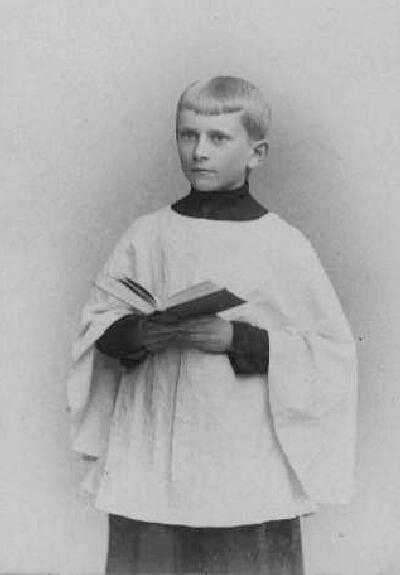
Third is the involvement of children in religious services. Children have also been commonly used as acolytes in many religions to assist priests in their devotionals and rituals. The modern altar boy and choir is a continuation of this tradition. Christinity appears to involve children in religious prctice to a greter extent than other religions.
The critics of religion point out the intolerance often associated with religions in history and the violence sometimes prepetrated in the name of religion. Often mentioned are the Crusades, Inquisition, European religious wars (16th century), Christian and Muslim forced conversions, Muslim piracy and enslavement of Christians, modern Islamic terrorism and many other historical examples. The point is a fair one which has considerable historical accuracy. These critics, howver, make the all too frequent historical falacy. These critics begin with their conclusion that religion is evil and then collect evidence to substantite their conclusion. They ignore historical crimes that were not founded on religion. And they ignore crimes perpetrated by secular states, in many cases sttes which strongly advocated aethism. Look at the major crimes of the 20th century (Soviet killing, the NAZI Holocaust, Chinese Communist killing, the genocide of the Kymer Rouge, North Korean killing, ect.). These are all crimes created by 1) secular states either committed to athism and targeting religious people are 2) states where religious teachings were dismissed or rejected. Using the logic of those criticizing religion, it was the absence of religion that made these secular states so deadly. Atheistics are quick to make the charge of violence againstreligions. Never do they add the violence perpetrated by atheistic states to the argument.
Atheism campaighns asre a relatuvely new phenomenon. This is bcause mankind even before civilization developed religiouhs concedopts like anmisim. Abnd with the development of civilization, powerful relogious ideas develped in all socities arund the world. Relogions were attacked, but by oyther reliigions. The idea of atheism is a modern development, even among the Greek who were the free thinkers of the ancient world, although the Greeks often made fun if theur gods. The first major outburst of atheism waa the French Revolution an the ttavk on tyh Vatholic chuc--the only religion of any importance in France. The Revolutionaries attempted to create a state revolution. This was an aproch taken by the socialist totalitarian societies in the 20th century, including both the Soviet Union and the NAZIs. A lesser known atheist campaign is the Cristeros War in Mexico. This would include all the Communist countries that appeared after World War II. The major reason totalitarion societies abhor religion is that totalitarians want to redefine morality. And religions have moral concepts which limit that ability. Another atheism campaign is underway in the United States, but not yet have the full force of the state which is necessary for a sucessful atheism campign. And Amerrica's democratic system and Constitution limit the ability to use the state.
Berger, Peter. The Sacred Canopy (1967).
Cook, Michael. A Brief History of the Human Race (Norton, 2003).
Hamer, Dean. How Faith is Hardwired into Our Genes (Doubleday, 2004), 241p..
Kirsch, Jonathan. God Against the Gods: The History of the War between Monotheism and Polytheism (Viking Compass, 2004), 336p.
Stark, Rodney and Roger Finke. Acts of Faith: Explaining the Human Side of Religion (Berkeley and Los Angeles: University of California Press, 2000).

Navigate the Children in History Website:
[Introduction]
[Biographies]
[Chronology]
[Climatology]
[Clothing]
[Disease and Health]
[Economics]
[Geography]
[History]
[Human Nature]
[Law]
[Nationalism]
[Presidents]
[]
[Royalty]
[Science]
[Social Class]
[Bibliographies]
[Contributions]
[FAQs]
[Glossaries]
[Images]
[Links]
[Registration]
[Tools]
[Children in History Home]