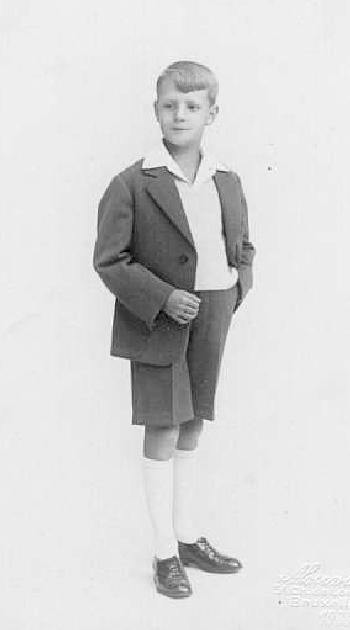
Figure 1.--This Belgian boy had his photograph taken wearing white kneesocks in 1930. He wears a short pants suit with an open-collar shirt. Click on the image to see a boy wearing white kneesocks in 1927. |

|
Belgian boys have worn a vaeiety of hosiery types. Long over-the-knee stockings were common in the late 19th century. HBC still has very limited information on Belgian 19th century hosiery styles. We believe that long over the knee stockings were common, although like in France, not as common in America. This may have especially been the case in the winter. Three-quarter socks seem to have been popular in the early 20th century, especially for younger children. Long stockings were worn both for warmth and as dress or formal wear. As with much else, we believe that they generally followed French styles. Knee socks were commonly worn by Belgian boys, especially after World War I. They generally replace long stockings during the 1920s, although some younger boys continued to wear them for warmth during the winter. We see mostly dark knee socks in the early 20th century, but we note boys wearing white kneesocks by the late 1920s. They continued to be worn after World War II, but began to decline in popularity during the 1950s. Boys in some private Catholic schools wore white kneesocks although I don't think that was common outside of school. Increasingly in the 1950s ankle socks became more common, especially during the warmer summer months. Many boys in rural Belgium wore wooden shoes before World War I. We are not sure what kind of socks they were worn with. Belgian boys never appear to have worn tights.
We do not yet have information about long over-the- knee stockings in Belgium during the early- and mid-19th century. We do have iunformtion on the late-19th century. Long stockings were common in the late-19th century, especially during the cold winter months. HBC still has very limited information on Belgian 19th century hosiery styles. We believe that long over-the-knee stockings were common, although like in France, not as common in America. This may have especially been the case in the winter. Long stockings were worn both for warmth and as dress or formal wear. We note that Belgian boys commonly wore long dark stovkings for church and other formal occassions even after kneesocks became precvalent in the 1920s. As with much else, we believe that they generally followed French styles, although Dutch and German styles may have been important in Flanders.
Three-quarter socks seem to have been popular in the early 20th century, especially for younger children. Three-quarter sicks were normally worn pulled up, but we have noted a few children wearing them with top cuffs like tirn-over-top kneesocks.
Some early knee socks are diffivult to differentiate from long three-qaurter socks. We begin to note knee socks in Belgium after the turn of the century, especially the 1910s. Knee socks were commonly worn by Belgian boys, especially after World War I. They generally replace long stockings during the 1920s, although some younger boys continued to wear them for warmth during the winter. We see mostly dark knee socks in the early 20th century, but we note boys wearing white kneesocks by the late 1920s. They continued to be worn after World War II, but began to decline in popularity during the 1950s. Boys in some private Catholic schools wore white knee socks although I don't think that was common outside of school.
Ankle socks were at first worn by younger children, although three-quater socks appaer to have been more common. Increasingly in the 1950s ankle socks became more common, especially during the warmer summer months.
Many boys in rural Belgium wore wooden shoes before World War I. We are not sure what kind of socks they were worn with.
Belgian boys like French boys never appear to have commonly worn tights. We have, however, only limited information. Perhaps they were worn by Flemish boys or in the small German-speaking area of Belgium.

Navigate the Boys' Historical Clothing Web Site:
[Return to the Main Belgian hosiery page]
[Introduction]
[Activities]
[Biographies]
[Chronology]
[Clothing styles]
[Countries]
[Bibliographies]
[Contributions]
[FAQs]
[Glossaries]
[Images]
[Links]
[Registration]
[Tools]
[Boys' Clothing Home]