|
English boys in the early-20th century still commonly wore suits. They were basically standard wear and not just dress up outfits. Boys wore both sack suits eith lapels and collar buttoning suits. We note the Rugby suit at the turn of the 20th century. We also see specialized suits like Fauntleroy suits and sailor suits. Gradually sack suits became more popular after the turn of the 20th century. Norfolk styling was popular in the early 20th century. We note knee pants, knicker, and long pants suits. We no longer see Fauntleroy suits for younger boys after World War I, except for very formal formal occasions. Sailor suits continued to be worn, but mostly by younger boys. We see older boys wearing sailor suits on the Continent. The single breasted suit became standard after World War I. Short pants suits replaced knee pants and we see older boys wearing long pants. Knicers largely disappear. We are not sure about colors, but grey appears to be a popular color. Many boys wore their school uniforms rather than a suit. This was often a blazer uniform. Gradually more informal dress strandards prevailed. This began after World War I, but became more prounounced after World War II. We no longer see boys wearing suits for everyday wear or to school. Boys wore suits much less than before the War. We still see short pants suits in the 1950s, but they become much less common in the 1960s. We see suits in clothing catalogs being offered with long pants even for younger boys. Boys at private schools still wore short pants schoo uniforms, but short pants suits declined in popularity. There was also a notable decline in the wearing of suits as informal dress standards became increasongly common. By the end of the century, boys did not wear suits, except as part of school uniforms. Many boys did not even hve suits.
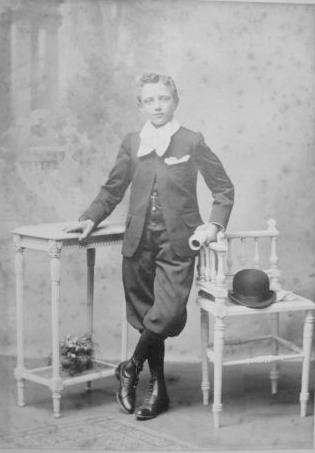
English boys in the early-20th century still commonly wore suits. The photogrphic record shows large numbers of boys wearing suits. Suits were basically standard wear for boys and not just dress up outfits. Boys wore a range of suits, both sack suits eith lapels and collar buttoning suits. We note the Rugby suit at the turn of the 20th century. We also see specialized suits for younger boys like Fauntleroy suits and sailor suits. Gradually sack suits became more popular after the turn of the 20th century. Norfolk styling was popular in the early 20th century. We also notice different kinds of pants worn with suits. We note knee pants, knicker, and long pants suits. Often older boys wore knickers and the younger boys knee pants. Knicker suits had been much more common in Britain during the 19th century than in America where knee pants predomimnated. The boy jer wears good example of a knicker suit (figure 1). We do not yet undertand to what extent knicker suits were a school style, mandated by schools as part of a uniform. This is opposed to suits for general wear outside of school. Curiously whilke this was the last decde we see large numbers of boys wearing knicker suits it was also the decade we see American boys beginninbg to wear knicker suits. Most American boys including many teenafers ore knickers suits in the 1900s until about 1908-09 when they began wearing knickers. We do not yet understand why British boys stopped wearing knickers and American boys began wearing them.
We continue to see English boys commonly wearing suits. Suits were still standard boys wear. Eton collars were still commonly worn with suits. We see a transition from knee pants with long stockings to short pants with knee socks during the decade. We still see some boys wrearing vested knicker suits. We think these knicker were mostly school uniform suits, meaning boys attending public) elite private boarding) schools. This would bethe younger noys at these schools, usually boys about 13-16 years old. We do not see these knicker suits to many extent in the state primary schools. And state primaries did not have uniforms. What they wore was there ordinqary clothes. School portraits are a useful inducator of suit trends. This was the World War I decade (1914-18). We do not have enough images yet to assess trends during the war. We see a trend toward informality after the War. We are not sure just what happened during the War.
Most younger boys did not wear sack suits, but a range of other outfits. We see older boys wearing sailor suits on the Continent. We no longer see Fauntleroy suits for younger boys after World War I, except for very formal formal occasions. There were Fauntleroy touches for youngr boys during the decade. Sailor suits continued to be worn, but mostly by younger boys. Double-breastred suits declined in populrity. The single breasted suit became svery imoportant after World War I. Short pants suits replaced knee pants, but continued to be very long. Knickers which had been prevalent at private schools also largely disappeared. We continueto see the older teenagers at school wearing long pants. Most English boys quit school at about 13 years of age abnd did not continue io to secondary schools. This was the general pattern in Europe and even America to a lesser extent. Boys quitting school While knickers largely disappeared, some clothers used the term knickers for short pants. We are not sure about colors, but grey appears to be a popular color. Many boys from modest income famiklies wore their school uniforms rather than a suit. Blazers became very popular as a school uniform item durung the decade.
Short pants suits became fairly standard for English boys in the 1920s. This trend continued in the 1930s. Short pants suits were not uiversal, but close to it. This depended a bit on school. Most boys finished schools at about age 13 years of age when they finished primary school. Boy finish school and entering the job market they often began wearing long pants suits. Boys in school were more likely to continue wearing short pants suits. This varied from school to school and parental choice. Another factor was that lower income boys often did not have a separate suit other than what they wore to school. And state primary schools did not have school uniforms. The boys wore what usually mum selecte. Boys commomly wore school caps. This could be part of a uniform. But we also see boys wearing their school caps even when wearing regular suits. Some schools expected this, especially private school and grammar scholls. But buying a peaked cap which matched the suit was not very common. More common was to wear their school cap. Middle-class boys were more like to have suits in additiion to what they wore to school. Private schools had uniforms, but state primaries did not. Secondary schools , both state and primary tended to have uniforms. The suit styles were very similar in the 1920s and 30s. We note suit jackets with very wide lapels, wider lapels than any other decade. Most boys wore suits with knee socks. We notice patters ob the turn-over-tops. The priamry difference between the 20s and 30s was that high-top shoes were still common kn the 20s and we mostly see low-cut shoes in the 30s.
The two Wotld Wars had an enormous impact on Europe and America. And this is observable in fshion trends as well as many other areas. War tended to make superficial matters such as the color of glove worn or different suits for different ocassioins seem meaningless given what people were facing in ordinary life. This led to a decidely more casual approach to fashion. Both adilts and children were ffected. Gradually more informal dress strandards for boys prevailed, especially after Wotld war II. This was clearly notable by the 1950s. It was part of a wider phenoemon observeable in Europe and America toward casual dress. More casual standards began to appar after World War I, but became more prounounced after World War II. Suits were becoming much less common and decidly not standard wear by the end of the decade. We no longer see boys wearing suits for everyday wear and suits becme less common a school, at least state primary schools. We do still see suits or blazers at private schools and secondary schools. Boys wore suits much less than before the War. Increasingly we see boys mostly wearing single breasted suits. Grey single breasted suits were becoming standard. And short pants while still common ere declining in popularity. We still see short pants suits in the 1950s, but they were declining in poularity, especially with suits. More and more boys, especilly by the end of the decade were wearing long pants, especially with suits. We still see some younger boys wearing short pants suits, but far fewer older boys.
Short pants suits become much less common in the 1960s. We see suits in clothing catalogs being offered with long pants even for younger boys. School uniform was a different matter. Sjhorts were still common t many schools. Boys at private schools still wore short pants schoo uniforms, but short pants suits declined in popularity oyside of school, accept as casual simmer ear. There was also a notable decline in the wearing of suits as informal dress standards became increasongly common.
We no longer see English boys wearing short panys suits in the 1970s, expecially by the mid-70s. Almost all suits except for prep-chpool boys ere sold as long pznts suits. But the suit was declining in popularity. Many prents no longer bought suits for boys as they were no longer standard wear, even for evenys like paryoes and chhurch. School tended to be vedifferent matter. Some state chools had short pnts uniforms, but for the most part not suits. Private schools were different. Many prp chools had short pants suit unoiform or blazers with short panys. At tte econdary schools a fe schools hd the younger boys ear short pants suits or blazers with short pnts, but this had largely disapperd by mid-cntury.
By the end of the century, boys did not wear suits, except as part of school uniforms. Many boys did not even have suits, despite thev fact that children's wardrobes were bmich more extensive than at the beginning of the decade. Some private vschoosl has suits as part of the school uniform. And secondary schools commonly had blazer uniforms.

Navigate the Boys' Historical Clothing Web Site:
[Return to Main English suit chronology page]
[Return to Main English suit page]
[Introduction]
[Activities]
[Biographies]
[Chronology]
[Clothing styles]
[Countries]
[Photography]
[Topics]
[Bibliographies]
[Contributions]
[FAQs]
[Glossaries]
[Images]
[Links]
[Registration]
[Tools]
[Boys' Clothing Home]