|
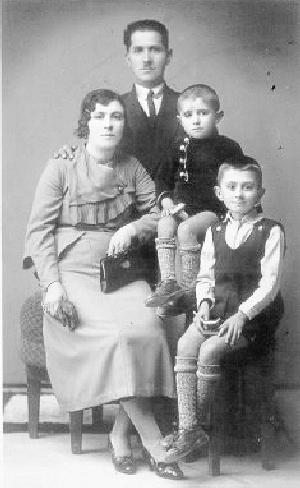
The Greek urban middle class has dressed much as their counterparts in Western Europe beginning with independene in the 1820s. The Greek monarchy, chosen from other countries, was caeryainly an important factor in popularizing Western styles and garments. The peasantry in the rural areas and small villages which constituted much of the population continued to wear traditional clothing through much of the 19th century. We do not yet have details on these traditional garment styles, but eventually hope to add a section on them. Western garments became increasingly common in the countryside in the 20th century, especially after World War I. The sailor suit was a popular garment in Greece as in much of the rest of Europe. Some school children wore smocks. By the 1920s, short pants were becoing increasingly common in Greece. Boys wore short pants suits. Some older boys wore knicker suits until after World War II. Short pants trend that pesisted through the 1960s. Some younger boys appear to have worn rompers, but this appears to have been primarily boys from affluent families. Greek boys still wear shorts, but now mostly as casualwear in the summer. Sport shorts and tube socks were popular in the 1980s. Since the 1980s Greek boys garments have become generally indistinguishable from those worn in America and the rest of Europe.
The Greek urban middle class has dressed much as their counterparts in Western Europe beginning with independene in the 1820s. The Greek monarchy, chosen from other countries, was caertainly an important factor in popularizing Western styles and garments. The peasantry in the rural areas and small villages which constituted much of the population continued to wear traditional clothing through much of the 19th century. We do not yet have details on these traditional garment styles, but eventually hope to add a section on them.
Our Greek archive is very limited, but we believe that Western garments were rare in Greece until independence from the Ottoman Empire after independence (1820s). Then we begin to see Western garmehnts, at first primary in the cities. Details on the various gatments are re not yet availablebecausee have so few images. The introduction of a German monarchy meant that German styles were important. Western garments were largely worn and began to become more common in the countryside (early-20th century). After World War I this process continued. Boys commonly wore short pants. Long stockings do not seem very common. Many boys went barefoot. Both climare and poverty were factors. Even at the time of World War II we still see traditional garments in the countryside. Since the 1980s Greek boys garments have become generally indistinguishable from those worn in America and the rest of Europe.
Greece during 19th and much of the 20th century was a poor country. Much of the population had little money to spend on clothes. Thus if clothing was wripped or torn, most mothers would not throw the item away, but instead patched it. This was especially trur of children's clothes because children are so hard on their clothes. There were many techniques for patching clothes. They were copmmonly used up until the 80s. A HBC reader tells us, "I
remember myself and my friends wearing patched clothing--especially our trousers."

Navigate the Boys' Historical Clothing Web Site:
[Introduction]
[Activities]
[Biographies]
[Chronology]
[Clothing styles]
[Countries]
[Bibliographies]
[Contributions]
[FAQs]
[Glossaries]
[Images]
[Links]
[Registration]
[Tools]
[Boys' Clothing Home]
Navigate the Boys' Historical Clothing Greek pages:
[Return to the Main Greek country page]
[Greek choirs]
[Greek folk costumes]
[Greek movies]
[Greek royals]
[Greek schools]
[Greek youth groups]