
Ancient Scotland: Caledonia and Pictavia
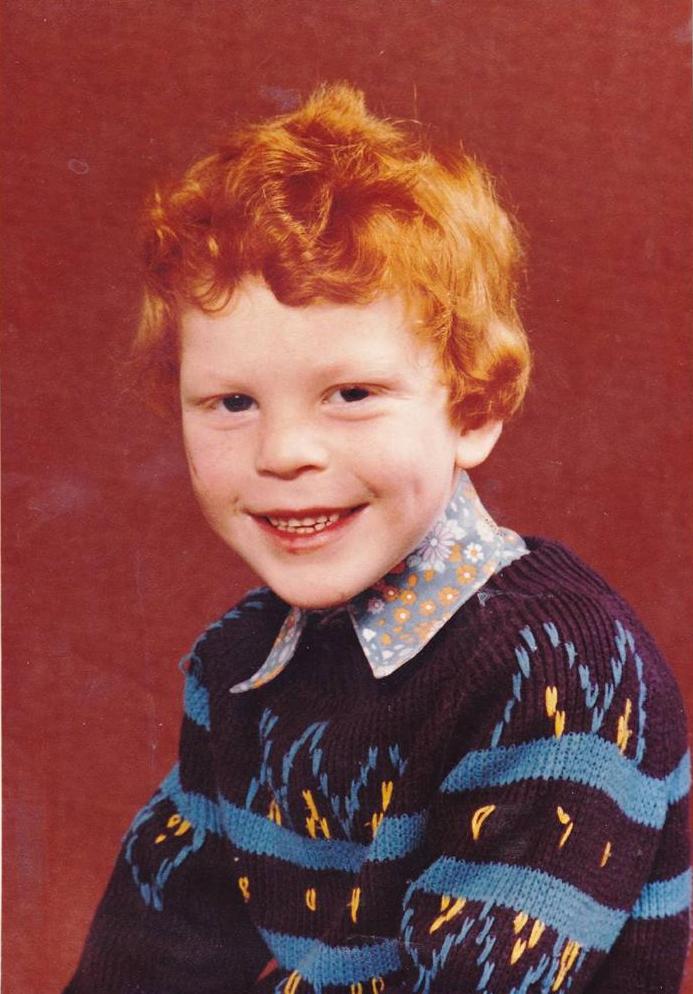
Figure 1.--One of the basic questions in Scottish history is who are the Scotts? Until recently this question has been impossible to answer with any surity. This is because the answer lies in the prehistoric movements of stone age man. And evem linguistics is not as helpful as with many other countries because the Pictish language is lost.
One fascinating little clue is red hair. There is a higher proportion of red hair in Scotland than in any other country. Some 13 percent of Scotts are red heads and an estimated 40 percent carry the related genes. The number of red heads have been noted before, but in recent years the advance of DNA studies have enabled historians to actually study this phenomenon with real evidence. DNA has become a major source on prehistory to add to pottery, other artifacrts, and linguistics, but with even more precission. In esence this boys red hair, more accuaretly his DNA, is imprtant evidence in Scottish history. It is now believed that the genetic mutation that created red hair originated with the Indo-European people of Central Asia and because of their horse technology spread it west to Europe. And the incidence of red hair was high among the Celts and Germans. Here it was primarily the Celts that brought red hair to Scotland. Tacitus mentions that the Caledonians had red hair, suggesting that the people who came together as the Picts also had red hair. The full story is much more complicated and DNA experts and historians are still unraveling it. And the Celtic Scots who conquered the Picts in the medieval era brought even more red hair to Scotland.
|
|
Scotland in antiquity was known by the Romans as Caledoinia. Little is known of the early inhabitants of Scotland. Human habitation of cotland appears to date from about 8500 BC. The appear to have been a mixed group of aborigines and unidentified European tribes of the Indo-Euroipean lingistic stock. Some archeologists believe that Scotland was settled by Iberians. The one group which is know is the Picts, a war-like people who were able to resist the Roman invasion. The term Pict is Roman in origin. The Romans called the pre-Celtic people in northern Britain "Pictii", meaning painted people. This appears to have referred the Pict pratice of tatooing their bodies. Roman General Gnaeus Julius Agricola invaded Caledonia and reached the Firth of Forth (late-1st century AD). The Picts and rebelious Britons pushed north by the Romans appeared to have successfully resisted the Romans in the area between the Firth of Fourth and the Clyde. Resistance was so successful that the Emperor Hadrian ordered the construction of a defensive wall from Solvay Firth to the mouth of the River Tyne which is today known as Hadrian's Wall (122 AD). Another wall was subsequently constructed further north which became known as the Wall of Pius (140s). This wall extended from the Firth of Fourth to the Firth of Clyde. The area between the two walls became the Roman first line of defense against the ancient Caledonians. The area south of the Wall of Pius became partially Romanized and this endured into Medieval and modern times as the Wall of Pius is roughly the dividing line between the Scottish Highlands and Lowlands. Litte information is available on the clothing worn by the ancient Picts.
Early Inhabitants
Little is known of the early inhabitants of Scotland. Human habitation of Scotland appears to date from about 8500 BC. The appear to have been a mixed group of aborigines and unidentified European tribes of the Indo-European lingistic stock. The original population were hunter-gatheres. They hunted and fished and gathered fruits and berries from the plentiful forrests. This began to change about 4,000 BC when the nomadic people began to settle in productive and sheltered river valleys and farm and raisr live stock. It is at this time they begin to clear the primal forrests using stone axes and other stone tools. Neolithic people from modern Spain and France are believed to have first settled Scotland. Some archeologists report a definite Iberian influence. Archeologists speculate that these built the great chambered cairns which have been found in the Scottish countryside. The Beaker people probably originating in northern Europe later moved into Scotland. The mingling of these two groups probably formed the pre-Celtic stock of Scotland. What is most notable about Scottish pre-history is that only about half of the country was settled. Archeological evidence suggests that the population was concentrated in the south and eastern coastal areas. There is very little evidence of human habitation along the northeastern coast and interior. [Cummins, p. 8.]
Caledonia: The Northern Picts
The Romans referred to northrn Britain as Calefoinia. Tacitus, Ptolemy, Lucan and Pliny the Elder, used thisterm to describe the northern part of Britain that Hadrian would evebtually wall off. The name comes from what is believed to have been the largest tribe, the Caledonii. They were hjust one tribe, but presumably the most important if not dominant tribe, which would explain the binomial Caledonia/Caledonii. Gnaeus Julius Agricola (40–93) was a Gallo-Roman general responsible for the success of the Roman conquest of northern Britain. He was closely associated with Vespasian. He completed the conquest of what is now Wales and northern England. He led an army into what is now northern Scotland, smashing the Caledonii at Mons Graupius, believed to be north Aberdeen (84). He built Roman forts across much of Lowland Scotlkand. He was recalled from Britain by the Emperor Domitian, perhaps because troops were neded elsewhere in the Empire or because of Agricolas' long service (85). Agricola thus did not comolete the Roman conquest of Britain or the destruction of the Caledonii. Agticola's invasion was a dter for the Calledonii and other northern tribes. Some historians believe this made plossible out of the need for deense for an unusual forging of related tribes into the Pictish nation. And he withdrawl of toops lessing Roman power in the north made possible for a unified nation to devlop out of quareling tribes. The Romans never again committed such a large number of troops in the north, instead building two walls, Hadrian's Wall and the Antonine Wall.lthough two important invasions would follow. . The Caledonii and related tribes woyld become the core if the northern Picts.
Maeatae/Miathi: The Southern Picts
A Roman author describes two races of Britons in the noth, the Caledonians and the Maeatae. [Cassius] Little is known about the Maeatae, althiugh they are said to live close to Handrian's Wall, the Caledonii further morth.
Near the summit of Dumyat hill in the Ochils, overlooking mpdern Stirling, there is the remains of a fort and the name of the hill is believed to be a corruption of "Dun Maeatae" - the hill of the Maeatae. Some historians believe that this impressive hillfort may have marked their northern boundary. Myot Hill near Falkirk could mark their southern limits. The Maeatae appear to have united as a result of treaties negotiated between the Romans and the various frontier tribes under the governorship of Ulpius Marcellus (180s). Thus by the late-2nd century, the various tribes appear to have coalesed into these two groups, the Caledinii (northern Picts) and Maeatae (southern Picts). And when Clodius Albinus, the Roman govenor of Btitain, took a large part of the British garrison t Gaul in an effort to become emperor, the frontier defenses were depleted. The Caledonii and Maeatae apparently having formed a military attacked. Roman armies were unavketo defeat them, the Roman Governor Virius Lupus was forced to bribe them. Eventually the Emperor Seveus cam to Britain to oversee a military offensuve (208). He oversaw the larget invasion since Agricola, but was unable to defeat the Cledonii-Maeatea alliance. Secverus died (211), ending the secondast major effort to defeat the northern tribes. The third and last effor occured a century later, The Emperor Comstantius led an army into the north (306). Like Severus, he died in York having failed to pacify the north. Beginning at this point the Roman authors begin to use the term Picts or Picttish tribes, apparently recognizing a degree of unity among the northern tribes. The Miathi continue to be mentioned in later sources. [Adomná] This suggests that their separate identity seems to have survived in some form well after the establishment of a unified Pictish kingdom.
The Picts
The most identifiable group associated with early-medival Scoitland is the Picts, a war-like people who were able to sucessfully resist the Romans. The term Pict is actually Roman in origin. We are not sure what they called themselves. The Romans in the later stage of their rule in Britain, began calling the people in northern Britain "Pictii", meaning painted people. This appears to have referred the Pict pratice of tatooing their bodies. The Celts referred to them as the Cruithne. The origins of the Picts is a mater of considerable historical debate, a mystery that has alled alure to the story of the Pictish people. Surviving legends describe a non-Bristish origin. Some believe them to be Teutonic. Others believe them to be Gaelic speaking Celts. Some believe that they were a non-Aryan people. Another theory is that they were Celts allied to the Cymry rather than the Gael of southern Britain. Increasingly modern scholars appear to be increasinfly concluding that the Picts were a mixed group consisting primarily of the pre-Celtic people, the Iron Age tribes of British pre-history. An here there is no indication based on archeological work such as hill top forts that the Iron Age tribes in northern Britain were any more war like than those of southen Britain. Although associated with Scotland, the Picts are believed to have been basically part of the Iron-Age population of Britain. Some may have been pushed north by the Celts who arrived in Britain about 500 BC during the pre-Roman era. The Celts did not encounter a Iron Age nation, but rather loosely assoicated still largely nomadic tribes. It is likely that at least in southern Britain there was a degree of mingling between the aboriginal Iron Age people and Celts. The Romanns called the tribes they encountered in northern Britain and Agricola almost defeated the Caledonians. There is not mention of the Picts until much later. Very little is known about the Ancient Picts because they had no written language. Thus almost all available information is archeological evidence such as burial sites and carved stones as well as Roman, Irish, and English accounts. Tactitus reports that a Pict chief named Calgacus said, "We, the most distant dwellers upon the earth, the last of the free, have been shielded ... by our remoteness and by the obscurity which has shrouded our name ... Beyond us lies no nation, nothing but waves and rocks."
It is likely that the Picts were a kind of union of the Caledonians and other tribes as they learned how to fefend themselves from invading Roman armies which of course is why they acquired a reputatioin as a war-like people. One of the few historical aspects we know for sure, is that the Picts seem to be the only group of Britons that formed a united people led by chiefs that were able to resist the Romans, Britons (semi-Romnaized Celts), and English (Anglo-Saxons). Both the Celts and Romans certainly influenced the Picts. The Pictish language is largely a mystery, but sone claim it was a mixture of Celtic and older elements. Besides their role in Scotland, the Picts appear to be the ancestors of the southern Welsh and the Firbolgs of western Ireland.
There are no written records of Scotland until the arrival of the Romans (1st century AD). Scotland in antiquity was known by the Romans as Caledoinia. The Romans after subduing what is now England and Wales pushed north. Roman General Gnaeus Julius Agricola invaded Caledonia in the late 1st century AD and drove north ofthe Firth of Forthto an area near modern Aberdeen. Here he defeated the Caledonii (94), but was then recalled leaving the Caledonii and related northern tribes to recover. The Caledonii and other rebelious Britons pushed north by the Romans appeared to have successfully reoccupied the area between the Firth of Fourth and the Clyde. It is unclear if the rebelious tribes military victories or the Romans concluded that the cost of the militry campign was not worth the territory to be gained. This is interesting because a later generation of Scotts--the Scotts-Irish played a critical role in stopping anoher great imperial power--the British. The Scotts-Irish on the Frontier played a major role in the American Revoutionary War.
What is now England, Wales, and the Scottish Lowlands became Roman province of Britannia. The fierce Picts, despite their lack of formal discipline and advanced weaponry, suceeded in preventing the undefeated Roman Army from conquering the northern part of Britain. [McHardy] The absence of a centralized political organization may have proved an advantage and slowly the idea of national identity and political union seems to have grown. Resistance in the north was so troublesome that the Emperor Hadrian ordered the construction of a defensive wall from Solvay Firth to the mouth of the River Tyne which is today known as Hadrian's Wall (122 AD). Another wall was subsequently constructed further north which became known as the Wall of Pius or the Antonine Wall (140s). It was named after he emperor at the time -- Antoninus Pius. This wall extended from the Firth of Fourth to the Firth of Clyde. The area between the two walls became the Roman first line of defense against the the northern tribes (Caledonians and Miathi who developed into the Pictish kingdom). Eventually the Romans tired of the Pictish Wars and retired to the southern or Hadrian's Wall. The area south of the Wall of Pius, however, became partially Romanized and this endured into Medieval and modern times as the Wall of Pius is roughly the dividing line between the Scottish Highlands and Lowlands, a major cultural artifact that would affect Scottish history. Emperor Severus disturned with raids conducted by the by the northern tribes personally came to Britain to lead a campaign to subdue them (208). He had little success. The Picts are described along with other Caledonians by Constantius Chlorus who was conducted the third mjor campaign against them (296).
The Scottish People
The Picts would be the core of the future Scottish people. It was the Picts that the Romans priomarily faced. The Scottish people today are an amalgamn of Caledoni and other tribes which united as the Picts and the Celtic Scoys under Kenneth MacAlpin who conquered the Picts and became the first king of a united cotland. The further north you go, the more important the Pictish indfluence. The further south the more important is the influence of the other people. This is one of the facgors in the differences in the Lowland (southern) and Higland (northern Scotts). Ther were contacts with the Gaels (pre-Roman Celts), but very little is known about the interactions. With the coming of the Romans, some Celts were driven north to remain out of Roman control. And another wave of Celts moved north with the coming of the Anglo-Saxons. Irish tribes invaded southwest Scotland. And waves of Germnan peoples followed (Anglo-Saxons, Vikings, and to a lesser extent Normans) followed in turn. The Angles of Northumbria were particularly important in the Lowlands. DNA studie are proving fascinating new data. The importance of Celtic languages suggests that the Celts were especially important. Pictish may have even had a Celtic component. Use of the Celtic language appears to have dominated throughout Scotland after the Scottish defeat of the Picts (840s). DNA evidece has shown that the Vikings were especially important on the Islands.
Clothing
Little information is available on the clothing worn by the ancient Picts. Rather the available accounts from the Romans focus more on body paonting and tatooing with a blue dyd than clothing. Given the climate, however, they must have worn warm clothing. There are few Pictish burial sites and virtually no surviving textiles. Any there are some limited depictions on stone stella. Both linen and wool were widely used in Britain during the Pictish period.
[Henshall] There is every reason to beliece that the Picts use these materials, especially wool. Silk was also know, but very expensive and used more for decoration. It is doubtful that it was important in Pictish dress. The probablky had the same weaving technology used to tge south by the Britins and Angl-Saxons. An important Pictish stone (Kirriemuir 1) seems to show shows a seated woman with a mirror and comb to her right and what looks like a loom
to her left. There are other interpretations, but it seems virtually impossible to imgine that weaving technology dis ws not transferred north. It probably ocuured even before the Pictish era.
Sources
Adomná. Life of Columba.
Cummins, W.A. The Age of the Picts (Alan Sutton: 1995), 166p.
Henshall, Audrey. "Early Textiles Found in Scotland," Part I – Locally Made (PSAS: 1951-52), pp. 1-29.
McHardy, A New History of the Picts.
CIH

Navigate the Children in History Website:
[Return to the Main Scottish history page]
[Return to the Main Scottish chronology page]
[Return to the Main Ancient Civilization page]
[Return to the Main Scottish page]
[Introduction]
[Biographies]
[Chronology]
[Climatology]
[Clothing]
[Disease and Health]
[Economics]
[Geography]
[History]
[Human Nature]
[Law]
[Nationalism]
[Presidents]
[Religion]
[Royalty]
[Science]
[Social Class]
[Bibliographies]
[Contributions]
[FAQs]
[Glossaries]
[Images]
[Links]
[Registration]
[Tools]
[Children in History Home]
Navigate the Boys' Historical Clothing kilt pages:
[Main kilt page]
[Kilt suits]
[Scottish kilts]
[Scottish boys clothing]
[Scottish school uniform]
[Highland dance]
[Pipeband]
[Irish kilts]
[Irish boys clothing]
[Irish step dancing]
[Greek kilts]
Created: September 10, 2003
Last updated: 11:50 AM 7/5/2018