|
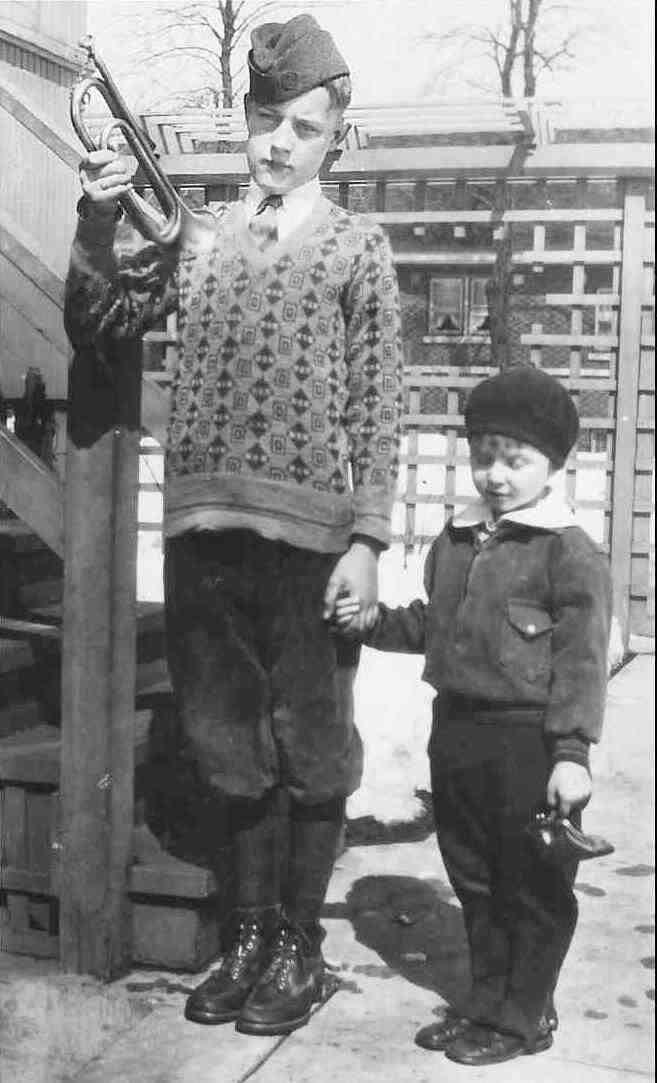
Knickers were very commonly worn by American boys in the 1930s. Knee pants were no longer common in the early 30s and had disappeared by the end of the decade. Knickers were especially common in the early-30s. Older boys were less likely to wear them, but they were still very common. A good example is an air show about 1930. Several boys can be been in the photograph and they are almost all wearing knickers. There were social class factors here. We believe tha knickers were more common with middle-class than working-class boys. Probably boys attending an air show were from middle-class or other affluent familirs. Knickers were very common in primary (elementary) schools. Most boys wore knickers with long stockings or knee socks at the behinning of the decade. By the end of the decade we see more and more boys wearing ankle sicks with knickers. Younger teens might wear them to high school, but this was much less common by the end of the decade. Younger boys might wear short pants, but here social-class factors were involved. Short pants were most common among affluent familirs especially for boys beyond 6-7 years of age. Shorts by the 30s were to some extent seasonal. we see quite a number of boys wearing shorts in the summer, especially in the South. Perhaps even more important were other factors such as age and family conventions. Some boys wore shorts even in the winter. We see more and more boys wearing long pants which were quite common by the end of the decade. Boys in rural areas still often wore overalls, even to school. A major trend in the oants mnerucan boys wore during the 1930s was a continued trend for increasing informakity in dress. We continued to see fewrer boys wearing suits, especially to school. We no longer see primary-chool boys wearing suits to chool, although we do still see sime biys at scondary school weafring yits. This meant fewer boys were wearing suit pants and increasingly pants purchased separately for eveyday wear. A new boys' clothing item appeared in the late-1920s-short sets. These were coordinated button-on shirts and pants--usizlly short pnts. They were coordinated, usually color coordinated. They became a major fashion item for primary school boys. They would become standard fashion itens in mail order catalogs throughout the 1930s abd 40s. Button-on styling went out of style by the 1950s.
Scouting became a major activity for boys in the 1920s. American Boy Scouts continued to wear knicker-like leggings in the 1930s. Most Scouts around the world wore short pants. There was a dhort onts option, but most American boys for the most part only wore shorts at Scout camps. The BSA finlly created a Cub program (1930). The Cubs could choose knickers or short pants.
We see a ranhe of pants types during the 1930s. Age was the principal factor. Fashion trends and age conventions shifted substantially during the decade. Knickers were very commonly worn by American boys in the 1930s. This is apparent from both the photographic record abd period retail catalogs. Most boys at the beginning of the 1930s wore knickers. Knee pants were no longer common in the early-30s and had disappeared by the end of the decade. Knickers were especially common in the early-30s. Older boys except for yourger tenagers were less likely to wear them, but they were still very common. Older boys began to wear long pants and by the end of the decade many younger boys had also began to wear longs. We begin to see a few younger boys wearing lon pnts in the early-30s and by the lte-30s long pants were very common but not universal even for little boys. Younger American boys might wear short pants, especially during the summer. This was very common for pre-school and younger school-age boys. Here regional and social-class factors were involved. Most American wanted knickers or as the decade progressed, long pant, after they began school.
We note American boys weafring many types of pants or trousers during the 1930s. We notice long pants, knickers, and short pants. KnickersThe dominate style of pants for most boys during the most of the 1930s was knickers. Long pants were growing in popularity and by the end of the decade had begun to replace knickers as the most popular pants style for boys. Knickers wre the most common pants for school age boys, at least until the began high school. Some younger teens might wear knicktrs, but this was becoming less common by the 1930s. Most boys in high school wore long pants. Yonger boy might wear shoryt pants, both for play and dtrssing up. We notice some short psnts suits, but they were not very common for boys over 10 years old. Generall long pants slowly became ncreaingly common as the decade progressed. We notice overalls being worn in rural areas. Younge children wore snow suits which had sppecial pants with a stirup arrangement at the leg hem.
American boys wore all kind of pants and trousers during th 1930s and this varies over the decade with long pants becoming inceasingly popular by the end of the decade. Becausev of the varied type of pants and changing popularity, the age conventions are complicated. There were also seasonal variation. A major factor in pants selectiomn during the decade was age, but his varied from family to family. Knickers were very common for boys throughout the 1930s, although the popularity of knickes had declined considerably by the end of the decade. W nomlongers older tens wearing knickers. Younger teens might wear them to high school, but this was much less common by the end of the decade. wemostly see knickers in grade or elkementary (primary) school. We see mostly school-age boys wearing knickers outside of school as well in the 1930s. It was less common for teenagers tonwear them, except for soomevyournger teens, especially in the early-30s. Some mostly younger boys wore short pants and some mostly older boys wore long pants in the early-30s, but by the end of the decade, long pants were becoming more prevalent. Short pants usage varied. Some boys, mostly younger boys, wore short pants all year round. Shorts werecespecially common with pre-school boys and boys just beginning school. This was less common in thevnorthern states, although boys wearing shorts might wear long stockings during the winter. Other boys wore shorts seasonally. Some boys even younger boys did not wear shorts. We also see different usages. Some boys wore short pants suits while other boys just wore shorts as casual msummer wear. This also varied with age as well as social class.
Social class affected the type of pants boys wore. A good example is an air show about 1930. Several boys can be been in the photograph and they are almost all wearing knickers. There were social class factors here. We believe tha knickers were more common with middle-class than working-class boys. Probably boys attending an air show were from middle-class or other affluent families. Younger boys might wear shortpants, but here social-class factors were involved. Short pants were most common among affluent familirs especially for boys beyond 6-7 years of age.
Knickers were very common in primary (elementary) schools. Boys in rural areas still often wore overalls, even to school, but this was not as common as in the 20s.
A major trend in the oants mnerucan boys wore during the 1930s was a continued trend for increasing informakity in dress. We continued to see fewrer boys wearing suits, especially to school. We no longer see primary-chool boys wearing suits to chool, although we do still see sime biys at scondary school weafring yits. This meant fewer boys were wearing suit pants and increasingly pants purchased separately for eveyday wear.
A new boys' clothing item appeared in the late-1920s--short sets. These were coordinated button-on shirts and pants--usizlly short pnts. They were coordinated, usually color coordinated. They became a major fashion item for primary school boys. They would become standard fashion itens in mail order catalogs throughout the 1930s abd 40s. Button-on styling went out of style by the 1950s.
Scouting became a major activity for boys in the 1920s. American Boy Scouts continued to wear knicker-like leggings in the 1930s. Most Scouts around the world wore short pants. There was a dhort onts option, but most American boys for the most part only wore shorts at Scout camps. The BSA finlly created a Cub program (1930). The Cubs could choose knickers or short pants.
The American hosiery industry truly began to flourish in the 20th century. Cotton, wool, and combinations of these fabrics in vivid colors and patterns caught the fashionable man's fancy. It was also during this period that sports hose in knitted wool, mixtures of wool and silk, and wool and cotton gained in popularity.
Most boys wore knikers with long stockings or knee socks at the behinning of the decade. Almost all boys wore long stockings and to a lesser extent knee socks in the 1920s. This changed in the 30s. We note boys moistly wearing knee socks with knickers. Bright colored knee socks became popular. ,We also see short socks. Long stockings were also worn during the winter. Long stockings were declining in populrity, but quite a number of younger boys wore them. Tan colors had largely replaced black stockings, except for formal occassions. And older children might wear long stockings for formal occassions. We seen many boys wearing knee socks with knickers. During the summer and for school we note boys beginning to wear ankle socks with knickers. This is something we rarely see in the 1920s. A factor here may have been long pants. Knickers were widely worn in the 1930s, but as the decade progressed we see more and more boys wearing long pants. We are not sure what kind of hosiery was worn with long pants, but suspect it was mostly ankle socks.
Some boys wore short pants, but not nearly as commonly as in Europe. By the end of the decade, ankle socks were becoming the standard hosiery even with knickers which were going out of style.
Until after World War I, the choice of pants was not seasonal. The materil might be seasonl with hevier woolen materials worn during the winter and lighter cotton materials worn during the summer, but not so much the type of pants. Boys wore knee pants/shorts or long pants primrily based on age and family choices, but was not a sasonal matter. This began to chsnge in the 1920s, but were more pronounced in the 1930s. Shorts by the 30s were to some extent seasonal. we see quite a number of boys wearing shorts in the summer, especially in the South. Perhaps even more important were other factors such as age and family conventions. Sunshine was increasingly seen as healthy for children which was nother factor. Some boys wore shorts even in the winter. We see more and more boys wearing long pants which were quite common by the end of the decade.
There were both dress aand play pants. Some were purchased specifically for one use. Here there were social class conventions. Boys from more sffluent damilies might hve wardrobes with items specifically for both. Boys from less affluent families might have pants which were intially worn for dress-up occassions and school and then became play pants as they hegan to show the wear.
American boys in the 1930s wore suits with short pants, knickers, and long pants. Short pants suits were mostly worn by younger boys, although some older boys, especially boys from afluent families were more likely to wear them. Most American boys wore knicker suits, although not as commonly as in the 1920s. Most older boys had long pants suits.
Long pants were becoming increasingly common. We see many boys wearing long pants for play. This varies quite a bit. Knickers were still very common, especially at the beginning of the dacade. Still we see large groups of boys all wearing long pants fior casual events and play. There were also social class conventions. noys from well-to-do famolies were more likely to wear knicjers and shorts. Casual and play shorts were also worn mosly by younger boys--mostly during the summer. Somewhat older boys might wear play shorts, but even play shorts were not commonly worn by boys past elementary school. Many boys went to camp during the summer. Some of the more expensive camps had uniforms. Usually shirts with the camp logo and short pants. Some of these shrts had a vertical stripe on the side.

Navigate the Boys' Historical Clothing Web Site:
[Return to the Main 20th century U.S. pants type page]
[Return to the Main U.S. pants type page]
[Return to the Main U.S. 1930s page]
[Introduction]
[Activities]
[Biographies]
[Chronology]
[Clothing styles]
[Countries]
[Essays]
[Bibliographies]
[Contributions]
[FAQs]
[Glossaries]
[Images]
[Registration]
[Tools]
[Boys' Clothing Home]