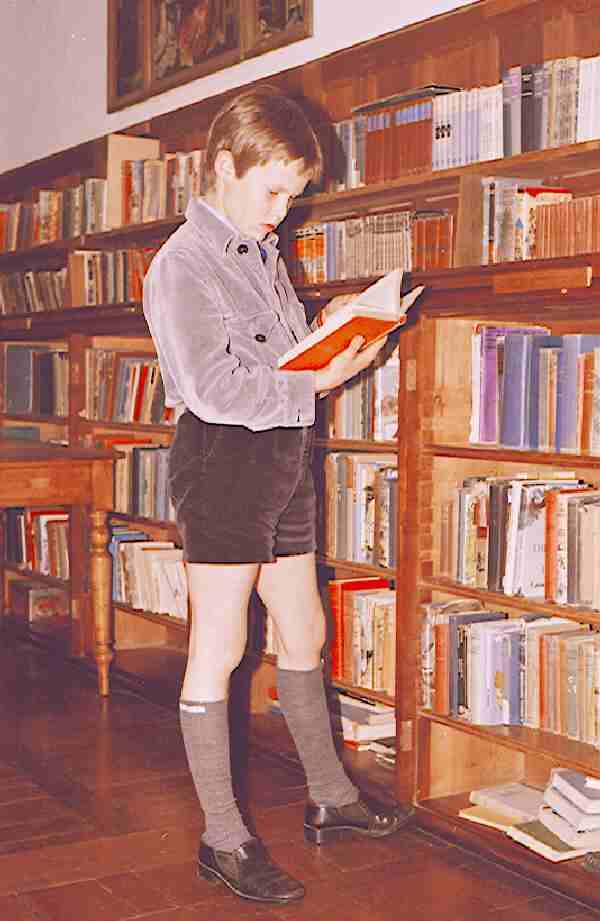
Figure 1.--While many preparatory schools have given substantial attention to sports facilities. We note that often the libraries are a rather neglected school facility. The library at this school, for example, was quite limited. |

|
A series of photo essays on different aspects of the British preparatory school experience can be viewed in this Apertures Press E-Book. Our photo essay here will eventually be a separate volume II of our British Preparatory Schools E-Book. As we are still working on Volume I, we thought that readers might like to have a look at the early stages in the development of the Photo Essays Volume II before we separate it from Volume I. We will add drawings, snipets of written work, and quotes from the children as well as material provided by the staff describing the schools and their educational programs. All this written material is designed to to help illustrate the photographs and to give an idea about what is on the mind of the the childeren pictured. The photo essays will cover all aspects of prep school life from beginning school in the morning to going to bed at night and is arranged in a kind of rough daily schedule order.
Our goal in visiting British prep schools was to creat a realistic mosaic of prep school life. We did not want the idealized, posed images one sees in schol prospectuses. Rather we wanted to capture what actually transpired at the schools every day. We what to record what the childrenb actually experienced during the school day. A complication here was that our presence and cameras imposed a rarity that tended to attract their attention. And of course we wanted them to go about their normal activities and ignore us. This was aittle complicated in that our visits were normaslly one-day events. So we attempted to develop a raport with the children to put them at ease. This normaly developed in morning vbreak where we goit lots of questions about our project and equioment. And I got questiins about America. We found that the children quickly got used to the cameras after the first few ophotograohs were taken and we could get diown to the business of compiling realistic photographic essays.
The children at boarding schools generally get up about 6:45 or 7:00 am. There is generally a bell or prefects to wake the children Getting up in the morning. They then wash up. get dressed, and make their beds. Then there is breakfast. The day children begin to arrive soon after breakfast.
The day children depending on where they live often have to get up before the boarders because of the commute. There are of course many ways of getting to school. A few day children are lucky to live close enough to school that they can walk or ride their bikes. Here they have yo live fairly close to the school. In the case of most private schools this is usually only a small number of the children. Riding bikes has become less common in recent years. At many day schools the children come by train or busses. Many boarding schools have a school bus. Also many parents drop off the children by car. Most schools require the day children to wear the full uniform with blazers and ties. Some schools also require caps, although by the 1980s that was becoming less common. Many schools believe that smartly dressed students are a good avertisement for the school.
Prep schools used to be very strict about hair cuts. They did not normally require short back and sites cuts, but the styles were definyely on the short side. Attitdes about hair changed considerably and the prep schools for the most part decided go go with the flow. We note a range of different styles in the 1980s. Most schools allowed the children considerable lattitude here as long as the hair was ke[t reasobanly near and off the collar. Here schools varied. Some schools continued to be very strict about hair styles. Sone schools have a barber come to school on a regular basis. Other schools let the parents handel hair cutting. Headmasters might, however, have boys whose hair is demmed beyond the pale visit a local barber. Girls cut for the most part left up to the individual as long as nothing exotic appears.
The traditional prep-school program began for boys about 8 years of age. Early prep-schools were flexible about this, but fter World War I, increasinglt the schools became more strict boy the age of entry. After World war, escpecially by the 1970s, prep schools became establishing pre-preps. They varied as to the age of entry, but commonly they dealt with children 5-7 years of age. There were many reasons for this development. There was the obvious academic purpose of ensuring that the children were properly prepared for preparatory school. Having a pre-prep ensured that the children could move seemlessly into the preparatory program. It also should be remembered that prep schools are all small businesses. Having a pre-prep ensured a continuity of new entrants into the preparatory school.
The classes at most prep schools are called forms. There are normally six forms, not includingb the pre-prep that many prep schools now have. Some prep schools use other terms, but form is by far the most common term. This term is used at the public schools and thus is the most widely used term at the prep schools. Normally the youngest children who begin at age 8 years are the Ist formers. The oldest children are the VIth formers who begin the form at age 12, but many are 13 when they finish. The coed prep schools normally have apprimately the same number of boys and girls in the first-fourth forms, but because many girl's public schools want the girls to begin at age 11, there are fewer girls in the fifth and sixth forms. The form numbers are repeated in the public school. Thus a prep school boy completing the VI form, becomes a Ist form boy again at his public school. This same system was once used in the state system, but schools there are adopting an annul progression system, but this varies from school to school.
The modern prep school is a place bustling with activity. Academic subjects dominate the morning classes. Going from class to class one sees a wide range of academic activities. The teaching styles varies at different schools as well as from teacher to teacher. Some schools persur rather traditional approaches with the children quietly listening or intent on the assignments at hand. One headmaster at a Staffordsgire school commented as he toured with us the quiet classrooms in the large country house serving as the school's main building, "You wouldn't think that these classrooms were full of boys." It is not all quiet activity at the midern prep school. Most schools have adopted a variety of modern, innovative approsaches. The authors have been unifoirmily impressed with the purposeful activity that almost aklways is observeable.
Of course there are all kinds of activities going on in the prepschool classroom. Many of the schools are quite traditional with the teachers seated at their desk giving a lesson to the children facing him or her lestening and taking notes, but there is much less of this than there used to be. Increasingly younger teachers are introducing all kinds of innovations to classroom work. Of course this varies with the subject matter. Science in particular permitted all kinds of interesting demonstrations which can easily interest the children. The art class is a favorite of many children permitting all kinds of hands own activities. The computer is also making a difference in some classes, although this was still relaively limited in the 1980s. And during the summer term there were a variety of activities that can be conducted outdoors.
All of the schools when we visited were beginning to integrate computers into the school program. Various schools were at different stages of this process. Many teachers, especiallu older teachers were unfamiliar with computers. Families at the time were just beginning to acquire home computers and so many of the children were also unfamilar with basic computer skills. There was, however, great interest, especially among the boys. Every school had at least somr boys who had achieved considerable computer literacy. Most schools had begun computer classes in basic skills and programs. Actually using computers in the classroom was still limited, in part because suitable educational programs were just beginning to appear and the intenet was still it a very early phase of development. Thus computing was both a classroom and extra-curricular activity.
Morning break is the term for recess at most prep schools. Normally it is about 11:00 am and weather permitting it is a time frentic activity for about 15-20 minutes. The children have spent the morning in their classrooms and this is a time to let off a little steam. Normally the boys choose a variety of active games. Girls often persue more sedate activities during the break. Here the popular games depend on the school and the age level. The younger boys may head for the playground. Many schools have suitable platground equipment. Okldrboys may choose a variety of active games. Some but not all all are sports related. Cricket batting using a tennis ball is popular. Various tag and a kind of dodgeball game are also popular. Some schools offer a little snack.
While many preparatory schools have given substantial attention to sports facilities, we note that often the libraries are a rather neglected their school library. While this is not the case of all prep schools, we have noted that a substantial number have very limited libraries. Quite a few have no dedicated library at all, but have a small collection of books in a multiple-use room. One school had a small collection of books in the billirds game room. Other schools have a library in a small room. Generally speaking the book collection is very limited meaning that there is little opportunity for the children to learn research and library schools. Some schools had reasonable libraries, but generally speaking even the best prep school linraries were inferior to the libraries at most state primary schools. I'm not surejust why the prep schools have generally given only limited attention to building school libraries.
The children's taste in reading mterial is quite electic. The titles of course vary over times. Children's authors like Roald Dahl are popular with the younger children when we visited in the 1980s. We saw the boys reading The BFG and James and the Giant Peach, but other titles were popular as well. The girls enjoyed the popular series like Nancy Drew. Throughout the schools children can normally perusing a variety of non-fiction books. Boys and girls differewidely on the books chosen. The boys tend to favor books on dinasaours, other animals, adventures, military history, cars, and sports. The girls often choose books on animals (here dinasaours are not such a favorite but horses are), and dance. The older children at about 12-13 years old begin to choose more adult novels. Mysteries seemed to have been especially popular. Most prep school strongly promote free reading. Some schools carefully monitor reading to make sure the children "suitable" books. Usuall the children are not allowed to read comic books, but this varied from school to school. The children also read a variety of magazines and often the older boys brgan to show an interest in newspapers.
Most schools have lunch about 1:00 pm after morning classess. Some may have lunch a little earlier. The boarding schools all have dining rooms providing cooked meals. The food, seating arrangements, and other matters vary from school to school. The situation is a little more varied at day schools. Some have dining rooms also, but the children at many day schools bring bag lunches. There are varing approaches to supervising the lunch period at the different schools. On nice days the children may have impromtu picnics. Other schools have the children eat indoors. This depens in part on the facilities available Of course during the Winter and on days with inclemate weather they have to eat indoors. The schools also vary as to what happens after lunch. Day schools tend to give the children free play time after lunch. This is also the apprach at state schools and secondary schools. Preparatory boading schools tend to have a rest period for the children.
While academics have become increasingly important at the modern prep school, games (sports) continue to be important at most schools. This of course reflects the public school tradition. Most readers will be familiar with the Duke of Wellington's remark that the Battle of Waterloo was won on the playing field's of Eton. The prep schools after all are geared to prepare children for public schools. Here the ballance varies greatly from school to school. This is something prospective parents should seriously consider before selecting a school. Some headmasters place great importance on games. We have even known headmasters to get in fist fights on the games field--although that of course is quite rare. Schools have fixtures, mostly with other prep schools near by. The principal games for boys are cricket and rugby and now football (soccer). Field hockey was once common, but has gradually lost out to soccer. The girls compete in netball and hockey. A considerable part of the afternnon at most schools is devoted to games. Here the emphasis is on the main sports and individual coaching is provided. Attention is also given to other sports like track and field. The younger children might play games like rounders.
Life at British prep schools tends to be very structured. With classess, games, meals, rest time, musical instrument practive prep, and other scheduled activities, the children do not have a lot of free time. Thus for many their free time is very precious. The children use it in a variety of ways, depending on the time and weather. Many younger children like free play, building forts or playing ad hoc games. There are also inside recreation. Some schools have gym for various games or other activities like rollar skating. The schools have a good supply of board gamesand chess a prenial favotite. Several schools have model railroads. This is something that is difficult for boys to do in a small house, but with interested staff some schools have wonderful lay outs. Some children take the opportunity to go to the libray or read the newspaper. Generall television is not incouraged, except for the news. And now ith the computer, there are a whole range of interesting activities.
The demands of the academic program and the relatively short school day limits the special events poosible at day schools. Much more is possible at boarding schools whicjh have afternoons and the early evening to work with. There was considerable diversity from school to school on these special events. One of the most common special event is inviting gest speakes to give talks to the children which are normally called lectures. This can easily be worked into the schedule of a day school. Other special events are more workable at boasrding schools. We noted form competitions in dramatics with presentations of skits. There were also debate competitions staged. Another populasr competitions were quiz type affairs. Some holidays called for special activities. Two populasr holidays were Guy Fawkes Day and Christmas.
One of the fascinating aspects of prep schools like any school is of course the children. We have slected some captivating images of the children as they go about their daily routein. We not happy and sad children. Some having a good laugh and others deep in thought. We would love to give the children a penny for their thoughts. We notice others completely abosorbed in a book or other activity. These an many other experiences and emotions are all part of the daily life at any prepschool. Some of these images are posed with the children having fun getting theit photograph taken. Other images are candid portraits with the childre bblivious to our photographic activities.
Prep school students begin a 8 years of age and finish at 13. Boarders live and go to school together, spending more time with each other than their own families. Not all children begin at 8 or stay until 13. But some children starting in the pre-ptep sprnd even longer times together. The children become very close, not unlike brother and sisters. They know each other probably better than anyone ever will. As a result the children become vet good friends. They share not only school and sports, but meals and free times. Children can be cruel to each other, but with rhe proper guidance vey positive, suportive relationships develop. This was not always the case in British boarding schools, but this has changed. We noted very friendly atmosheres at almost all the prep schools we visited.
We found children at preparatory schools engaged in a wide range of activities beyond the academic program. Many activities were conducted at most schools. Other activities were conducted at only a few schools. Each school had its own unique range of activities and approasch to those activities. MOst schools scheduled days for clubs or occupations. Most schools offered some choice so the children could persue their interests, but this varied from school. The size of the school was a factor here. Also the schools generally incouraged the children to at least try new and different activities. Often children will only want to persue familiar activities or activities for which they already have some skills. For relatively small schools, most prep schools offered an impressive range of activities. A variety of factors affected the particular mix of activities offered. The interests of the children were similar at the different schools. Thus an important factor was the interests and skills of the staff.
British private schools began as boys schools. This was because at the time these schools began to appear in the Tudor period (16th century) that for the most part only boys were educated. Girls might be educated at home, but they were not sent away to bording schools. This was still largely the case when the first preparatory schools were opened (mid-19th century). Girls schools, both preparatory and public (private boarding) schools were subsequently opened. The larger number of chools were the boys schools. And all the really famous schools were boys schools. State primry schools might be coeducational, but almpst all of th private schools were single gender schools until well after World war II. This began to change (1970s). It was not a matter of reasessing educational methods and results. It was a financial matter. Britain experiencing serious economic problems in the 70s. As a result many chools experieced problems filling places, especially boarding places. Small schools away from major coties were the hrdest hit. Quite a number of schools closed at this time. One option that that the head masters nd governing boards had was to go coed. At a stroke this doubled the number of potential student. Some parents definitely wanted a single-gender school. Many others were uncommitted on the issue or actually preferred coeduction. Often this was for practical matters. Parents who had sons and dughters found dealing with the scheukle of a single school, especially for day children, was a matter of some convenience. Almost all of the schools that shifted to coeducation were boys' schools, few girls' schools did so. So by the late-1980s now the prep schools are a mix of boys, girls' and coeducational schools. The transition required some investment as separate facilities hd to be sorted out which often meant adding facilities. Many schools found a substantial change in the atmosphere of the school.
An important aspect of the prep school program is discipline. Probably in no other area is the contrast between the state schools and independent sector so obvious. It is also one of the major changes made at the school in recent years. A former prep school boy writes, "The pictures in the eBooks seem to date from the 1980s. When I was a my prep school in the 1960s, it was still common to use corporal punishment to which I can personally testify. By time depicted here, most prep schools had almost all abandoned corporal punishment and those still using it, reserved it for only the most serious matters. Aother reader writes, "By comparison with the inter-war years, discipline was more relaxed and punishment of whatever kind less severe. In the same way the whole ethos and atmosphere of prep schools had changed after a further 20 or 25 years, with the much more homely circumstances your eBooks describe." Unlike our readers. we have no experience from earlier years, but his comments confirm from what we have managed to piece together. While the discipline at the school seems somewhat relaxed that of course does not mean that the schools are not well disciplined. As far as I can see, the schools today are able to achieve the objectives of the discipline. A degree of discipline is needed in everyone's life. And teachers need a disciplined class if he or she is to teach. And the prepnschools today are clearly able to achieve both goals without resort to physical punishment. Some of the older teachers had a little trouble adjusting. But most schools made the transition sucessfully. A factor here was probably coeducation. And with very few exceptions, the schools seem happy places that the children enjoy attending and receive a first class education. This was not always the case in past years, especially for children not sports oeiented.
Going home for the day children is generally stasggered. The younger children go home first, especially the pre-prep. The younger prep school children go home a little later. Often their prep period is very short. Older children stay later. They have longer prep and are often involved in games, both mastches and practices. Again when going home the children are expected to put on the full uniform including ties and blazers and caps if the school still required them. Some schools also had footwear rules. Some schools are quite strict about the children being properly turned out at the end of the day. Other schools are more relaxed about this. A few children walk or ride bikes. Other takes busses or trans which is cmmon at day schools. Boarding schools may have small busses for the day children. Often parents pick up their children.
A lot goes on at school after the day children go home. Here the program varies from school to school. It also varies seasonally. Generally the children are allowed to stay up longer during the summer term with longer days. Of course thed schools vary considerably as to the facilities availavle for freetime activities. There can be free time, supervised activities like a free swim, tea (evening meal), perhaps some television (usually the news), prep, and finally bed time. Some schools give more attention to free time while others place greater emphasis on prep. The children's bed-times are staggered by age so the younger children go to bed a little earlier. The amount of time in the evening depends on the child's age. A separate eBook (Volume VI) to look specifically at boarding schools in more detail than our brief assessment in Volume II.
Most schools require the children to do some preparation ("prep") or homework every day. This is scheuled at various times, normally in the afternoon or evening. Here schools vary. Generally the younger children are given little or no prep, but prep is gradualy increased as they move from form to form. Prep is much more common in thr middle and senior forms. Schools have varying attitudes toward prep, but most schools assign at least some prep. Newlands like many other other schools believes that prep is "essential for the full benefits to be derived from the instruction given". Some offer the children more free time while others insist on more prep. At some boarding schools it constitututes a major part of the evening program. More commobly schools have the older children do aboit an hour of prep and then allow them to persue free time or organized activitoies before their bed time.
Many schools allow the boarders to have some free time in the evening rather than stressing prep. This varies from school to school. Some schools stress prep. Other give more emphasis on free time. Here the season affects the free time options. In thewinter it gets dark early. In the summer it stays light quite a while allowing some outdoor activities. The gymnasium is often open for a variety of activities. The children may use their skteboards, skate, or ride bikes--depending on the school rules. Board games are popular, especially in the winter term. Model building is another popular ctivity. Many schools have special rooms just for ctivities like this that the chikldren enjoy. The advent of computers have ipened up other possibilities. 2of course it is mostly the older boys that have appreciable free rime in the evening. The younger children are put to bed first and then the bed times are staggered by form level.
Bed time is well organized at the prep school. Unlike the situation at home ghere is no arguing about bed time. The acrual time is staggered by age. It often varies a little seasonally. A bell goes and the children of a certain age head for their dormitories. There is no fussing about staying up late. The times are set and that is that. Matron and her ssistabts are waiting for them to sort them out. Each age group is usually seoarated by about 15 minites or so. Once in bed there is a little time before lights out. The children can chat withb each other or read a little. The beds are covered with cilorful blankets and duvees. And most children have a stuffed animal friend or two. The school have had to limit this tonprevent a popularuon explosion. This in itself is a major change as earlier the boys woukd be teased about having a teddy. Here coeducation has made a big difference. The stuffed friends the older boys have are commonly the ones they brought to school as younger boys. The older you are, the older you get to stay up which means more free time. The school begins to get quiet as the younger children head off or bed. Usually the prefects get a littke extra time after the older boys head off for their dormitories.
Almost all British prep schools require the children to wear uniforms. These uniforms have varied widely from school and over time. The uniforms range in formality and at many schools are adjusted seasonally. Many schools require the children, boys and girls, to wear neck ties, but quite a number of schools are now more casual about uniforms and use open collars. Some times this is part of the seasonal change. Caps were once almost universal, but are now worn at only a few schools. Many schools have colorful blazers, bit they are usually not worn for classes and other activities. Some schools have corduroy uniforms. School scandals were once very common, but now not as widely worn.
