
World War II Campaigns: Italy--The Resistance
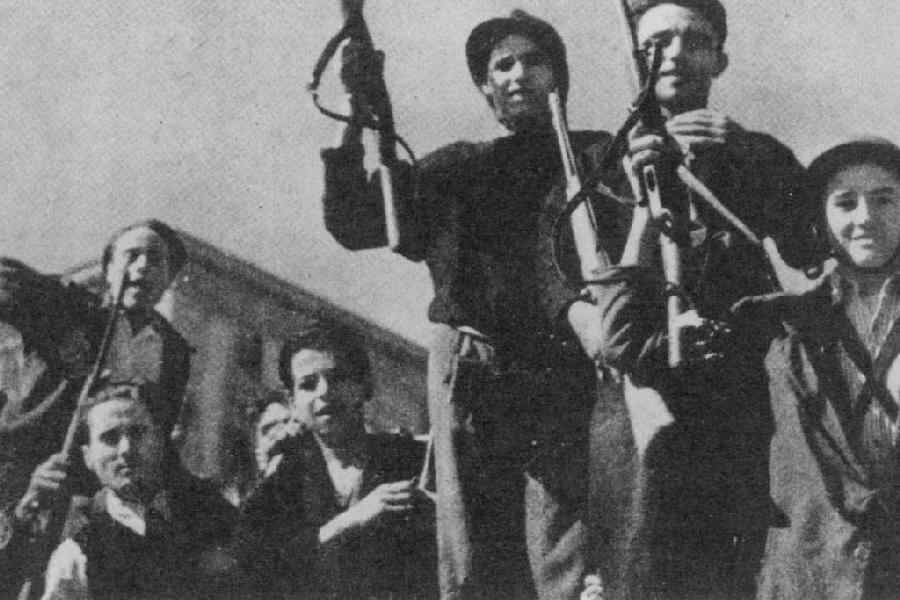
Figure 1.--The most successful action of the Italian Resistance occurred in Naples as the Allies were driving toward the city anbd its criticsally important port. The result was the famed Quattro Giornate,. Nsaples became the first city to rise up against the German occupation.
|
|
Although Italy was an Axis partner, anti-Fascist resistance groups played an important role in the Italian campaign, especially in the fighting north of Rome (1944-45) We have not much compiled much informsation on the Italian Resistance. As best we can tell Mussolini and his Fascists suceeded in supressing resistance to the rgime in the 1920s. Italy was a founding member of the Axis. And while there was no great enthusism for the war when Mussolini entered the War by declaring War on Britain and France and subsequently the Soviet Union and America. While there was no enthusism for the War, there was also no resistance to the War or the Fascist regime. This remained the case even after after terrible Italian losses in North Africa and the Soviet Union. And even after the Allied invasion of Sicily (July 1943), we do not note any major actions by the Resistance in Italy. Allied airmen shot down in Italy did not find the same Resistance network to get them home as was the case of The Low Courtries and France as well as Yugoslavia. This did not change until the Fascist Grand Council arrested Mussolini and even more importantly the Italian surrender (Armistice) (September 1943). The Italian Army did not offer effective resistance to the Germans. Anti-Fascist groups began organizing armed bands. When the Allies announced that Italy was surrendering. Hitler expecting this, ordered the Wehrmacht to seize control of Italy. Field Marshal Kesserling set up a defensive line in the south. Hitler assigned Rommel to intern the Italian Army. They were given the option of joining a Fascist militia or being interned. Units that attempted to resist were analilated. The Italian Navy as required by the armistice left Italian ports for Malta to surrender to the Allies. The Luftwaffe succeeded in sinking a battle ship with a remotely controlled missle. The Germans transported the POWs (both Italiahs and Allied soldiers) to Germany. The NAZIs also began roundups of Italian Jews and the conscription of workers for war work in Germany. The Italian Left which had been effectively silenced by Mussolini began organizing to confront the NAZIs and their Italian Fascist allies. Some soldiers mamaged to evade capture and internment and organize resistance cells. In addition, German brutality towrd civilans also help motivate Italians civilians to form resistance units. The conscription of workers as in France also fueled the Resistance. The Italian resistance was largely organized along political lines. The Resistance at first was primarily involved with assisting Allied trops (1943-44). This changed after the liberarion of Rome (June 1944). The Italian resistance essentially began at this point. Young people who rose up formed the nucleus for the Resistance that would play an important role in the campaign against the Germans and Fascists in northern Italy. The Resistance organized larger units that actualy confronted the Germans and Fascists, although experiencing heavy losses. They also organized non-military resistance such as strike actions. The main goal of the Resistance was to drive the Germans out of Italy. The timing of final German surrender was more the result of insurections in northern cities (Genoa and Milan) than impending Allied assaults. [Katz] It was Italian partisans that captured and hung Mussolini (April 1945).
Although Italy was an Axis partner, unlike Germany and Japan. a substantial resistabce did form in Italy. Italy was a founding member of the Axis. Germany, Italy, and Japan signed the Tripartite Pact September 27, 1940. The agreement allied Germany and Italy (which were at war with Britain) and Japan (which was at war with China). Germany and Italy has since 1939-40 been at war with Britain. Japan since 1937 had been at war with China. The alliance did not require the partners to join these wars, but it did require them to come to each other's aid if attacked by any country. The alliance became known as the Berlin-Rome-Tokyo Axis alliance, or commonly the Axis. The three Axis partners recognized German hegemony over most of Europe; Italian hegemony in the Mediterranean, and Japanese hegemony in East Asia. After the Axis agreement was signed, several German allies joined the Axis, notably Vichy France and Fascist Spain refused to do so. Japan had no Asian allies, except for the puppet state of Manchukuo.
Early Italian Resistance
Italy had a very strong Communist and Socialist movement at the time of World War I which opposed Italy's entry into World War I. Mussolini himself had edited a Socialist newspaper. He and his Fascist movement suppressed the left-wing opposition. The methods were not as brutal as the NAZIs, but they were brutal enough. As best we can tell Mussolini and his Fascists suceeded in supressing resistance to the regime in the 1920s. As a result, there was in the 1930s no effective resistance to Mussolini's Fascist rule. Unlike Germany, however, the Fascist seem to have meerly quieted the Socialists and Communists without converting them. And wven after Mussolini brought Italy into the War on Germany's side, there does not seem to have been any real opposition to Fascist rule. There certainly were anti-Fscists, but any effective opposition was not evident. [Pugliese] Mussolini was unable to generate any rel ethusism for the war effort. Many Italians did not understand why Utaly went to war. This was especially the case when Mussolini at Hitler's bequest declared war on America. It mistified many Italians why they were allied with Germany and fighting america. Even so, we do no see any open resistance even after rationing became increasingly strict or the truth about the disasters in North Africa and the Soviet Union began to filter through despite Fascist control of the media.
World War II (June 1940)
Unlike Wor;d War I, there was no real debate about Italy's entry into World War II. Nor was tgere any forml assessment in Goverment circles about the potential benefits are which side Italy should join. The Axis Alliance firmly tied Italy to the NAZIs. Mussolini's caution kept Italy out of the War after Germany and invaded Poland and Britain and France declared war on Germany. Ironically it was Soviet Russia that joined the NAZIs in invading Poland (September 1939). Fermny's ally Italy remained out of the War. British diplomats attempted to disuade Mussolini from entering the War. The NAZI success in their Western Offensive was stunning (Mau 1940). The spois of war were to much for Mussolini to resist. He declared war in Britain and France (June 1940). There was no great enthusian for the War, but neither was there any popular resistance.
First Phase of the War (1940-43)
From the beginning with the invasion of Greece (October 1940), the War did not go well for Italy. Italy despite two decades of Fascist rule, was not prepared to fight a modern European war. The Greeks drove the Italians back into Albania. The next Itlian offensive, invading Egypt (december 1940), also went badly. The British counter attack drove into Libya and onlt the intervention of the German Afrika Korps (May 1941) prevented Libya from falling. The sea war also went bady for the Italians. The Royal Navy defeated the Italian fleet at sea in a series of sharp clashes (1940-41). The Italian fleet was fast, but poorly armoured and had neither radar or aircraft carriers. Italians were shicked wihen Mussolini declared war on America (December 1941). Failure at se meant that the Italian and German forces in North Africa could not be adequately supplies. And after Allemaine (October 1942) and Operation Torch (November 1942), first Libya and then Tunisia fell to the Allies. Large numbers of Italian prisioners were taken. Large numbers of Italians were killed or taken orisioner in the Soviet Union after Stalingrad (1943). Sicily fell to the Allies (July 1943). While there was o resistance to the Fascists in Sicily, beither did the Sicilans see the Allies as invading army. Many Sicilians had worked in America or had family that had immigrated permanently. Allied successes in Tunisia and Sicily meant tht an air campaign could be initiated against Italy. These raids brought the War home to many Italians. While there was no enthusism for the War, there was also no resistance to the War or the Fascist regime. We do not note any major actions by the Resistance in Italy. Allied airmen shot down in Italy did not find the same Resistance network to get them home as was the case of The Low Courtries and France as well as Yugoslavia.
Itallian Surrender
Even after the militaty disasters, there was no popular resistance to the War. The Fascist Grand Council, however, removed Mussolini from power and arrested him (July 1943). The new Givernment under Marshal Bradoglio pledged to their Germany ally that Italy ould continue the War, but began secret negotiations with the Allies. The Italians surendered when the Allied invasion of Italy began (September 1943).
Resistance Born
Resistance in Itatly began to organize in 1943. The surrender in Tunisia was a factor (May 1943), but even more important was the allied invasion and occupation of Sicily (July 1943). Italian forces there offered little resistance. The fighting was done by the Germans. Sicilians received the Allies, especially the americans, as more like liberators than conquerors. The loss of Sicily led directly to the Facist Grand Council rempving Mussolini. This can be seen as the birth of the Resistabce movement in Italy. But the real turning point as the Italian surrender and the Allied and German invasions (September 1943). This is when we begin to read about Resitance actions. Anti-Fscists began joining the resistance and acting. [Gobetti]
Hitler had no illusions as to Italian intentions. He ordered powerful forces ibnto Italy, depite serious reverses on the Eastern Front. These forces moved quickly to seize control of the country with the Italian surrender to the Allies was announced. There was no effective resistance to the NAZIs, either by the Italian Army or anti-Fascist forces. This was in part because they had no orders. The Italian Army was xo closely tied to the Germans that any such orders would have probably been discovered by the Germans. The Germans rapidly disarmed the Italian Army and interned the men as POWs in camps in the Reich. Hitler assigned Rommel to intern the Italian Army. They were given the option of joining a Fascist militia or being interned. Units that attempted to resist were analilated. The Italian Navy as required by the armistice left Italian ports for Malta to surrender to the Allies. Fied Marshal Kesserling set up a defensive line in the south. The Luftwaffe succeeded in sinking a battle ship with a remotely controlled missle. The Germans transported the POWs (both Italiahs and Allied soldiers) to Germany.
Resistance in the Southern Campaign (1943-44)
As a result of the swift German action and Italian confusion, the Allies received little support from the Italians when they invaded southern Italy (September 1943). Anti-Fascist groups began organizing armed bands, but tghey were gebnerally nd poorly organized. . When the Allies announced that Italy was surrendering.Individuals Italians did offer assistance as scouts nd guides as the campaign developed. Some soldiers mamaged to evade capture and internment and organize resistance cells. In addition, German brutality toward civilans also help motivate Italians civilians to form resistance units. The conscription of workers as in France also fueled the Resistance. The Italian resistance was largely organized along political lines. The Resistance at first was primarily involved with assisting Allied trops (1943-44). The NAZIs also began roundups of Italian Jews and the conscription of workers for war work in Germany. The Italian Left which had been effectively silenced by Mussolini began organizing to confront the NAZIs and their Italian Fascist allies. After a long abd difficult campaign, Rome was finally liberated (June 1944).
While anti-Fascist resistance groups played only a minor role in the fighting south of Rome. This changed after the liberarion of Rome (June 1944). The Italian Resistance they played an important role in the northern campign whenb the fighting moved north of Rome (1944-45). This was important because the Allies withdrew forces from Italy for what was seen as the more important campaign in France. The effective Italian resistance essentially began at this point. Young people who rose up formed the nucleus for the Resistance that would play an important role in the campaign against the Germans and Fascists in northern Italy. The Germans oversaw a rimp-Fascist state set up by Mussolini in northern Italy. The Resistance organized larger units that actualy confronted the Germans and Fascists, although they were poorly equipped and experienced heavy losses. The Italians played a major role in the Po Valley (winter 1944-45). They also organized non-military resistance such as strike actions. The main goal of the Resistance was to drive the Germans out of Italy. The timing of final German surrender was more the result of insurections in northern cities (Genoa and Milan) more than impending Allied assaults. [Katz] It was Italian partisans that captured and hung Mussolini (April 1945).
Sources
Gobetti, Ada. Partisan Diary (2014), 384p. Gobetti's diary/memoir is an important narative of resistance to the Germans. It begins, however, with the German entry into her native Turin. The Resistance was essentially a non factor before the Italian surrender (eptember 1943).
Katz, Robert. The Battle for Rome: The Germans, The Allies, the Partisans, and the Pope, September 1943-June 1944 (Simon & Schuster, 2003).
Pugliese, Stanislao, G. Fascism, Anti-Fascism, and the Resistance in Italy.
CIH -- -- WW II

Navigate the Boys' Historical Clothing Web Site:
[Return to Main Italian campaign page]
[Return to World War II European campaign second phase page]
[Return to Main world War II country resistance page]
[About Us]
[Aftermath]
[Biographies]
[Campaigns]
[Children]
[Countries]
[Deciding factors]
[Diplomacy]
[Geo-political crisis]
[Economics]
[Home front]
[Intelligence]
[POWs]
[Resistance]
[Race]
[Refugees]
[Technology]
[Totalitarian powers]
[Bibliographies]
[Contributions]
[FAQs]
[Images]
[Links]
[Registration]
[Tools]
[Return to Main World War II page]
[Return to Main war essay page]
[Return to CIH Home page]
Created: 3:54 AM 7/31/2008
Last updated: 6:08 PM 6/14/2016