
World War II Country Trends: Egypt
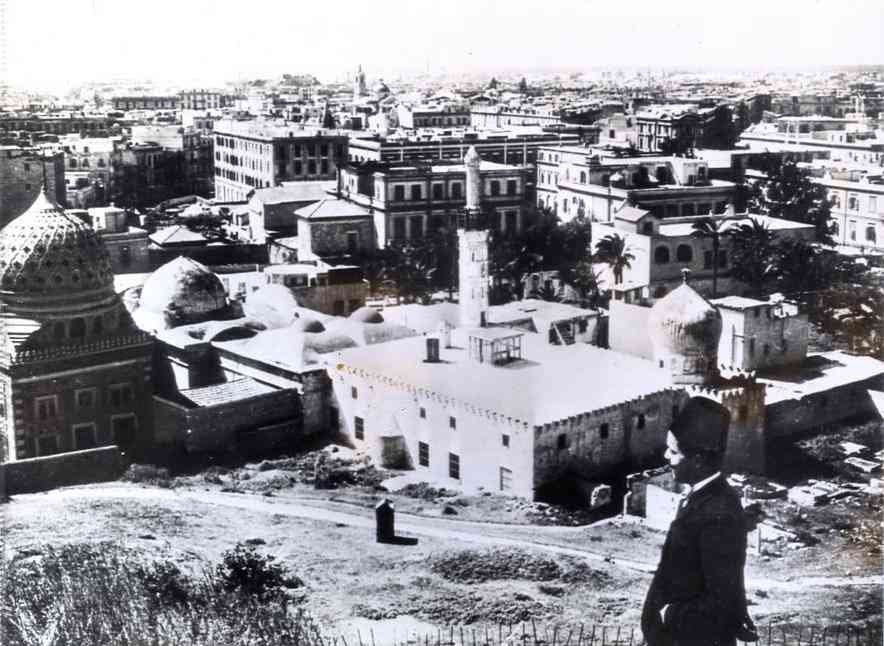
Figure 1.-- As rumors spread about Italy declaring war on Britain, the Egyptian government began moving children and the aged out of Alexandria. Thus was Egypt's major port with a key British naval base. The AP released this photo June 8, 1940. The caption read, "Women and Children Flee City: Growing fears of widespread war in the Mediterranean caused the Egyptian government today to send 6,000 children and aged men and women from Alexandria to the interior. Here is a general view of the city." Apparently AP did not have a photographer in the city to record the exodus and used a file photo.
|
|
Britain seized control of Egypt making it a kind of defacto colony (1882). The British interest was of course the Suez Canal which significantly shortened the sea route to India. The British granted Egypt independence (1922), but continued to station troops there and supported the royal Government, thus retaining political control. Egyptian forces played no role in the War, but the Suez Canal did. The British had it and the Axis, especially Mussolini wanted it. Mussolini ordered the massive Italian Army in Libya to invade Egypt (September 1940). A small British force defeated the Italians and drove them back into Libya (December 1940). The British drove into Libya and seemed poised to take Bengazzi. Hitler dispatched Rommel and a small German force which came to be known as the Afrika Korps. What followed was a see-saw battle in the Western Desert in which Rommel effectively taught the British the principles of modern mechanized warfare. Superior British forces, the interdiction of the Afrika Korps' supplies, and copious American supplies eventually led to the victory of the 8th Army at El Alemain (October 1942). The Axis persued a propaganda campaign to win over the Egyptian nationalists. The most imprtant faction was the openly Fascist Young Egypt movement. They decided not to openly attack the British and to await the Germans who never came. Colonel Gamal Abdul Nasser an early adherent of Young Egypt seized power after the War, overthrowing the royal government (1952).
Ottoman Emmpire
The Ottoman Empire conquered Egypt (16th century). It was for a time the most powerful state in Europe. It could have built a cabnal at Suez. There were ancient canals long since abbdined. in the area of Suez which had silted up before the creation of the current canal. The Ottomans could have easily built a similkar canal. Imprtant civil projects other than mosques and palaces were not important to the Ottomans. And unlike Europe, they had access to the East over the Silk Riad and with Indian Ocean (Arabian Sea) ports acces to the Spice route. The Ottomans did not needed Suez for a Passage to India. Their major concern was in denying Europe access to those valuable trade routes. The Ottomans lost cintrol of Egypt during the Napoleonuc Wars And by thw 19th century had neither the technivcal skill or the financial ability to build a canal. They watch enviously, however, as Britain and France built the Canal. When war broke out in Europe, the Sulltan decided to join the Central Powers and use German power to take back lands conquered by Russia as eell as the Egypt and the Canal.
India was the single most important colony in the British Empire. The most direct route between Britain and India led through Egypt even before the constructioin of the Suez Canal. The Suez Canal was completed (1869) and thus made Egypr of great strategic significance in world affairs. It was very important in world trade, connecting Europe with Asia. For the British it was a lifeline with India. It also had considerable militatry importance. The 19th century after the Npolenonic Wars was an era of rekauve oeace in Europe. The 20th century was not. The British allowed the Russian Fleet head for Japan to use Suez in 1905, probably unfluenced by growing concerns over Germany.
The debt ridden Egyptian government sold its share in the Canal to Britain. Whoever owned it, the Canal once built created an artifical, but immensely signinificantly new geographic reality. The Canal and thus Egypt was suddenly a strategic point that would significntly influce trade patterns and the ecoonomy. It thus bcame a factor in great power competition. Suez would be an important factor in Workd War I, World War II, the Cold War, and the Arab-Israeli conflicts. Suez became a major strategic assett for whoever possessed it. And an important militsry objective for those who did not.
Colonel Ahmad Arabi ('Urabi) and the nationalists gained control of Tawfik Pasha's cabinent (early 1882). Nationalist elements in the Army threatened the Turkish and Circassian officers. Tawfik Pasha himsel was in danger. Nationalists led riots in Alexandria and other port cities. This threatened not only Tawfik Pasha, but the Europeans living there. Both Britain and France dispatched warships to blockade Alexandria. The British landed troops and formally made Egypt a protectorate (1882). The growth of The British Empire is a complicated empire. Unlike many empires, the British were in many cases reluctant imperialists. This was represented by the long running differences between Benjamin Disreali and William Ewart Gladstone who dominated British politics in the mid/late-19th century. Disreali the Conservative argued to expand tge Empire. It was he who suggested Victoria become the Emperess of India.) Gladstone wanted to limit it. Gladstone did not forsee a prolonged occupation of Egypt or to formally seize political control. A factor here was the diplomatic consequences (the Sultan in Constantinople and other European powers), but the major factor was Gladstone's reluctance to further expand the Empire. Even Gladstone, however, was unwilling to abandon Egypt to the nationalists without securing Britain's position in Suez. And there seemed no way of doing this with a hostile nationalist regime. Thus a military presence ws deemed necessary. Subsequent colonial officials projected an extended British presence. The intervention was meant to be temporary, but British influence would be felt in Egypt into the 1950s. The British military forces would play a role in both World Wars. Some authors chage thzt Egypt was a virtual British colony, but in fact the British did not imtervene significantly in domestic administrarive measures. Their focus was on the Canal and on foreign relations. The British also played a major role in intriducing modrn technolgy to Egypt.
Egypt after the construction of the Suez Canal became strategically important in the Euroean power balance. It represented a key link in the sea lanes connecting Britain and India--Britain's most important ally. Tewfiq Pasha attempted to modernize the Egyptian economy. He rurned over financial control to the British who began to administer Egyot increasingly like a colony. Egyptian nationalists resented Tewfiq's seeming submission to the British. They compelled Tewfiq Pasha to appoint Ahmed Orabi as Minister of War. This was unacceptable to the Allies who shelled Alexandria and seized Ismailiyya. The Allies defeated Orabi's army at Tel El Kabir. The British reinsstated Tewfiq as a suseriant puppet. Orabi was exiled. Mustafa Kamil assumed leadership of the Egyptian nationalist movement. By the outbreak of World War I, Egypt has become essentially a tacit British colony--especially in ecoomic terms. The Ottomans entered the War (November 1914). The Sultan declared a Jihad, hoping to raise an Islamic revolt in Egypt. The Ottomans launched an unanticipated attack from Palestine, but were repulsed by Commonwealth forces after heavy losses. The Egyptian essentially remained neutrl. The British build up a substantial force in Egypt. They were reiforced by ANZACs. The British launched an offensive into Palestine and with the Arab Army supported by Col. Lawrence on its flank pulverized the Ottomon Army and seized Damascus (1918). Fouad become Khedive, but was consided under British control by most nationalists. Sa'ad Zaghloul demanded autonomy which the Brish rejected (1918). The British arrestedand deported him to Malta. This caused anti-British riots. After the War, the British ended the protectorate and recognized Egyptian independence (1922), although retaimed comtrol over the government, economy, amd most critically the Suez Canal. Fouad was proclaimed King of Egypt (March 1922).
Independence (1922)
The British in an effort to address the rising tide of Egyptian nationalism, granted Egypt independence (1922). The British did not, however, withdraw from Egypt. The British did promote a range of fiscal, administrative, and governmental reforms.
Muslim Brotherhood (1928)
The Grand Mufti of Jerusalem, Haj Amin el-Husseini, was at the forefront of resisting the British role in Arab coutries. Resistance was also developing in Egypt. Hassan el Banna founded the Muslim Brotherhood (1928). The Muslim Brotherhood from the beginning had links with thd Grand Mufti. The Brotherhood supported Palestinian actions against British administration and Jewish settlers, sending volunteer fighters (1936, 1939, and during the 1948 war). The goal of the Muslim Brotherhood was to establish Islamic states based on the Sharia (Islamic law) and to establish the Caliphate. This was a political regime based on Sharia and rule by a Caliph--a religious-political figure. While the Muslim Brotherhood has never seized power in Egypt, it has had a profound impact hroughout the Arab world.
Young Egypt Movement (October 1933)
Ahmed Hussein, a lawyer, founded The Young Egypt (Misr al-Fatah) movement (October 1933). It was an overtly Fascist political movement. The date of its founding was no accident. Hussein was impressed with Adolf Hitler and his NAZIs in Germany. How a lawyer could found a poliical movement based on the NAZIs who essentially rejected law is an interesting phenomenon. Young Egypt was a virtual paradoy on the NAZIs. Young Egypt had a paramilitary party militia, in their case with Green Shirts. There were also NAZI salute and Fascist slogans. They did not even bothere to create new slofans, but meerly tranlated NAZI slogans into Arabic.
Both Nasser and Sadat, future Egyptian presidents, were influenced by Young Egypt.
Egypt has arguably the oldest national army in the world. In more recent times, Egypt along with the Arab heartland was invaded and conquered by the expanding Ottoman Empire. The Ottoman–Mamluk War (1516–17) was the second conflict between the Egyptian Mamluk Sultanate and the rusing Ottoman Empire centered un anatolia. The Ottoman victory led to the collaose of the Mamluk Sultanate and the Ottoman annexation of the Levant, Egypt and the Arabian Peninsula into their Empire. The Arab heartland thus became Ottoman privinces. And the Ottomans became a minority in a huge empire with lsrge Balkan Christian and Arab Muslim populations. And it men that the Egypt and other Arabs no longer had a national army, although Arabs erved in the Ottoman Army. This situation continued for four centuries. After Napoleon's oncursion in Egypt (1798-1801), Ottomon governor Muhammad Ali Pasha seized of power in Egypt and declared himself Khedive of Egypt. Muhammed Ali esentially declaed inepenendence, but nomimally expoused fealty to the Ottoman Sultan. He began building the first Egyptian Army in four centurues knowing that the Ottomans would atempt to restablish control. He purchased modern European weapons and obtaind European military advisers. He was ths able to defeat the Ottoman Army sent to reeestablish contol. The Ottomans were by this time a decling power and referred to as the Sick Man of Europe. The Ottomans also began to lose their hold on the Chritian Balkans. Muhammed ali with his modern Army was able to detach the Levant and Hejaz from the Sutn, although the Ottomans were subsequently able to restablish control over these Arab-populated areas. Muhammed Ali's Egyptian Army participated in a sries of wars: the Greek War of Independence (1820s), Egyptian–Ottoman War (1831–33), and the Egyptian–Ottoman War (1839–1841). The Ottomans were unable to reestablish control over Egypt. Muhammed also used his Army to invade and conquer Sudan to the South, uniting with Egypt for the first time in millenia. Britain abd France constructed the Suez Canal whichopened (1869). Britian established a veiled protectorate over Egypt when nationlist forced threatened to seize the Canal (1882). Ahmed Urabi led a revolt against European and Ottoman domination of Egypt. Both Egyptian military officers and civilins were involved, but the Army as a whole did not resist. Egypt did not become a colony, but British advisrs wealed great influence. The Egyptian Army did not resist the British and French expeditionry force that put down the nationalist disorders. The British oversaw the modrnization of the Egyptian Army. The Egyptins were conflicted. These resented British interbention, but respected British wepons and professionlism. Egypt was involved in the Mahdist Revolt War (1881-99) in the Sudan which broke out when Islmic tribesmen resisted British effoirts to end the slave trade. Muhammad Ali began the construction of a new professionalmarmy along European lines. This process involved separating recruits from civilian life. Seculat military law was imposed. The new recruits were drawn from the Egytian fellah and not from Sudanese slaves or Mamluks. Thus the Army developed as a core institution in developing a sense of Egyptin natiinalism. Traditionally wives and family were allowed to follow the army as camp followers. This was the case in Europe as recently as the Napoleonic Era. The Egyptian adopted the pproach as modern European armies and ebded the practice. Recruits were isolated in barracks, military schools and training camps as the Egyptian began to build a modern professionl force.
the British replaced the independent-minded Khedive Abbas II with his uncle, Sultan Hussein Kamel, who was more compliant.
The Egyptian Army stayed neutral in World War I.
Egypt did not react to the Ottoman Sultan's call for an Islamic Jihad against Britain. After World War I, Britain recognized Egyptian independence, but insisted on a treary which maintained a military relationship to guarantee the security of the Suez Cana. The process toward full independence was arested ith the NAZI take iver in Germany (1933). Resentment within the Egyptian military grew and many young offiuvers were impressed with the NAZIs, seeing them as a potential ally in obtaining independnce. Few seemed to have stopped to think that the NAZIs were potentially much more brutal colonial masters and held racist views that placed the Arabs very low in their racial rankings. Anwar Sadat was jailed by the British for his pro-German activities. Misr al-Fatah had been in contact with German agents since the 1936-39 Palestine uprising in Palestine.
Sadat and other participants in the Free Officer movement also dealt with German military intelligence. Rommel's Afrikakorps advaced to El Alemine only 100 kilometers from Alexandria. They and much of the rest of the world expected them to reach Cairo in days (July 1942). Sadat and Nasser were in touch with the Germans. And in cooperation with the the Muslim Brotherhood they planned an uprising in Cairo to coordinate with the final German offensive. Preliminary discussions envisioned a treaty with the NAZIs. The NAZIs were more than willing to offer independence knowing that they could do with Egypt what they wanted after they won the War. A young Sadat promissed that 'no British soldier would leave Cairo alive'. After the Afrika Korps was stopped at El Alamein, the British arrested Sadat and his co-conspirators. They spent the rest of the War in a British jail. The Egyptian Army stayed neutral in the War, but would play a central role in the country's post-War history..
King Farouk (1936-52)
King Farouk rose to the throne (1936). The King became disliked by nationalists because of his willingness to cooperate with the British. His lavish. licetious lifestyle also became an issue with Islamicists. His reputation continued to decline during the War. He kept the lights of his Alexandria palace burning with the rest of the city was blacked out because of Axis bombing. Frouk also prevented his Italian servants from being interned by the British. Some say he told British Ambassador Sir Miles Lampson, "I'll get rid of my Italians, when you get rid of yours." Lampson was married to an Italian woman.) The Germans preceived the Egyptian political situation and did noy just deal with him. They conspired with Col. Nasser and the Free Officers Movement who in turn were working with with the Muslim Brotherhood to overthrow King Farouk.
King Farouk after the War made an Egypt a have for NAZI war criminals and unrepententent NAZIs. This included military and intelligence personnel and ranking NAZI officials. Many were hired as "advisors". The Free Officers movement finally succeeded in over thring Faroul.
Treaty (1936)
Britain and Egypt signed a treaty (1936). Egypt granted Britain thecright to station troops on Egyptian soil if needed to safeguard the Suez Canal.
Mediterranean Fleet
As Europe began to move toward Wat, the Royal Navy moved the the headquaters of its Medeterranen Wat from Malta to Alexandria, Egypt. Malta became vulnerable because it was in range of Italian air attaks from Sicily.
World War II
NAZI Germany invaded Poland laubching World war II (September 1939). The Egyptian Governent
declared its neutarality. The importance of Suez, however, caused Britain to make Alexandria and Cairo important military bases. At first this had only a minor impact on Egypt. NAZI Germany was far away from Egypt and the German surface fleet very week. British and French naval power was dominahnt in the Mediterranean. The fall of France radically changed the military ballance (June 1940). Not only was Britain now alone, but Italy with a powerful fleet and with army forces in neigboring Libya declared war. This brought the War to the borders of Egypt. It was not Egypt that the Axis wanted--it was Suez. Possessin of Suez wioukd turn the Mediterranean into an Axis lake.
Italian Invasion (September 1940)
Mussolini seeing French armies reeling from the NAZI invasion, declared war on France (June 10, 1940) He was afraid of losing out on the spoils. He also declared war on Britain. This meant that the Royal Navy was confronted with the prospect of fihting the mmodern Italian Navy. It also meant that the still small British Army in Egypt faced a massive militry force the Italians were building across the border in Libya. Unlike the French, the British successfully resisted the NAZI onlaught. The Dunkirk evacuation saved the British Army and te Channel stopped the Panzers. The Royal Air Force was able to fend off the mighty Luftwaffe. Thus the Italians would hve to fight. The Italians invaded Egypt with a force mny times the size of the British Army in Egypt. (September 1940). The Italians advanced ingto Egypt, but then stopped and set up a defensive position at Sidi Barrani.
Italian Community
Cairo before the War had a substantial Italian community. After Mussolini declared war, the British intenedcmost adult Italian males andcseized Italian property. The women were not interned, but left in poverty.
British Offensive--Operation Compass (December 1940)
The British struck back with a smaller, but more mobile force (December 8, 1940). Indoan soldiers played a prominant role. Opperation Compass as planned by Major-General O'Connor involving attacking the Italian rear. This was possible because the Italian positions were not cloes enough to provide interlockig fire. Thus the British attacked through a gap in the defenses south of Sidi Barrani. The British attack was conducted with great secrecy. Most of the participting troops thoughtv they were involved in a training erercise. The British supported the attacking force with 25 pounder (11 kg) artillery and Blenheim bombers. They had a small number of Mk.II Matilda tanks. The British offensive was a huge success. Italian General Pietro Maletti was killed and 4,000 Italian soldiers surrendered at the onset of the fighting. In the first 3 days of the fighting, the British captured 237 artillery, 73 tanks, and 38,300 Italian soldiers. The Italian position collapsed. The British took huge numbers of prisoners. The Italians that could fled back into Libya. The British advanced west along the Via della Vittoria, through Halfaya Pass, and captured Fort Capuzzo in Libya. The 7th Armoured Division cut off the Italians attemoting to retreat. The British moved 800 km, in 10 weeks, reaching El Agheila. The British destroyed 400 Italian tanks and 1,292 artillery pieces and capturing 130,000 POWs. British casualties were extremely light. They suffered only 494 fatalities and 1,225 wounded.
Greece (April 1941)
Just as the O'Connor reached Al Argheila and prepared to seize the rest of Libya, Primeminister Churchill ordered the offensive stopped. The NAZIs were preparing to sattack Yugoslavia and Greece. Churchill had pledged Britush support to Greece and sone if O'Conner's force was dispatched to Greece. Only a few weeks later, Rommel and the lead elements of the Deutsches Afrikakorps would reach Tripoli. The Greek expedition would opove to be another British disaster,
The Italian Arny retreated from Egyopt in dusaray (December 1940). It looked like the British would seize all of Libya. Mussolini pleaded to Hitler for assistance. Hitler chose an officer who proved himself in the campaign against the French--Erwin Rommel. The German force became known as the Deutsches Afrikakorps. The Germans began arriving (May 1941). This was Operation Sonnenblume. The arrival of the Germans changed the character of the Desert War. Admiral Raeder and ohers had argued Operation Felix, seizing Gibraltar and a Mediterranean strategy. A major objctive here was Suez. Possession of Suez would turn the Mediterranean into an Axis Lake. And beyond Suez wa the oil of Iraq, potentiually providing the hgermsch its single most important raw material--oil. And control of the Mediterannean would provide a secure passage for transporting Iraqi oil back to the Reich. It was the long way around, but meant that Hitler woud not have to take on the Red Army. Hitler was, however, having, none of it. Since the earliest point of his political career, Hitler was focused on the East. And he was convinced that the Red Army like the French Army could be defeated in a short summer campaign. He understood, however, it would be a massive undetaking. As a result he was he wanted no draining away resources from Barbarossa. He was willing to rescue
Mussolini, but ony with small firce that could stop thevBritish advance into Libya. The Afrika Korps began to arrive in Libya (February 1941).
CIH

Navigate the CIH World War II Section
[Return to Main World War II country page ]
[Return to Main World War II Italian page ]
[Return to Main World War II Arab page]
[Return to Main Egyptian history page page]
[Biographies]
[Campaigns]
[Children]
[Countries]
[Deciding factors]
[Diplomacy]
[Geo-political crisis]
[Economics]
[Home front]
[Intelligence]
[POWs]
[Resistance]
[Race]
[Refugees]
[Technology]
[Totalitarian powers]
[Bibliographies]
[Contributions]
[FAQs]
[Images]
[Links]
[Registration]
[Tools]
[Return to Main World War II page]
[Return to Main war essay page]
[Return to CIH Home page]
Created: 6:32 PM 3/6/2009
Last updated: 6:53 AM 12/13/2018