|
We notice a variety of facilities in various countries focused on children health. The most obvious insitution here are hospitals. But hispitals are generally for relaively short periods and the children in most cases are largely confined to beds. Some are sick children others are more related to children growing up in less than ideal circumstances and who would benefit from fresh air and sunshine. These are not precisely charity institutions. Many are run or financed by government agencies. This is particularly true in Europe as Socialist parties in the 20th century began to have an increasing impact on givernment policies. Our information on these institutions is still limited, but we have begun to collect some information. Institutions here include camps, group homes, sanitoria, and other institutions. Here we are talking about institutions caring for children from intact families and not institutions assuming permanent responsibility for the children like orphanages.
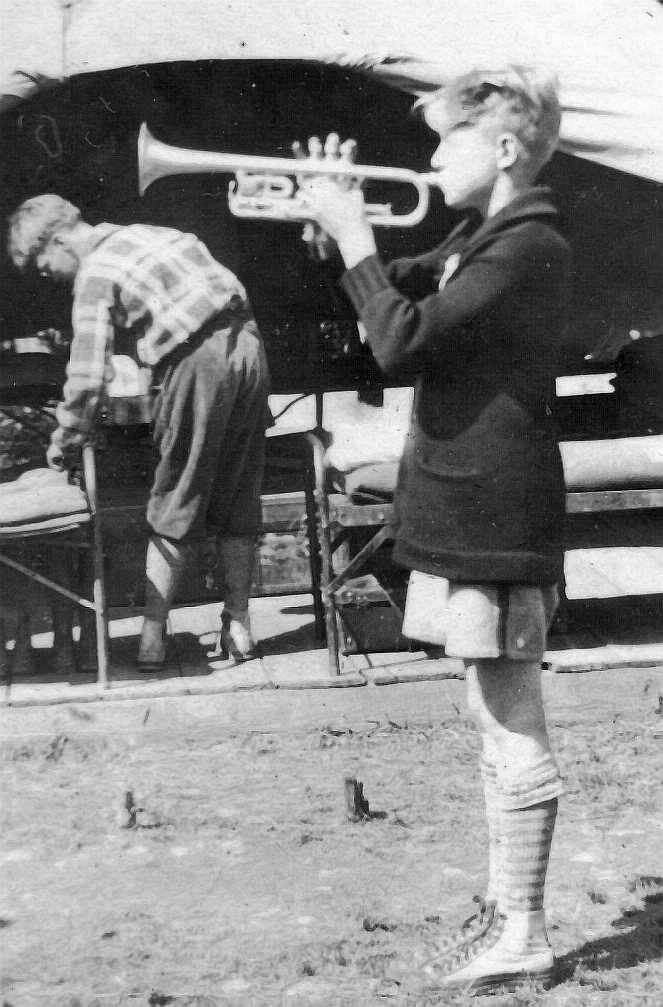
HBC has not yet found a history of the summer camp movement. We believe it began in the late 19th century, even before the devlopment of camps by uniformed groups. The summer camp movement appears to have been founded in America as a a way to get city children out into fresh air and sunshine. The YMCA played a major role in this effort. The first uniformed youth group to begin asummer camp program was the Boy's Brigade. The Boy Scouts after the turn of the 20th century promoted summer camping on a wider sacale. The Hitler Youth and Young Pioneers made summer camping available to virtually all children, regardless of their ability to pay. The popularity of summer camps has varied greatly from country to country and over time. The activities conducted have also varies. One current trend in camping is away from a rugged outdoor experience and more workshops on a range of activities like sports, dance, music, computers, and other interests. Usually boys wore their own clothes at these summer camps, but some camps had simple uniforms. The unifored youth groups that organized camps would use their uniforms.
We have noticed some facilities that appear to be group homes, although we are not enirely sure just how to classify them. We noted photographs from Germany that we first assumed were school photographs. A German reader, however, tells us, "I believe the photo isn't taken at a school, but at a children's home where the children had to take a cure, or at a children's school home, that's a place usually in rural areas, were the children can rest and learn something about the region they are staying at.
These places are instead of school lessons. Unluckily you can't read the sign clearly, perhaps you could locate the photo then. I think so, because the sourrounding looks too green for a school and the building has a large windows line, that suggest a sleeping room on the second floor." The German term for these homes is " Kindererholungheim " meaning "children's recreation home". Curiously, the photographs we have seen at these facilities show very healthy looking children. We do not know much about these facilities. We do not know when the program was begun or whether it was a national program or one financed by local government. Nor do we know how the children were selected. We are guessing that other countries had similar programs, but we do not have any details on such facilities at this time.
Going to the hospital can be a scary experience for children. Just going to the doctor and getting a shock can be unpleasant enough, but the hospital can be a very different matter for younger children, if only for routine treatments. A HBC reader has mentioned an interesting book written for children by Frances Chase, A Visit to the Hospital The illustrations are by James Bama. The book is a story written for children who might need to go into hospital for surgery. In this story the boy is going into hospital to have his tonsils removed. We follow him being given a reassuring talk about going into hospital by his older brother. His parents help him pack his suitcase. He goes to the hospital dressed in his best short pants suit. That might have happened in 1957, it certainly wouldn't happen today. When he arrives at the hospital he meets a boy coming out who is also dressed in the same way. He meets the doctor and smiling nurses. He is dressed in hospital clothes. After the operation the boy comes home and he finds a presents. He opens it up and finds it�s the fire truck he always wanted. The drawings illustrate the experience of the young boy�s hospital visit. This story was written to reassure children about what will happen to them in hospital. Both the child, the parents and medical personnel know that this can be a scary experience. The child knows he is going to feel pain. His mum and dad are worried about the operation and have to lrave their child behind who is suffering. They know they should be with him at this time. The doctors know that they will be able to heal the child quicker if the child is unafraid and comfortable and knows what the surgeon will do to make the child better.
Two German doctors in the 1890s began promoting sun light and fresh air as beneficial for patients aflicted with tuberculosis. Soon special hospitals called sanatoria we being built in many European mountainous regions, especially in the Alpine region (Austria, southern Germany and Switzerland. They were designed to maximize exposure to fresh air and sunshine. Puropse built facilities featured large balconies on which patients could lie in their beds without clothes or with minimal clothes. Here they could be exposed to fresh air and sunshine. Many German and eventually foreign patients went to these establishments.
We are just beginning to collect information about these santioria. While the initial concern was tuberculosis, the beneficial affects of fresh air, sunshine, and good food ws useful in treating other disorders as well. They are essentially hospitals devoted to the care of individuals with chronic diseases such as tuberculosis or mental disorders. The concept was expanded during the late-19th century to include facilities caring for people that were not really sick, but persuing a variety of "cures" to improve one's health. I am not sure if there were sanitoria specializing in caring for children, but suspect there may have been. Children were involved in these sanitoria both for treatment, but also because their parents needed treatment. In some cases the entire family might join the patient, often stating in near by homes. The staff of the sanitoria also had children and given the isolated areas in which the facilities were located, these children often had to be accomodated in various ways. A HBC contributor tells us about growing up in a small Swiss village where his father ran a sanitorium. We also notice schools adopting some of the same efforts to expose children to fresh air and sunshine.
We have noticed a number of hospital ships. These were generally not specificallfor children, but they were some of the major beneficiaries. The first hospital ship that we know of was the America Floating Hospital in New York City. It was founded as part of the St. John�s Guild of Trinity Church philanthropic efforts right after the Civil War (1866). The Floating Hospital fom the beginning served all families in need without regard to creed, color or nationality. At the time it was founded, the growing industrial cities in America and Europe did not have effective public health system. Some had no systems at all. As a result, they were experencing epidemics ranging from cholera to smallpox. The cities were also full of orphans and homeless children (mostly girls) working as child laborers as well as in America a growing strean of immigrant families. Families lived in slums and cramped tenements. The Floating Hospital continues to provide a health care safety-net for New York City's most vulnerable women and children. We note hospital ships during both World War I and II. They were especially important during the Pacific War. This gave military doctors and nurses access to very modern sophisticated eqyipment to treat the wounded and they could be located very close to combat areas. After the War, Project Hope (Health Opportunities for People Everywhere) was founded (1958). It was an American charity with the goal of bring modern medical services to developing countries. It ws best known fior the SS HOPE, the second peacetime hospital ship that we know about. It was the World War II hospital ship USS Consolation (AH-15). The organizers retired the SS HOPE after nearly two decades of service. It had made trips to Indonesia, South Vietnam, Peru, Ecuador, Guinea, Nicaragua, Colombia, Sri Lanka, Tunisia, Jamaica, and Brazil. The decesion was taken because of the enormous progress in public healt that was being made in the Thitd World. The emphasis switched to land-based operations. There are now organizations in Germany and the United Kingdom that are engaged in similar medical activities in the Third World. Despite their Socialist ethos, Communist countries made no comparable public health effort during the Cold War and the Soviet Union had a very sizeable navy. A related exception may be Cuba, although it id alittle difficult determining if the Cuba effort providing doctors go developing countries is a charitable act or an effort to earn hard currency. It is also notable that despite the importance of charity in Islam, none of the wealthy oil states have initiated such work.

Navigate the Historic Boys' Clothing Web Site:
[Return to Main institutional page]
[Introduction]
[Activities]
[Biographies]
[Chronology]
[Clothing styles]
[Countries]
[Bibliographies]
[Contributions]
[FAQs]
[Glossary]
[Images]
[Links]
[Registration]
[Tools]
[Boys' Clothing Home]