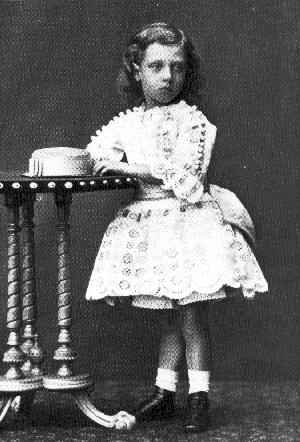
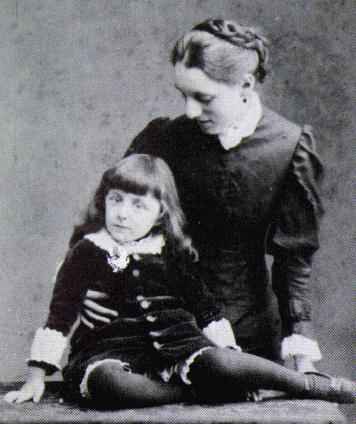
Figure 1.--This 1848 painting shows an 11-year old English boy still wearing dresses and lacey pantelettes to modestly cover his leg below the knee. Note his younger sister is not wearing pantalettes. |

|
Pantalettes are most associated with girls, but boys also wore them, especially in the early 19th Century. Boys and girls generally wore different style pantalettes, but pantalettes were not made and sold as gender specific garments. It was up to mother to decide who wore what style. Some limited information is available on the pantalettes worn by boys. They were most commonly worn in the early-19th Century, but did not entirely disappear until the turn-of-the 20th century. Styles varied over time. There were differences between countries over pantalettes.
Pantalettes were made in a wide variety of styles. There were no boys and girls styles, the same styles were worn by both boys and girls. The most common style for boys were plain pantaleetes with little or no lace trim or ruffles, however, this style was not exclusevely for boys. Pantalettes were also made in fancy styles with elaborate lace or ruffle trim. Some pantalettes also had extensive embroidery work. Often ribbons were threaded through the lace trim or ruffles at the hem of the leg. Fancy pantalettes were most common for girls, but many 19th Century mothers selected fancy pantalettes for their sons as well.
The different styles of pantalettes were often reflected in the gender of the child. Girls were more likely to wear fancy pantalettes and boys to wear plain pntaslettes, often called drawers. But there were not hard and fast rules here. The photograohic record shows many boys wearing fancy pantalkettes. anbd we see girlsing plasin pantalettes, although per haps ot as coimmonly as the boys wearing the fancy ones. We are not sure to what extent chronological periods and social class affected this.
|
Pantalettes were worn by girls into their teens as well as womem. They were, however, mostly worn by pre-school boys, primarily boys not yet nreeched or fully breeched. This is somewhat complicated by the fact that in the early- and mid-19th century, many younger boys were educated at home. This we so see some older boys including school-age boys wearing pantalettes. A good example is a boy in a painting by Rebecca Solomon depicting an idealized Victorian family. The painting was done in the early-1850s. The boy looks to be about 6-years old.
Pantalettes for children, both plain and fancy were an important 19th century garment. They were primarily worn by boys during the first half of the 19th Century. They did not entirely disappear, however, until the turn of the 20th Century. The length of the pantalettes varied based on fashion of the day. The major change over time was the length of the panatalettes. In this regard, boys pantalettes while generally plainer, but the length primarily reflected the length that girls were wearing. Early in the 19th century, women wore very long pantalettes with trimming at the for the part that showed under the skirt. Boys panralettes were also quite long. Even after the introduction of the hoop skirt, pantalettes continued to be fanciful because of an occasionally glimpse of the ankle was possible. Children by the 1860’s, however, were wearing shorter dresses and the the bottoms of the pantalette legs extended to just below the knees. After the Civil War even pantalettes for women and girls became plainer and eventually were referred to as drawers.
|
I believe the style of having boys in dresses and tunics wear pantalettes was a fashion throughout Western Europe, Britain, and America in the 19th Century, especially the first half of the 19th Century. I have not yet noted pantalettes in the 18th Century, but the style probably did appear in the 1790s. Clearly pantalettes were widely worn in Britain, France, and America. The number of images suggest that pantalettes were most common in America and England. However I believe that this is just a function of the fact that America and British images are most accessible to HBC. I have little information, however, on other countries. Hopefully some HBC visitors from other European countries can provide some insights on this. The fashion trends for pantalettes are probably primarily French and passed to America primarily through England. The fact that HBC has a number of American images is probably a function of the HBC's greater access to American images rather than a reflection of the relative popularity of the style in America. I have not yet been able to discern stylistic differences between the various countries or changes in those countries over time. The information I have at present is currently limited making it difficult to discern country trends and stylistic differences. There appear to have differences in social class affecting who wore pantalettes. Boys from affluent families were the most likely to wear them. Class differences appear to have been less in America, but still important. One of our difficulties here is establidhing gender in unidentified images.
Boys wore pantalettes with a wide variety of clothes, from dresses to pants for most of the 19th century. They were most common with skierted garments, especially dresses. One topic we are not entirely suyre about. Is petticoiats. We are not sure that pantalettes were worn with petticioats. While pantalettes were generally made and worn to be seen, his was not the case of petticoats. We see them with other garments as well. They were worn with kilt suits that were especially popular in America. This is often not apparent becasuse kilt suits were commonly worn at long length. Thus it is often not clear what the boysd are worn with kilt suits. Some imasges, however, do show pasntalettes. The garments worn changed as the century progressed. Interestingly at the beginning of the 19th century they were worn with dresses and long pants--long pants being at the time a destinctive boys' garment not worn by gentlemen. Pantalettes were not very coimmon with knee pants with the exception of Little Lord Faunleroy suits. We note them worn with both long stockings and short socks. They were worn wih different typoes of shoes. High-top shoes were mpre common in America than Europe. European boys were more likely to wear low-cut shoes klike strap shopes. Here it is not amatter of diiferent attitudes toward appropriasteness, but just that strap shoes were more common in Europe for both boys ahnd girls.
The style and length of pantalettes, along with other fashion trends, can help date an image or determine the gender of the children pictured in unidentified images. Thus a knowledge of this garment can provide useful indicators to assist in evaluating old photographs and paintings. The fanciest pantaettes, for example, were usually made for girls. Boys could wear quite plain pantalettes, although this was at the mother's whim and a boy could be dresses in nquite fancy pantalettes. It is likely, however, that a child in a short dress and long fancy ankle-length pantalettes is probably a girl.

Navigate the Boys' Historical Clothing Web Site:
[Return to the Main pantalettes page]
[Introduction]
[Activities]
[Biographies]
[Chronology]
[Cloth and textiles]
[Clothing styles]
[Countries]
[Topics]
[Bibliographies]
[Contributions]
[FAQs]
[Glossaries]
[Images]
[Links]
[Registration]
[Tools]
[Boys' Clothing Home]