
American Tunics: Colors and Patterns
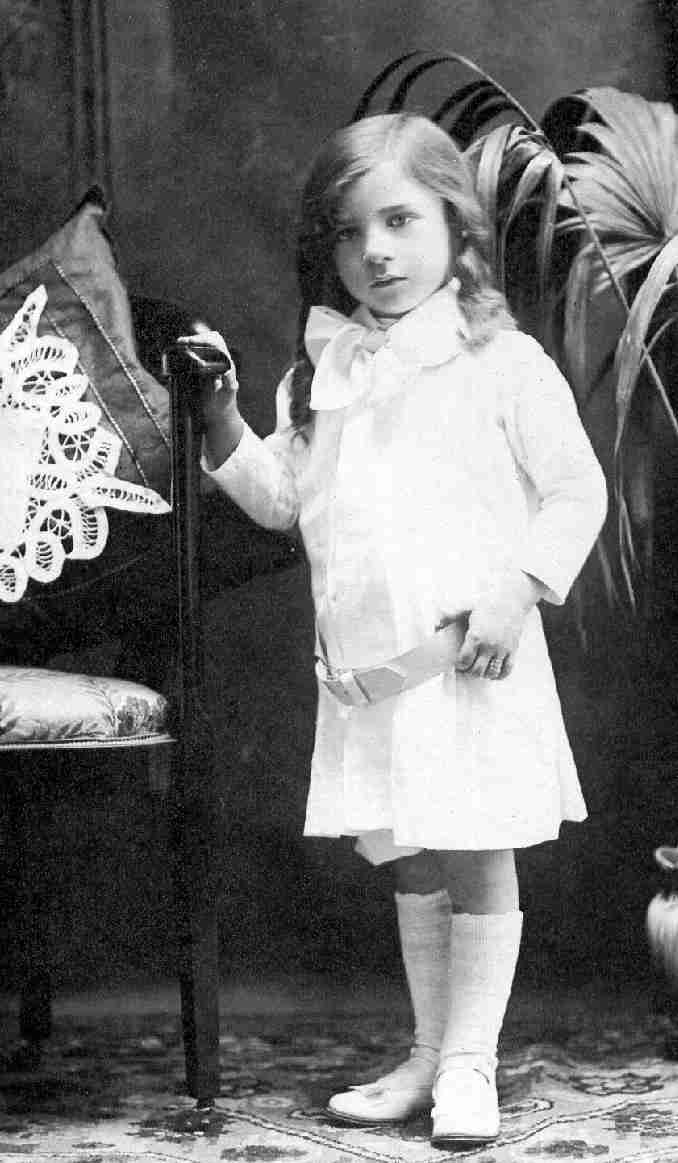
Figure 1.--This American boy wears an elegant white tunic suit with an Eton collar and white floppy bow. The belt is colored, but we are not sure what color it was. He has very loose ringlets looking almost like a wave. He has a left part so his hair falls longer in the right side. Image courtesy of the RG collection.
|
|
Very commonly the tunics were white or some other solid color. White tunics were often used for dressing. Some white tunics were plain while others were quite fancy with added lace and ruffles. The boy here wears a plain, but elegant white tunic. He looks to have an Eton collar with a matching white floppy bow (figure 1). We are not sure about the colors at this time. Many illustrations show Buster Brown tunics done in red. We are not sure how common this actually was. We also see tunics made in patterns, but they were not nearly as common. We have noted pokadot tunic suits. The portrait here shows an Indiana boy wearing a checked tunic outfit (figure 1). Many of these tunic suits were made at home. Thus mother could choose whatever pattern and material she desired. A famous portrait of President Theodore Roosevelt's family, shows their youngest son Quentin wearing a yellow tunic suit. As the published post card had the color added later, we are not sure if this was the actual color.
Solid Colors
Very commonly the tunics were white or some other solid color. We do not know much yet about the early-19th century. Here we do not even have photography to help us. But we have paintings and vintage clothing. A Thomas Sully portrait shows an unidentified boy in 1829. He wears a green tunic with brown pants. And we note a brown tunic worn by Octavius Eastman in 1837.
We have much more information about 20th century tunics. Often there were solid color tunics with contrasting trim. White tunics, especially white tunics without colored trim, were often used for dressing up. We see quite a few at the turn- and dring the early-20th century. A good example is Charles Melvin Dixon. Some white tunics were plain while others were quite fancy with added lace and ruffles. The boy here wears a plain, but elegant white tunic. He looks to have an Eton collar with a matching white floppy bow (figure 1). Another example is a white suit with sailor styling is James Jones in 1913. An undated formal tunic suit is worn by Bradley Elliott, probably about 1910. We are not sure about the colors in which tunic suits were made at this time. Browm, blue and red were commonly used wither for tge main color or the trim. Many illustrations show Buster Brown tunics done in red. We are not sure how common this actually was. A famous portrait of President Theodore Roosevelt's family, shows their youngest son Quentin wearing a yellow tunic suit. As the published post card had the color added later, we are not sure if this was the actual color.
We also see tunics made in a variety of patterns. The patterned tunics were not nearly as common as plain-colored outfits. We note one 19th century tunic worn by an unidentified American boy in the mid-19th century done in a plaid style. This presumably is relate to the growing popularity of the kilt as a boys' style. We are not sure how common this was, in part because of the limited number ofimags available from this period. We have also noted pokadot tunic suits, but this doesnot seem to have been very common. More common were checked tunic suits, perhaps done in gingham. The portrait on the previous page shows an Indiana boy wearing a checked tunic outfit. Many of these tunic suits were made at home. Thus mother could choose whatever pattern and material she desired. This caused considerable diversity. We are not sure about the colors used for these patterns. Conventions varied somewhat over time. Tunics at mid-century do not seem to have commonly matched the pants, but the patterened tunics worn in the early 20th century did have matching pants.
HBC

Navigate the Boys' Historical Clothing hair style pages:
[Return to the Main long hair page]
[Return to the Main curl hair page]
[Bangs]
[Ringlet curls]
[Hair bows]
[Caps]
[Collar bows]
Navigate the Boys' Historical Clothing Web Site:
[Return to the Main American tunic page]
[Introduction]
[Activities]
[Biographies]
[Chronology]
[Clothing styles]
[Countries]
[Topics]
[Bibliographies]
[Contributions]
[FAQs]
[Glossaries]
[Images]
[Links]
[Registration]
[Tools]
[Boys' Clothing Home]
Created: 11:24 PM 10/22/2004
Last edited: 6:47 PM 3/15/2016