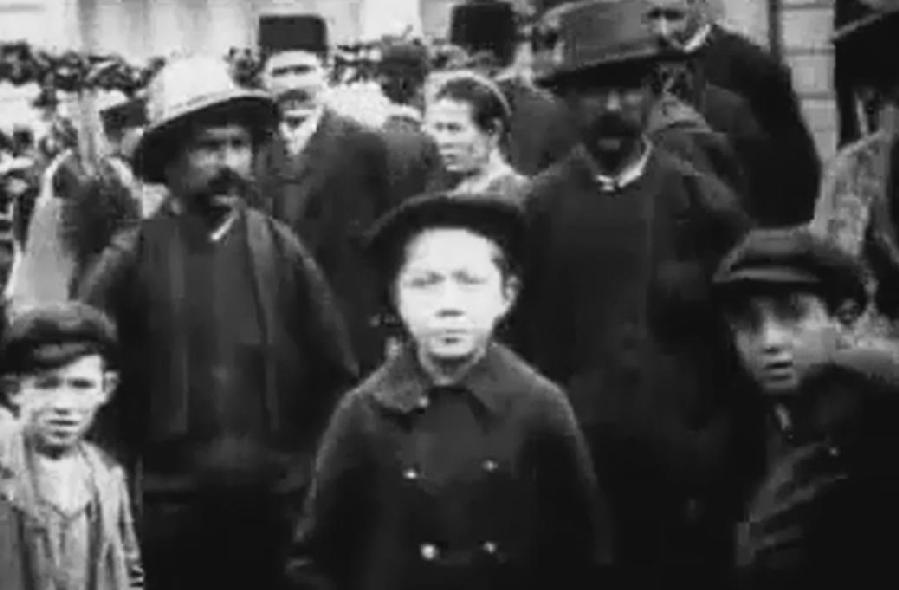
Figure 1.--The first movie we know of shot in Serbia was a documentary on the coronation of King Peter I in Blgrade. It includes many scenes of the people all dressed up in the streets for the festivities. The cinamaphotographer was British. |

|
We do not know if movies were made in Serbia before World War I. There may have been films made in Yugoslavia which was formed fter the War. Many countries had trouble competing with American Hollyood films or the films of the larger European countries like Germany, especially duting the silent era. After talkies were developed, locally made films had a greater advantage. As far as we know, however, the Yugoslav Government made no great effort to support a film industry. This changed after the Communist take-over following World War II (1945). The Communists who took over all media sectors wanted to use a film industry to make propaganda. As a result, the Government made Government funds available to create a modern film industry. With Government support came Government controls over what films were made and what was said and depicted. The restrictions on non-coforming film makers were no lethal as during the Soviet Stalinist era, but they were very real. No private film making was possible. Some forign film makers came to Yugoslavia because of the low profuction costs. With the great up of Yugoslavia (1990s), film making indutries developed in the new independent countries. These cuntries do not offer the support or the restrictions of the Communist regime.
We do not know if movies were made in Serbia and other states and provinces that were to compose Yugoslavia before World War I.
There are reports f foreign filmsbeing shown in Serbia soon after they appearedin other countroes. The first showing was a Luninare Brothers film (1895). We are unsure when the fiest cinameas opened. Wedo not know about any film making in Serbia before World War I. The only film we have found so far is a documentary film shot by forigners (1904). We think this may be the earliest film footage from Serbia. A reader writes, "I have been reading about a British cinematographer who made films in Serbia at the turn of the 20Th century. The first film he made has survived and is in the Serbian Film Archive. A DVD of the film was released a couple of years ago as a freeby in a Magazine called NIN. I was watching it today. The film cameraman, Frank Storm Mattershaw, was from Sheffield, Yorkshire England. It was basically a documentary on the cornonation of King Peter I, but added footage turns it into an early travelogue. Apart from the coronation the film recorded how people on the sreets of Belgrade dressed and the reaction of children to their first encounter with movie cameras. Most boys posed as if having a still photograph taken. They looked interestingly at the film camera. However there is always one who rises to the occasion. The boy is not known but I call him Dusan."
There may have been films made in Yugoslavia which was formed fter the War. Many countries had trouble competing with American Hollyood films or the films of the larger European countries like Germany, especially duting the silent era. After talkies were developed, locally made films had a greater advantage. As far as we know, however, the Yugoslav Government made no great effort to support a film industry.
Film making changed after the Communist take-over following World War II (1945). The Communists who took over all media sectors wanted to use a film industry to make propaganda. This was the same pattern as occured throughout the Soviet Eeastern European Empire. As a result, the Government made Government funds available to create a modern film industry. With Government support came Government controls over what films were made and what was said and depicted. The restrictions on non-coforming film makers were no lethal as during the Soviet Stalinist era, but they were very real. Filmaker Dusan Makavejev tells of his experiences, "Once upon the time I was officially made invisible. A fourth feature film of mine was banned in my native Yugoslavia, then wiped from the official Register of produced films. The attached decision stated: "Film was not finished and will never be finished." This document was signed by the President of the Filmmakers Union of the Vojvodina region of Serbia and the Secretary of the Party Cell of the Filmmakers Union. What irritated them more than anything was the fact that the film was already playing in more than 20 countries. I was indicted and threatened with three years in jail. The horse's head appeared in my bed in January of 1973 in the form of three screws from the right front wheel of my VW bug, unbolted and pedantically left under the wheel's hubcap, producing a strange farewell noise." [Makavejev] No private film making was possible. Some forign film makers came to Yugoslavia because of the low profuction costs.
With the break up of Yugoslavia (1990s), film making indutries developed in the new independent countries. These cuntries do not offer the support or the restrictions of the Communist regime.
We do not know much about the individual Yugoslav films yet, but we hope to collect information as HBC develops. The World War II Partisan struggle was a favorite theme.
A reader reports, "I saw a Yugoslav film this week. I could not fully understand it. It was about a group of children who were hiking across country. They were with a teacher. The film was about their adventures. At the end of it they reached a Serbian pioneer camp. Then they met Tito but this was inserted newsreel footage. Interesting in itself."
Makavejev, Dusan. "Parallel realities," Afterimage (January 1, 2001).

Navigate the Boys' Historical Clothing Web Site:
[Return to the Main country movie page]
[Return to the Main movie page]
[Introduction]
[Activities]
[Biographies]
[Chronology]
[Cloth and textiles]
[Clothing styles]
[Countries]
[Topics]
[Bibliographies]
[Contributions]
[FAQs]
[Glossaries]
[Images]
[Links]
[Registration]
[Tools]
[Boys' Clothing Home]