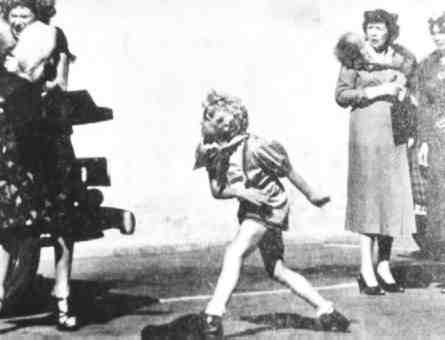
Figure 1.--The "Day of the Locust" was set in 1939. One of the characters was a boy whose mother wanted to get him him into movies. She dressed him in a Fauntleroy-type suit to make him look cute and more appealing for movie roles. |

|
A spoiled brat (Jackey Haley) of a boy whose mother is trying to get him in the movies, dresses him in girlish blouses with puffed sleeves and frills and very short pants. He even lacey ankle socks. His hair is bobbed and curled. Mothers trying to get their kids into the movies in the 1920s and 30s often did dress them in fancy costumes, but this was a bit unrealistic. I'd say Jackey was about 11. He only appears briefly, but one of the most sissy outfits ever worn by a boy in a movie, in fact it is hard to tell he is a boy. Nathanael West's book is a classic of Hollywood literature, that often dark and satirical subgenre populated by such authors as F. Scott Fitzgerald, Joan Didion and Aldous Huxley. It is a negative look at the decadent Hollywood of the late-1930s.
The film was based on a book published by a playwrite Nathanael West in 1939 about his experiences in Hollywood. West's book is a classic of Hollywood literature, that often dark and satirical subgenre populated by
such authors as F. Scott Fitzgerald, Joan Didion and Aldous Huxley. It is a negative look at the decadent Hollywood of the late-1930s. A young artist (named Homer Simpson) searching for glamour encounters a dismal world of broken people
and shattered dreams. Here, West tells the story of characters on the fringe of the entertainment industry, Homer Simpson (coincidence?), Faye Greener, and Tod Hackett. The reader may be left a little flat by the spare prose West uses in his
tale, remeniscent of noir fiction. The story is terse and biting. Each character has come to California seeking fame or health in the shining city, and each carries his own history of bitterness and dreams. The imagery West uses to illustrate the moral decay of this fringe population is sometimes disturbing, sometimes inspired, and occasionally presages events still decades into the future for Los Angeles. I, myself, was left looking for more depth to the characters, as well as left dreaming of the romance of Depression-era California.
The basic plot involves a young scene designer (Donald Sutherland) and aspiring actress in 1930s Hollywood. She is naive, manipulative,
self-centered, yet full of life and hope. He falls in love with her, but she has no intentions of falling for him. He as a result is traumitized. Any plot summary about the surface storyline is almost beside the point though, because this movie is far more a study of
human nature, both of individuals and of groups and crowds. It seems to be a movie about appetites as much as
anything....hunger for fame, sex, riches, recognition; and about rage, both repressed and terrifyingly expressed.
The traumitised man has gone a little crazy and he is very withdrawn. He has his bags so must be waiting for a bus.
A film is being premired. a Cecil B DeMill film called 'The Buccaneer'. A scene with a boy appears towards the end of the film. A fancy dressed boy throws a stone at Donald Sutherland. He gives chase. The boy flees in terror.The boy trips and Donald Southerland captures him. There follows a violent scene in which the boy is attacked and stamped on. The boy's cries alert the crowd. They rush over and see the terrible situation. Donald Sutherland is captured by the crowd and a riot breaks out.
Its pace is slow, and it is not light viewing. If you watch without paying too much attention, or wander off for 5
minutes here or there to get some popcorn or whatever, you probably will find it rather odd and rambling. I can't say that I cared for the film, but it is well written and complex characters will draw in the careful viewer, and by the time you do reach the end, it will leave you very, very disturbed.
'The Day of the Locust' depicts a child in Hollywood
who in an effort to make him look cute, is dressed up in a Fauntleroy-like suit. The suit was not velvet. It was rather like a shortbpants suit, but worn with a frilly collar and bow. Like many boys wearing Fauntleroy
suits in this era, he was depicted as a terrible brat--the cleche of the era. In fact, he is the classic Hollywood example of outfitting brats in a sissy suit. The boy is perhaps the quentisential Hollywood brat.
We are not sure how accurate the costuming is. It is true, however, that Hollywood was full of mothers trying to get their kids in the movies. Especially in the 1920s, these mothers would dressy the boys in fancy costumes. Even the boys who had made it in the movies like Jackie Sear, Jackie Coogan, and others were dressed in fancy outfits.
We were not sure who the boy was that plays the child. Perhaps Jackie Hayley.

Navigate the Boys' Historical Clothing Web Site:
[Return to Main Fautleroy page]
[Return to Main D movie page]
[Return to Main movie page]
[Return to Main Fauntleroy movie page]
[Introduction]
[Activities]
[Biographies]
[Chronology]
[Cloth and textiles]
[Garments]
[Countries]
[Topics]
[Bibliographies]
[Contributions]
[FAQs]
[Glossaries]
[Images]
[Links]
[Registration]
[Tools]
[Boys' Clothing Home]