|
Children received no special protection under British law until the Industrial Revolution. It was Britain that invented the Industrial Revolution. And it was Britain that began to protect working children. Too often the abuses of child labor is blamed on capitalism and industry. We see texts like "When the Industrial Revolution began, industrialists used children as a workforce," suggesting that industrialists invented child labor.But children for millennia worked including in abusive circumstances. Children were an important part of the work force in all societies. Laws to protect children began to be enacted, but only in a few capitalist countries where the Industrial Revolution was unfolding. Elsewhere and to this day, child labor continues. This only began to change and only in a few countries (19th century). Laws to protect children began to be enacted first in Britain. Young children were working very long hours in workplaces where conditions were often horrible. The basic act was prohibited child workers under 9 years of age.The question rarely asked is -- why? Child labor was nothing new. The answer is unclear. Factory was perceived as more abusive than agricultural work. Perhaps more dangerous, but we are not at all sure it was more abusive. A factor often ignored is the growth of the middle class,generated by the Industrial Revolution, which was more concerned with social issues. Attitudes toward childhood were changing. And mass media was developing bringing abuses to public attention. Attitudes toward childhood were changing. Charles Dickens published David Copperfield (1859-60) to great public acclaim. Factory abuses were very real and more visible than what occurred in isolated rural areas. Thee were no compulsiry school attendance laws. News accounts of abuses gradually swung public opinion to governmental action to protect children. Finally Parliament began limiting child labor, the initial laws were very minor restrictions. The first such law was the Factory Act (1833). It banned children under 9 years old from working in factories. It limited hours, and required some schooling, gradually setting precedents for modern protections against exploitation, as seen in legislation like the Mines Act (1842). .Two more Factory Acts followed (1844 and 47). The Factory Act of 1844 regulated the relay system. Some factory
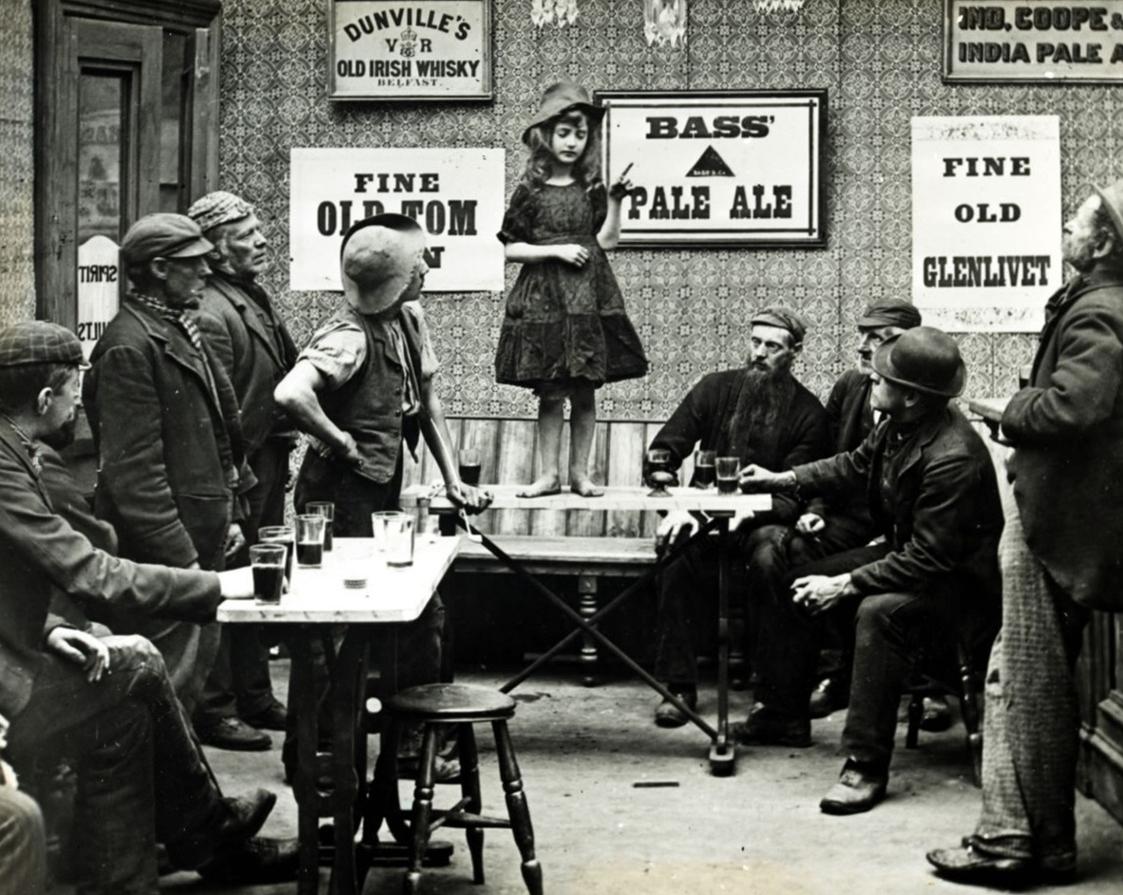
owners had avoided limits on the working day for children by developing a relay system. The children might work from 5:00 am to noon and then begin to work again at 1:00 pm under the guise of a new shift. While the 1844 Act regulated this abuse, it granhted factory owners the right to employ children at age 8 insttead of the previous 9 year old limit, his opened up a new supply of potential workers. [Wilson, p. 53.] There were some concessions granted factory owners, but the overall arc of the legislation was to prorect children. These laws limited the hours children could be worked. The Factory Act of 1844 regulated the relay system. Some factory owners had avoided limits on the working day for children by developing a relay system. The children might work from 5:00 am to noon and then begin to work again at 1:00 pm under the guise of a new shift. While the 1844 Act regulated this abuse, it granted factory owners the right to employ children at age 8 instead of the previous 9 year old limit, his opened up a new supply of potential workers. 【Wilson, p. 53. 】 Numerous Parliamentary Acts followed to further protect children over time. The Children Act (1908) prohibited children under the age of 14 years from entering pubs.
Reed, Lawrence W. "Child labor and the British industrial revolution," Liberty Haven, site accessed August 3, 2003.
Wilson, A.N. The Victorians (W.W. Norton & Co.: New York, 1993), 724p.

Navigate the Boys' Historical Clothing Web Site:
[Return to Main child labor country page]
[Return to Main English work trends page]
[Return to Main industrial revolution page]
[Introduction]
[Activities]
[Biographies]
[Chronology]
[Cloth and textiles]
[Clothing styles]
[Countries]
[Topics]
[Bibliographies]
[Contributions]
[FAQs]
[Glossaries]
[Satellite sites]
[Tools]
[Boys' Clothing Home]