|
The major denominations of the Christian faith are the Catholic, Protestant and Orthodox or Eastern churches. There have been other denominations of considerable importance, some of which like the Eastern Catholic Maronites in Lebanon and the Copts in Egypt still exist. There are operhaps more religious traditions in the Christian Church than any other major religion. This is primarily because Christianity became the accepted religion in so many different countries. In addition, some Christian theologians, especially Protestant scholars argued that salvation was a personal matter and promoted Bible study and personal reflection. This of course necesitated mass literacy and was one reason why the Protestant states of Europe and America led the Catholic states of Europe in providing free public education.
The early Christian Church developed out of the Jewish Jesus movement. With Jesus gone there was no authoritive direction of the movement able to dictate theology. His brother James with a Jewish outlook tried to control the movement from Jerusalem. Paul became an important voice as did Peter in the larger Roman world. Outside Jerusalem many non-Jewish ideas and outlooks entered the faith. And while James, Paul, Peter, and others were influential, they all lacked the temporal power of the state and were thus unable to dictate theology. As a result, people with a wide range of beliefs within the Roman Empire identified themselves as Christians. One of the most important controversies in the early church was what we now call the Arian Hersesy. There was no accepted Bible, but many religious writings that were popular with Christians. Each chirch wa essentially independent and the faithful there could adopt whatever theological doctrire they desired. If a group in a church developed ideas unacceptable to the rest, they could leave and forn a new congregation. This did not change until Constantine became emperor and made Christianity the state religion. Constatine was no theologian. He was not interested in the theological issues that enveloped the early Church, but he did want the faith to be standardized to help promote order within the Empire. The result was the Council of Nicea which Constatine oversaw (323 AD). The Council rejected the Arian view and ruled on many other controversies. They also cannonized Christian writings with a Bible. And armed with the coersive power of the state, the Church could now enforce its theological dictates as wll as move again other religions and sects.
The Catholic (Universal) Church grew out of the Church that Constantine recognized and helped form with the Council of Nicea. The Bishop of Rome who would become the Roman Catholic Pope had enormous prestige, being located in the imperial capital. The importance of Rome was recognized from the very beginning of the Church. It was why Peter went there to preach. The bishop of Rome, however, had influence, but no real authority outside of Rome itself. And the influence of the bishop of Rome was weakened by a series of dramatic events. The Emperor Diocletian divided the Empire (285 AD) which meant that Rome was no longer the center of the whole Roman world. The other half of the Roman Empire was the Eastern Roman Empire, today widely known as the Byzantine Empire. Constantine the Great essentially reunified the Empire with his victory at the Milvian Bridge (312). With the death of Theodosius I (395), the division of the Eastern and Western Empires became permanent (395). This diminished the importance of the pope. As did the the growing authority of the Byzantine Patriarch. But worse was to come, Rome was further dininished by the declining military power of the Western Empire. And was eventually overwealmed by Germanic tribes. Thus unlike the Eastern Church, the Western Church no longer had the support of a powerful temporal state. Pope Leo the Great played a major role in establishing the prestige of the papacy when he managed to disuade Atila from sacking Rome(440-61). The Western Empire ended officially with the abdication of Romulus Augustus under pressure of Odoacer (476). Despite the subequent conquest by the Ostrogoths, The Roman Church survived and was organized much like the Roman Empire. The papacy gradually extended its authority over the churches in Western Europe. A powerful factor was the continuing prestige of Rome. Another factor was the pope's developing temporal authority over Rome and the surrounding area which provided a source of wealth. Important differences developed between the Eastern (Byzantine) and Western (Roman) Church, although the formal break did not occur for several centuries. One common feature was that both forces used coercive state power to supress individuals or religious comminities that did not follow established doctrine. There were a range of doctrinal differences that separated the Eastern and Western Churches, but the major issue concerned the authority of the pope. The power of the Roman Church grew as the churches and nobility in Western Europe adhered to the Roman Church. At the same time, the power of the Byzantine church and Patriarch declined with the rise of Islam and the loss of the Levant and Egypt and subsequently Anatolia.
The Western and Western Churches for centuries had been moving apart. It was in the 11th Century that the Great Schism occurred that formally separated Christianity. Pope Sergius wrote a confession of faith which included the controversial filioque ('and the son') as an addition to the long accepted Nicene Creed (1009). This seemingly small change ignited a theological firestorm that continues to this day. The addition addresses the idea that the Holy Spirit, the third person of the Trinity, proceeds not only FROM THE FATHER but also FROM THE SON, that is, that not only God the Father but also God the Son must be considered the indivisible origin of the HOLY SPIRIT. It is because the Orthodox didn't agree with the change to what is now called "the doctrine of the double procession" that the great split between the Eastern and Western churches occurred. The disagreement is still a theological dispute between Roman and Orthodox churches today.
The patriarch in Constantinople responded by removing the pope of the Roman Church from the diptychs, the official list of sister churches and bishops. The division between the Churches had reached crisis proprtions by mid-century. The major issues were the filioque, the authority of the pope, and varying liturgical practices. These issues had been simmering for some time. The differences now reached crisis proportions. The Pope suppressed Eastern (Greek) liturgical practices in southern Italy and Patriarch Michael Cerularius of Constantinople suppressed Latin practices in the East (1052). The Pope dispatched a mediator (1053), but mediation failed and the Pope excomunicated the Partirach (1054). Most historians date this as the formal split in the Christian Church. Although the Eastern and Western Churches were essentially separate Churhes before the Great Schism, after 1054 there were in fact as well as practice a Western Roman Catholic and a Eastern Orthodox Church.
The Roman Catholic Church like the Eastern Orthodox Church did not begin with the Great Schism, but did formally mark its existence as a separate church. Of course neither the pope in Rome or the patriarch in Constantinople accepted the separation. Both claimed to be the one true church. For the first milenium of Christianity there was no formaly declared Roman Catholic Church or no Eastern Orthodoxy let alone Protestantism. What existed was theoreticallt the "one, holy, catholic church" affirmed by the early creeds which was the body of Christian believers all over the world. Catholic in fact means universal. Even so, there wide differences in the early church. Some of these differences were judged to be heretical and either supressed or driven ubderground. Over time major differences developed between the Western and Eastern churches. Roman Catholicism thus traces its roots to the apostles, especially St. Peter. St. Peter is considered the first pope, and every pope since him is regarded as his spiritual successor. Peter is derived from the Greek 'petros' meaning rock. And Jesus told Peter, "And I say also unto thee, That thou art Peter, and upon this rock I will build my church; and the gates of hell shall not prevail against it." [Matthew 16:18] The bishops of Rome who adopted the title 'pope' used this passage to justify their spiritual auhority over the early church. A Catholic source writes, "Through trials like persecution, heresy, and the Reformation, the notion that the church leadership represents the continuation of an unbroken line from the apostles and their teachings ('apostolic succession') has contributed to the survival of Christianity."
The fundamental theological differences between Roman Catholocism and Orthodoxy was the use of the word Filoque in the Nicene creed meaning "and from the son" which was part of the issue concerning the relationship of the Holy Spirit to the other two persons of the Trinity. Other issues were Purgatory, efficacy of prayers for the dead, and the authority of the pope. Orthodoc Churches also allow married priests, although bishops are chosen from celibate monks. The Byzantine Empire became the center of Orthodoxy. Backed by the power of the Empire, the Orthodox Church became dominant in the East. This meant Greece and the Balkans. This included the Middle East until the rise of Islam in the 7th century. The conversion of the Kievian Rus would leave the Orthodox Church dominant in Russia as well. The fall of Constantinople (1458) meant that the Patriarch could no longer function as the head of the Orthodox Church. It was at this time that the Tsar in Russia provclaimed Moscow as the Third Rome. With the European emmigration in the 19th century, Orthodox communities were established in America and other countries like Australia.
A number of autonomous chuches developed that were for a variety of historical reasons were outside of control of the heirarchy both in Rome and Byzantium. The most isolasted was probably the Thomasine Church in India. Medieval Christians believed a Prester Jon founded a a church in China, but this proved to be a myth. There was a church founded in Ethiopia which was outside of Byzantine or papal control. The Church heirarchy after Christianity became the Empire's state religion began to force churches to discontinue heretical beliefs. Here they often encountered fierce resistance. The most important was the Coptic Church in Egypt which was influenced by Arias. There were also churches further east in Armenia, Georgia, and Persia outside of the empire's political control and thus also control (but not necesarily influence) of the heirarchy. After the fall of Rome (5th century AD), the rise of Islam cut the churches off from the Byzantine Empire. In fact, Byzantine suppression of the Coptic and other non-conforming churches was one reason for Islamic successes. While autonomous churches existed, until the Protestant Reformation (16th century), the two basic divisions in Christianity was the Roman Catholocism and Eastern Orthodoxy. This conveys an overly simplistic religious pattern than was actually the case. There were many other churches in part because of the Islamic outburst which created a space in which independent churches could exist beyond the control of the pope and patriarch. In addition to the churches cut off from Christian Europe, there were also the anomalies of churches in Eastern Europe which adopted a largely Eastern liturgy, but accepted the authority of the Roman pope.
The Protestant Reformation began when Martin Luther posted the 95 Theses on the door of the Witttenburg church. Luther did not intend to create a new church, but to reform the extisting church. But he set in motion a theolical tiudal wave. Once individuals began reading the Bible themselves all kinds of ideas emerged and the Reformation put them beyond the control of the Church hierarchy and its Inquisiotion. As a result, many different theological trends among Protestants. Today there are so many Protestant Churches that it is difficult to even count them. There are of course substantial differences among countries as to the importance of these groups. More Protestant churches exist in America because of the level of religious freedom there especially after the doctrine was enshirned in the First Amendment of the Constitution. There are some Protestant Churches, however, of particular importance. We have begun to develop information about some of the more important denominations.
The Anglican Church is often seen as a Protestant denomination, but many Anglicans today view their church as
a third way, combining aspects of both Catholocism and Protestantism. The Anglican Church began as the Church Of England (COE) when King Henry VIII divorced Queen Catherine of Aragon. The Pope refused to approve the divorce and Henry cut the COE off from the Roman Church. This happened during the Protestant Reformation in Europe. Henry, however, did not approve of the Protestant Reformation and the COE retained a basically Catholic liturgy until the regin of his son, Edward VI. At this time, the English began seeing themselves as Protestants as liturgical changes and wars with Catholic powers began to shape religious thought. Even Elizabeth I who was raised a Protestant with Edward saw the COE as different from the Protestat churches on the Continent. She saw the COE as a 'via media' (middle way). The 'via media' between Catholic and Protestant traditions emerged because the COE retained some features of each while also rejecting some features of both. And while English Protestants have sought to steer the COE into the Protestant camp and many English came to see themselves as Protestant, the COE has retained many features of Catholicism. As a result of the Oxford movement, the COE and the overseas Anglican Community has steered a gradual path back toward Catholocism. Many Anglicans today are moving toward eventual reconciliation with the Roman Church.
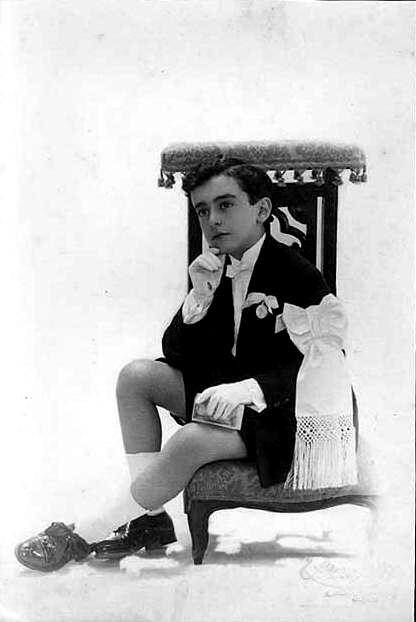
The last supper is seen by Christians as the first Holy Communion. It is generally seen, together with Baptism, as the most important of the sacraments. Thus it was perhaps inevitable that with the Reformation, Communion would be at issue. And in fact, one of the many points of differences, and in some ways one of the most important, between Catholics and Protestants is the sacrament of Holy Communion. Here there are not only differences between Catholics and Protestants, but also very substantial differences among the various Protestant faiths. The Catholic Church believes that God is present in the Holy Host. Here the Anglicans are in agreement. Most other Protestant Churches, however, believe that Communion is chiefly a symbolic act. Martin Luther was a Catholic priest who gave communion. He largely agreed with the Catholic view, but after with the Reformation, criticized the Catholic interpretation. Many Protestants took this issue much further than Luther The Protestants believed in returning to the Bible rather than Church tradition. In the Gospel, it is written: "Do this in memory of Me". This passage was interpretated justifying the Eucharist as a memorial or symbolic rite. And this became a major tenant of Protestantism, although with real variation among the different denominations. The sacrament of First Communion is the first conscious step of a child in joining the Church. Perhaps because of the way Catholics view Communion, it tends to be a more important event in the Catholic Church than in other churches. Interestingly, many Lutherans now hold a view of the Blessed Sacrament that is much closer to the Anglican belief in the "real presence" of Chirst in the bread and wine--that is, they accept the consecrated bread and wine as more than simply "memorial" (which is characterisitic of most Evangelical traditions). This is why the Episcopal Church in the United States has accepted the most orthodox Lutherans (such as the Church of Sweden, which has bishops and the apostolic succession) into full communion with Anglicans.
As part of our HBC website, we rely heavily on photography and other imagery to illustrate the issues we are discussing. In this regard while we have found a lot of Catholic images, we have had more difficulty finding Protestant imagery. A HBC reader addresses this problem, "The reason it is easier to find images of the Catholic-minded churches (Roman Catholic, Anglican, and Orthodox) is that these are liturgical churches who act out their theology in worship and like outward and visible symbols (stained glass, statues, carved shrines, creches,
adorned altars, rich vestments, vested choirs, processions, candles, thuribles, crucifixes, rosaries, etc.). And their woship involves physical movement (standing up, genuflecting, kneeling, sitting down, crossing themselves, being sprinkled with holy water, etc.). They see worship as Christian drama, so there is a lot more to photograph in
these churches than in congregations who don't dress up, march around, or participate physically in their religion. Just a thought."
Halévy, Elie.
Hattersley, Roy. A Brand from the Burning: The Life of John Wesley (Doubleday, 2003), 353p.
Wacker, Grant.
Navigate the Boys' Historical Clothing Web Site:
HBC

[Return to the Main Christianity page]
[Return to the Main religion page]
[Introduction]
[Activities]
[Biographies]
[Chronology]
[Clothing styles]
[Countries]
[Bibliographies]
[Contributions]
[FAQs]
[Glossaries]
[Images]
[Links]
[Registration]
[Tools]
[Boys' Clothing Home]
Created: July 22, 2003
Last updated: 10:27 PM 1/28/2011