|
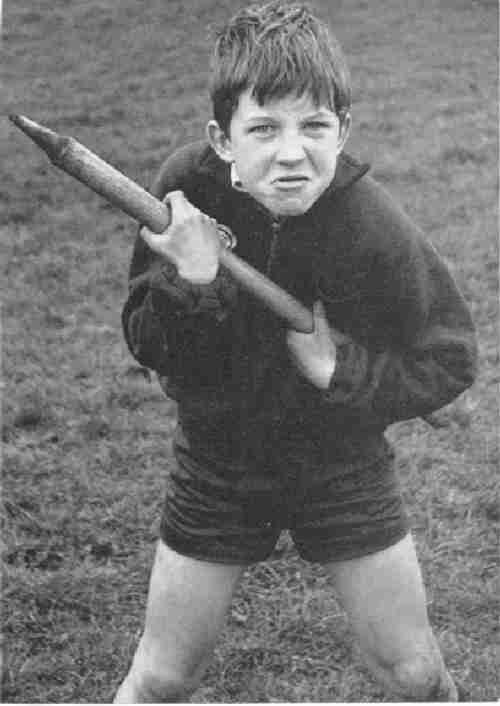
Trend that began in the 1960s became increasingly apparent in the 1960s. Short pants were still commonly worn in the 1960s, but by increasingly younger boys--especially by the late 1960s. Boys began wearing clothes with a European influence. Short pants began increasingly short in the 1960s. The standard short pants were grey. Terelyn blended fabrics tended to replace flannel. These grey shorts were widely worn at schools. Some younger boys at secondary schools still weore shorts in the early 1960s, but this was rare except in private schools by the end of the decade. Outside of school, dress shorts were less commolybworn, but a varierty of play shorts in various colors and materials, including denim were popular for boys until their teen years during the summer. The year of 1968 is especially important as it was the year of the Paris school riots--which marked the increasing importance of youth culture throughout Europe. This trend was and fashions styles which accompanied it were also noticeble in England. By the end of the decade it was rare to see an older boy wearing short pants suits with knee socks, except at a few mostly private schools. Even the Scouts, but not the cubs, following the popular trend switched to long pants in 1969.
The 1960s as in America and Western Europe were called the Swinging or less commonly Screaming 60s depending on whether you focus on the political or cultural/sexual changes underway. Either way, it was a time of unusually intense change. Staid Britain suddenly became a hot-bed of social change. Part of it was because parents came out of the challenging Depression and World War II period. There was desire to enjoy life and the prosperity of the 1950s enable them to so. And this generated a permissiveness that allowed the Baby Boomer generation to express itself with a level of tolerance unusual for other generations in the relatively rigid British social system. Their parents had neither the time or opportunity to find their own identity. They had to think about finding a job during the Depression or dodging NAZI bombs during the War. The baby boomers embraced the new cultural environment. We see the emergence of distinctive trends in fashion, music, dance, and entertainment. Fashion is the easiest changes to follow, but there were many more important changes underway. There were important social and cultural events which impacted English society. The clash between Mods and Rockers made headlines, but many other changes were even more important. The 1960s in particular were a decade of rapid change. The mere speed of change was a powerful element of the 60s. The pace of life picked up markedly from the more easy going 50s. Charlie Fleischer may have phrased it best when he said, "If you remember the '60s, you really weren’t there.”
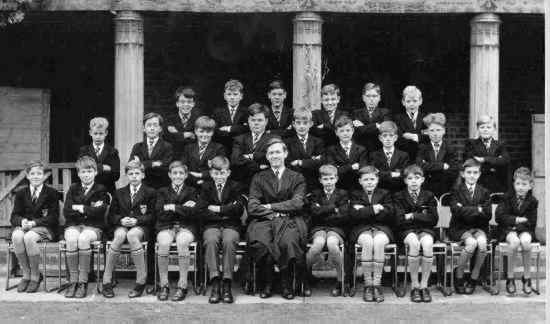
The 1960s was a time of enormous change in British boys' wear. The trends began in the 1950s became widely adopted. Boys no longer wore short pants suits. Many younger boys at state secondary still wore short trousers with there school blazers at the beginning of the decade, but gthis had beconme rare by the end of the decade. Many state elementary schools adopted uniforms for the first time and these commonly required short pants, but usually without blazers. Private prep schools continue requiring blazers and short pants. Boys at home no longer wore short pants suits. Several non traditional styles apperaed in suits. Increasingly English boys began wearing shorts as leisure wear. The Scouts changed to a long pants uniform in 1969.
Trends that began in the 1960s became increasingly apparent in the 1960s. France seems to have been the primary foreign influence, although by the endof the decade, America was beginning to have an impact. Short pants were still commonly worn in the 1960s, but by increasingly younger boys--especially by the end of the decade. We don't see many of the long baggy shorts that were still very common in the 1950s. Boys began wearing clothes with a European influence. This meant more trimly and shorter cut short pants. These were common on the Continet by the 1940s, but not in Britain where 1940s styles persisted longer. The new Contihnental styles also begin to show up in schoolwear.
English adults and children were dressing a lot more cassually by the 1960s, but we still see more formality than was common in America or was the case earlier in England. Boys wore collared shirts. Jeans were not yet standard, although by the end of the decade thery were becoming more common. Suit jackets and ties were no longr worn at home. Some fathers still dressed formally, but this too was chnging. Short pants were still common, although we see more boys wearing long pants. Knee socks were still worn along with leather shoes and closed-toe sandals. We do not yet see sneakers being commonly worn, except on vacation. Girls still wore mostly dresses.
We see a major change in playwear that begun in the 1950s. Britain did not share in the post-War recovery to the same extent as its continntal neiughbors. There was nothing like the German Economic Mairacle in Britain. That ould have to wait forMrs. Thstcher and the 1980s. Wages and living conditions, however, were improving. And this affected how children dressed. Before the War, boys unless theyvcamecfrom affluent families did not have large wardrobes. And this included the middle class, although they were better off than the working-class boys. Basically play clothes were simply older garments such as school wear. We see many boys wearing old suit jackets and blazers wrn for schooleven for play. Many boys basically had two outfits. OIne for dressup and school and the other for play consisting of he older best outfit. Gradually in the 1950s we see more boys with summer play wear. This uncluded brightly colored striped 'T' shirts and cotton shorts worn with ankle socks. By the 1960s, this had become standard. There were no longer many boys tht only had two outfits. School sandals were still widly worn although we see some plimsols.
We see some major changes in English boys wear during the 1960s. The bsic school peaked cap tht had been so common for decades largly disappared. We continue to see some at private preparatory schools and for cubs but we no longer see them being commonly worn. The amorack became a major jacket type. We begin to see boys wardrobes becoming more varied. Boys no longer commonly wore suits as they did through the 1950s. The amorack became a major casual jacket type. It was perfectly suite for britain because it waslight and could be put on tken off in the Country's changeable weather conditions. We begin to see more casual shirts like "T"shirts. Short pants were still commonly worn, but were not as universal as was the case in the 1950s and earlier decades. The short pants that were worn wer often grey and became increasingly short and less baggy in the 1960s, folloing Continental styling. Short pants suits by the end of the decade it was rare to see an older boy wearing short pants suits with knee socks. The exception was for school uniform. We see short pants suits and blazers worn with shorts at many private schools, epecially preparatory schools. Jeans became increasingly popular during the 1960s, especially among teenagers, but they were not allowed at school. Younger boys might wear jean shorts. Knee socks were still worn, especially in coolr earther, but along with long pants we see more ankle socks. Knee socks were especially common for school wear and were often called school socks. Sandals continued to be very common, especially for primary school age children Bothboys and girls wore them. We see trainers/plimsols (sneakers) becoming increasingly popular by the end of the decade. Sandals continued to be much more common than in America.
|
Trends which began in the 1950s continued in the 1960s. By the end of the decade, most state schools and public schools had done away with school caps, although they continued to be worn at prep schools. Many state secondary schools required a standard uniform of black blazer and grey long trousers. A few state secondary schools still required junior boys to wear caps and short trousers, but by the end of the decade this had become increasingly rare. Many public schools still required shorts for younger boys, but almost all (except in Scotland) dropped requirements for older boys to wear them. While state secondary schools began to relacse uniform regulations, especially by the late 1960s--an increasung number of elementary schools began requiring school uniforms, in most cases short pants. The shorts worn also became shorter and more trim fitting during the 1960s.
The standard short pants were grey. Terelyn blended fabrics tended to replace flannel. These grey shorts were widely worn at schools. Some younger boys at secondary schools still wore shorts in the early 1960s, but this was rare except in private schools by the end of the decade. Outside of school, dress shorts were less commolybworn, but a variety of play shorts in various colors and materials, including denim were popular for boys until their teen years during the summer.
The year of 1968 is especially important as it was the year of the Paris school riots--which marked the increasing importance of youth culture throughout Europe. This trend was and fashions styles which accompanied it were also noticeble in England.
The Boy Scouts which in many ways had pioneered short pants as boys wear in England modernized their uniform in 1969. The Scouts, but not the cubs, following the popular trend switched to long pants.
English mail order catalogs offer a very useful time line on changing fashion trends. English mail order catalogs as well as newspaper and magazine ads provide great detail on fashion trends. We have very few 1960s catalogs or advertisements at this time, but we are beginning to collect information. In addition to catalogs, Parenting Magazine is a particulsrly valuavle source, especially for younger children's clothes. We have one ad for suits. We have one ad for suits. We have another ad for playsuits in a wide variety of styles. One of our HBC readers remembers games at the time. We would be interested in any that our English readers might be able to contribute.
A British merchant reports, "In 1965 I started in Hampstead, London, a shop called "Colts," which offered a selection of "the world's best casual clothing" for boys of school age. Cplts catered solely for boys' leisure wear, largely imported from France, Holland, Belgium, Germany and the United States. The introduction to our catalog declared:
'We're noted for the brilliance and sophistication of our sports shirts, the sumptuous variety of our corduroys, the tough-ness of our jeans, and the shortness of our shorts. The Continent shows us that school-boys don't have to be Just Williams or bedraggled grey mice; they can be quite shapely animals if their clothes give them half a chance'." The catalog shows a range of sylish clothes that were becoming popular in England, including cord jackets, bright poloshirts, jeans, and suits with mod and traditional styling. There was even an American-style baseball cap--at the time quite novel in England. Colts operated in England between 1965 and 1975, with branches English branches in Hampstead (London), Richmond (Surrey), Guildford, Chester, Bath, Reading and Brighton.
Navigate the Boys' Historical Clothing Web Site:
Stores
HBC

[Return to the Main English post-war chronology page]
[About Us]
[Introduction]
[Activities]
[Biographies]
[Chronology]
[Clothing styles]
[Countries]
[Girls]
[Theatricals]
[Topics]
[Bibliographies]
[Contributions]
[FAQs]
[Glossaries]
[Images]
[Links]
[Registration]
[Tools]
[Boys' Clothing Home]
Created: June 22, 2001
Last updated: 6:56 PM 2/23/2024