|
Japan until the Menji Restoration (1867) was a largely feudal society. We do not have much information on clothing before the Menji Restoration, but it was traditional costumes that were as far as we can tell largely unchanged over hundreds of years. Japanese people today dress up in these traditional outfits, but it should be remembered that the traditional outfits worn by most Japanese people were much more plain than the fancy costimes and bright colors commonly worn today. After the Menji Restoration you begin to see Western dress, especially in the cities. To some extent it was seen as an aspect of moderniization. Western-style school uniforms were adopted for the new national school system. It was not until after World war II that Western dress became widely worn in the countryside. Even though Japan was occupied by the Americans, European-style clothes became very popular for children in Japan. The short pants Japanese boys wore became destinctive by the 1970s. Beginning in the 1990s, Japanese children began to wear many of the same stules popular in American and Europe. Traditional clothes have not disappeared in Japan and are often worn by children for special occassions.
Japanese boys in the 18th century wire traditional garments like their parents. Japan until the 19th century Menji Restoration was a largely feudal society closed to the West. We do not have much information on clothing before the Menji Restoration, but it was traditional costumes that were as far as we can tell largely unchanged over hundreds of years. We note that modern Japanese festivals even though based on events from various centuries seem to use costumes that are very similar. Japanese people today dress up in these traditional outfits, but it should be remembered that the traditional outfits worn by most Japanese people were much more plain than the fancy costimes and bright colors commonly worn today.
Japanese boys mostly wore traditional clothing in the 19th century. This was entirely the case in the first half of the century, and largely true in the second half of the centuury even after the opening to the West. Western dress was not worn in Japan until the opening to the West initiated by Commodore Perry and his black ships at mid-century (1853). The small number of forerigners had little or no impact on Japanese clothes. It continued to be relatively until the turn of the century. After the Menji Restoration you begin to see Western dress, especially in the cities. To some extent it was seen as an aspect of moderniization. Western-style school uniforms were adopted for the new national school system.
|
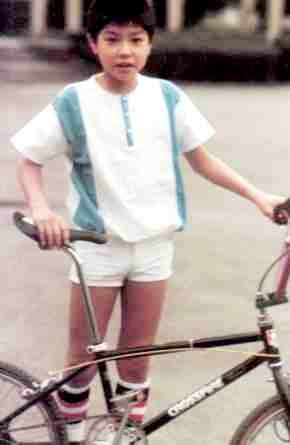
Japan in the 20th century emerged as the most modern country in Asia, undergoing an emense social transformation. Japan was the only country in Asia to industrialize and create a modern economy. The changes in Japanese society are observeable in children's clothing. This was especially the case for boys who were more likely than girls to wear Western clothes. We note Japanese boys in major cities beginning to wear Western-styled clothes after the turn-of-the 20th century. This was promoted because Western styles were adopted as school unifirms. It was not until after World war II, hiwever, that Western dress became widely worn in the countryside. We also see children commonly wearing more stylish clothibg after the War, especially as the economy began to eapidly expand in the 1950s. Even though Japan was occupied by the Americans, European-style clothes became very popular for children in Japan. American styles like jeans were less popular. The short pants Japanese boys wore became destinctive by the 1970s. Beginning in the 1990s, Japanese children began to wear many of the same styles popular in American and Europe. Gradually Japanese children clothes became less destibctive.
Japanese children in the 21st century seem to be wearing essentially the same common clothing styles that have been common both in Western Europe and in the United States. Traditional clothes have not disappeared in Japan and are often worn by children for special occassions.

Navigate the Boys' Historical Clothing Web Site:
[Introduction]
[Activities]
[Biographies]
[Chronology]
[Clothing styles]
[Countries]
[Bibliographies]
[Contributions]
[FAQs]
[Glossary]
[Images]
[Links]
[Registration]
[Tools]
[Boys' Clothing Home]
Navigate the Boys' Historical Clothing Japanese pages:
[Return to the Main Japanese page]
[Choirs]
[Department store catalogs]
[Monarchy]
[Music recitals]
[Youth groups]
[School uniforms]