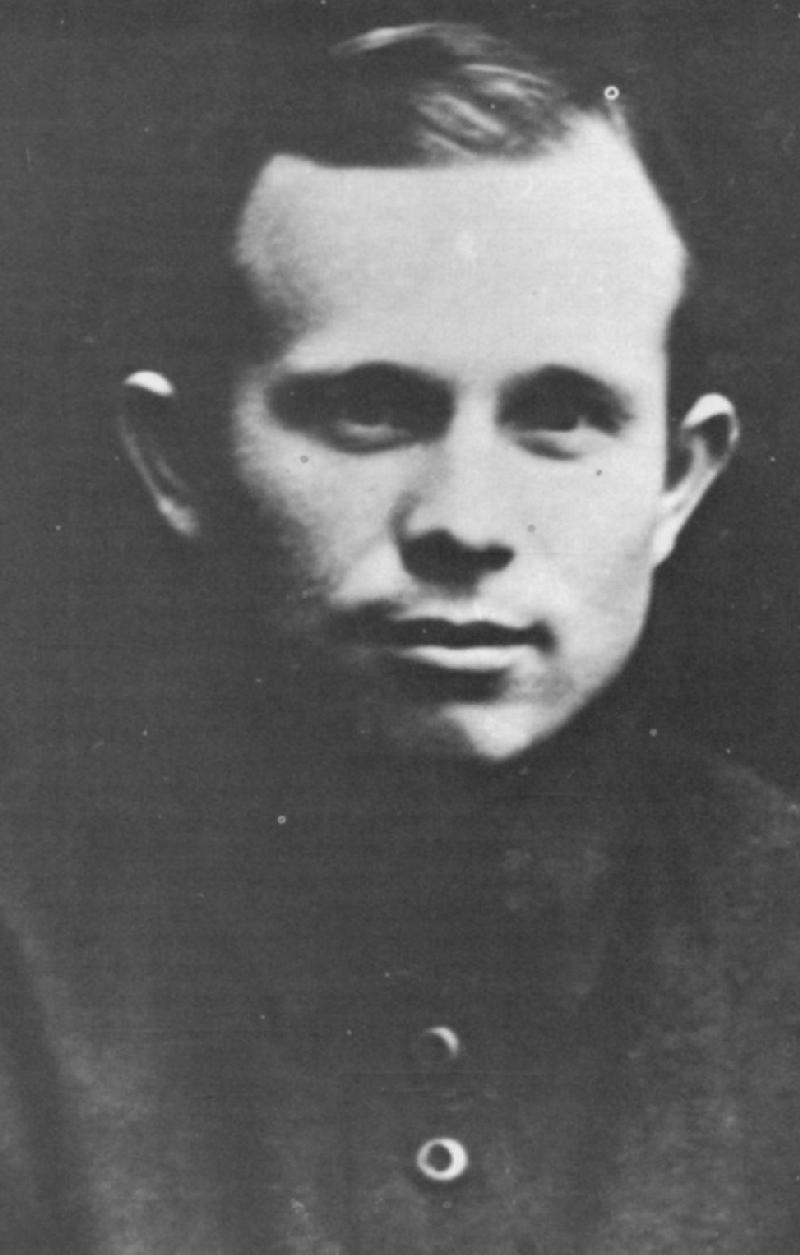
Figure 1.--This is one of the few photographs we have been able to find of the young Nikita Khrushchev. It looks to have been taken before World War I. |

|
A power struggle followed Stalin's death i(1953). Former Ukranian Party boss Nikita Khrushchev emerged victorious in that struggle. Khrushchev was a true believer in Communism. Like many of his generation, the Revolution had provided opportunities thast were incoceivable under the Tsarist regime, He was convinced that the Communist system was a scientifically based system that if properly managed would out produce the West. He was perplexed when confronted with the Soviet Union's deep seated economic problems. Nowhere had Stalin's policies been more murderous than in the Ukraine. Khruschev was not a Ukranian. He was born in the Russian village of Kalinovka (1894), close to the Ukrainian border. .He was all to aware of what Stalin had done there and was in fact complicit himself. Stalin appointed him Ukranian Party boss (1939). He served in World War II as a political commisar. He participated in the Barrle of Stalingrad. Perhaps his single most important achievement as the new Soviet leader was launching the De-Stalinization process (1956). It was the closest the world would come to nuclear disaster. He once confided with Nassar that a Mideast crisis was like "playing chess in the dark". He was finally replaced by faceless party aparatcheks in 1964 for his "adventurism". [Taubman] While Stlalin was a mass murder, Khrushchev was even more dangerous. His behavior was often crude such as when he took his shoe off and banged his desk at the United Nations when a speaker displeased him. He told Americans, "We will bury you". He rarely listened to advisors, often making important decissions on whim. Also he actually believed in Communist ideology. This combined with his mercurial personality and willingness to gamble brought the world close to nuclear war over Cuba in 1962. He once confided with Nassar that aideast crisis was like "playing chess in the dark". He was finally replaed by faceless party aparatcheks in 1964 for "adventurism". [Taubman] Conservatives in the Party leadership were concerned about the de-Stalinization process as well as dangerous adventure in Cuba, but what seems to have caused his removal was Khrushchev's efforts to reform the beaureacracy, especially fixed terms in office--a convern to an aging leadership generation. Khrushchev had essentially made Soviet officials safe from purges through his de-Stalinization program. These very same officials replaced him (October 1964).
Nikita's parents were Sergei Khrushchev and Ksenia Khrushcheva, poor peasants of Russian ethnicity. Sergei Khrushchev found various employment in the Donbas area of eastern Ukraine. He worked as a railwayman, a miner, and labored in a brick factory. Wages tended to be higher in the Donbas than in the Kursk region to the west. Khrushchev as a result often woked away from the family, returning to Kalinovka when he had sufficient funds.
Nikita Sergeyevich Khrushchev was born in Kalinovka, Russia (1894). This was near Kurskand the Ukrainian border and much of hs career would be connected with the Ukraine. He grew up with a younger sister Irina. She was 2 years younger.
Kalinovka was a peasant village and not aproserous on at that. Khrushchev's teacher in the village school was Lydia Shevchenko. She would later write that she had never seen a village as poor as Kalinovka. The young Nikita worked as a shepherd from a very early age. His father moved to the Donbas city of Yuzovka (1908). Nikita at age14 years followed after a few months. His mother and Irina came later. Yuzovka was renamed Stalino after Stalin (1924) and Donetsk (1961). This was one of the most industrialized areas of the Russian Empire.
Nikita had a very limted education. He attended school inthe village for 4 years. Part of this was in the village parochial school and part under Shevchenko's tutelage in Kalinovka's state school. Khrushchev in his memoirs describes Shevchenko as a freethinker who disturbed the villagers by not attending church. [Khrushchev, 1970] Her brother sometimes visited and gave Nikita gave the boy books which had been banned by the Imperial Government. She urged Nikita to pursue his education, but his family could not afford it. It is understandable how a bright boy, denied education would have began thinking about the need for a more just social systm offering opportunity for all.
Nikita after joining his father in Yuzovka, hefound odd jobs. His parents found him a poition as a metal fitter's apprentice. After completing the apprenticeship, Nikita was hired by a factory. He was about 15 years old. He soon, however got in trojuble. fired by the factory owner for n he collecting money for the families of the victims of the Lena Goldfields Massacre. The Lena Massacre involved the vrtual execution of striking goldfield workers by the Imperial Russian Army (1912). The min was located in northeast Siberia near the Lena River. The Massacre was a major tunng point in Russian history. It cause a wave od strikes before the War andradicalized many workers. After beng fired, Khruschev was hired to fix underground equipment by a mine in Rutchenkovo, a nearby town. There he continued his political activism. He enbgaged in distributing copies and organize public readings of Pravda. It had earlier irigins, but beca e the official newspaper of the Bolshevik Party. From a very early age, Khruschev showed a propensity fr political activism. Tsarist Russia was an absolute monarchy which had made only minor concessions as a result of the 1905 Revolution. Thus most political activity had to be done suretitiously, especially labor activism. At the time, the young Khrushchev says he thought about emigrating to the United States for higher wages, but decided against it.
Khrushchev married Yefrosinia Pisareva, daughter of the elevator operator at the Rutchenkovo mine (1914). They had a daughter, Yulia (1915) and a son, Leonid (1917).
Khrushchev joined the Bolsheviks (1918). He fought with the Red Army during the Civil War.
Khrushchev after the Civil War was able to pursue a technical education, something that would not have been possible
during Tsarist times. This made him a true beliver in Communism. He began work as a miner.
Khrushchev rose rapidly in the Party. He became a member of the Central Committee in part because of vacancies created by Stalin's purges (1934). Stalin chose him for the Politburo on the eve of World War II (1939).
Any assessment of Nikita Khrushchev has to consider his involvement in the Stalin's genocidal man-made Ukranian Famine. There are a number of issues involved in this assessment/ First, Khrushchev in his Memoirs says that he was in Moscow and unaware of events in the Ukraine. Foven his connection with the Ukranian Party, this is not entirely convincing. Second, another issue is just how does one assess an individual's behavior in a barbaric regime in which one's rise or even life was dependent upon absolute loyalty to Stalin. Third, the fact that Khrushchev was a true believer in Communism which colored his view od those who resisted Soviet policies like atheism and collectivization. The U.S. Comgress upon the eve of Khrusschev's visited to the United States conducted hearing on this issue. One of the experts testifying reported, " I myself, of course, had not witnessed these crimes. But on the basis of my socioeconomic studies and, of course, individual consultations with many witnesses who have been in Vynnytsia, Ukraine, and elsewhere, these crimes stack up in a rather staggering way. I should like very quickly to recount them in a methodical and systematic manner to show how the career of this person has been based on a pyramid of crimes. Indeed, it justifies this title, 'Khrushchev, the Political Criminal'.
First, Mr. Khrushchev played a very significant role in the man-made famine in Ukraine in the period of 1930-33. On the basis of performances in that famine he was promoted in 1934 to a full-fledged member of the Communist Party of the Soviet Union.
Second, he was engaged in extensive purges in Ukraine actually to make way for himself to become eventually the first secretary of the Communist Party in Ukraine. In these purges he directly engaged in the murder of people like Kossior and others. Countless others met death as a result of Khrushchev's perpetration of these extensive purges. Yet, quite cynically, in 1956 at the 20th party congress he posthumously rehabilitated the very people whom he had directly murdered. The purges continued during the period of the thirties to wipe out well over 400,000 Ukrainians.
Third, as the first secretary of the Communist Party of Ukraine, he was involved in the heinous massacre of about 9,500 Ukrainians in Vynnytsia.
Fourth, during the war, as a security general in the NKVD, he exploited the Communist partisans primarily to provoke German occupying forces into augmenting their repressions and persecutions of the Ukrainian populace. Much of the populace was in favor, for a time, of German liberation. Seeing one alien totalitarianism supplanted by another, they soon fought against both Berlin and Moscow.
Fifth, in 1944-46, Khrushchev was responsible for the liquidation of the Ukrainian Catholic Church and continued the suppression of the Ukrainian Orthodox Autocephalic Church. He has continued to keep both institutions in extinction - no posthumous rehabilitation on this score.
Sixth, during the war and after, when he was dispatched again by Stalin to take control and wipe out the "bourgeois" nationalist forces in Ukraine, Khrushchev was heavily engaged in the liquidation of many individuals and groups connected with the Ukrainian Insurgent Army (UPA). He also inflicted damages, physical and personal, upon the populace which supported contingents of this army.
Seventh, in 1954-55, with his so-called virgin land policy, he precipitated a forcible resettlement of countless Ukrainian youth, male and female, to Kazakhstan. This, too, was really an act of genocide, a nation-destroying type of deportation under cover of economic resettlement.
Eighth, he was also, in 1954-55 responsible for the barbarous suppression of strikes by Ukrainian political prisoners at Vorkuta, Mordovia and Karaganda. In Kingir, in 1954, he was responsible, by way of command, for the decimation of 500 Ukrainian women who protested conditions in that camp." [Dobriansky]
Khrushchev was at his post in Kiev when Hitler launched his invasion of the Soviet Union (June 1941). Until this time, Khrushchev seems to have had only limited contacts with the Red Army. Stalin appointed him a political commissar to seve with the Red army. Khrushchev served on different fronts as an intermediary between the military commanders and the political rulers in Moscow, namely Stalin. Stalin used Khrushchev to keep closely control commanders. The vatious commnders in contrast sought to influence Stalin through him. [Taubman, p. 150.] In the early phase of Barbarossa, worked with the military in an attempt to defend Kiev. Stalin ordered that Kiev be defended to the death. Because of pre-War dispositions, the Wehrmacht made slower progress in the Ukraine than in the north. The Red Army defending Kiev was eventually encircled and something like 0.6 million prisoners were taken. Is is apparently at this time that Khrushchev began to have doubts about Stalin's omisicence [Frankland], but apparently not about Communism. Here sources vary as to Khrushchev's involvement. Marshal Georgi Zukov claims that Khrushchev persuaded Stalin not to evacuate troops from Kiev. [Taubman, pp. 162-64.] Khrushchev claims in his memoirs that he and Marshal Semyon Budyonny proposed withdrawing and redeploying forces to escape the encirclement, but Marshal Semyon Timoshenko arrived from Moscow with orders from Staslin for the troops to hold their positions. [Khrushchev 2004, p. 347.]
A power struggle followed Stalin's death and the elimination of Lavrenti Beria and his faction (1953). Ukranian Party boss Nikita Khrushchev became the Party's First Secretary in the collective leadership which emerged. Khrushchev most effectively used Stalin's well-honed techniques of dividing and conquering his rivals and replacing them with his own loyalists. He emerged victorious in the Kremlin power struggle. He was in only 2 years, the undisputed mater of the Soviet Union. Politics under Stalin was played for keeps. The losers were shot or disappered in th Gulag. Khrushchev while a master of the Stalinist system was different. He did not kill his defeated adversaries. His approach was to exile them to meaningless poitions in far way posts such as Ambassador to Mongolia.
Krushchev's son Sergei who moved to the west paints a benign portrait of his father. Other biographers are less kind. Most paint a man whose crass buffonery often hid a ruthless core. [Montefiore] Stalin treated him as a country bumkin, but a loyal one. [Khriuschec, 1970] Khrushchev was a true believer in Communism, but over time came to question Stalin's judgment, at least to himself. Like many of his generation, the Revolution had provided opportunities that were incoceiveable under the Tsarist regime. He was not even able to continue his education beyond primary school before the Revolution. He thus was convinced that the Communist system was an undisputable force for good and as Marx depicted it a scientifically based system that if properly managed would out produce the West and create a utopia era of prosperity. he was perplexed when confronted with the Soviet Union's deep seated economic problems. But he remained a true believer. And of course like the Spanish inqusitors, possession of the absolute truth justified extremne cruelty and brutality. Historians argue about Hhrishchev's role in Stalin's attrocities. And one has to ask just what an individual could do when questioning could lead to an NKVD bullet in the head or the Gulag and when a belief in Communism justfied the harshest methods. Now while this all has generated debates among historians, we think one assessment is less controversial. Hjrushchev did not have Stalin's dark heart. He did bot believe in terror as an ibstrument of governence or the murder and incarceration of millions of innicdent souls. This shows up in the photographic record in his interactions with oeople, especially children. Now it is not unusual for dictators to be photographed with children. There are thousands of images of Hitler with children. And many of Stalin with children. But Khrushchev was not just phoyographed with children. Krushchev embraced children in a way that you never see Hitler, Stalin and other dictators.
While he participated in the Stalinist Terror, his single most important achievement was surely launching the De-Stalinization process (1956). No one in the leadership could have not participted and survived. Khrushchev stunned the delegates at the end of the 20th Party Congress when he without warning delivered his 'Secret Speech' which went on for 6 hours. He denounced both the Stalin's excesses and the dictator's personality cult as well as charging that Stalin made serious mistakes, especially not preparing for the German World War II invasion. Even after Stalin's death (1953), no one until the 20th Party Congress dared say anything negative about the former dictator. Today Khrushchev's speech seems timid given the enormity of Stalin's crimes. It was not only timid, but in many ways did not attack the underlying criminality of Stalin;s rule, in part because Khrushchev was involved in those crimes. There were three fundamental flaws in his Secret Speech. First, Khrushchev limited his denuciatons to crimes against thae Party. Cimes against the people were not mentioned. Second, he talked about the thousand killed while the body count of Soviet citizens he niredered was in the millions not to mentionn millions more of broken and ruined lives. Third, Khruschev did not criticize ll oc Stalin's crime, he maintained that some of the killing was not only justified, but important. Despite these failures, the impact Within the Soviet empire was electrifying. It was the beginning of the end of Stalinism, but not politicl repression. Despite his many negative actions and behavior as the Soviet leader, this was a courageous and critical action. Under Khrushchev many were eventually released from the Gulag--but the camps were not emptied. And in fact some received transports of Hungarian patriots. It should also be remembered that in his last years in power that the regime was again clamping down on disidents.
De-Stalminization resulted in difficulties as disorders in both Poland and Hungary soon followed.
Khrushchev was a committed Comunist. He looked on socialist economics as proven scientific fact. People of his gebneratin only heard Markist theiory presented. It is of course easy to when adebate if disenting voices diappeaed in the Gulag. Thus he assumed that after the Wat, it was only a short time before the Soviet Union and its Eastern European satellites would destroy the Capitalist systeml. And to opursue this goal he set a range of bold economic gols and developmet ininiatives. Many were poorly convceived by political functionaries with no understnding of economics.
Concerns like profitability or environental conseuences were ignored ro more commonlynot even considered. The idea was to 'overtake the West' as quickly as possible. Khrushchev promoted noth agricultural and industrial initiatives. One major effort was to increase food prouction. Stalin's collctivization policy and the elimination of large numbers of the Ukraine's best peasant farmers had adversely affected Soviet food production which was further reduced by World War II. Khrushchev plan was a massive effort to begin farming vast tracts of 'virgin' lands in the steppe of Kazakhstan and Siberia. Thousands of urban Komsomol volunteers with no knowledge of farming were mobilized. The Ukranian Pary boss considered himself to be an expert on agriculture and of course no one in the Soviet Union questioned him. His agricultural ininiatives were dismal failures. The vigin lands not only proved unproductive, but the effort did enormous enviromental damage. Khrushchev trvaveled to America, visting Iowa (1959). He was impressed. As a result of the visit, he became interested in corn. He decided to introduce it to the collective farms. Corn is an enormsly effecetive plant for soaking up nutrients and sunlight. The climate in the Soviet Union, however, was unsuitable for corn, a factor Khrushchev had not even considered. Another major effort was the Soviet Union had a much smaller industrial base than the United States. To compete with the United States, a very large share of Soviet industy had to be used for miliitary production. Khrushchev shifted Stalin's emphasis on heavy industry and military production. Some production shifed to a range of conumer goods which helped improve the standard of living for the Soviet public. Because the Soviet economy was closed, there was no competition with western compaies, Soviet production was inefficent. And because profitabiity was not a factor, incredably the cost of raw materials going into factories often exceeded the value of the finished products produced by Soviet factories. These defincincies dragged on Soviet indutry as it strained to compete with the West.
It is difficullt to understand the true character of political leaders even in the West with a free press. In the Soviet Union it was not just difficult, but impossible to judge the character of Soviet leaders beyond what they actually do. One little insight that we have to work with is the images projected by dictatorial leaders who have the ability to totally control the images avaiable to the public. Both Hitler anbd Stalin liked to be photogrphed with children. And these images were used in an effort to project a kind, human side of their character. But the images are carefully crafted. Many show children idolizing the two men, delivering flowers or looking own adoringly. Never do we see Stalin and Hitlr looking on adoringly at the children. Almost always Hitler and Stalin were the focus of the image, not the children. And never do we see Hitler and Stalin deigning to join in the fun with the children. With Khrushchev we see some different imagery. We see some of the standard totalitarian imagery of Khrushchev receiving floweers and being adored by the children. But we see something different with Khrushchev as well. We note images where he is not the focus of attntion. We see him looking on adoringly at his grandchildren and even joining in on the fun. They are very human images that you simply do not see with other totalitarian leaders. These are hints at the nature of his character and heart.
While Stlalin was a mass murder, Khrushchev was insome regards even more dangerous. He was more mercurial and less calculatng than Stalin. His behavior was often crude such as when he took his shoe off and banged his desk at the United Nations when a speaker displeased him. He used missles in an attempt to intimidate the West, as Hitler had used the Luftwaffe. He bragged about turning missles out like sauggages. His son who was an enginner is reported to have asked him about this because he knew there were only a small number of missles. Khrushchev is reported to have told his son not to worry as there were no sausages either. The story may be apocriphal. He is rembered in America as saying, "We will bury you". The impact was to stimulate American defense spending. It also caused President Eisenhower to authorize U-2 flights which Khrushchev used to wreck the Vienna submit and a chance to limit the arms race (1960). He rarely listen to advisors, often making important decissions on whim. Also he actually believed in Communist ideology. This combined with his mercurial personality and willingness to gamble made him more dangerous than the much more calculating Stalin. While Stlalin was a mass murder, Khrushchev nearly precipitated the holocaust of nuclear war. The Cuban Missle Crisis was the most dangerous confrontation of the Cold War (1962). He once confided with Nassar that
Mideast crisis was like 'playing chess in the dark'.
The most dangerous point of the Cold War was the Cuban Missile Crisis. President Kennedy's handling of the crisis has been generally hailed as a triumph of presidential leadership, although his miteps upon assuming office may have contributed to the crisis. . The Soviert Union secretly began installing balistic missles in Cuba capable of hitting Atlantic coast American cities. American surveillance photographs detected the missle sites and President Kennedy ordered a naval blockade to prevent further deliveries. The President considered an invasion if the Soviets did not remove the missles. This was the closest the two sides came to nuclear war. American stategists were astounded that Khrushchev would take such a risk. Khrrushvhev later claimed in his memoirs that it was to protect Cuba. Many scholars dismiss this as a cover story.
It was an effort to jump-start Soviet military capabilities. A massive prodution of misskles was inter-continental missles was planned, but was still largely on paper. THE CIA understood this. Assessing the Soviet Union's strategic capability hd been the major purpose of the U-2 flights. Khrushchev who was skilled at buster thought he could bluff. He had met the new amerixcan president in Vienna and was unimpressed. Khruschchev was a high-stake gambler, but not demented. His peasant shrewdness in the end led him to back down. [Tauubman] We know now that the world came much closer to a nuclear exchange than was no at the time. Russian forces in Cuba had tacticl nuclear weapons and probably would have used them if the Unitd states had invaded. Also U.S. destroyers assigned to the blockade were forcing Soviet submarnes around Cuba to the surface. Two of the submarines involved came very close to using nuclear-tipped torpedos. Either action could have very possibly resulted in full-scale nuclear exchange.
Khrushchev was finally replaed by faceless party aparatcheks in 1964 for 'adventurism'. [Taubman] He had enemies within the Party leadership. They were concerned about the de-Stalinization process. And they were put ioff with his predeliction for flashy projects as well as his bizarre behavior such as banging his shoe on the desk at the United Naions. Some wanted to remove him, but in the Soviet Union this was no easy matter and frought with danger. It would be the dangerous adventure in Cuba, that seems to have caused his removal was Khrushchev's efforts to reform the beaureacracy, especially fixed terms in office--a convern to an aging leadership generation. Khrushchev had essentially made Soviet officials safe from purges through his de-Stalinization program. These same faceless very same aparatcheks replaced him (October 1964).
Dobriansky, Lev. E. Dobriansky was a son of Ukranian immigranys. He became a professor of economics at Georgetown University and a staunch anti-Communist. He was actove in the National Captive Nations Committee and the Victims of Communism Memorial Foundation. You can see the comments of others who trtified at the Congressional hearings.
Frankland, Mark. Khrushchev (1969).
Khrushchev, Nikita. Edward Crankshaw, intro, commentary, and notes. Strobe Talbott, trans. and ed. Khrushchev Remembers (Little Brown: Boston, 1970), 639p.
Khrushchev, Nikita. Serfei Khrushchev, ed., Memoirs of Nikita Khrushchev, Volume 1: Commissar (The Pennsylvania State University Press: 2004).
Montefiore, Simon Sebag. Stalin: The Court of the Red Tsar (Knopf), 785p.
Taubman, William. Khrushchev: The Man and His Era (Norton), 876p. Zukov of course he is an important source, but it has to be noted that he wrote after Khruschev demoted him in 1957.

Navigate the CIH Children in History Website:
[Return to Main Soviet communism page]
[Return to Main specific war and crisis page]
[Introduction]
[Animals]
[Biographies]
[Chronology]
[Climatology]
[Clothing]
[Disease and Health]
[Economics]
[Geography]
[History]
[Human Nature]
[Law]
[Nationalism]
[Presidents]
[Religion]
[Royalty]
[Science]
[Social Class]
[Bibliographies]
[Contributions]
[FAQs]
[Glossaries]
[Images]
[Links]
[Registration]
[Tools]
[Children in History Home]