
The West and Modernity
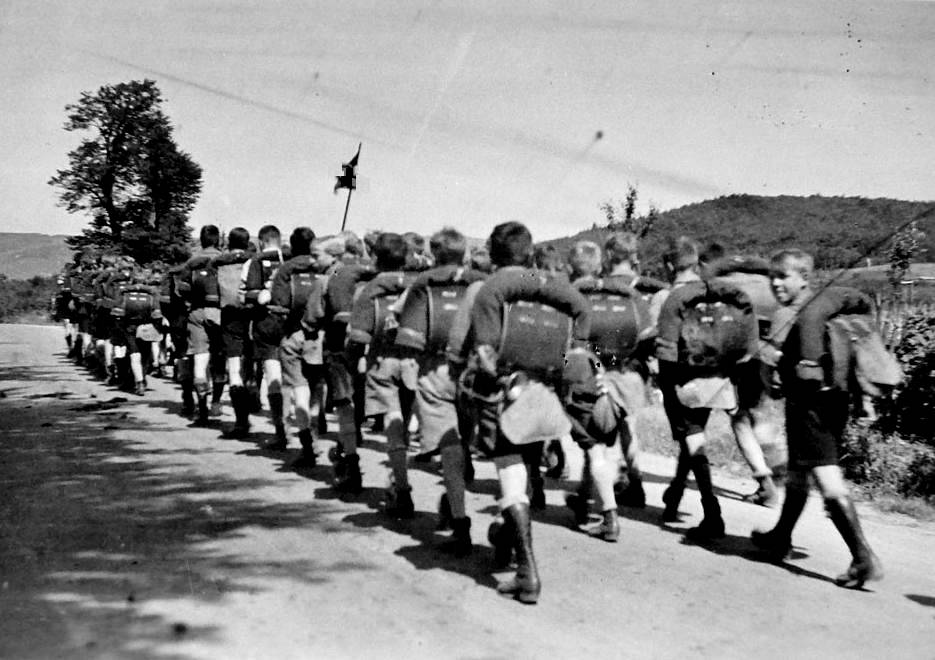
Figure 1.--The long arc of Western history through many false starts and reverses has been toward individualism and liberty, both economic and political. The result has been a society of unprecedented affluence and individual freedom. Itv is thus frighting to hink how close the 20th century totalitarians, both Communist and Fascist came to ending the hard won progress made over millenia. Churchill speaking to the Commons after Dunkirk when Britain had been virtually stripped of its arms spoke in those deep tones we was so capable of mustering, "What General Weygand called the Battle of France is over. I expect that the Battle of Britain is about to begin. Upon this battle depends the survival of Christian civilization. Upon it depends our own British life, and the long continuity of our institutions and our Empire. The whole fury and might of the enemy must very soon be turned on us. Hitler knows that he will have to break us in this island or lose the war. If we can stand up to him, all Europe may be free and the life of the world may move forward into broad, sunlit uplands. But if we fail, then the whole world, including the United States, including all that we have known and cared for, will sink into the abyss of a new Dark Age made more sinister, and perhaps more protracted, by the lights of perverted science. Let us therefore brace ourselves to our duties and so bear ourselves that, if the British Empire and its Commonwealth last for a thousand years, men will still say, ‘This was their finest hour.’” And as few besides Churchill understood, even if Hitler was defeated, there remained the menace of Hitler's then ally, Stalin and Soviet Communism.
|
|
Our modern world has evolved in Western Europe and its North American offshoot. It is basically the history of Western civilization. This is to extent politically incorrect as many in the academic community are committed to the ideology of cultural relativity. They believe it is an exercize in xenepobia to focus to intently on Western civilization. It is, however, asimple fact that the West has invented modernity. This is not to say that all aspects of Western civilization are valuable contributions to humsan history. After all, 20th century totalitarianism (both Communism and Fascism) are artefacts of Western Civilization. But they were both threads that were defeated by the major threads of Western civilization and this from the very beginning in ancient Greece centered on the importance of the individual. The paradox of Western civilization was present at this very beginning. The Greek focus on the individal spring from a slave society. From this focus on the individual came both democracy and an explosion of learning, including scientific insights that would not be replicated until the Renaisance. To the Greek foundation, the Romans added another important element of Western civilization--the rule of law. With the fall of Rome and the Germanic barbarian invasions, the ancient basis of Western civilization was essentially lost. It was not recovered until the Italian Renaissance stimulated interest in the classical texts. And the result was a shift in Ruropean thought from God back to the individual. The Reformation in Germany began as a largely theocratic and nationalistic movement. But there we a range of collateral impacts. It prevented the Roman Church from limiting intelectual discourse, at least in northern Europe. It also as a result of translations of the Bible into the developing "vulgar" languages, stimulated literacy and learning. The Enlightenment took the next step, questioning both religion and absolutism. French phiosophes played a major role in the Enlightenment, but English thinkers like Locke also played an important role. The French and British engaged in a world-wide struggle for dominance in the 18th century which was not finally settled until Trafalgur (1805) and Waterloo (1815). As a result, it would be the English-speaking people that would essentially invent modernity. France was the larger, stronger country, but it was crippled by absolutism, including the Bonapartes, the Revolutionary Terror, and the Bonapartes. France did not overthrow its absolutist traditions until defeat in the Franco-Prussian War gave birth the the Third Republic. It is no accident that the Industrial Revolution occurred in Britain. The developing democracy, relatively open society, and capitalist system all contributed to the Industrial Revolution. And the Developments in Russia and Germany led to terrible totalitarian regimes in the early 20th century. Britain and France were unable to stand up to these totalitarian regimes by themselves. But Britain's victory over the French allowed them to implant British political traditions in North America and the combined forces of the English-speaking people made possible the victory over totalitarnism.
Freedom
We believe that on sungle and simple idea, the concept of freedom— has been the critical driving force of Western civilization. It is what differentiates the West from the civilizations of the Eat, some of which were for an extended period technologically and economically superior to the West. A coralary here is competition. This is an aspect of freedom. Without freedom there is no competition. An the fact that the West after the fall of Rome split into competing nation states eventually fueled competition and tghd growth of freedoim. China on the oherhand congeled into a unified empire. The energies and productivity of the Empire allowed for considerable cultural and technological profress. It was in the West, however, that freedom and the competition it fuled led to the final step toward modernity. Freedom is the most influential intellectual force the world has ever known. Thisleads to a question, however, just what precisely is freedom. Here freedom is an ideal we all endorse in the abstract. The application of freedom, however, meets considerable resiatance even in the modern West where the idea of equality has emerged as a competing ideal. One important historian has argued that Western dominance has been based on certain killer apps of society thst have flown from free market capitalism and political democracy. [Ferguson] In sence, however, each of his killer apps are in essence simply aspects of freedom.
Historical Development
The history of freedom is one that begins in the West with the Greek city states. A key question to consider is why modrnity emerged in the West and not the East which was culturally and technologically superior to the West for nearly two millenia. The history of freedom continues into our modern age when the Western democracies were chalegened by great totalitarian states, notably empires: The Soviet, NAZI and Japanese empires. It should be no surprise that the ideas of freedom were so mortally challehed in our modern age. Or that this challenge continues with the rise of Islamic fundamentalism.
The central genius of ancient Greece centered on the importance of the individual. This freed Greek thinkers to break away from the religious constraints to thought that fettered other ancient civilizations. The paradox of Western civilization was present at this very beginning. The Greek focus on the individal spring from a slave society. The Greeks struggled against absolutism, over troeing kings and defeating Persian emperors. And within Greece was the struggle between democratic Athens and otalitarian Sparta (so admired by the NAZIs). From this focus on the individual came both democracy and an explosion of learning, including scientific insights that would not be replicated until the late-Renaisance.
To the Greek foundation, the Romans added another important element of Western civilization--the rule of law. Again Rome struggled with absolutism, the conflict between the Republic and the Empire. Even after Augustus established the Empire, he retained the fiction of the Republic with the Senate. And under the Empire, Roman law continued to operate.
With the fall of Rome and the Germanic barbarian invasions, the ancient basis of Western civilization was essentially lost. The Medieval era was an extemnely extended peruod of European history. And there were some bright spots. The Irish monestaries helped to preserve classical texts. And Islamuic Spain with the assistance of Jewish linguists helped to revover classical texts lost to the West. The rise of the medieval universities was a major step in Europe's movement toward modernity.
Christianity
Islamic Caliphate
China
The central question in Chinese history is why modernity did not emerge in China with all its wealth and technological superiority. Most of the technological advancds that led to the industrial revolution and modern economies originated in China and only slowly spread to the West, sometimes taking centuries to do so. An alien arriving on earth at the beginning oif the second millenium surely would have thoughtg that the West was hopelessly backward and the fiture of humanity lay with China. Why this did not transpire is the question that Western and Chinese gistorians must answer.
European society did not fully recover from the collapse of Rome until the Italian Renaissance stimulated interest in the classical texts. The result was a shift in European thought from God back to the individual. Although generally classified by most scholars as the last century of the medieval era, the 14th century is generally seen as the beginning of the Renaissance and the beginning of a modern state of mind. "Renaissance" means "rebirth" in French and describes the cultural and economic changes that occurred in Europe beginning in the 14th century. Humanism began to replace Schlolaticism as the philosophical foundation of European intelectual thought. The precise time is difficlt to set and of course varied accros Europe. The Renaissance began at Firenze around 1300 and gradually spread north. Even so, the indicators that constitute the Renaissance did not reach other areas of Europe 1-2 centuries. It was during the Renaissance that Europe emerged from the Feudal System of the Middle Ages. The stagnant Medieval economy began to expand. The Renaissance was not just a period of economic growth. It was an age of intense cultural ferment. Enormous changes began in artistic, social, scientific, and political endevours. Perhaps of greatest importance was that Europeans began to develop a radically different self image as they moved from a God-centered to a more humanistic outlook. The Humanist scholars used their clasical work to assess Church practices and Biblical scholarship. The Renaissance is probably most associated with stunning developmens in the visual artse, especially Italian and Dutch-Flemish painting. The Renaissance is also associated with advances in music, especially the brilliant polyphonic music. Another major achievement during the Renaissance was the birth of modern European drama.
The Reformation in Germany began as a largely theocratic and nationalistic movement. But there we a range of collateral impacts. It prevented the Roman Church from limiting intelectual discourse, at least in northern Europe. It also as a result of translations of the Bible into the developing "vulgar" languages, stimulated literacy and learning. The impact of the Renaissance has been much debated. One important author has connected Protestantism with the rise of capitalism. [Weber] Weber argues that Protestantism led to thrift and capital accumulation leading to capitalism. We are not sure about this, but it is certainly needscto be considered. We think that the Protestant challenge to the Roman Church and then the splintering of Luther's Prootestant Church into a mulditude of different denominations meant that no one religion could dominate Europe. The imapact was that religious authorities were no longer strong enough to stifle scientific and political discourse, at least in northern Europe.
Catholic Absolutism: The Spanish
The first military confrontation in the construction of the modernn world was the struggle with the Catholic Hapsburgs, especially Catholic Spain. Spain after six centuries of struggle finally completed the Reconquista with the conquest of Grenada (1492). Ferdinand and Isabella made possible the unification of Spain. And in the same year that Grenada fell, Colunbus reached the America's and in a few years, gold, silver and other wealh would be flowing into Spain in prodigious quantities, making the country a European super power. But others events were falling into place at the time leading to one of Europe's major conflicts. Charles the Bald, Duke of Burgundy died (1477). As a result of the standard Hapsburg policy of marital politics, the wealthy Low countries controlled by Charles passed to the Hapsburg Emperor, Maximillian I. Although small in area, the Lowlands were the wealthiest areas of Europe. Soon after, Maximillioan's son marroed the heir of Ferdinand and Isabella. This meant that under Charles V, the Hapsburgs cointrolled much of Europe. And it was during the reign of Charles V that Luther launched the Protestant Reformation and and the Catholic effort to stamp out the Protesant heresy. This struggle was a first fought argely in German, but under Charles' son Philip the struggle shifted first to first the Netherlands and then England. Philip attempt to impose absolutist rule on the Dutch who had considerable authonomy under Burgundian rule. The spread of Protestantism in the Lowlands escalated the conflict. The result was the Dutch War of Independence. The tiny United Provinces would seem to have little chance against the immense Spanish Empire. Philip was also interested in England. He married Queen Mary and for a time a child was expected which would have perpetuasted Catholic rule. When Mary died without child she designated Philip as her heir. It was Elizabeth of course who followed Mary. And when Elizabeth offered support to the beleagered Dutch, a conflict between England, a still small kingdom, and the might of Spain became inevitable. Philip had both a clsaim to the crown and the military might to seize the kingdom.
Capitalism
Capitalism is often seen as an English creation, perhaps because of Adams Smith book, The Weath of Nations. In facr, modern capitalism was a Dutch invention. It was the English that persued it on a far greater scale with a larger empire than the tiny Neherlands was able to do.
Lberalism
Liberalism is difficult to define because concepts have changed over time. Scholars like Hume, Locke, Mill, and countless others have wrote a great length on what liberalism is. Cut to te core, liberalism is a belief in freedom and liberty. The liberal tradition began to develop in the 16th century at the very dawn of the modern age when governments attempted to contro thought and expression as well as political and economic life. Liberalism thus developed as a reaction to the Cathloic Inquisitions attempt to supress Protestantism and divine right monarchies attempt to supress political discent. This is not to say people at the time enbraced the idea of liberalism and freedom. Early Protestants were in many ways nearly as intolerant as Catholics. The only thing is that Protestantism because it promoted lay reading of the Bible and religious thought, morphed into so many different sects that toleration was vurtually forced upon them. Ojnly later did toleration began to be seen as desirable in itself. And likewise those who opposed divine right monarchy, suh as Cromwell could be as dictatorial as the kingsd they replaced. But again by opening up the political system to the common man, eventually forced a degree of toleration in the political realm ad the development of democratic institutions to channel democratic rule. The great political philosophers did not begin to write about liberalsim until the 18th century enlightenment. The liberal thesis was extended to economics by Adam Smith's wealth of nastion in which he promoted the ideals of economic liberalism in The Wealth of Nations. One might imagine that a centralized, absolutist state would emerge victorious in any confrontatiomn with liberal states rent with internal divisions. This is especially the case as absolutist regimes (Catholic Spain, and France, Napoleonic France, Willimite Germany, NAZI Germany, Imperial Japan, Soviet Russia and Maoist China) amassed huge empires and military power. And at times they confronted tiny opponents. The United Provinces for example was the size of Maryland. Even England when it cofronted Philip II's Spain and Louis XIV's France had a fraction of the population and national wealth. And more recently it was England which stood alone against much of Europe conquered first by Napoleon and then NAZI Germmany. But since the time of the Great Armada, it has been the liberal Anglo-Saxon regimes that have greated the authoritarian or absolutist powers of the day. One has to ask how that could have occurred. An important shift in liberalism has occurred in the 20th century. Liberals who out of power once resisted state power have in the 20th century when obtaining power have come to endorse the growth of government power and the use of that power in addressing social concerns.
Naval Power
Catholic Absolutism: The French
The French and British engaged in a world-wide struggle for dominance in the 18th century which was not finally settled until Trafalgur (1805) and Waterloo (1815). As a result, it would be the English-speaking people that would essentially invent modernity. France was the larger, stronger country, but it was crippled by absolutism, including the Bonapartes, the Revolutionary Terror, and the Bonapartes. France did not overthrow its absolutist traditions until defeat in the Franco-Prussian War gave birth the the Third Republic.
The Enlightenment took the next step, questioning both religion and absolutism. French phiosophes played a major role in the Enlightenment, but English thinkers like Locke also played an important role. The Enlightenment along with the Renaisance and Reformation was a key step in the formation of the Western mind. Many of the most influential Enlightenment thinkers were French, but the Enlightenment was a movement which over time affected all of Europe to varying degrees. America was also affected by the Enlightenment, but the American exoerience was different, in part because of the Great Awakening. The Enlightenment is also termed the Age of Reason. Authors define it differently and there were many different aspects, but the Enlightenment at it heart was a basic turn in the Western mindset. The West for more than a milenium had been dominated by religion, often descrined as faith. Even the Reformation had not changed this. In fact the Protestants were often more consumed with faith and theological questions than the Roman church. With the Enlightenment, primacy was given to reason. Intelectuals began to think that objective truth about life and the universe could be achieved through rational thought. The advances achieved in physics, led by Sir Issac Newton in Britain, had a profound impact on European intellectuals. Enlightenment writers begasn to think that the same kind of systematic thinking could be used to understand and improve areas of human activity as well. A whole new system of aesthetics, ethics, government, and logic was developed based on reason. The Enligtenment was an era of great optimism. Enlightenment thinks were convinced that reason could dramatically improve society. They were not openly athiestic, but they were highly critical of religion which they often equated with irrationality and superstition. The Enlightement also attacked political tyranny. The intelectual ferment of the Enlightenment led to the American and subsequent Latin American revolutions as well as the French Revolution which had a much more pronounced impact on Europe. the Enlightenment prepared the foundation for both classical liberalism and capitalism. There were comparable movements in music (high baroque and classical) and art (neo-classical).
Jacobin Absolutism: The French
British Conservative Tradition
It is no accident that the Industrial Revolution occurred in Britain. The developing democracy, relatively open society, and capitalist system all contributed to the Industrial Revolution. It is curious how 20th century totalitarians like to present their ssytem as new and modern. Marxists painted Communism as a new scientific system. Hitler called the NAZI regime the New Order. And would be totalitarians like Hugo Chavez in Venezuela talks about his :"New Socialism". Yet these regimes are essentuially repackaging of the absolutism (beith religious or political) that Western civilization has struggle against.
20th Century Totalitarianism
And the Developments in Russia and Germany as well as Japan led to terrible totalitarian regimes in the early 20th century. Each trumpted ther regumes as the face of modernity. Each was in fact the repackaging of absolutism and imperialism with an ibreasing admixture of nationalism and with the eception of the Soviet Union, racism.
The English Speaking Peoples
Britain and France were unable to stand up to these totalitarian regimes by themselves. But Britain's victory over the French allowed them to implant British political traditions in North America and the combined forces of the English-speaking people made possible the victory over totalitarnism.
The United States and its allies following World War II fought a 45-year struggle war with the Soviet Union and China. The War pitted the ideals of Western democracy and free enterprise against totalitarian states with command economies. At stake was the future social order of mankind. Germany's defeat left Stalin in control of the countries of Eastern Europe. President Harry Truman when he became president in April 1945 began taking a stronger approach to the Soviets, disturbed by Soviet actions in Poland. Stalin proceeded to install People's Republics in these states which meant Stalinist police states subservient to the Soviet Union. American and European democracies sharply criticised the Soviet actions. Winston Churchill warned in 1946 that an "iron curtain" was descending through the middle of Europe. Joseph Stalin who had virtually allied himself with Hitler in 1939 to launch World War II, blamed the War on "capitalist imperialism" and threatened Western Europe. President Truman decided to support Western Europe economically (the Marshall Plan) and militarily (NATO). The Cold War was a period of intense East-West competition, tension, and conflict, but always short of full-scale war. The first major episode was the soviet blockade of Berlin in 1948. Berlin was during much of the Cold War a focal point of the conflict. The Soviets brutally suppressed attempts by Eastern Europeans to overthrow Soviet imposed governments: East Germany (1953), Poland (1956), Hungary (1956), and Czechoslovakia (1978). There were proxy wars and competition for influence in developing countries, many of which introduced Soviet command economics. There was also an arms race between the two super powers. After Stalin died in 1953, the Cold War became more unbalanced. There were periods of relaxation followed by resumed confrontation. The most dangerous point of the Cold War was the Cuban Missile Crisis (1962). There were efforts to pursue detente during the 1970s. Unlike the other major conflicts in world history, in the end the Cold War was not settled by force of arms. It was the example of the West, especially the success of free market economics and political democracy that defeated Communism. Not all historians agree that the Cold War was necessary and that the foundation of Western democracy was at stake.
Islamic Nilhism
The terms empire, imperialism, and conolnialism are today roundly rejcted and considered great evils. So much so that left-wing authors try to use the term empire to describe America's role in the modern world, although even a casual understanding of the term empire would make it clear that this is not the case. What is not well understood is that the normal course of human history since the dan of civilization has been rule by empires. The world until the advent of American power and the Pax Americana has been a very dangerous place for small states and very fe managed to survive for any substantial period. As late as World War I, virtually all of Europe was governed by four empires (Austria Hungary, Germany, Russia, and the Ottomans). And two other countries (Britain and France) governed much of the rest of the world. Essentially empire was the default setting for human history. And this did not change until the advent of America on the world scene in World War I. Britain was ghe world's greatest imperial power, but British imperialism was not absolutist, the British brought modern infrastructure, the rule of law, free trade, freedom of the seas, and many other policies not often associated with trditional empires. Notably, most British colonies reported economic problems upon ikndependence, unless they had oil resources. Thus Britain began a major shift in world history, but there were also traditional imperial aspects of the Britgish Empire. It would be the Americans that would make the final transition to the modern small, independent state system. This began with President Wilson's World War I Fourteen Points. The small states created after the War were, however, assilted by four majors powers (Germany, Italy, Japan, and the Soviet Union) attempting to found tradtional empires. Despite the invective commonly hurled against the United States, the accomplishments of the world crafted by the United States after World War II are stunning and too infrequently recognized: 1) Security for small states, 2) Protection of small states from Soviet imperialism and the liberation of Eastern Euroope, 3) Rise of democratic government and the rule of law throughout the world, 4) Decolonization, 5) Expansion of public education, 6) Expansion of womens rights, 7) Expanding economic freedom and the rise out of poverty for about half of the world's population, 8) Massive increases in food production, 9) Expanding freedom of religion (except in Muslim states), 10) Starteliging increases in technology, and 11) Vast improvements in pujblic health, Of course America alone is not responsible for all of these advancements and its actions have not always been well considered and often not alturistic. America is, however, responsible for many of these advances and more importantly the international system it crafted is undeniably responsible for these advances. But just as the small state system was challenged by the great totalitarian powers of the 20th century, the system is now challenged again. This time there are a range of potential threats. One of the most serious is American abdication of the role it has played since World War II on the basis of a bipartisan consensus. President Obama and the Democratic Party are increasingly rejecting the American role in maintaining the system. Other threats include Islamic fundamentalism seeking to recreatethe Caliphate(a medieval empire), rising Chinese nationalism, Russian nationaism, and the failure of Europe to assume responsiblities for maintaining the system.
Western Military Dominance: Capitalism and Democracy
Christian Europe after the fall of Rome struggled for a milenium and was not a dominant force. It was asailed by the war-like Steppe people like the Huns and Mongols from the East. Important parts of its technology originated in the East, especially China. With the rise of Islam, Chistendom was besiged in the west by the North African Moors through Spain and in the east by the Ottomon Empire through the Balkans. European elites hungering for the luxuries available in the East, luxuruies they did not have the technology to produce (silk and porcelin) or the climate go grow (spices). Hunger for these luxuries were fueled by the Crusades where crusaders came into contact with them.
Western military dominance only began to grow with the European maritime outreach (15th century). It is at this time that the wealth from opening trade roots to the East (circumventing Muslim lands) that building on other trends generated by the Church, Renaissance, and Reformation began ti build the modern world. It is thus in Europe that the book ends of modernity appear: free market capitalism and democracy. These are in esence economic anmd political liberty. Abd it is this liberty unlockibng the individual mind and asperations that left individuals for the first time in history to pursue the full caabilities of their mind abnd spirit. The wealth created by this dynamic allowed Europeans to generate unprecedented military power. And with the Industrial Revolution this military power enabled Europeans to not only establish coastal trading posts arond the globe, but to actually colonize broad saths of the globe in Asia abnd Africa. War until the 19th century was conducted in similar ways. Since the Industrial Revolution, European and then Anmerican culture has reshaped warfare. [France] The current preminence iof American military power is considered a given by most Americans and many Europeans. It is, however, more precarious than many realise. Western dominance has been based on certain killer apps of society thst have flown from free market capitalism and political democracy. These are attributes which can be copied. [Ferguson] One author writes in his preface, "To see military power, and actually military supremecy, as rooted in our culture is a comforting idea. But this book adopts a very different perspective. It seeks to examine the history of war as a whole, rather than simply one period or civilization." [France] The ability to replicate the success of gthe West was first noted with the rise of Japan before World War II and of the Asian Tigers (Singapore, South Korea, and Taiwan) in the post-War era. And free market reformers (Brazil, China, and India) showed how rapidly even large, moribund economies can be turned ariound (1990s). Their success brings out a still unanswered question. There is no doubt that free market caopitalism generates wealth, but less clear is the role of political liberty. Many of the countrues pursuing free narket refirms have taken the path of political democracy. One glaring exceotion is China. The Chinese have chosen ton open upm large sectors of their economy to market competitio, but have retained an authoruitaian political system as their econiomic suuceess has enabked them to build increasingly formidable military power.
Sources
Ferguson, Niall. Civilization: The West and the Rest.
France, John. Perilous Glory: The Rise of Western Military Porr (2012).
Mead, Walter Russel. God and Gold: Britain, America, and the Making of the Modern World (Knopf, 2008), 449p.
Smith, Adam. The Wealth of Nations.
Weber, Max. The Protestant Ethic and the Spirit of Capitalism.
CIH

Navigate the Boys' Historical Clothing Web Site:
[Return to Main specific war and major historical trends page]
[Return to Main history of freedom page]
[Introduction]
[Biographies]
[Chronology]
[Climatology]
[Clothing]
[Disease and Health]
[Economics]
[Geography]
[History]
[Human Nature]
[Law]
[Nationalism]
[Presidents]
[Religion]
[Royalty]
[Science]
[Social Class]
[Bibliographies]
[Contributions]
[FAQs]
[Glossaries]
[Images]
[Links]
[Registration]
[Tools]
[Children in History Home]
Created: 7:04 AM 2/21/2008
Last updated: 4:48 PM 4/20/2014