|
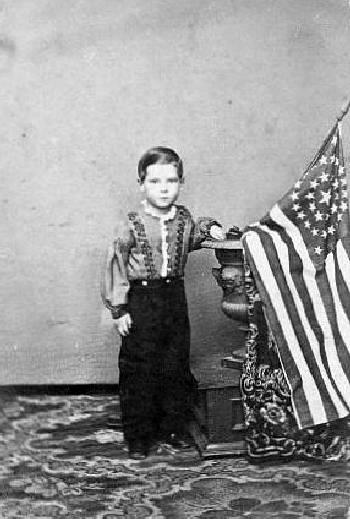
The American Civil War has been called the first modern war because of the number of men involved, the sweeping movements, the use of trains and telegraphs, and the increasing sophistication of the weaponery including rifled artillery, repeating weapons, and iron-clad ships. The intensity of the conflict and the lethality of the weapons cost 620,000 lives. It was an enormous struggle involving 10,000 battles, engagements, and skirmoshes fought out across the width and breath of the country. Ultimately, however, the War was dtermined in the 100 miles between Washington and Richmond and Cinfederate forays to surround Washington. The Civil War was the defining epoch of the American nation. It has been extensively studied in American history, but except for military scholars little noted outside the United States. The Civil War, however, had profound consequences for world history that were not immediately apparent in 1865. The losses and disruption of the war was staggering. More Americans died in the Civil War than in any other war America has fought--including World War II. This was in part because military tactics had not yet adjusted to the increasing leathality of weaponry. The South was devestated and the economic and social impacts were felt well into the 20th century. The industrial expansion of the north, however, was strongly promoted by the War. We do not know, however, of a major fashion change associated with the war. Military styled outfits such as Zouave outfits were popular, but lasting impacts on boys' fashions seem hard to detect. The Civil War does appear to be the watershead between the first and second half of the centuries. In a general way it also divides the period when long pants were common to the later era when kneepants dominated.
The United States by 1860 had developed into two destinct regions, essentially separate countries. The North and South had complimentary, but very different economies. Southern plantations supplied Northern textile mills. While complmentary, the economic systems were very different. The northern states were becoming increasinly important manufacturing and commercial centers supporing small, family-owned farms. Most northern states had abolished slavery. The southern states were primarily agricultural dominated by large plantations worked by African slaves. Most southeners did not own slaves, but the planter class dominated the economy and state governments. The forced labor of slavery was deeply inbedded in the economic, social, and political system of the south. 【Levine】 The economic issues could possibly have been resolved through political, constititional processes. It would have been difficult, but within the realm of possibility. Slavery was, however, the basis of the economy for the planter class and the emotional debate surrounding slavery by 1860 had risen to the level that regional tensions exploded. Abolitionists had for several decades been stoking the fires. They could describe the evils of slavery. They could not, however, end slsvery in the South. Southerners had begun to think of themselves as a distinct nation. Underminining the economic foundation of the planter class was a difficult enough issue, but abolitionists questioning their morality and values meant that rational discussion became impossible. This and fear of a large emancipated black population has essentilly created two nations. Here the head-strong southern planters made a serious miscalculation. Slavery was inshrined in the Federal Constitution. And given the strength of the Southern voting block in the Congress, slavery could not have been abolished or altered without their consent as long as they remained in the Union.
Cotton is the most widely used natural fiber in the manufacture of clothing. It has a number of qualities making it ideal for making textiles and clothing. It is a natural vegetable fiber--the most important texttile raw material. As it is a plant it can be cultured in much larger quantity and at much less cost than producing animal fibers as in raising sheep for wool. The extensive use of cotton around the world as a textile fabric owes primarily to the fact that individual cotton fibers have a natural spiral twist, giving it a strength and reiliancy unmatched by other palnt fibers. Cotton fabric has been used since ancient times and the development of cotton agriculture was an important step in the advance of civilization among ancient civilizations. Cotton also played a major role in the Industrial Revolution that has so changed modern life. American slavery was decling in importance. Many though that in the South it would eventually disappear as it was in the North. The Industrial Revolution, however, led to Eli Whitney's cotton gin. The resulting efficiences changed the economies of cotton cultivation. New plantations were founded on King Cotton as Southern planters moved west into Alabama and Mississpi and eventually Texas. The revitalization of the South's slave-based economy began a process that was to lead inexorably to Civil War.
Slavery was at the heart of the Civil War. It was not only the cause of the War, but played an important part in the waging of the War. The increasingly acrimonious American debate over slvery led inexorbly to Souther secession. Slavery was the one issue that could not be resolved politically under the Constiution. And in the decade before the War, slavery was at the center of events like the Dred Scott case, fugaive slave laws, Bleedung Kanseas, and John Brown's raid. These an other developments made it clear that the growing sectional rift could not be resolved politically. Slavery was the cause of secession, but only a part of the Federal response. Here the more important motivation was presrvtion of the Union. President Lincoln had to recognize this politicl imparative, but skillfully expandd the Federl cause to emancipaion and not just emancipation, but full citizenship as well. Slavery also played a key role in interntional diplomacy which could have undermined the Federal cause. International recognition could have saved the Condfedracy, even brining about foreign support. Lincon's Emancipation Proclamation prevented this. The European powers were not going to recognize a slave republic. The Lost Cause historians who dominated Americn historiography for decades denied this because the Condeferacy could not be defnded if slavery was seen as the cause of the War. So the slavery issued was swept under the rug. Modern historians now recognize the primacy of slavery. as both the cause of the War and an important aspect in wageing the War.
Religion is a poorly reported Civil War subject amid all the shot and thunder of reporting on the great battles. And based on eMails received on this and other sections of our website, a poorly understood one. Religion was very important to 19th century Americans. The Second Great Awakening (early-19th century) had stirred America's religious consciousness--vital to the growth of the one-reviled Abolitionist Movement. Perhaps more than any other comment, the modern secular view is to attack religion because the South used the same Bible read in the North to support slavery. While this is true, it is a total misreading of history based on a ideological view point. In fact, 1) the South was a minority, 2) the South lost the War because of their perverted world view, and 3) it was the Christian Abolitionist Movement that led the fight against slavery. It was the Abolitionist Movements in Britain and America that destroyed slavery. Opposition to slavery did not come from Government, academia, or the press--it came from the two great Christian Abolitionist Movements. And while White Southerns saw justification for slavery in the Bible, their slaves despite the religious instruction they received, saw hope and freedom with Moses leading the children of Israel out of slavery. It was the Abolitionist Movement more than any other development that drove the Southern Confederacy out of the Union--thereby dooming slavery. There was no legal challenge to slavery before the War--only the moral challenge of the Abolitionists which the Southen planters could not effectively answer. This led to the division of the major churches along sectional lines (1840s) and secession soon after. And it would be the Christian churches in the North supporting abolition that would be Lincoln's bed-rock support during the darkest period of the Civil War.
The causes of the Civil War have been discussed in great detail. Essentialy it was regional conflict between two regions of the country that had developed along different economic and social lines. The agrarian South had an economy based on slave labor. The rapidly expanding north was beginning to industrialize using a free labor force. Some mostly Southern writers have claimed that slavery was not the true cause the War, but rather this regional rivalry. This argument is often made because it is difficult to morally justify the Confederate cause as a fight for such an inhumane institution as chattle slavery. Regional differences were in fact important factors, but the issues involved could have been resolved by constitutional political processes. It was the slavery issues that inflamed emotions on both sides, making it impossible for regional differences to be resolved politically. Slavery was clearly the issue that caused Southern sucession, a fact accepted by most modern historians. 【McPherson, 2002】 While slavery, or more correctly, Southern perceptions that Lincoln and the Republicans threatened slavery, was the cause of sucession--it was not why the North fought. There was a strong and growing abolitionist movement in the North, but it was a clear minority view. Lincoln could never have drawn the volunteers needed to impose abolotion upon the South. What the North fought for was to preserve the Union. In the end, the South succeded to protect the institution of slavery which was not threatened and in doing so Lincoln was able to turn a War to preserve the Union into a War that freed the slaves.
Some revisionist historians in the United States claim that the Lincoln and the North were in error in fighting the Civil War to preserve the Union. They claim that slavery was a dieing institution. Some say that the South would have freed the slaves within a generaion and then would have come back into the Union. Much of this is speculative. One aspect that is not speculative is that slavery was a dieing institution. This is simply not true. Slaves were building emense fortunes for the Southern planter class and important for the northern economy as well. As to the suposition that the South would have abolished slavery and come back into the Union, there is is no real evidence to suggest this. Theabolitionist Movement had so poisoned Southern attitudes toward the Union that this seems very unlikely. It is possible that the outh would have emancipated slaves, but it is likely that it would have been years after the War, a gradual process, and certainly with out granting the emncipated slaves full citizenship. Thoose that believe that slavery was just not possible in the modern world should consider that the Southern states severly repressed Blck American\s into the 1960s until forced to chage by the Federal Government. We certainly in 1860 see no movement toward abolition in the South. The subject could not even be discused. Southern officials even acted to prevent abolitionist literature from even entering southern states. And abolition was only part of the issue. Even in the North abolition had not brought citzenship. This only came with the War and the 14th and 15th amendments. Neither would have been possible without the War. Rather than the South coming back into the Union, it is quite fesible with the precesent established that other states would have succeded. In fact it is quite possible that some Southern states may have considered from the Confederacy itself. Ad fast forward to the 1930s. It is conseivable that arace obsessed South would have made common cause with the NAZIs. The potentential consequences are terrifying.
The U.S. presidential election of 1860 was the most important election in American history. The election realigned American politics and fudamentally changed American society. The issue of slavery had gradually emerged as the fundamental American political issue. There had been compromises in the Constitutional Convention (1787). The Great Compromise fefused the issue for a generation (1820). Another attempt at compromiose (1850) had just the opposite impact and throughout the 1850s the issue became increasingly bitter. Northern abolitionists promoted the end of slavery on largely moral issues. Southerners were outraged and it became impossible to even discuss the issue in the South or distribute books and newspapers which questioned slavery. The Compromise of 1850 has opened the possibility of new slave states and the result was "Bleeding Kansas". The Dread Scott Supreme Court decession and the John Brown raid further fueled sectional bitterness. The result was that the election of 1860 was a sectional election. The Demoratic Party was split by southern and northern factions, making possible the election of the candidate of the new Republican Party, the relatively unknown Illinois lawyer--Abraham Lincoln. South Carolina immediately succeeded from the Union. The state like the other Deep South States was dominated by the planter class.
The election of Republican candidate Abraham Lincoln in November 1860 stunded the South. Although he had not campaigned on a platform of abolishing slavery, his views and the views of more strident Republicans convinced Southern planters who domianted state governments in the South that they needed to seceeded from the Union to protect their interests and way of life. Regional tensions had been escalating for decades, primarily over the emotional issue of slavery. Lincoln's election decided the issue for many Southeners. He had not threatened slavery in the South, but he had vowed to prevent the spread of slavery into the western territories. (He also had a plan to end slavery which he had not revealed during the election.) A South Carlolina convention met and adopted an Ordinance of Secession from the Union. Other deep south states followed South Carolina: Mississippi, Florida, Alabama, Georgia, Louisiana, and Texas. Represenatives from these states met in Montgomery, Alabama and on February 8, 1861 adopted a provisional constitution for the new Confederate States of America (CSA). Senator and former Secretary of war, Jefferson Davis, was chosen as the first Confederate President. A constitution was adopted March 11, 1861. CSA militias seized Federal garisons throughout the South. President Buchanan took no measures against the Southern actions. At the time much hung on Virginia, by far the most important southern state. In addition many border states wavered. This was the situation President-elect Lincolm faced. Because of southern sympathy in Maryland, Lincoln had to virtually sneak into Washington for his inaguration March 4. He was immediately confronted with what to do about Fort Sumter, one of the few remaining Federal garrisons in the South. It was located in the heart of the Southern Confederacy--Charleston, South Carolina and now under seige with supplies running low.
Peace efforts occurred before the out break of the war and countinued through to the Hampton Roads meeting (February 1865. There was, however little for prospect for peace. The Cinfederates were inten on undependence, in large part because they were so outraged by the growing strength of the abolitionist movement in the North which challened their morality. The voting power of the southern states made boiion impossible, but the plantation class was so outraged that they decided on independence. Thus for them reunion was unacceptable. For Lincoln, union was a first the primary war goal, on which he would not compromise. And then after the Federal vicory at Antitem (September 1862), he decided on emancipation, adding another war goal. Neither were acceptable to the South. And Davis became convinced that only a military victory would settle the issue. Thus he was not impressed with the possibility that McClellwn might win the 1864 election. Kincoln was, however, underconsiderable pressure as war losses mounted to treat with the South. At first this was aolitical calculation to improve chances for reelection. Later it became toed up with House passage of the 13th Amendment. Lincoln eventually after the House approved the 13th Amendment met with a Confederate dlegation at Hampton Roads (Fenruary 1865).
Prsident Lincoln, unlike his predecessors Pierce and Bucannan who attempted to placate the South, upon assuming office quickly took decisive action. This did not, however, occur until March, 5 months after his election. For these critical months, President-elect Lincoln was powerless to act as the nation unravelled before his eyes. The inaguration date would not be moved up to January until the 20th century. Thus for several months the Southern states were able to freely move toward sucession without any Federal response. Although Lincoln acted decisively upon assuming office, he did not initiate hostilities. This was to be an action taken by the Confederacy. This was a concious action on Lincoln's partaimed primarily at keeping the border states in the Union. The Civil War was to drag on for over 4 terrible years, but the decissive actions taken by Lincoln, many of then political, in the first few months of his presidency in many ways doomed the Confederacy. Confederae President Jefferson Davis also actd decisively upon assuming office. His first major deciion was to launch the War by firing on Fort Sumter (April 1861). Thus the onnus for lunching the War from the beginning lay with the South. This was to play a major role in both border and northern state politics.
War goal: Linclon decided from the onset that the primary goal would be to preserve the Union. This was a compeling argument for many Americans. This was critical because large numbers of Americans were committed to the American nation and were willing to risk their lives for it. Many of these potential soldiers had no interest in freeing the slaves, let along risk their lives for the cause. This was critical. Modern revisionists criticise Lincoln for a lack of commitment to emancipation. This fails to take into account the obvious fact that there would be no emancipation with out a Union victory in the War.
Keep the border states: For the Union cause it was critical that the four Border States be kept from joining the Confederacy. These states included Deleware, Maryland, Kentucky, and Missouri as well as later the western counties of Virginia. The substantial white population and strategic location would probably have made it impossible for the North to win the War. All four were slave states, but the slave population was much smaller than in the Deep South abd the population divided on the issue of slavery. Lincoln understood the critical importance of the Border States. Lincoln is reported to hae said, "I hope to have God on my side, but I must have Kentucky." Davis did not fully appreciate the importance of the order States or how to convince them to suceed. Lincoln managed to keep all four of these key states in the Union by 1) not initiating the War,
2) not pushing for emancipation as an initial war goal, and 3) by the judicious use of military force when necessary.
Hostilities: Lincoln deftly preceived at the onset that it was important for the Federal Government to act decisevly, but NOT to actually initiate the fighting. This posed a serious problem because the Federal garrison at Fort Sumter was rapidly rinning out of supplies and could be releaved only by breaking through a ring of Confederate fortifications. Lincoln thus delayed action. Confederate forces finally fired in Fort Sumter on April 12. The garrison surrenders April 13. Lincolm was now free to act because throughout the North and border states, it was the South who was preceived as initiating the War. The preciptious Southern action was unnecesary as the Federal garrison was almost out io supplies and would have had to surrender.
Mobilization: After the Confederacy fired on Fort Sumter, Lincoln ended the stupor of Federal action during the Buchanan administration with a call for 75,000 volunteers on April 15. This made it claer that the Federal Government would maintain the Union by force, but it was done AFTER the Confederacy had fired the first shots. This was critical in the border states. Virginia succeeded April 17, but the call for volunteers was the first of many Federal actions that culminating in the amassing of the largest military force in American history--until World War II.
Blockade: Lincoln on April 19 proclaimed a naval blockade of southern ports. It became known as the Anaconda Plan. Although not immedaitely emplemented by 1862 an expanding American Navy had virtualy cut the Confederacy off from foreign markets for its cotton and other agrcultural products and from foreign military supplies. This was critical because the South did not have the industrial capacity to match the North's manufacturing capacity. It also cut Briatain and France off from supplies of raw cotton.
The Union adopted a comprehensive strategy first envisioned by an aged Winfield Scott. President Lincoln had little government or military experience, but wisely adopted Scott's sound strategic vision and pursued it rigorously despite military setbacks. The President had hoped that a rapid mobilization of men and resources would quickly end the succession crisis. He clearly did not fully appreciate the depth of feeling on the issue of slavery in the South. He would, however, pursue this strategy throughout the War and it would be the key to victory. The early Confederate victories lay in large measure to the fact that fear of a slave rebellion meant that the South was a more martial society than the North, but over time the power and vibrancy of free people won out over that of a slave-based economy. The Civil War has been described as the first modern war. And there were indeed some modern aspects. This included some advances in weaponry. And the railroads were first used in a major war during the Civil War. It was certainly not because of tactical innovation. In fact, one reason that the casualties were so high was that the generals failed to adjust tactics to the increasing lethality of modern warfare. Countless battles were fought, leaving a bloody trail east of the Mississippi River. The Western battles were of enormous strategic importance and fought over a huge swath of territory, but it was the battles in the East, especially the battles in the short distance between the Washington and Richmond that received the most attention -- the epic struggle between the Army of Northern Virginia and the Army of the Potomac that received the most attention and where the outcome of the War was settled. Military historians quite reasonably focus on military matters. And we of course, we also cover these issues, including strategy, tactics, weaponry, units, campaigns, and battles. But there are issues in the Civil War that transcend the military. Issues that would powerfully affect the outcome. Americans were not educated at the time like our modern counterparts, but they understood the key issues of union and freedom. And were prepared to fight the bloodiest war in American history. It was the final piece of the uncompleted piece of the Revolution to create a democratic republic and an economy based on free labor. Some 10 percent of the population was left out of that dynamic. And the great majority of the American people understood this as Lincoln so eloquently captured in the Gettysburg address. This and Lincoln's ability to hold the Union together through its bloodiest historical test would gain the military victory that has so powerfully impacted not only American history, but the whole course of world civilization.
The history of the Civil War like other momentous events is of course the story of the countless individuals who participated or who were caught up in the Civil War. The central figure is of course newly-elected president Abraham Lincon. Evert president since Jackson were either southerns are willing to placate the South and accomodate them on the issue of slavery. Lincoln was willing to to avoid a major ininitaitive on slavery, but he was adament on union. And the South had largely mafe up their mind before he even took office. Perhaps the most fascinating biographical issue is the contrast between Lincoln and Cofederate president Jefferson Davis. The contrast between the two men we have one of the great imponderables of history.Lincoln had virtually no education, almost no military experience, and was a single term Congressman. Davis on the other hand was highly educated, a West Point grafuate and war hero, Mississpoi senstor, and Secretary of War. Despite this difference, Lincokn made the critical decesions that led to the Union victory. Davis on the other hand made decesions that contributed to the Confederate defeat. We will add here the biographies of other Civil War figures we have developed for HBC. HBC has biographical pages on some of the individuals involved in or associated with the Civil War. Many of these are in the HBC Presidential section, but we hope to build more biographcal pages as well.
Europe at the time of the Civil War was still dominated by monarchies. Virtually from the foundation of an American independence, European rulers believed that a democratic republic was unworkable and would not last. There was surprise that the United States lasted as long as it had and had achieved some success. When the southern states seceeeded, many Europerns were convinced that separation and breakup was invitable. Early Confederate successes further confirmed that opinion. Fortunately, Presidnt Davis was not much interested in diplomacy. He and many other confederates just assumed that Eurooean depedence on southerrn cotton would utomagivllh result in European intervention. Two Eufopesan countries in the 1860s possessed powerful navies that could had intervened in the Civil War--Britain and France. Both had important economic interests at stake. Official and non-official Confederate agents were present in Europe, especially Britain and France. They did not prove very effective. President Davis decided a greater efforts wre needed, resulting in the Trent Affair which had the potentisl of spiraling out of control (November 1861). The American South at the time was the world's primary source of long-fiber cotton used by the textile mills in both countries. The Industrial Revolution in both countries began with the textile industry and textiles were still a major sector of the industrial economy in both countries. The Federal blockade by October 1861 was beginning to effectively close Southern ports and cut off both countries from American raw cotton. The result in Britain, especially Lancastershire where many mills were located in and around Manchester, was the Cotton Famine of 1861-65 which threw thouands of mill workers off their jobs. Mill Owners wanted access to Southern cotton (there were at the time only limited alternatives available) and pressured the Government to recognize the Confederacy and even use the Royal Navy to break the Union Blockade. There was also continued resentment in aristocratic circles over the American Revolution and republican government. (America in 1861 was the only republic of any significance.) English workers identified, however, with the freeing of the slaves even though many were thrown out of work. There is today in Manchester city center near city hall a Lincoln Close. It is named after President Lincoln and in the center is a statue to him. It commemorates the Cotton Famine. Despite the personal cost to the people of Manchester, the statue was put up by public subscription as a monument to the struggle for emancipation in America the part ordinary Lancastershire weavers played in it. There was also a strong abolitionist lobby in Victorian Britain. One of the last achievements of Prince Albert in 1861 was to convince the Government not to become involved to support the Confederacy. Even so the Government permitted the blockade runner Alabama to be secretly built. Lincoln for political reasons, primarily to keep the critically important Border States in the Union, did not initially make the conflict a war for emancipation. Once the Emancipation Proclamation was announced (October 1862), the possibility of European internvention receeded. Emperor Louis Napoleon in France, however, did use the opportunity to intervene in Mexico. The problem for Confederate diplomats was that slavery was by the 1860s so toxic, especially in Britain that no government was going to recognize the Confederacy as long as it championed slavery. There was uneasiness in Europe among mostly elite groups about the rising power of the United States and racist ideas were bcoming even more prevalent, but slavery was a step too far for the Europeans. After President Lincoln issued the Emancipation Proclamation (January 1863), there would be no possibility of European recognitiuon.
The Emancipation Proclamation, one of the key documents in American history, was closely tied to the progress of the War. Like many other steps on race issues, it was not taken by Congress, but was a presidential proclamation. President Abraham Lincoln had wanted to act sooner on the slavery issue, but was afraid that Confederate victories would make emancipation look like an act of desperation. Only after the Federal victory at Antitem (October 1862), did he feel confident to proceed. President Lincoln on January 1, 1863 declared that all "... slaves within any State, or designated part of a State, ... then ... in rebellion ... forever free." It was a half measure to be sure. The slaves in the borer states were not freed. It did signal, however, a fundamental shift in Federal policy. The War was now to be fought, not only to preserve the Union, but to free the slaves. One of the interesting aspects of the Emancipation Proclamation is its very legalistic tone, in sharp contrast to the soaring retoric of his Gettysburg Address or the Second Inagural.
|
Civil War armies commonly had large numbers of youthful solsiers. Many of the soldiers and all of the younger ones were volunteers. Casualties in Civil War battles, however, were so enormous that the draft had to be introduced for the first, but not last time in American history. Given the lethality of Civil War battle, one has to ask why the average soldier, often a youth, on both sides fought. A emense number of letters survive which help answer that question and many Civil War historians have accessed this resource. 【McPherson, Fields】 Many boys and youths served in both the Federal and Confederate Army. One author has suggested calling the American Civil War the Boys' War. Both the Federal and Confederate armies had youthful soldiers. In addition to military personnel there were also camp followers. Some families followed their husbands and fathers into the War. Here there were both the families and officers. It was the fanilies of enlisted personnel that were most likely to be involved in camp life. Commonly they wouls support themselves by cooking, mending clothes, and doing laundry. We believe that this was much more common with Federal than Condfederate armies. This was in primarily because the Confederacy did not have the logistical capability of adequately supplying the soldiers, let alone camp followers. Also slaves flocked to the Federal lines and were at first used for labor associated with military operations.
Economics is a major factor in warfare because a country's economy is a major fctor in determining a country war-making poterntial. This is the less true of short wars, it is much more the case of longer wars of attrition. And the American Civil War was very much a war of lengthy war of attrition. This is imprtant in understanding why the northern states won the War. It is not the only reason, but certainly a very important part of it. The North's larger populastion and growing industrial power were vital to the Union victory. It is also imprtant in understanding the sweep of Ametican history now uder attaak by woke voices in academia and popular culture. Slavery was the major cause of the War, but not fully understood today is that slavery is but one form of forced labor. It is the most egregious tyoe, but only one type. And over the seven millennjia or so of civilization, it has not been the major type of forced labor. The principal type of forced labor was creating a landless peasantry when agriculture was the principal source of wealth. This did not change for mnkind until the American Revolution (1776-83). It was the new American republic that first established a democratic republic and an economy based on free labor. The United States was created a system in which for the first time in history the people who owned the land actually owned it. Critics of America today contemd that the country was founded on slavery. 【Hannah-Jones】 This idea could not be more wrong. Now the systen creatted by the founding fathers was not perfect, only 90 percent of the population befited from this system. But afer seven millenia, getting 90 percent of the system right seems an enormous step forward. But it us true that a little more than 10 percent of the population was enslaved which was perpetuated because slavery was left for each state to decide. And that slavery and the cotton it prioduced was imprtant economivally, but it was never the dominnt part of the Amnericn economy. The Civil War itself refutes this idea. America was founded on freedom. Southern slavery was a minority institution. And throughout the Ante-Bellum era it was the northern free states thst were the most dymanmic and economically vibrant era. It was here that major inventions were made, most universties founded, and Amrrican industry grew. The South languished as an agricultural backwater.
And the Civil War showed clearly that a system based on slave kabior could not compete with free labor. .
Railroads played a major role in the Civil War. The railroads in fact played a role in exacerbating the slavery issue. A major issue before the War was the building of an trans-continental railway to connect California and the Pacific coast with the East. There was general agreement that this was needed. The political problem case over a disagreement about the route. Southern states wanted a southern route while northern states wanted a more central route. Senator Stephen A. Douglas was a major proponent of the railway and in an effort to win Congressional approval, he was willing to make concessions to the South on slavery. These concessions, however, angered northerners, hightening sectional politics. His sollution was to undo the Missori comptmise with popular soverignity. This was one of the major issues debated by Douglas and his political challenger for the Senate--Abraham Lincoln. When war came the inter-continental railway project had not yet been resolved because of the sectional strife. The project was finally approved by the Republican controlled Congress suring the War, although actual construction did not begin until after the War ended. During the War, the North had a huge advantage becuse of its much more extensive railway network. Railways played an important role in several battles, but the major significance was in supplying field armies. Here the South had an increasing problem as the war progressed. The Southern commitment to states rights was relected in the railway system which was poorly connected between states. And with the limited industrial capability, they could not build new locomotives and jad trouble maintaining rilway cars and lines. Thus the limited, poorly connected system deteriorated bady as the war progressed. 【Gordon】
The Civil War was the major event in American history during the 19th century. Americans were fundamentally changed -- and not just the soldiers. Huge changes were set in motion in the culture, demographics, economy, politics, society, and technology -- virtually all aspects of national life. Lives were changed forever. Before the Civil War, the great majority of Americans grew up on farms. Most people never ventured more than 50 miles from home. Farm populatiions were largely isolated from natioanl life. There were only a few large cities of over a million inhabitants. All but one (New Orleans) was located in the South. The railroad had begun to create an increasing mobile populoation, but that process had just begun by 1860 and the continent was not yet crossed by rail. Women had to step forward to care for the family when their vmen went off to war. Earlier wars had been fought on much smaller scales. During the Civil ar a much larger share of the civilian (mostly male) population was involved--more than all previous wars combined. This meant that mothers had to take on much of the hard physical labor of farm work. Agriculture was still largely unmechanzed. The demand for men was so great that the North eventually had to institute America's first military draft. People on the home front had to deal with range of issues, including fighting, inflation, shortages, sickness, worry and loss of loved ones, and a myriad of other problems. The casualty lists were horrifying. More Americans lost lived ones in the Civil War than any other conflict--amd America at the time was a much smaller country. Issues in the North were serious. In the South where the economy was centered on one crop (cotton), it was catertroohic after the U.S. Navy bloclade began to tighten.
Ehnicity is a topic not often considered in the Civil War, except for the obvious -- African Americanss and slavery. It can, however, not be avoided in any discussion of the War. The role Blacks played in the War, both in laubching the war because of slavery and in the Federal victory is the most obvious ehnic consideration. It was, however, not the only one. The Scotts-Irish played a critical role in the American Revolution. We are not entirely sure yet about the role in the Civil War. We beliece they were better integrated into American society than was the case at the time of the Revolution. We believe, however, that they were less likely to be slave holders than other Americans. The experience of indentured servitude may have been a factor as well their economic situation. The Scotts-Irish were certainly a factor in support for the union in western Virginia and the eventul creation of the state of West Virginia. German Americans were another importabnt ethnic group. And came to America both for economic opportunity and to avoid military conscription. We are not entirely sure about the impact on the Civil War. There were Germans in both the North d South, but the larger munber were in the north, especially the Midwest. America in the mid-19th century was a much less diverse country both than is the case today and was the case at the time of the Revolution. Many of the various groups at the Time of the Revolution (Dutch, Germans, Scotts, Scotts-Irish, and others) had merged into a more generalized American culture based largely on an English base. Two groups besides Afro-Americans, however, stood up, in part because they were recently arrived in large numbers--the Irish and some Germans. This is not to say that these two groups did not fight, but they were less committed than most other Americans. The motivating force for Irish emigration was of course the Potato Famine (1840s). America at the time did not have an immogration policy or even immigrationm laws of any importance. The Irish came as refugees from the Famine. At the time few Catholics came to largely Protestant America, but hunger was aowerful force. They fled British dominated Ireland here thedy had few rights and were starving and experienced disrimination in America. Both Catholicism and the lack of education as well as simple prejudice were factors. The Irish were by no means committed to the Union cause or abolition at the time the War broke out. Most had been in America for a relatively short time. The great bulk of the Irish lived in the major cities of the Northeast, especially Boston and New York. The Irish formed, however, one of the most notable units in the Federal Army--the Irish Brigade. Some 7,000 men served over the course of the War and casualties totaled about 4,000 men. They played a key role in many of the major battles of the War: Antitem, Fredericksburg, Chancellorville, Gettysburg, Petersburg, and Appapmatox. It was the Irish Brigade that drove the Confederates out of the Sucken Road at Antitem--a critical action in the War. Despite the casualties, some Irish flocked to the colors, in part because at the time it was the only military unit in America and Britain where Irish men served under Irish officers. 【Craughwell】 There were also a substantial population of recently arrived Germans. Unlike the Irish they were not a new emigrant group and for the most part were not Catholic. The attitide of German-Americans varies in part on how long the families had been in America. The most recent emigrants were fleeing the Revolutions of 1848 and the repression that followed. Many were not enclined to volunteer as many have evaded military conscription in Germany. Thus they were less inclined to accept conscription to a country with which they were not yet attached.
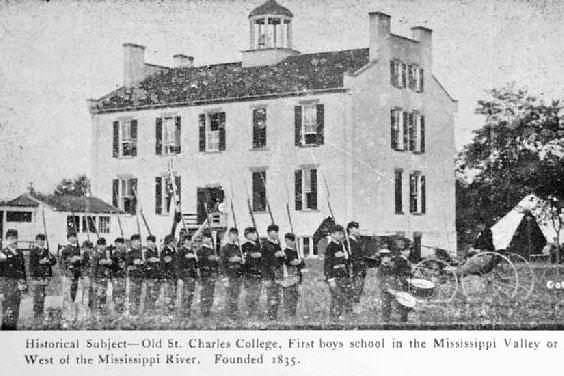
Both Federal and Condederate soldiers had similar uniforms, only in different colors, blue and grey respectively. The Federal soldiers were almost always well uniformed. There were differences among Federal units. Federal soldiers were issued "sackcoat". Arsenal made coats were lined. Army Regulations called these "Recruit Coats". Many commercial contract blouses were unlined. Arsenal made blouses were typically made from 12 oz wool flannel, while contract blouses were made to the specifications given by the Army to the contractor at time of order. Army sutlers sold commercial grade blouses to soldiers who preferred not to take the Army issue clothing. Confederate uniforms were much more varied than Federal uniforms. Many Conderate soldiers infact fought without standard uniforms. Drummer boys in both armies were uniformed in standard enlisted uniforms. We note some period images of boys in uniform. Some of these are students at military schools rather than drummer boys. We have not yet assessed major fashion changes associated with the Civil War. We note that some boys' suits were styled like military uniforms such as Zouave uniforms. We note Zouave styled suits in the 1850s even before the War.
At the same time the Europeans megan to codify the laws of war which emerged as the Geneva Conventions, something similar occurred in America during the Civil War. President Lincoln's military advisers pulled together a group to draft a code of military law to govern Federal soldiers in the procecution of the War (late-1862). There was a range of legal issues that were never addressed in the Revolutionary War, War of 1812, and Mexican War. Fighting in 1861 had been limited, but major battles with huge losses had been fought in 1862 and it was clear that there were many more terrible battles to come. The basic issue addresses and one that Lincoln agonized over was the often elusive bondary beteen the legitimate application of military power and what in the 20oth cntury became known as crimes against humanity. Many of the issues involved have been dealt with by Federal commanders in an ad hoc manner, often with major differences on the part of different commanders. President Lincoln issued the resulting code (spring 1863). The new military code covered a range of issues, including torture, prisoners of war, assasination, and many other issues. Along with the Geneva Convention, Lincoln'Code became the foundation of the modern laws of war. 【Witt】 Many of the rules that emerged in Lincoln's Code were not applied in what might be called insirgencies, both the Indian Wars and the Philippines Insurection.
There was for decades aftervthe War enormous resentment in the South aimed that those "damed Yankees". This sectional bitterness carried over into the 20th century. Southerners recalled Sherman's March through Georgia and other harsh Federal war actions. Often forgotten in all this was how soft the peace was. Confederate leaders and soldiers had committed treason. The fate of failed traitors in rebellions and civil wars in other countries is often quite bloody. There was almost no legal action taken against Confederate civil and military leaders. Grant at Appomastox simoly required the Confederate oldiers to afirm that they they would no longer take up arms against the United States, after which they and their officers, including General Lee was free to go home. The only successful prosecutions of Confederate supporters was the commondant of the infamous Andersonville Prison in Georgia and those associated with the Lincoln assaination.
The Civil War has been called the first modern war. The importance of the Civil War, however, goes far beyond the military struggle. The Civil War was the defining eeperience of the American nation. It was an open question in the 19th century as to whether a democratic republic could govern a country the size of the United States. This was the question President Lincoln asked at Gettysburg. The Civil War definitively answered that question. For those involved it was for the most part the great adventure of their lives. Their experiences were told and retold to children and grand children. Many embelished their stories as they grew older. Others had no need to enbelish their accounts. The Civil War has been extensively studied in American history, but except for military scholars little noted outside the United States. The Civil War, however, had profound consequences for world history that were not immediately apparent in 1865 by a Europe not yet fully aware of the titan developing across the Atlantic, Except for Bismarck, German leaders seem particularly dimisive of the United States despite the huge number of Germam emigrants. The thought of what today's world would be like today if a united industrial powerhouse had not existed in 1940 to serve as the great Arsenal of Democracy and then as a key element in the Allied coalition that defeated the German NAZIs and Japanese warlords. Imagine the consequences of racist Confederate Rpublic. Or what would have happened to Western Europe had not America existed to stop Stalin from instituting totalitarian rule throughout the continent. The best discussion of the consequences of a Southern victory is a brilliant counter-factual article written by Winston Churchill, "If Lee Had not Won at Gettysburg".
The Civil War was the beginning of America comsidering what now might be called war crimes. Several issues have surfaced. The two most imprtant are POWs and the treatment of escaped slavwes by the Comfederavy. Americans were very disturbed (with some justification) by how the British treated prisoners of war during the Revolution. There were very high mortaliy rates. There were similar concerns during the War of 1812. The U.S. Army had regulations on how prioners should be treated. Ironically the basic regulations were drafted when South Carolina icon and the father of secession, John C. Calhoun was Secretary of War. So at the time of the Civil War both sides had regulations mandating the humane treatment of prisoners. Actually they were the same regulations as the Confederate Government adopting the regulations of the United States on such matters. There were minor differences because of changes made by the Federal Army during the War. Overall both sides lived up to these regulations, but there were exceptions, especially on the part of the Confederacy. Perhaps the greatest violations occurred at the Confederate prison of Andersonville in Georgia. Federal prisoners when the camp was liberated were in terrible condition, some looked like the human skeletons that the U.S. Army found when it liberated Dachau. Much of this was the work of the brutal camp commander--Cpt. Henry Wirz. Lost Cause historians claim that death rates were high at Federal prisons as well. This is in part true, but largely Civil War camps were not healthy places, not only POW camps, but regular Confederate and Federal military camps as well. This was in part because of the lack of knowledge of sanitation. No camp, however, even approached the Andersonville death rates. Lost Cause historians also insist that the South was starving. You get a little of this in 'Gone with the Wind'. But this was simply not true. Thee was plenty of food in Georgia. The problem was getting food to the soldiers at the front because of the South's inadequate transportion system. And Wirz prevented local women from bringing fresh vegatables to Andersonville and limited access to fresh water. 【Finkleman】 No Condederate POWs came out of Federal camps looking like NAZI Holocaust victims. Other issues which need to be considered here are treatment of black prisoners and treatment of civilians. Berginning in 1863 with the Emncipation Proclamation, African Americans were allowed to enlist in the United States Army. Eventulaly they would comprise about 10 percent of the Federal Army. Eventually some would be captured by Confederate forces. Their treatmentment varried, but was generally harsh. African-American captives might be shot. Confederate soldiers executed captive Black soldiers captured at Fort Pillow, Tenessee (1864). Capitve Blacks were both shot and hanged. Their white officers were also treated harshly, commonly seen as 'outlaws' and often wxecuted rather than treated as POWs. Union officers threatened retribution. This may have restrained Confederate officers. Another factor was that captives African-Americans had substantial value. As a result, many were returned to their previous owners if possible. Or sold into slavery. Another issue is the treatment od civilians in occupied areas.
The losses and disruption of the war was staggering. More Americans died in the Civil War than in any other war America has fought--including World War II. Over 0.6 million Americans were killed and staggering numbers received debilitating injuries. This was in part because military tactics had not yet adjusted to the increasing leathality of weaponry as well as the limitations of medical treatment at the time. The South was devestated and the economic and social impacts were felt well into the 20th century. The industrial expansion of the north, however, was strongly promoted by the War.
After the Civil War, the Federal Government began a process of Reconstruction. The Federal Government descipte Southern critics, persued a soft peace. Southern soldeiers were allowed toi simply return home after afirming loyalty. Lee's soldiers after surrender were not even interned. The same was true of Johnston's soldiers in North Carolina who surrendered soon after. Blacks for the future. White southerners attepted to intoduce a legal system which kept the freed slaves in a state of servitude. Their primary instrument was the Black Codes (1865). They resstricted the rights of Blacks and limited economic and educatioinal opportunities. White southerners formed a secret paramilitary white supremacist organization, the Ku Klux Klan (KKK). The KKK terrorized blacks with beatings, whippings, burning of homes and lynching. Radical Republicans in Congress persue a policy aimed at protecting southern Blacks. Here the quarled with President Johnson (1864-69). President Grant was more supportive (1869-77). The central step taken was the passage of the 13-15 amendments which abolished slavery and guaranted the civil rights, including the right to vote, of the freed slaves and guaranteed the equal protection of the law. (The Emancipation proclamationThere was an execyive order and open to legal challenge.) The slaves were freed, Reconstruction brought great hope for change in the South. There were some considerable gains made. Schools were established and Blacks elected to public office. The Freedman's Bureau was established. After President Hayes (1877-81) withdrew Federal troops from the South, the white majority began to take away the civil rights that the freed slaves had briefly experienced.
"The Lost Cause" was a historical myth which persisted for many years in American history. The Civil War in the minds of most northerners had bee fought to preserve the Union, not free the slaves. Racism was not a belief prevalent only in the South. After Reconsnstruction there was no real Federal action to protect the rights of Black citizens in the South or to prevent terroist activities perpetrated by the KKK. The KKK was even established in northern states like Indiana. Southern historians with anti-Black bias established the Lost Cause myth. This was largely accepted even in the North, in large part because of the widly held rascist attitudes of most white Americans at the time. The historical myths went largely unchallenged except by scholars like
W.E.B. Dubois, who was not given scholarly recognition at the time. The historical myths of the Lost Cause were not seriously challenged by academics until the advent of the Civil Rights Movement in the 1960s.
Both Federal and Condederate soldiers had similar uniforms, only in different colors, blue and grey respectively. The Federal soldiers were almost always well uniformed. There were differences among Federal units. Federal soldiers were issued "sackcoat". Arsenal made coats were lined. Army Regulations called these "Recruit Coats". Many commercial contract blouses were unlined. Arsenal made blouses were typically made from 12 oz wool flannel, while contract blouses were made to the specifications given by the Army to the contractor at time of order. Army sutlers sold commercial grade blouses to soldiers who preferred not to take the Army issue clothing. Confederate uniforms were much more varied than Federal uniforms. Many Conderate soldiers infact fought without standard uniforms. Drummer boys in both armies were uniformed in standard enlisted uniforms. We note some period images of boys in uniform. Some of these are students at military schools rather than drummer boys. We have not yet assessed major fashion changes associated with the Civil War. We note that some boys' suits were styled like military uniforms such as Zouave uniforms. We note Zouave styled suits in the 1850s even before the War.
Lasting impacts on boys' fashions seem hard to detect at this time, but this is a subject that we are just beginnng to access. The Civil War does appear to be the watershead between the first and second half of the centuries. There are very destint differences between styles in the 1850s and 60s. We think that the fashion trends may be more the result of rising affluence as the American industrial economy begins to grow rather than a result of the War. There is a rich photographic recordd as a result of the introduction of the CDV. In a general way, the Civil War seems to be the dividing line netween several major fashion tends. In the first half of the 18th century we see many boys weaing just shirts or tunic-like shirts of varying lengths and trousers while after the Civil War suits become increasinghly common. The Civil War is also the dividing point btween when long pants were standard to the begging of the appearance of knee pants which would a few decades later become standard for American boys. We are not sure, however, just how the War influenced this trend. In fact European fashion trends uninfluenced by the War appaer to have been more important in influencing American boys' fashions. There were some military influences, especially with caps. Somewaht surprisingly, a major military style, the collar-bittoning military jacket with multiple buttons went out of style during the Civil War era. It was an important boys' style in the 1840s and 50s and we still see it in the early-60s, but it becomes much less common after the War.
The Civil War was the major historical event in America during the 19th century if not all of American history. It settled the issue of slavery as well as the nature of the Union. It also marked the transition of America from an agrarian nation to the rising industrial power that would determine the fate of Western Civilization in the 20th century. Those who think that this is an overstatement should red Winston Churchill's pice, "If Lee had not won at Gettysburg". Millions of Americans were affected by the War in counless positive and negative ways. For those who participated, many recalled it at the most exciting and stressful event of their lives. Many were farm boys who had led placed lives and who had never traveled more than 50 miles ffrom home, but found themselves involved in apocaliptic struggles in ever corner of the country. We see veterans having portraits taken with their medals and uniforms throughout the 19th century and their children and grand children pictured in Civil War uniforms. We even note immigrant children wearing Civil War uniforms. A good example is the Keeling boys in 1896. And even today Civil War reenaction is enormously popular. Historians continue to publish new and revealing books about the War and the people who waged it,
The Civil War was perhaps the great crisis in the American Republic and thus western democratic society. (What would have happened to Britain and Western Europe during World War II, if an independent rascist South had existed in North America?) It is thus no accident that no period is more popular for historical re-enactmernts in America than the Civil War era. It was the most costly war America has ever engaged in, even more costly than World War II--despite the much smaller population. Modern weapons emerged, but the tactics from previous wars resulted in horendous losses. How Europeans view World War I is how Americans viewed the Civil War. Virtually no family in America was left untouched in a war that bitted brother gainst brother. The most popular boys' costume is of course the famed drummer boy who has been so tenderly depicted in books and film. There are also civilian costumes used in these events.
No individual is more associated with Civil War photography than Mathew Brady. This is because he equipped traveling photigrapers to vist Union Army camps and battlefields. Given the lmits of photography of the time, the battlefirld shots were taken after the battles and depict scenses where the fighting took place and unburied corpses. Brady was of course not the only photographer at the time. There were photographic studios located throuhjout the Uninted States. Thus there are numerous studio portraits taken at the time of both the soldiers and civilians affected by the War.
The United States Army fielded and supplied by the Federal Goverment became one of the greatest armies of liberation in history. This was a largely unheralded development at bthe time and even today. American histography today gives more attentiin to the failure of Renconstruction than the accomolishment of the Federat Army. There are few wars of liberation until the 20th century. Wars were mostly dynastic struggles over who would control various principalities. The Reformation resulted in wars to sustaint Protestantism. The French Revolution proclaimed wars to liberate Italy and France, but this is not how thaey were conducted. The Dutch and Americans waged wars of national independence. The Haitian Revolution was a slave rebellion. The American Civil War was perhaps the greatest war to free an oppressed people in history up to thar time. As a result of the War, 4 million Americans were freed from chattel slavery. It is one of the most greatest achievements of any army in history. Yet the GAR has rarely been pictured in this light. Astonishly, the GAR has often been pictured negativekly by Hollywood which essentially accepted tge Lost Cause. The two greatest Civil War films ('Birth of a Nation' and 'Gone With the Wind') have pictured the GAR in extrodinarily negative terms. Hollywood has in fact tended to picture the Confederate Army and soldiers in a more positive light than the GAR even though they were fighting to preserve slavery. 【Gallagher】 One of the few films to depict the GAR as a victorious army of liberation is 'Glory'. It is also one of the most accurate film depictions of the War. Hollywood films have not only distorted the character of the War, but they generally exclude both black slldiers (U.S. Colored Troops) who played a key role in the GAR and the boys and youth who played a major role in both the Confederate Army and GAR. Hollywood may seem a relatively inconsequential subject. The problem is that the general public gets much of their sence of history from Hollywood rather than historins.
Churchill, Winston. "If Lee Had Not Won at Gettysburg".
Cooper, William J. We have the War Upon Us (2012), 352p.
Craughwell, Thomas J. Greatest Brigade: How the Irish Brigade Cleared the Way for Victory in the American Civil War (2012).
Finkelman, Paul. War Crimes Trial of Henry Wirz.
Gallagher, Gary W. Causes Won, Lost & Forgotton.
Gordon, Sarah. Passage to Union.
Griffith, Paddy. Battle Tactics of the Civil War (T.H.E. Crowood Press Ltd.: 2014), 230p.
Hannah-Jones, Nikole. The 1619 Project (2020).
Hormats, Robert. The Price of Liberty
Kreiser, Lawrence A. Jr. Defeating Lee: A History of the Second Corps Army of the Potomac (2012), 416p.
Levine, Bruce. The Fall of the House of Dixie: The Civil war and the Social Revolution that Trahsformed the South (2012).
McPherson, James. BookTV C-Span, October 12, 2002.
McPherson, James. Fields of Fury: The American Civil War (Atheneum, 2002). This well written book is aimed at younger readers. It includes many excerpts from the letters and dairies of young soldiers, both Federal and Confederate, helping to understand why they fought.
Robertson, James. The Untold Civil War: Exploring the Human Side of War (2012).
Waugh, John C. One Man Great Enough: Abraham Linclom's Road to Civil War (Harcourt, 2007), 479p.
Witt, John Fabia. Lincoln's Code: The Laws of War in American History (2012), 512p.
Wittenberg, Eric J. Gettysburg's Forgotton Cavalry Actions (2012), 224p.

Navigate the Boys' Historical Clothing Web Site:
[Return to Main American history page]
[Return to Main 19th century war page]
[Return to Main war page]
[Biographies]
[Campaign]
[Causes]
[Emancipation]
[Families and youth]
[Fiscal policy]
[Formations and units]
[Law]
[Railroads]
[Reconstruction]
[Slavery]
[Soldiers]
[Uniforms]
[Weaponry]
[Lost Cause]
[Civil Rights movement]
[Return to CIH Home page]