|
The NAZIs incorporated Austria into the Reich with the Anschluss (1938). This was was enormously popular action both in Austria and Germany. After the German surrender (May 1945), Austria was separated from Germany and occupation zones set up. Austrians began to complain saying that they were occupied by the NAZIs and should be treated as a liberated country, not a occupied country guilty of war crimes. In fact the Anschluss was widely popular in Austria. And many Austrians were enthusiastic NAZIs and actively participated in the NAZI aggressioins and war crimes. In the end, Austria like Germany was devestated by the War and occupied by the Sovietrs and Allies. The occupation was ended on the condition that Austria would be a neutral nation (1955). and in a rare interluse of agreement during the Colf war, the Soviets and Western Allies withdrew.
There was considerable sentiment in both Germany and Austria after World War I to join the two German-speaking states. France adamently refused. Hitler after seizing power revived the issues. Austrain NAZIs were encouraged to promote the idea. Hitler and Austrian NAZIs throughout 1937 demanded an Anschluss with Austria. Belaegered Austrian Chancellor Kurt Schuschnigg on March 9, 1938, announced plans to hold a plebiscite on the independence of Austria. Hitler used this opportunity to take action against the Austrian State. The NAZIs with the Wehrmacht on the border pressed Schuschnigg was pressed to resign. The NAZI surrogate, Arthur Seyss-Inquart, took over the chancellorship and formed a new government dominated by the Austrian NAZIs. The German Wehrmacht
and the SS, armed with list of NAZI opponents, crossed the German-Austrian frontier. Hitler on March 13, speaking before a jubilent crowd in Linz, announced the "Anschluss" (Annexation) of Austria into the German Reich. Jouous celebrations occurred throught Austria. Even while the celebrations were going on, the SS and local NAZIs began rounding up those who had opposed the NAZIs. Violence occured against the Jews. Jewish students and professors were attacked in universities. Emboldned NAZIS dragged Jews at random into the streets to scrun the sidewalks on their hands and knees--surounded by taunting crowds.
Austria's infrastructer was severely damaged by the Allied strategic bombing campaign, although not as badly as in Germany. There was also considerable damage as the Soviets and Western Allies moved into Austria. The Red Army seized Vienna (April 13, 1945). The Soviet troops plundered Vienna for anything which could be carted off. This included windowpanes, typewriters, machinery, even lavatories were fair game. A Austrian reader reports, "The Soviets stripped Vienna clean." The Soviets did the same in Berlin, but Vienna had not been as heavily damaged as Berlin. The Soiviets in Berlin also conducted an orgy of rapes. I don't know if this also occurred in Vienna. American forces reached Austria from the west (April 30). They were soon joined by additional American units moving north from Italy. A few days later Germany surrendered which ended World War II in Europe (May 8).
Austria was largely untouched by the War until the last year of the War. The adverse impact on Austrians were the people targeted by the NAZIs, primarily Jews and Gypseys. This changed when Austria finlly camne within range of Allied bombers (1944). This was when most of the phyical danage was done, primarily in Vienna. Other Austrianbs cities, especislly Innsbruck were also hit and the transport system destroyed. Despite the extensive distruction, loss of village was limited because of the efficient German civil defense system. More damage occured when the Red Army
entered Austria (April 1945). The primary fighting occured as part of the battle for Vienna. There was more phyical damage, but this was when most of the Austrians were killed, both soldiers and civilians. There was also an orgy of rape and theft that turned what was left of Vienna abd other cities and towns into a hellish nightmare. The Western Allies entered western Austria 2 weeks after Vienna fell. But there was little or no resistance and fighting. In fact the primary interest of German soldiers was to surrender so they would not be taken into Soviet captivity. Wjile the Wesern Allies caused little additional damage, the bombing left Austrian cities badly damaged and Vienna in ruins. In addtion the transport system was virtually destroyed.
Many believe that after the NAZIs surrendered (May 1945) that all German resistance suddenly ceased. This was not the case. There were NAZI attempts as resistance and the Allies had to take measures to deal with the resistance from various German groups. The NAZIs in the closing months of the War organizated operations like the "Werewolves" to disrupt the occupation. Most of the Werewolves were Hitler Youth boys. There were incidents of Allied soldiers ambushed by Werewolf boys and incidents between Werewolf partisans and Allied forces in the closing days of the War. American soldiers leaflets detailing plans on how to undermine the occupation through sabotage and other measures. The NAZI resistance efforts proved ineffective. Given the level of support that the NAZIs built up, this seem rather surprising. The NAZI resistance effort failed for a variety of resons. One, the destruction as a result of the War changed the mind-set of many Germans. Two, relevations of NAZI war crimes also had a major impact on German thinking. Three, Germany was so devestated that the Germans were dependant on American food aid. Four, the nature of the Western Allied occupation did not generate resistance nd ill will. Five, the nature of Soviet behavior had the result of making the Americans look more like protectors than occupiers.
The Volksdeutsche are German people who emmigrated to East and South Europe, but kept their language and customs. German minorities used to live throughout Eastern Europe and Russia. Austrian emperors played a role in this emigration. After World War II, countries in Easten Europe expelled most of the German minorities and these peole were expelled and forced back to Germany, often in unfortunate circumstances. We are not sure to what extent Germans went to Austria rather than Germany. We think it was largely a matter of geography. The Poles and Sudeten Germans primarily were forced into Germany. A look at the map, however, shows that Austria was closer to to the Germans more to the south (some of Czechoslovakia and all of Slovakia, Hunagary, Romania, Bulgaria, and Yugoslavia. Thus soon after the War expelled Germans began arriving in Austria. Czech President Edvard Beneš speaking on the radio from Brno (May 12, 1945) only days after the NAZI surrender declared gthat the Germans during ghe War had not acted like humnan beings. And that the Germans 'must pay for this with a great and severe punishnment ...." We must liquidate the German problem defunitively." Frno is just north of the Austrian border and Vienna. Riots broke our in Brno attacking ethnic Germans and demanding police arrest them. Days later, the Brno National Committee began fircibly evicting some 20,000 men, women, and children from their homes. They had to trudge on foot toward the Aystruian border. Hundreds died along the road. Czech authorities reported that nearly 6,000 ethnic Germans committed suiside in 1946. [Pykel, p. 18.] This kind of action was occuring all over Eastern Europe. Virtually all were expelled with only the shirts on their back and perhaps a small suitcase or bundel. Almost immeduately attacks on ethnic Germns began, especially in Poland and Czechoslovakia were the Germans had brutally treated the local population. Quickly actual laws were passed as the governments began legal action. The countries involved passed various laws, seizing German property and deptiving ethnic Germans of their citzenship. We do not have a lot of information on Austria which was a small country without much capacity to settle huge numbers of refugees. We think most went on to Germany.
Many Austrians wanted to join Germany after the loss of their multi-ethnic empire at the end of World War I. Union was prohibited by the Versailles Treaty. Hitler prevented a referendum in Austria and ordered theGermany Army into Austria--the Anschluss (March 1938). It was a total violation of the Versailles Treaty. Austria was annexed to the Reich. Britain and France issued only weak pro-forma complsints. As the War developed, however, the future of Austria became a question. The United Kingdom, the UNited States, and the Soviet Union at the Moscow Conference decided to treat Austria differently than Germany (1943). They agreed that Austria would be treated as the first victim of NAZI agression because of the Anschluss rather than an active participant in the War. The fact that the vast majority of Austrians were etralled by the Anschluss was ignored. The NAZIs absorbed Austria intio the Reich. Thus with the outbreak of World War II hostilities (September 1939), Austrians fought as Germans against the Allies throughout the War. The Allies and Soviets thus reseparated Austria from Germany and treated Austria differently from Germany with the cessation of hostilities. Many Austrians claimed that they were one of the oppressed occupied nations and should be treated differently than Germany. Many view Austria as a not only a willing collaborator, but an enthusiastic suppoter of Hitler and the NAZIs. The victorious Allies divided Austria into five sectors (July 1945). Each of the Allied powers had occupation zones. The Soviet zone was in the east. The Americans, British, and French had zones in the west. There was a fifth zone created for Vienna, the capital of Austria. This was the same approach taken for Berlin. Vienna was administered by the Allied Council, composed of the four occupation zone commanders. The Allied Council first met and from the beginning, as in Germsny, found agreement difficult (September 1945). The Soviets wanted the Allies to recognize the provisinal government establishged by Karl Renner, an elderly but respected Soicialist politican. The Western Allies, suspicious of Soviet intentions, refused at first to recognize the Soviet-backed Renner government. Vienna became a neutral city at the center of the four occupation zones. Austrians could move eaily through the Western zones and Vienna. The Soviets imposed a much more restructive regime. Inhabitants in the Soviet sector had to ask permission just to go to another village.
Most Germans readily admitted their country's responsibility for the War and ther honredous acts of the NAZI regime. This was not so true in Austria. Many Austrians wanted to portray their country as a NAZI victim and not a willing collaborator. The fact is that the Austrians enthusiastically greeted the Anschluss and there was widespread support for the NAZIs. The same was true of other German-populated areas seized by the NAZis (Danzig, the Saarland, and the Sudetenland).
The Allies instituted a thorough going denazification process in Germany. I assume the same took place in Austria, although we have few details at this time.
The Austrian denazification process appears to have been more lenient than in Germany. The Americans initiated a comprehensive denazification program in the American occupation zone (May 1945 to summer 1946). The Soviets implemented a less rigorous process in their occupation zone (1945-46). After the election of an austrian provisional government, the Allied Council lrgely turned the denazification effort over to Austrian authorities (1946). The Austrian Denazification lprogram was based on the War Crimes Law (June 26, 1945) and the Prohibition Law (May 8, 1945). Austrian authorities were expected to compile a registry of all NAZIs. Files were compiled on NAZI Party members which assessed the nature of their Party activities, when they joined the Party, their Party �associations�, and the duties performed for the Party. There wera a range of legal and professional penalties, from prison to measures such as dismissal, disbarment from frofessional practise, and fines. Some estimates suggest that as much as a quarter of the Austrian population would have been affected by through implementation of the de-Nazification laws. Another problem was that the Austrian intellectual elite had largely been coopted byb the NAZIs and became Party members. Given these facts, de-Nazification was not an issue that would prove helful to Austrian politicians attempting to garner votes. Austrian authorities wanted to limitv the time period of the de-Nazification process. Most politicians focused on other issues which they insisted were more pressing. In addition, Austrians politicians largely rejectef co-responsibility with NAZI war crimes, insisting that Austria was an occupied country. Many believed that this approach would enable Austria to end the occupation. Many politicans concluded, although few argued the point in public, that throughly persuing de-Nazification would endanger the developmrent of a democratic political system because it would alienate a sunstantial part of the Austrian population.
The Allies decided to try NAZI war criminals in Nuremberg. This was in part a symbolic gesture because Nuremberg was the heart of NAZI Germany, but the palace of justice in Nuremberg was on of the few facilities left standing in Germany large enough to accomodate the proceedings. Nuremberg was location of the annual NAZI Party Congresses. The chilling film, Triumph of the Will depicted one of these NAZI extravaganzas. There were other reasons for holding the trials in Nuremberg, one in particular was that it wa in the Western zone. The first trial of the NAZI leadership was held from November 20, 1945 to October 1, 1946. The International Military Tribunal (IMT) convened in the principal courtroom for criminal cases (room No. 600) in the Nuremberg Palace of Justice. It was the scene of many NAZI show trials. Allied leaders during the War had agreed to prosecute those responsible for war-crimes. President Harry S. Truman designated Supreme Court Justice Robert H. Jackson as the U.S. representative and chief counsel. He planned and organized the trial procedure and served as Chief Prosecutor for the United States. It was Jackson who recommended Nuremberg as the site for the trials. The Soviets wanted the trials held in Berlin. A compromise was reached. Berlin was to be the permanent seat of the IMT and that furture IMT trials could be held in Berlin. There were no further IMT trials, however, because of the Cold War. There were further trials, but none conducted by the Soviets and Western Allies jointly. Each of the four Great Powers (Britain, France, the Soviet Union, and the United States) provided one judge and an alternate as well as the prosecutors. The first session of the International Military Tribunal was opened on October 18, 1945, in the Supreme Court Building in Berlin, which had become the seat of the Allied Control Council. Soviet judge, Iola T. Nikitschenko presided over the opening session. The prosecution presented indictments against 24 "major war criminals" and against six "criminal organizations": Hitler's Cabinet, the leadership corps of the Nazi party, the SS (party police) and SD (security police), the Gestapo, the SA and the General Staff and High Command of the Wehrmacht.
Many GIs began occupation duty with great bitterness toward the German/Austrian people. Most GI's had lost friends during the War. Many had also seen the conentration camps and all had heaed about them. There was a general assumption that most prople had participated in the attrocities or at least known about them. (There is still considerable debate as to how involved the German/Austrian people were in the attrocities.) Gradually as the occupation progressed, many GIs began to change their attitudes. One factor here was the children. The children were attracted to the GIs who were a seeminglly endless source of chewing gum and Hershey bars as well as food and cigarettes. There were a lot of children on the street. There were displaced families as well as abandoned children. Many families had their homes destroyed as a result of the bombing and figting. The American reached Austria (April 1945). Schools had been closed down and the Summer vacation meant that children had little to do. The resulting contacts must have been part of the process in changing attitudes, although it is difficult to assess just how important it was.
The Allies completely dismantled the NAZI regime and during military occupation reconstructed an entirely new political structure. In some ways the process was simplified by the NAZIs who although opposed to democracy had gone a great way toward the breaking down of class barriers and weakening the power of the Prussian junkers. The Austrians like the Germans Germans were not without a tradition of democracy and parlimentary politics. Given the NAZIs success in dominating the German people and the thorouness of that domination, it seems perhaps surprising how readily the Austrians and Germans adopted democracy. Perhaps the totality of the NAZI defeat and the spector of Soviet totalitarianism looming accross the border were major factors. What ever the reasons, the Austrians took to political democracy and free-market economics.
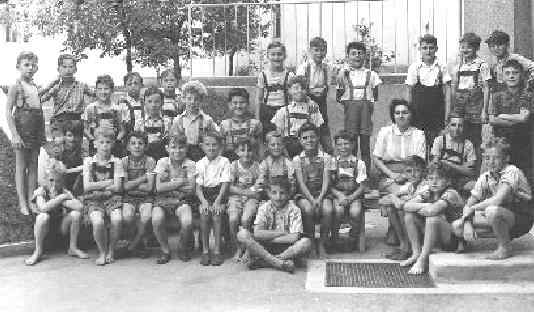
The occupation of Austria was significantly impacted by advent of the Cold War. The Soviets attempted to establish a Communist puppit government in Austria. This proved difficult, however, because they did not control the country as was the case throughout Eastern Euroope. They did control the eastern half of Austria. Stalin had selected Socialist leader Karl Renner to head a puppet government. Renner only a few days after the fall of Vienna and before the Americans had reached Austria Renner had formed a provisional government (April 27, 1945). The Western Allies refused to recognize the Renner Government. Renner and his assovciates met with political representatives from the other occuipatioin zones. Renner agreed to expand his provisional government to inclyde representatives from the Western zones and agreement was reached on nation-wide elections. The Allied Council then proceeded to recognize Reenner's providsional government (October 20, 1945). The elections which followed (November 25) resulted in a crusing defeat of the Communists ganered only about 5 percent of the vote. This might have occurred in other Eastern European countries if free elections had taken place. Most Austrians voted for the Austrian People's Party and the Austrian Socialist Party. The Allied Council adopted a new control agreemment (1946). This granted greater authority to the Austrian Government. This democrsatically elected government supported by the western Allies was difficult for the Soviets to deal with. The Austrians passed more than 500 laws that the Soviets tried to block, but were out voted on the Allied Council. When the Soviets began seizing German assetts in Austria as a foirm of war repriatiins (July 1946), the Austrian government nationalized German assets to keep them out of Soviet hands. The Soviets opposed the Austrian law and whenn they were out voted on the Allied Council proceeded to seize German assetts in their occupation zone. The Soviets also tried to prevent Austria from participating in the American Marshall Plan, but the 1946 Control Agreement prevented the Soviets from partivipating or from joining the Organization for European Economic Co-operation. the Allied western sector of Austria prospered much more than the Soviet eastern occupation zone. The Austrian economy, at least the Westen sector along with German had begun to recover (early-1950s). Voralberg in the French sector had begun to benefit from Swiss tourists. The economy of the Soviet sector lagged behind the western sector. The school photo here is from Schwechat which was near Vienna in the Soviet sector. The Soviets imposed strict limitations on the population in their sector. Austrians there were not permitted even to go into Vienna without giving a reason to Soviet occupation authorities and getting their permission. Notice that most of the children in the school portrait didn't have shoes. In fact, children's shoes in Soviet sector were rare. Children might wear them when going to school and during the class, but the afternoon being free, children often took them off for activities. The rural setting of the school may also be a factor. A reader writes, "In Vienna 1953-55 I never saw school children without shoes, even in Soviet sector. At this time, leather pants (Lederhosen) were rather expensive. Many of these boys are wearing lederhosen which probably handed down from older brothers bought before the War." We suspect that shoes in Vienna were more common than in the counrtyside. And we have found many Austrian school images showing barefoot children.
Soviet dictator Joseph Stalin died (March 1953). Taking advantage of the changes in Moscow, the Austrian Government acted to end the occupation and reunify the country. The Government offered to adopt a neutral stance between NATO and the Warsaw Pact. The era following Stalin's death resulted in a temporary thaw in East-West relations. The Soviets eventually agreed to a neuralized and unified Austria and a treaty was signed (May 15, 1955). The Austrians agreed not to unify with Germany or allow the Hapsburgs to return. There were also protections for ethnic minorities. Austria's neutral status and a provision prohibiing foreign military bases were incorporated in the Austrian Constitution (October 1955). Soviet troops withdrew from Austria (September 1955) and a smaller number of Western troops (October 1955). There is in Vienna a large monument honoring the Red Army. It is located on the grounds of a public buildong in Vienna. The Soviets conditioned their withdrawal from Austria in part by requiring that this memorial not be removed or altered in any way. The Austrians had the last say, however, by constructing an enormous fountain whose spray of water effectively overshadows the Soviet monument!
The results by all practical measures have been an overwealming success. Germany today is one of the most prosperous and democratic societies in the world.
Young Germans are reeamining their past. They do not accept the previous reluctance to avoid a discussion of how Germans suffered in World War II. This is in part due to a lack of familarity with the totality of NAZI crimes. It is also due to the vert real fact that the Germans also suffered greviously in World War II. One German reader writes to us, " "Well, wars do just happen. But the same way crimes and accidents do just happen and everything is done to prevent or at least to keep them at a low number, everything should be done to prevent wars, too. Furthermore, wars are always man-made, so man should be able to prevent them. It is just a simple black and white creation. Strange, that this could work over centuries so very well, and now still works. World War II brought democracy to us, but at a high price. Towns were bombed, many of them being no military targets. And two nuclear bombs were thrown on Japan. Not to mention the thousands of people died on all sides. I think the price is too high." We suspect that many young Germans feel the same. To a large degree this opinion seems to be a rejection of war as an instrument of national policy. This opinion is widely shared by young people througout Western Europe. It is a major issue that separates America and many Europeans today.
Conot, Robert E. Justice at Nuremberg (Carroll & Graf: New York, 1986), 593p.
Dollinger, Hansand and Hans Adolf Jacobsen. The Decline and Fall of Nazi Germany and Imperial Japan (New York: Crown, 1968).
Dulles, Allen W. "That was then: Allen W. Dulles on the occupation of Germany" Foreign Affairs (November/December 2003).
Gosztony, Peter. Endkampf an der Donau 1944/45 (Wien: Molden Taschenbuch Verlag, 1978).
Laffin, John (1995). Brassey's Dictionary of Battles (New York: Barnes and Noble, 1995).
Lewis, Jill. "Dancing on a Tight Rope: The Beginning of the Marshall Plan," in Gunther Bischof, et al. The Marshall Plan in Austria (Transaction Publishers: 2000), pp. 138�55.
Lucas, James. Kommando: German Special Forces of World War Two.
Pykel, Pitor. "The expulsion of the Germans from Czechoslovakia, in Steffen Prauser and Arfon Rees, eds. The Expulsion of the 'German' Communities from Eastern Germany at the end of the Second World War<./i> EUI Workng Paper No, 2004 /1.

Navigate the CIH World War II Section:
[Return to Main World War II aftermath page]
[Return to Main Austrian World War II page]
[Biographies]
[Campaigns]
[Children]
[Countries]
[Deciding factors]
[Diplomacy]
[Geo-political crisis]
[Economics]
[Home front]
[Intelligence]
[POWs]
[Resistance]
[Race]
[Refugees]
[Technology]
[Bibliographies]
[Contributions]
[FAQs]
[Images]
[Links]
[Registration]
[Tools]
[Return to Main World War II page]
[Return to Main war essay page]