|
The Austro-Hungarian Empire desintegrated in the closing months of World War I (1918). The Austrians declared a republic in the much reduced territory of German-speaking Austria. The economy suffered. Many Austrians after the War wanted to join Germany, but the Allies prohibited this with the Versailles Treaty (1919). After Hitler's seizure of power in Germany, but the Austrian NAZI Party grew in membership, but was restricted by the Government, especially after the assaination of Chancellor Dolfuss (1934). The Austrians NAZIs led by by Arthur Seyss-Inquart, (the future NAZI occupation head in the Netherlands) agitated for union with Germany. Hitler finally accomplished union with the Anschluss (1938) whch was accompanied with an unimaginably outburst of violence against Austrian Jews. The Anschluss was an action thar was popular with the great majority, but not all Austrians. Despite the Versailles Treaty prohibition, the British and French did nothing, but submit diplomatic protests. With the Anchluss, Austria ceased to exist and Austria participated in World War II as a part of Germany. A particularly brutal Gauleiter was causing problems in Vienna, so Hitler appointed Baldur von Schirach (former Hitler Youth leader) as Gauleiter and Governor of Vienna. He provided a little cultural gloss to the NAZI regime. After successfully transporting Vienna Jews to the death camps, von Schiracht wisely left Vienna as the Red Army approached. Unlike many top NAZIs, he had no intention of fighting to the end or in killing himself and family. He tried to hide as mystery writer after the War. Finally fearing Austrian anti-NAZIs and French occupation troops, he quietly entered the American occupation zone and surrendered. Many Austrians now claim that Austria was an occupied country. In fact, Austrians were vigorous supporters of all aspects of the NAZI war effort, including the Holocaust. Soviet and American armies reached Austria at the end of the War (April 1945). American forces arrived from both the south (Italy) and the west. Austria was divided into four occupation zones by victorious Allied powers (Soviet Union, America, Britain, and France). An Austrian reader has provided some personal comments.
Austria had for centuries been a major European power, dominating the Holy Roman Empire. Prussia in the Austro-Prussian War (1866) essentially ejected Austria from Germany. The Hapsburgs then recreated Austrial as the Dual Monarchy--the Austro-Hungarian Empire. Austria-Hungary became a large multi-ethnic empire dominated by a Grman and Hungarian ruling class. The Empire dominated much of central Europe. Ousted from Germany, it expelled into the Balkans where it came into conflict with Russia which had ethnic ties and expansionary goals. These conflicts escalated as Ottoman power wained. Its dealings with the various nationalities were a major political problem. The Hungarians were give dual royal status with Austria. Other nationalities felt oppressed, none more than the Slavs. Serbia secretly supported terrorist forces in Bosnia withits substantial Slavic population. This led to the assasination of Arch Duke Franz Ferdinand and Austria's decession to punish Serbia. The Austrians had no desire to launch a world war which was reflected in their war planning. There were two Austrian war plans, Plans B and R. The difference in the two plans reflected the unknown of the Russian reaction. Plan B provided only for hostilities in the Balkans against Serbia. Three Austro-Hungarian armies would invade Serbia. Three other armies would be heldin reserve along the Russan border. Plan R was a more expansive plan, a modification of Plan B in case the Russians invaded. In this case only two armies would invade Serbia and four armies would defend against the Rusians. It assumed that the Germans would enter the War if the Russians declared war. Ecalating nationalist tensions came to a head when Serbian nationalists assasinated Archduke Ranz Derdinand, heir to Emperor Franz Josef. Germany's decession to support Austria's desire to punish Serbia turned a Balkans crisis into a major European war. It was the Russians that cracked first, but only because the Germans bolstered the Austrins. The enormous losses from the War, however, fundamentally destabilized the Austro-Hungarian Empire and the Empire desintegrated in the closing months of World War I (1918).
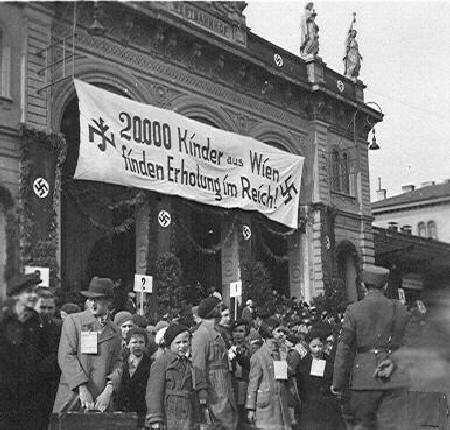
Austra for several centuries was one of the major European powers, dominating much of Germany and after the Austro-Prussian War (1866) the center of a large-multi-ethnic empire as a dual monary with Hungary. The Austro-Hungarian Empire desintegrated in the closing months of World War I (1918). The Central Power's defeat in World War I left Austria a small, Germanic state and European backwater. Many Austrians found this a difficulkt adjustment to make. The Austrians declared a republic and Emperor Karl was forced to abdicate. Austria was now the much reduced territory of German-speaking Austria. The Republic of Austria was forced to recognise the independent states of Czechoslovakia, Poland, Hungary and Yugoslavia as part of the World War I settlement. It was not just a nationalist adjustment. The Austrian economy suffered with the separation from the former territories of the Empire. This helped engender political and economic strife. The political and economic dislocation gave rise to fascism as it did in several other European countries. Many Austrians after the War wanted to join Germany, but the Allies speifically prohibited this in the Versailles Treaty (1919). This was a perfect breeding ground for fascism and the Heimwehr was one manifestation of this. The Heimwehr, similar to the German Frei-Korps, was used to supress left-wing groups and striking workers. Austrians also elected Fascist leaders. The Heimwehr merged into the Fatherland Front (1934). Austrian fascists were divided as to wether the country should join Germany. Some were more committed to Austrian than German nationalism. After Hitler's seizure of power in Germany, the Austrian NAZI Party grew in membership, but was restricted by the Government, especially after the assaination of Chancellor Dolfuss (1934). The Austro-Hungarian Army was disbanded at the end of World War I. The Austrian Republic organized a small army. At first the promary force was the Volkswehr (People's Defence Force), similar to the German Frei Korps (1918-21). They fought the Yugoslavian Army units occupying parts of Carinthia. The Army was rechristened the Bundesheer (1921). The Bundesheer supressed an attempted NAZI take over, sometimes referred to as the Austrian Civil War (1934). The Bundesheer was a small, porly equipped force. It developed a defense plan to resist a German invasion (1938). Unlike Czechoslovakia, in reality it did not have the capability of resisting the Germans. The Austrians NAZIs led by by Arthur Seyss-Inquart, (the future NAZI occupation head in the Netherlands) agitated for union with Germany. Chancellor Kurt Schuschnig attempted to obtain foreign support. When nome was forth coming from the Allies, he attempted to organize a referendum. Hitler and G�ring intimidated Schuschnig from furthr resistance. He resigned to avoid bloodshed. Hitler finally accomplished union with the Anschluss (March 1938) which was accompanied with an explosion of national rejoycing and unimaginably vicious outburst of violence against Austrian Jews.
There was considerable sentiment in both Germany and Austria after World War I to join the two German-speaking states. France adamently refused. Hitler after seizing power revived the issues. Austrain NAZIs were encouraged to promote the idea. Hitler and Austrian NAZIs throughout 1937 demanded an Anschluss with Austria. Belaegered Austrian Chancellor Kurt Schuschnigg on March 9, 1938, announced plans to hold a plebiscite on the independence of Austria. Hitler used this opportunity to take action against the Austrian State. The NAZIs with the Wehrmacht on the border pressed Schuschnigg was pressed to resign. The NAZI surrogate, Arthur Seyss-Inquart, took over the chancellorship and formed a new government dominated by the Austrian NAZIs. The German Wehrmacht and the SS, armed with list of NAZI opponents, crossed the German-Austrian frontier (March 12). Hitler the following day on March 13, speaking before a jubilent crowd in Linz, announced the "Anschluss" (Annexation) of Austria into the German Reich. Joyous celebrations occurred throught Austria. Even while the celebrations were going on, the SS and local NAZIs began rounding up those who had opposed the NAZIs. Violence occured against the Jews. Jewish students and professors were attacked in universities. Jews at random were dragged into the streets to scrub the sidewalks on their hands and knees--surounded by taunting crowds.
With the Anchluss, Austria ceased to exist and Austria participated in World War II as a part of the German Reich. Thus the Austrian war experience is essentially the same as that of Germany itself. German laws and regulations became operative in Austria. Austrians were enrolled in the German military and thus were involved in the major battles of the War as German soldiers.
Austrians loyally served in German military units throughout the War. The Germans drafted about 800,000 Austrians into the Wehrmacht). About 150,000 Austrians volunteered for service in the Waffen SS. I am not sure about the numvers of Austrians serving in the Luftwaffe and Navy. Unlike units formed from occupied countries, the Austrians were fully integrated into German units. There were no Austrian military brigades organized.
Immediately after seizing Austria, the Germans began expsnding their concentration camp system into Austria. Mauthausen, one of the most infamous NAZI concentration camp was opened. It was opened near the village of Mauthausen, on the Danube River, 12 miles east of Linz (April 1938). Other camops were opened which organizationally were part of the Mathausen system: Ebensee, Nebenlager Bretstein, Steyr-M�nichholz, and others. Lackenbach was a Gypsy-Anhaltelager. St. Pantaleon-Weyer began as a labor 'education' camp, but was turnmed into a Gypsy-Anhaltelager
There were also fored labor camps such as Siegendorf.
A particularly brutal Gauleiter was causing problems in Vienna, so Hitler appointed Baldur von Schirach (former Hitler Youth leader) as Gauleiter and Governor of Vienna. He provided a little cultural gloss to the NAZI regime. After successfully transporting Vienna Jews to the death camps, von Schiracht wisely left Vienna as the Red Army approached. Unlike many top NAZIs, he had no intention of fighting to the end or in killing himself and family. He tried to hide as mystery writer after the War. Finally fearing Austrian anti-NAZIs and French occupation troops, he quietly entered the American occupation zone and surrendered.
Vienna was one of the mot cosmopolitan cities in Europe. There was a long established and largely assimilated Jewish population. Hitler ordered the Wehrmacht to cross the border and seize his native Austria (March 1938). The Anchluss was a widely popular step in both Germany and Austria. The country was annexed to the German Reich. Thus the full force of German law was immediately brought into force. This included the Nuremburg and many regulations implementing those laws. German Jews had had 5 years in which to adjust as much as possible to NAZI race laws. Austrian Jews had no such adjustment period. They immediately found themselves subject to these laws as well as the whim of local NAZIs all to eager to enforce them and publically humiliate as many Jews as possible with their new found authority.
The Allies at first accepted the Anschluss. [Keyserlingk] The foreign ministers of the Soviet Union, Britain, and the United States meeting in Moscow issued what has become known as the Moscow Declaration (November 1943). The Moscow Declaration described Austria as "the first victim of Hitlerite aggression". The Alliesstated that they would establish an independent Austria. The Allies made it known, however, that Austria would not be treated as just an occupied country. They stated that Austria would be held liable for its participation in the War.
Early German military victories, the kimited range British bombers, and Italy's entry into the War meant that Austria was shielded from direct attack during much of the War. Austria's location south of Germany and north of Italy along with Luftwaffe air defences, put Austria most of the Reich beyond the effective range of Allied bombers. The British began the strategic bombing of NAZI Germany in earnest with the arrival of the Lancaster heavy bomber (1942). The United States joined the effort with a joint around-the-clock bombing campign (1943). This was conducted by Bomber Command and the US. 8th Air Force from bases in Britain. The first raid to hit Austria was conducted by the Soviets (September 4, 1942). Petlyakov Pe-8 bombers flew a 2,000 mile round trip raid which also targeted Vienna, Budapest, Koenigsberg, and Breslau. [Dickinson] This was a prpaganda raid. The Soviets did not commit major resources to strategic bombing. The air war over Austria changed with the disastrous defeats suffered by the Italian Army. Vienna and Austria in general had become kniwn as the Reich's bomb shelter. The Italians quit the War and signed an armistace with the Allies and the Allies invaded (September 1943). The important Italian air base at Foggia brought Austria and southern Germany within range of American bombers. The 9th Air Force was assined the task. Austria was not targeted to the same extent as the rest of Germany, because it was not nearly as industrialized, but by 1944, Austria, primsrily Vienna, was being regularly bombed. As with targets in the rest of Germany. the arrival of P-51 escorts, meant that targets anywhere in the Reich could be bombed with acceptable losses. The main target of the effort was Vienna, Austria's capital and major city. An important petro-chemocal center was located near Vienna. Anticipating American attacks, the Germans began strenthening Vienna's air defenses. As a result of earlier air battles over Germany, the Luftwaffe was no longer a major force. These losses and fuel shortages meant that few Luftwaffe units were still operating. Vienna's air defenses were thus primarily anti-aircraft batteries, largely manned by Hitler Youth boys. The defenses included a ring of anti-aircraft batteries and three mssive Flak towers--hardened anti-aircraft gun blockhouses built in the city itself. Anti-aircraft batteries were not nearly as effective as the Luftwaffe had been before fighters began escorting the bombers. The first American raid targeted the refinery at Floridsdorf and mined the Danube (March 17, 1944). A more sustained effort began (June 1944). Allied bombers began regular attacks on Austrian industrial and transportation centers as well as targets in southern Germany and the German-occupied Balkans. The other main target in Austria was Innsbruck, a major rail hub supplying German forces in Italy. The Allies after succeeding in reentering the Continent with the D-Day landings resumed the stategic bombing campaign with ever increasing force (September 1944). Thus Allied air raids hit Vienna and other Austrian targets with increadsing frquency during the winter of 1944-45.
Local authorities attempted to hide war industry factories that were trgeted by the bombers. Some factories were moved to bomb-proof sites such as the Seegrotte caves near Hinterbr�hl. Others were camouflaged. As in Germany, as a result of Armament Minister Alber Speers initiatives, Austrian war plants increased production. Many of these plants used forced and slave labor from nearby concentration camps. POWs were also used. The bombing continued throughout early-1945. The last raid was conducted (April 12, 1945).
There was considerable support for the NAZIs with the Anchluss. Early German victories were treated with enthusiasm. This begun to change with the distastrous defeats in Russia, both before Moscow (1941-42) and at Satalingrad (1942-43). The Germans suffered huge losses in Russia which affected attitudes toward the War as well as the Anchluss. This was no doubt inteensified air raids began to hot Vienna and other Austrian cities. Of course in the NAZI police state, any real assessment of public sentiment is difficult to assess.
Soviet and American armies reached Austria at the end of the War (March/April 1945). American forces arrived from both the south (Italy) and the west. The Soviet Red Army steadily advanced from the east. The Red Army first reached Austria (March 30). The Soviets and Western Allies had worked out the occupatiin zones of Germny. The weight of the armies determined what countries from whivch the Germns would be driven. The only impornt vriation was Americsn forced which liberated western Czechoslovakia. Nothing, however, had been worked out about Austria. The Americans had not planned to move into Austria, but concern over a NAZI Alpine retreat caused Gen. Eisenhower, to order Ameruican firces into Austria. The first to reach Austria, however, were the Soviets. Stalin decided it would be advantageouds to occupy the country. After the failure of Unternehmen Fr�hlingserwachen (Operation Spring Awakening) to defend Budapest (Unternehmen Fr�hlingserwachen), Sepp Dietrich's badly maulded 6th SS Panzer Army retreated toward eastern Austria and Vienna. The desperately prepared defensive positions to defend the city. Little had been done in adavnce. Two Soviet armies (fronts) prepare to invade Austris. General Fyodor Tolbukhin's 3rd Ukrainian Front drive through western Hungary on both sides of the Danube. [Laffin 1995, p. 449.] They took Sopron and Nagykanizsa before crossing the border into Austria. ????'s 2nd Ukrainian Front launched the Bratislava�Brno Offensive by crossing the Hron river (March 25). .
The 2nd Ukranian crossed the Nitra River and encountering little resiustnce rushed across the Danubian Lowland towards Bratislava (March 30). Tolbukhin with his western flnk secure began advancing into Austria setting up thr bsttle for Vienna. The depleted Germans forces resisted the Soviet advances, but were woefully inadequate. Vienna fell (April 13). In the West, the Allies (the United States, Britain, and France) encountered only minimal resistance. Many Austrians were elated to see the Western Allies rather than the Russians. And the remaining German firces moved west so they could surender ti the Americans. American forces reached Austria (April 30). French and British troops arrived a few days later.
Austria after the Anschluss was the German province of Ostmark. It continued to be a loyal part of the Third Reich throughout World War II. A preliminary Austrian government declared the Anschluss 'null und nichtig' (null and void) (April 27).
NAZI Germany surrendered unconditionally ending the War in Europe (May 8)..
Many Austrians now claim that Austria was an occupied country. In fact, Austrians were vigorous supporters of all aspects of the NAZI war effort, including the Holocaust.
A reader writes, "I think you are quite correct that most Austrians were enthusiastic about becoming part of the Gro�deutsches Reich. After the War went against them, they tried to pretend to be victims, much like the Japanese. Today they are a little selective about wjo is a German and who is an Austrian. They consider Hitler to be a German and Beethoven an Austrian." An Austrian reader has provided some personal comments.
The victorious Allied powers detached the province of Ostmark from the now defunct NAZI Reich. They divided Austria into four occupation zones (Soviet Union, America, Britain, and France). The country was in terrible coindition as a result othe war danage. Viennaas in ruins as aresult of the Aklied bimbing and Red Army oddensive. Insbruck was also dmaged. And the transport system was destroyed. The immediate problem was food because exploitation of occupied areas was no longer possible. Fuel was another serious problem. A four power occupation was establishe, but as in Germny the Soviets refiused to cooperate. Elections were held (November 1945). To Stalin's surprise, the Communists won a mere four prlimentary seats. An irrtated Stalin ordered a massive reoaratiins effirt. With the Sovits and Western Allies ant loggerheads, the ne Austrian Parliament was able to exercise considerable authority. Austriaas was restored to sovereignty with the Austrian State Treaty (1955). This occurred during a lull in the Cold War following Stalin's death. The occupation was ended on the condition that Austria would be a neutral nation (1955). This was accomplished by the Austrian Declaration of Neutrality (1955). The Soviets and Western Allies then withdrew. br>
Keyserlingk, Robert H. Austria in World War II: An Anglo-American Dilemma (1988), 328p.

Navigate the CIH World War II Pages:
[Return to Main World War II country page]
[Return to Main Austrian history page]
[Biographies]
[Campaigns]
[Children]
[Countries]
[Deciding factors]
[Diplomacy]
[Geo-political crisis]
[Economics]
[Home front]
[Intelligence]
[POWs]
[Resistance]
[Race]
[Refugees]
[Technology]
[Bibliographies]
[Contributions]
[FAQs]
[Images]
[Links]
[Registration]
[Tools]
[Return to Main World War II page]
[Return to Main war essay page]