|
The most logical place for the Allied invasion was the Pas de Calis. It offered the shortest sea trip and broad sandy beaches. It was also the shortest, most direct route into Germany. The Allies deception campaign to protect the Normandy landings was to convince the Germans that what seemed to be logical cite of the landings was indeed where the Allies would strike. [Holt} General Patton was given the assignment of staging a diversion with the non-existent First U.S. Army
Group in Kent. The Germans were convinced that Patton would lead the invasion. Radio traffic was generated and dummy tanks and trucks deployed. There were, however, many other diversions. Patton in Kent was just opposite the Pas de Calais, helping to confirm the German assessment that the invasion would come there. The fact that Patton was in Kent was a factor in convincing the Germans that this was where the main strike would come because the Germans assumed that Patton would command the found forces. Some historians have argued that this was a misuse of Patton. (Patton had been sidelined but no fired by
Eisenhower after the slapping incident in Sicily.) Omar Bradley was a competent general. He was not a brilliant commander. The breakout in Normandy may have come earlier if Patton was in command. [Hanson] It seems incredible today given the size of the Overlord landing force that the Germans could have been deceived. It shows not only the Allies mastery of the skies prevented German areial surveilance, but that the Germans had no unturned agents in southern England.
The most logical place for the Allied invasion was the Pas de Calis. It offered the shortest sea trip and broad sandy beaches. It was also the shortest, most direct
route into Germany. The Allies deception campaign to protect the Normandy landings was to convince the Germans that what seemed to be logical cite of the
landings was indeed where the Allies would strike. [Holt}
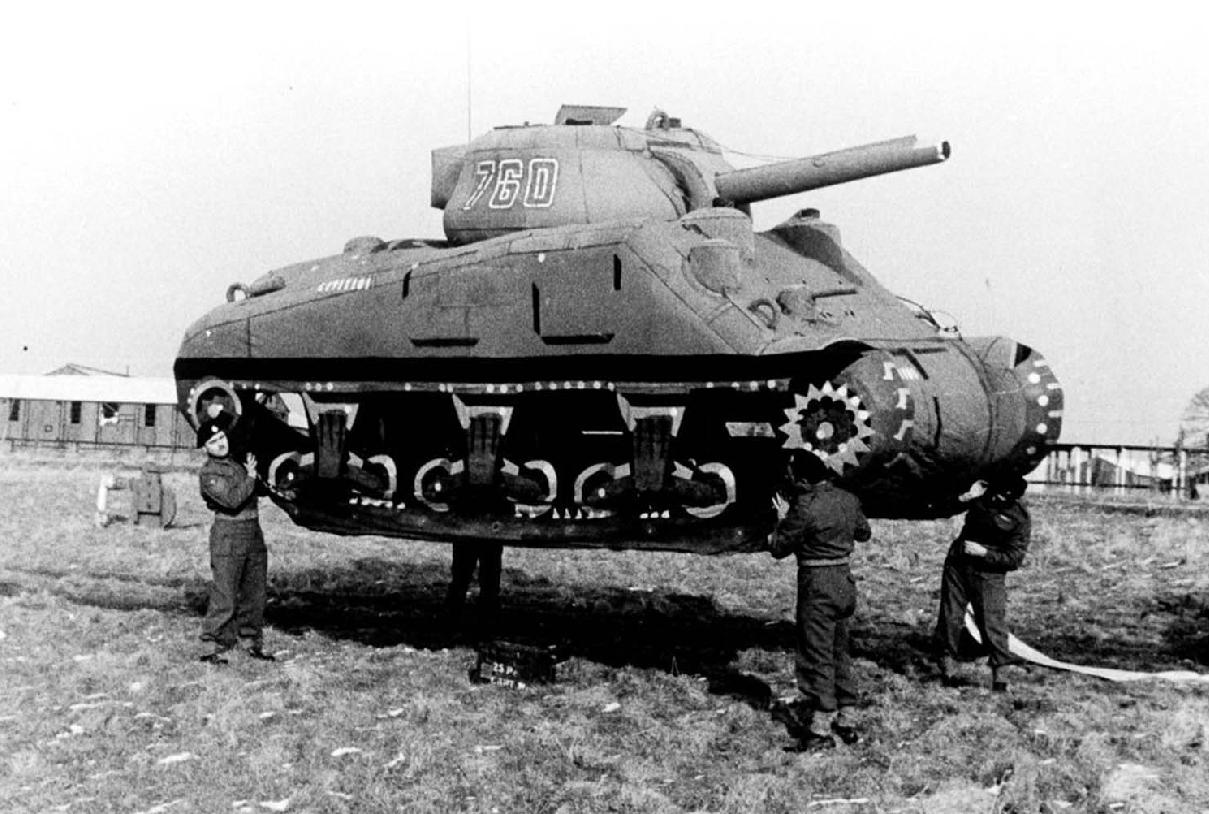
The centerpiece of Fortitude was FUSAG. The Allies created the non-existent First U.S. Army Group (FUSAG) in Kent. A range of deceptions was developed to fool the Germans. They sucessfully convinced the Germans that the Allied Cross-Channel invasion was coming at the Pas de Calais opposite Kent and East Sussex. FUSAG in Kent and East Sussex was just opposite the Pas de Calais. The obvious conclusion was that the Allies invasiion would come there. Military historians will tell you that misinformatiinn is most likely to be successful if it confirmed what the enemy already believes or at leastrs suspects. And the Germans believes that the Allis would most likely choose the Pas de Calais. So the goal for Fusag was to convince the Germans thatb they would rightb about the Pas de Calais, that the German assessment that the invasion would come there. The success of these deceotions was based on the weakness of the Germabn reconisance effort. A range of deceptions was developed. It convinced the Germans that the invasion was coming at the Pas de Calais opposite Kent and East Sussex. The most visible of these diceptions, at least to us today is the the dummy rubber tanks and other vehicles. We are not certain how many of these rubber tanks were made. One source says hundreds. But far more than hundreds woulds have had to to be made and deployed to make any visual impact on German reconisance aircraft. Some reports suggest that the Allies let Luftwaffe reconisance aircraft fly over Kent and East Sussex. And of course if the Germans were allowed to fly over Kent and East Sussex and not Hampshire and Devon, the inevitable conclusions would have been that the preparations were in western and not eastern England. Hollynwood may present the Gernmans as idiots. They were not. The Allies had to be very thoughful if they were to carry off the FUSAG Fiortitude deceoption. Much more important was elecronic messaging. FUSAG generated radio traffic. This could be done very easily and with a very small number of people. The Germans were monitoring it. This signals intelligence was particularly important. One source suggests that 13,000 radio messages were sent. thastv strikes us as a very small number. There were, however, many other diversions. One of the most notable was sending an actor disguised as General Montgomery to Gibralter (late May 1944). As Montgomery was Eisenhower's Deputy and in overall command of the landings, this suggested to the Abwehr that the invasion was not eminent. The British had found German agents early in the War and either shot or turned them. The turned agents reported on FUSAG movements. Here one particularly important agent was a volunteer anti-NAZI from Spain--????.
General Patton was given the command of FUSAG. The Germans were convinced that Patton would lead the invasion. Patton in Kent was just opposite the Pas de Calais, helping to confirm the German assessment that the invasion would come there. The fact that Patton was in Kent was a factor in convincing the Germans that this was where the main strike would come because the Germans assumed that Patton would command the found forces. Some historians have argued that this was a misuse of Patton. (Patton had been sidelined but no fired by
Eisenhower after the slapping incident in Sicily.) Omar Bradley was a competent general. He was not a brilliant commander. The breakout in Normandy may have
come earlier if Patton was in command. [Hanson]
The key to the Allied invasion was air power. German beach defenses ans airfields were heavily targeted by the RAF and the 8th Air Force. The Luftwaffe could only offer token resistance, primarily because the available force had to be pulled back to defend German cities. Allied planners carefully executed missions primarily on Pas de Calais defenses rather than Normandy to help confirm the Pas de Calais as the invasion site. The same was true of other air operations such as reconisance.
The Allies also tried to convince the Germans that Greece and Norway were also targets. This played into Hitler's mindset which was not to withdraw from any occupied country. His inclination was to defend everywhere which even the most basic military strategy mean\s that you adequately defend nowhere. Hitler in particular was concerned with Norway, presumably for racial reasons. He is reported to have described Norway as "... the zone of destiny of this war". [Holt]
It seems incredible today given the size of the Overlord landing force that the Germans could have been deceived. It shows not only the Allies mastery of the skies prevented German areial surveilance, but that the Germans had no unturned agents in southern England. Gen. Alfred Jodl, an extrodinarily competent German commander, was tottaly fooled. Even after the War was comvinced that he prevented Patton's FUSAG from landing at the Pas de Calais where he could have more quickly ended the War. The FUSAG deception also help convince the Abwehr that the Allied force was much larger than the actual force. The Abwehr estimted that the Allies had about 100 divisions when the actual force was only 50 divisions. [Holt] Even more astonishing, even after the D-Day landings in Normany, OKW kept the 15th Army wiyh its powerful Panzer divisionxs at the Pas de Calais.
Hanson, Victor Davis. Soul of Battle.
Holt, Thaddeus. The Deceivers: Allied Military Deceptionin the Second World War (Scribner, 2004), 1,148.

Navigate the CIH World war II Section:
[Return to Main D-Day page]
[Return to Main military Double-Cross page]
[Return to Main U.S. World War II page]
[About Us]
[Aftermath]
[Biographies]
[Campaigns]
[Children]
[Countries]
[Deciding factors]
[Diplomacy]
[Geo-political crisis]
[Economics]
[Home front]
[Intelligence]
[POWs]
[Resistance]
[Race]
[Refugees]
[Technology]
[Totalitarian powers]
[Bibliographies]
[Contributions]
[FAQs]
[Images]
[Links]
[Registration]
[Tools]
[Return to Main World War II page]
[Return to Main war essay page]
[Return to CIH Home page]