
Sino Japanese War: Nationalist Resistance (1938-41)
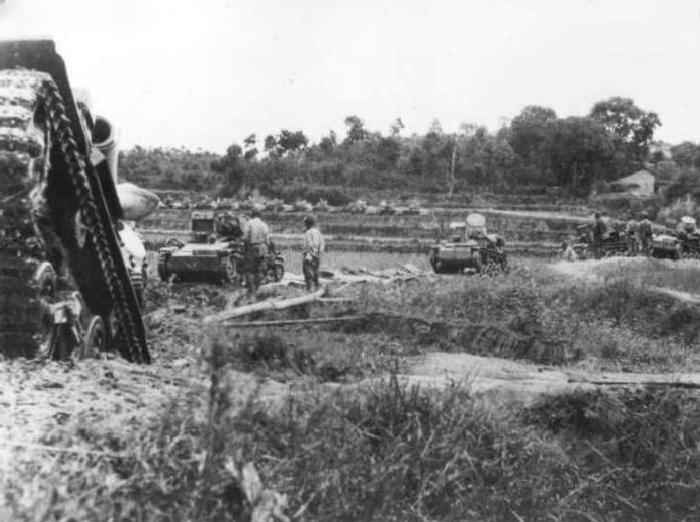
Figure 1.-- This Wide World News photograph and caption described Japanese "boy tank crews" attacking over Chinese anti-tank trenches. The report described a Japanese Youth Tank Corps. We have never heard of a Youth Tank Corps and don't quite know what to make of this report. The photograph was dated October 14, 1940.
|
|
Despite the Japanese onslaught, the Chinese government never surrendered. The Chinese achieved few real military victories, but the Japanese were never able to defeat them. They moved further inland, setting up a new capital Kumintang. The War continued on a lower scale, but envolving the continued deployment of the bulk of the Japanese Army. After the fall of Hankow (October 1938), Nationlist tactics changed. The Nationalists after withdrawing west into the internior were on more defensible ground. The Japanese advantaged diminished as they moved away from the voast and supply lines became streached. The Nationists adopted what they described as 'magnetic warfare'. They attempted some major engagements if they were able to gain advantageous deployments against over streached Japanese units. The most sccessful Chinese operation was the repeated defense of Changsha. Japan and the Nationalist thus reached a stalemate (1940). Japan controlled the coast and most of the major cities. The Japanese found it difficult to persue their offensive into China's interior. In addition, the resistance in occupied areas requirdthe garrisoning of substantial Japanese forces. Brutal Japanese actions against the civilian populatiin was unable to supress the resistance. Both Chiang and Mao concerned about each other were relkuctant to launch major operations againsdt the Japanese that might weaken their forces. Chiang was unable to launch any majoe offense against the Japanese with his poorly equipped and led army.
The Natioalists fought a conventional war, going hed to toe with the invading Japanese. The fight for Shanghai ws especilly hrd fought, surprising the Japanese. The Nationlits did not, however, have the material, industry, or the military leadership capblity to successfully fight the Japanese. After seizing Shanghai (November 1937), the Japanese seized Nanking, the Nationalist capital (December 1937). The Rape of Nianking was one of the great attrocites of the War and to this day adversely affects Sino-Japanese relations. Next the Japanese moved to take the northern city of Xuzhou (March 1938). The Chinese stood and fought. The Japanese suffered heavy casualties, including 30,000 killed. They eventually took the city (May. 1938).
Yellow River Flood (June 1938)
Unable to stop the Japanese militarily, Chiang Kai-shek took the desperate decesion to break the dikes of the Yellow River at Huayuankou, near Zhengzhou. The reslt was a devestating flood. The Chinese civilian population was uterally unprepared. The action hs ben clled the gretest act of environmental warfare in history. Flood waters coursed into to Henan, Anhui, and Jiangsu. The resulting flood permanently changed the course of the Yellow River. The flood shifting the mouth of the River hundreds of miles to the south. Flood waters eventually covered and destroyed some 21,000 square miles of farmland and put an estimated 4,000 Chinese villagesunder water. It is believed that 0.8 million Chinese civilians perished, drowned, starved or died of ensuing diseases and mlnutrition. Several million villagers were turned into refugees.
Continued Japanese Offensive (June-December 1938)
The Yellow River Flood did not stop the Japanese. They continued their offensive operations. They captuted Canton/Guangzhou (October 21) amd Hankow/Wuhan (December 25, 1938). This was the culmination of a 5 months campaign. The Nationalists would have lost Wuhan earlier if Stalin had not committed Red Air Force pilots. Wuhan is the capital of Hubei province and the largest city in Central China. It is strategically placed in the eastern Jianghan Plain at the intersection of the middle reaches of the Yangtze and Han rivers.
Miliary Stuation (1939)
The KMT at the time that Europe was about to erupt into War was left in a desperate situation. The loss of Canton meant that Japan controlled the entire east coast of China, at least the ports. This meant that after only 2 years of fighting that the KMT had lost its major industrial cities and arms industries, important natural resources, fertile agriculural areas, and access to international commerce and aid. Despite the Japnese onslaught, the Chinese government never surrendered. The Chinese achieved few real military victories, but the Japanese were never able to defeat them. And this meant that rather than a short victorious war, the Japanese found themselves in a Chinese quamire and one requiring a never ending commitment of men and resources. Rather than supporting the Japanese economy, the effort in China required a substntial commitment of resources and wa a drag on the economy.
Chunking/Chongqing
Chunking/Chongqing deep in the inteior and north f Burma became the final war-time capital if China. Hundreds of thousands of Chinese seekingto escape the Japanese headed to the KMT area around Chongqing. There was an effort to transporting key machinery and factory parts. Chunking thus doubled in size during the first 3 months after theChiang set up his capital there. Feeding the local popultion, lt alone the rfugees became a major problem.
Chinese Strategy and Tactics (1939-44)
The Nationalist/Kumintang respnse to the defeats inflictd by the Japanese in the first 2 years of the War was to move further inland where the Japanese had increasing difficulty bringing their superior resources to bear on the Nationalists. The Nationlists setting up a new capital at Chungking/Chongqing where some supplied could be obtained obr the Burma Road. The War continued on a lower scale, but involving the continued deployment of the bulk of the Japanese Army. After the fall of Hankow/Wuhan (October 1938), Nationlist tactics changed. The Nationalists after withdrawing west into the internior were on more defensible ground. The Japanese advantaged diminished as they moved away from the coast and supply lines became streached. The Nationists adopted what they described as 'magnetic warfare'. They attempted some major engagements if they were able to gain advantageous deployments against over streached Japanese units. The most sccessful Chinese operation was the repeated defense of Changsha. Japan and the Nationalist thus reached a stalemate (1940). Japan controlled the coast and most of the major cities. The Japanese found it difficult to persue their offensive into China's interior. In addition, the resistance in occupied areas requird thegarisoning of substantial Japanese forces. Brutal Japanese actions against the civilian populatiin was unable to supress the resistance. Both Chiang and Mao concerned about each other were reluctant to launch major operations againsdt the Japanese that might weaken their forces. Chiang for most of this period was unable to launch any majoe offense against the Japanese with his poorly equipped and led army. The Japanese military dominance in China continud for mosr of the war. The Japanese lunched the Ichi-Go offenive (1944) to prevent the United states from launching a strategic bombing offenive on the Home Islands from Chinese bases.
Chinese Offensive (1945)
The military situation in China finally changed in 1945. Several fctors wee involved. First the Allied offenibe ito Burma opened the BrmaRoad, atfirst through the Ledo Road from India. Second, American operations in the Pacific forced the Japanese to shift combat forces from China to the Pacific and ultimtely the Home Islands. Third, while the Ichi-Go offensive prevented a strategc bombing coagn from Chin, American and Chinse ir operatins took an increasing toll on Japanese forces in China. Fourth, the American Strategic Bombing campaign destroyed theJapanese War ecnomy meaning that shipments of war matrial to Chinese forces in China dropped precipitysly as the same time that American euiment ad supllies began reaching Ntinalist forces. .
CIH -- WW II

Navigate the CIH World War II Section:
[Return to Main World War II Chinese-Japanese War page]
[About Us]
[Introduction]
[Biographies]
[Chronology]
[Climatology]
[Clothing]
[Disease and Health]
[Economics]
[Freedom]
[Geography]
[History]
[Human Nature]
[Law]
[Nationalism]
[Presidents]
[Religion]
[Royalty]
[Science]
[Social Class]
[Bibliographies]
[Contributions]
[FAQs]
[Glossaries]
[Images]
[Links]
[Registration]
[Tools]
[Children in History Home]
Created: 8:56 AM 2/2/2005
Last updated: 8:30 AM 5/26/2015