
World War II: British Channel Islands--German Fortifications (1941-43)
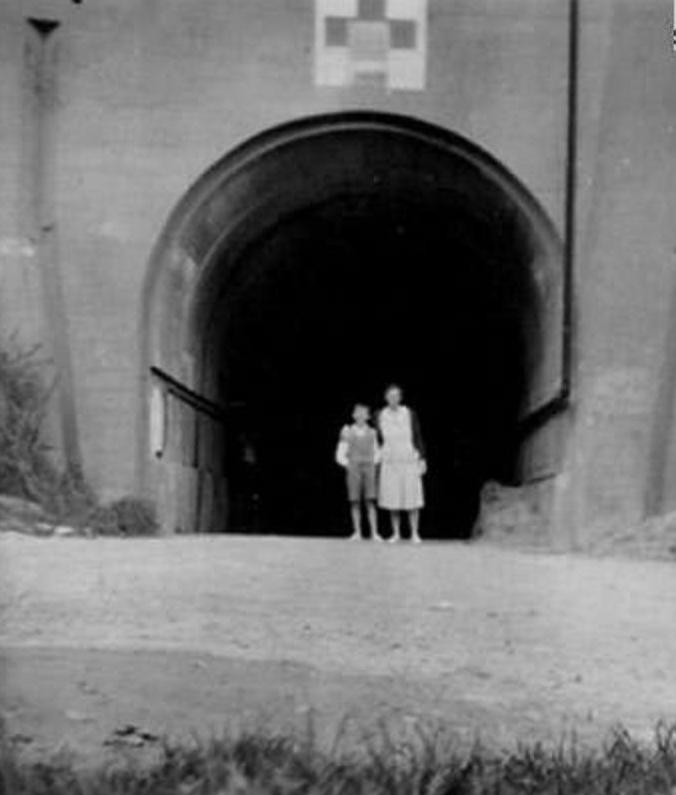
Figure 1.--The German fortifications included many hardened underground fscilities built with steel and concrete. This was to be a massive underground hospital on Jersey. There was of course nothing like this in Nomandy. This photograph is undated, but we believe was taken after the War. I don't think that the Germans woukd have wanted the islanders taking pictures of the fortifications during the occupation.
|
|
Hitler as the balance of power began to shift after the failure of the Wehrmacht before Moscow became concerned that the British might retake the Islands. He liked the idea of occupying at least a small part of Britain. He thus ordered a massive construction campaign to build defensive fotifications. It was a massive effort, so large in fact that it delayed the much more important project of building the Atlantic Wall. German Army engineering and building units landed on Jersey (1942). It was the beginning of a massive constructions program that turned the island into a Super Fortress. The construction was undertaken by the Organisation Todt which used both German soldiers and about slave workers fromm occupied countries, mostly Russians and French. We have seen varying estimates as to the precise number of workers. The Channel Islands became among the most heavily fortified islands of World War II. Perhaps the only exception is Iwo Jima in the Pacific. There was even an underground military hospital to be built. The most heavily fortified island was Alderney, presumably because it was the closest to the French mainland. Hitler personally decreed that 10 percent of the steel and concrete devoted to the construction of the Atlantic be used for the Channel Islands. He was concerned with the propaganda value he saw in holding British territory. Devoting such huge quantities of scarce materials on islands of no real strategic value , however, was pure lunacy. The ennormous effort to fortify the islands made little military sence and would have been more useful as part of the Atantic Wall along the French coast. The Germans set up a concentration camp on Alderney--Lager Sylt. This was for the slave labor building the fortifications. The German authorities treated the slave laborers brutally and ged them poorly. A few managed to escape from the Germans. Not only was this difficult, but there was no way off the island. A few were taken in, but the islanders were not in a position to help as on such a small island, the Germans were likely to catch islanders sheltering escappes. And this would mean arrest and depotation to a concentration camp.
Hitler as the balance of power began to shift after the failure of the Wehrmacht before Moscow became concerned that the British might retake the Islands. He liked the idea of occupying at least a small part of Britain. He thus ordered a massive construction campaign to build defensive fotifications. It was a massive effort, so large in fact that it delayed the much more important project of building the Atlantic Wall. Hitler personally decreed that 10 percent of the steel and concrete devoted to the construction of the Atlantic be used for the Channel Islands. He was concerned with the propaganda value he saw in holding British territory. Hitler issued a Supreme Command (OKW) Directive for " ... the build-up and defence of the English Channel Islands ... account must be taken of the possibility that the English may at any time carry out isolated attacks as the result of pressure from their Eastern allies anf for political and propaganda reasons; in particular they may attempt to recapture the Channel Islands, which are of considerable importance for our escort traffic." It is fascinating that the Germans who proved the falacy of depending on static defnsive lines (the Maginot Line) in 1940, based their fate in the West on just such a line--the Atlantic Wall
Massive Undertaking: Inselwahn
Construction of the Channel Island fortifications began before the construction of the Atlantic Wall began in ernest. Hitler and and OKW were sure that the War was won and British would be realtic enough tp sue for peace. If not, Operation Sea Lion was being reaided to invase and decisively defeat the British. As a result, virtually no attention was at first given to given to defnd the Islands. Hitler with the failure of his effort to subgegate Britain, was determined to hold on to these little pieces of Britain, whatever the cost. It became an obsession. Not only did he begin a massive building program, but he never stopped. Hitler made a personal decesion to pouring men, concrete and weapons onto the Islands even while his attention was focused on plans for Barbarossa. He ordered that the defences emplacements be built on the Channel Islands. All three services were involved. Important Luftwaffe anti-aircraft batteries were among the first important defenses (early-1941). And both the Heer and Kriegsmarine began installing coastal artillery batteries. Conferences were held in Berlin involving high level officers to assess the idea of converting the Islands into powerful naval fortresses. The German Army's Fortress Engineer Staff began conducting a tactical, geographical and geological survey in the islands to assess the requirements for a major fortification program. As the War was about to be decided in the East, Hitler could not get the Channel Islands out of his mind. Hitler specified his plans through OKW in a written directive (October 20, 1941) ordered that the Channel Islands were to be converted into "impregnable fortresses". German Army engineering and building units landed on Jersey (1942). It was the beginning of a massive constructions program that turned the island into a Super Fortress. Officers aware of what was happening began to call it "Inselwahn'--island madness. The Germans devoted 8 percent of the concrete destined for the Atlantic Wall to the Channel Islands. And there were more guns and gun emplacements than 600 miles of Normandy Coast. The construction was undertaken by the Organisation Todt which used both German soldiers and slave workers fromm occupied countries, mostly Russians and French. We have seen varying estimates as to the precise number of workers.
Concentration Camp
The Germans set up a concentration camp on Alderney--Lager Sylt. This was for the slave labor building the fortifications. The German authorities treated the slave laborers brutally and ged them poorly. A few managed to escape from the Germans. Not only was this difficult, but there was no way off the island. A few were taken in, but the islanders were not in a position to help as on such a small island, the Germans were likely to catch islanders sheltering escappes. And this would mean arrest and depotation to a concentration camp.
319th Infantry Division
He ordered that the 319 Infantry Division be committed to their defence (May 1941). Not only was a full division committed, but it was reinforced with troops and weapons well beyond and the strength of an average frontline combat Division. A tank battalion that could have been used in Normandy was transferred to the Islands.
The Channel Islands became among the most heavily fortified islands of World War II. Perhaps the only exception is Iwo Jima in the Pacific. There was, however, every reason in the world to defend Iwo. There was no reason to defend the Channel Islands. As the British had recognized when they abandined them, they had no military significance. The fortfications were enormous. Hitler turned the Channel Islands were the most heavily defended portion of the Atlantic Wall, but was not part of it and thus did not add to the defensive strength of the Wall. The most heavily fortified island was Alderney, presumably because it was the closest to the French mainland. The fortifications built were massive. Many were unfinished. Yet what was accomplished in the 2 ½ years of frentic work (early-1942 through May-1944) was phenomenal. Only the D-Day landings in Normandy brought the construcion to a halt. Before that the occupying German forces and the Organisation Todt constructed massive fortifications all around the coasts of the Channel Islands. Hitler ordered that 10 percent of the steel and concrete used in the Atlantic Wall go to the Channel Islands. Tunnels and bunkers were built everywhere. The Germans escavated 244,000 m3 of rock from Guernsey, Jersey and Alderney (more than half from Jersey). That was more rock than all the rest of the Atlantic Wall. If this effort had made on the Normandy beaches, the D-Day outcome might had been very different.
Fate of Workers
A Channel Islands historian tells us, "Most of the OT workers started moving back to France towards the end of 1943 to repair the damage the RAF were inflicting on the railways etc, by 6th June 1944 nearly all the building of fortifications had been done, however in Alderney the slave workers were still there. Many Russians were liberated by the British in Guernsey and Alderney. We have seen some come back for holiday/memorial days. Many Dutchmen and others who were brought to Guernsey by the Germans stayed here after the war and married local girls and raised families." [Martin]
Assessment
Devoting such huge quantities of scarce materials on islands of no real strategic value , however, was pure lunacy. The ennormous effort to fortify the islands made little military sence and would have been more useful as part of the Atantic Wall along the French coast.
Sources
Martin, Phil. E-mail message, September 25, 20009.
HBC

Navigate the Boys' Historical Clothing Web Site:
[Return to Main British Channel Islands World War II page]
[Return to Main United Kingdom World War II page]
[Biographies]
[Campaigns]
[Children]
[Countries]
[Deciding factors]
[Diplomacy]
[Geo-political crisis]
[Economics]
[Home front]
[Intelligence]
[POWs]
[Resistance]
[Race]
[Refugees]
[Technology]
[Bibliographies]
[Contributions]
[FAQs]
[Images]
[Links]
[Registration]
[Tools]
[Return to Main World War II page]
[Return to Main war essay page]
Created: 4:47 AM 9/24/2009
Last updated: 1:46 AM 5/4/2013