|
The British Channel islands of Jersey, Guernsey, Alderney and Sark lie only 15 miles off the French coast. Thus after the fall of France they were indefensable for the hard-pressed British, bracing for a German invasion of Englnd itself. Primeminister Churchill announced that Jersey was to be demilitarised and declared an undefended zone (June 19). Available shipping was limited. The British were not able to evacuate the entire civilian population. They evacuted all military personnel along with women and children desiring to be evacuated. Only men choosing to join the military were evacuated. The remaining population would have to endure German occupation. The Germans arrived (July 1940). The Islands thus became the only British territory to be occupied by the Germans during the War. The Germans stationed axsubstantial garrison on the Island, over 10,000 men. The Islands were of no real strategic importance. Hitler considered them useful as a propaganda statement. As the balance of power began to shift he became concerned that the British might seize the Islands. He thus ordered a massive construction campaign to build defensive fotifications. It was a massive effort, so large that it delayed the much more important project of building the Atlantic Wall. After the Normandy invasion (June 1944), the Islands and their German garrison was cut off. The Germans and the population neaely starved. They were finally liberated by the British after the German surrender (May 1945).
The British Channel islands of Jersey, Guernsey, Alderney and Sark lie only 15 miles off the French coast.
The status of the islands was at vthe time and continues to this day to be unusual. Jersey, Guernsey, Alderney, Sark and Herm are theoretically independent states with their own governments and laws and complicated relationship with the United Kingdom. (So is the Isle of Man which was not occupied by the Germans.) The people of these islands are British subjects but not necessarily British citizens. They are British Crown dependencies. Their U.K. passports are slighly different than the passports of British citizens. These differences result from the fact that the Channel Islands were a part of the Duchy of Normandy and among the possessions og Duke William before he conquered England and became William the Conqueror (1066). For the next 200 years, the islands, along with Normandy and England, were united but the islands were administered from Normandy. King John lost Normandy and the other French possessions to the King of France. To keep the loyalty of the strategically important Channel Islands which he still held, he decreed they could continue to be governed according to Norman laws rather than English law which had important Saxon components (1204). This meant that a separate system of government was created with the British Monarch ruling as the "Duke of Normandy". Although the systems has changed since the 13th century, the Islands retain some destinctive legal features. Here there was no overall administrative structure. Each island had its own entirely separate government and administration. They are, however, treated similsarly by the crown. They are not subject to the laws of the U.K. Parliament, though U.K. currency is legal tender and they depend upon the U.K. for defence. The official languages are English and French and there is a local patois that blends them both. And interestingly at the time of the German ninvasion, King George VI was considered the Duke of Normandy and referred to, by the island legislature, as "Our Duke".
The Channel Islands figured in almost a millenia of conflict between England and France down to the Napoleonic Wars (1799-1815). Only slowly during the Victorian era did relations begin to shift as Imperial Germany rose and challenged boh countries. This was a major shift as Prussia and other German states hd generally been allies in wars with France. As Anglo-Frencgh relations warmed, the need to maintain a British mikitary presencecon the Channel Island declined. Britain's and France's World War I fundamentlly changed the relationship of the two countries. Britin was bankrupted by World War I and the British people were determined to avoid any future war. As a result, military spending was sharply pared back. As military commanders agred that the Channel Islands had no strategic value, this was a logical place where cuts could be made. The British thus demilitarized the Islands. There were two Army battalions on the Islands. The battalion in Jersey was eithdrawn (mid-1920s). The batllion on Guernsey was withdran (1939). [Stephenson]
The Germans launched their long-awaited Western offensive (May 10). Within days they hd broken through the French lines and driving for the Channel. Hopes of establishing a defensive line on the Seine proved ilusionary. Although war had been declared several months earlier. Neither the French or the Channel Islanders believed the Germans would defeat the French Army. Thus no plans had been made to evacuate to Britain. The Islandrs were still in a state of shock when the French surrendered to the Germans (June 21) andthen began arriving at the mainland ports.
The Channel Islands after the fall of France were indefensable for the hard-pressed British and of very limited strategic importance. The hard-pressed British were bracing for a German invasion of England itself and many believes that the Germans would invade. Defending the Channel Islands was out of the question. The British Government announced that Jersey, the largest island, was to be demilitarised and declared an undefended zone (June 19). They did not inform the Germans. There were two factors affecring the evacuation. One was the decesion of the island governments. The other was the availability of shipping. The British Government consulted the elected representatives on each island (there was no central government) to develop an evacuation program. This proved difficult in the time available because the different islands had varying opinions. The British Government tried to send enough ships to allow islanders who desired to do so to leave. Alderney authorities recommended evacuation and almost all complied. The Dame of Sark encouraged islanders to stay. Guernsey evacuated the school-age children, although parents could keep their children with them if they desired to do so. On Jersey most of the islanders remained. Available shipping proved limited. The British were not able to evacuate the entire civilian population that wanted to leave. They evacuted all military personnel along with women and children desiring to be evacuated. Only men choosing to join the military were evacuated. The remaining population would have to endure German occupation.
The Germans expected to have to invade the islands and were not aware that the British had evacuated.
Reconnaissance flights did not reveal the British evacuation. Luftwaffe bombers struck the harbors at Guernsey and Jersey (June 28). At St. Peter Port the Germans mistook lines of trucks at the port for troop carriers. The trucks were lined up to unload tomatoes for shipmnt to England. The Germans killed 49 islanders. The Germans were preparing an amphibious assault. Meanwhile a reconnaissance pilot landed on Guernsey (June 30). The Islanders surrendered to him. Few islandees were were aware they bhad been occupied until they received their newspaper the next day. Jersey surrendered (July 1). Alderney ws left with only a few residents who surrendered (July 2). A detachment from Guernsey reached Sark which surrendered (July 4). The Germans moved quickly to establish themselves on the Islamds. They landed infantry troops and set up communications facilities and anti-aircraft defences. They rounded up a few British servicemen who had failed to evacuate.
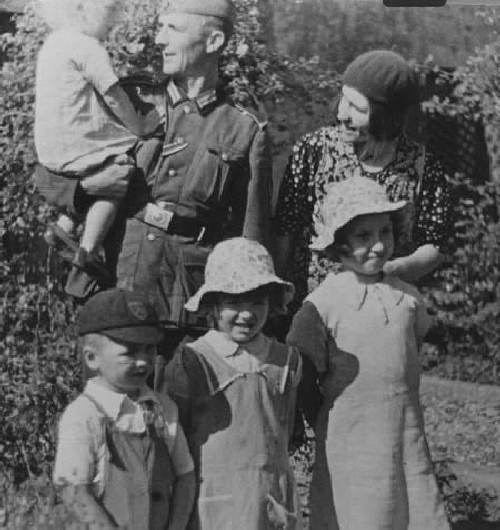
The Islands thus became the only British territory to be occupied by the Germans during the War. The Germans stationed a substantial garrison on the Island. The Jersey garison alone exceeded 11,500 men. The substantial German garrison and small size oif the islands meant that resistance was impossible. The Germans issued a range of strict regulations. Identity papers were issued and had to be carried. Strict curfews were enforced. The Germans confiscated all vehicles and even bicycles. The islanders had to walk or use horses. All radios had to be turned in to the Germans. The German occupation authorities took over the island newspaper. Many civilians that were not native to the islands were deported to internment camps in the Reich. Their homes and possesssions were often looted or otherwise damaged.
The Islands were of no real strategic importance. Hitler considered them useful as a propaganda statement. The Islands were not placed so as to be of any importance in the coming cross-Channel invasion. The Germans were convinced that the Alloes would come ashore at the Pas de Calis, much further north. Even Normandy where the allies decided to come shore was at the base of the Cotentin Pensinula, far away from the Islands. So they were of no real military importance to either German or Allied planners. Only Hitler was obsessed with the Islands.
Hitler as the balance of power began to shift after the failure of the Wehrmacht before Moscow became concerned that the British might ertake the Islands. He liked the idea of occupying at least a small part of Britain. He thus ordered a massive construction campaign to build defensive fotifications. It was a massive effort, so large in fact that it delayed the much more important project of building the Atlantic Wall. German Army engineering and building units landed on Jersey (1942). It was the beginning of a massive constructions program that turned the island into a Super Fortress. The construction was undertaken by the Organisation Todt which used both German soldiers and about slave workers fromm occupied countries, mostly Russians and French. We have seen varying estimates as to the precise number of workers. The Channel Islands became among the most heavily fortified islands of World War II. Perhaps the only exception is Iwo Jima in the Pacific. There was even an underground military hospital to be built. The most heavily fortified island was Alderney, presumably because it was the closest to the French mainland. Hitler personally decreed that 10 percent of the steel and concrete devoted to the construction of the Atlantic be used for the Channel Islands. He was concerned with the propaganda value he saw in holding British territory. Devoting such huge quantities of scarce materials on islands of no real strategic value , however, was pure lunacy. The ennormous effort to fortify the islands made little military sence and would have been more useful as part of the Atantic Wall along the French coast. The Germans set up a concentration camp on Alderney--Lager Sylt. This was for the slave labor building the fortifications. The German authorities treated the slave laborers brutally and ged them poorly. A few managed to escape from the Germans. Not only was this difficult, but there was no way off the island. A few were taken in, but the islanders were not in a position to help as on such a small island, the Germans were likely to catch islanders sheltering escapees. And this would mean arrest and depotation to a concentration camp.
The Germans showed on the Channel Islands what they would have done to British Jews had they occupied Britain. There were only a small number of foreign and British Jews on the Channel Islands. Most of the Channel Island Jews wisely evacuted (June 1940), but officials did not permit foreign Jews to leave for Britain. There were 17 Jews on the Islands when the Germans arrived. Soon after the German occuption, officials issued the first anti-Jewish Order (October 1940). They instructed the police to idetify Jews as part of the registation process. Island authorities complied. Their registration cards were marked with red "J"s. Authorities also compiled lists of Jewish property which was turned over to German authorities. [Fraser] Placard were placed on jewish-owned shops in German and English --'Jewish Undertaking'. Jewish had to sell their businesses. The process developed differently on the three islands, Jersey, Guernsey, Sark, and Alderney. Jersey Jews and 22 Jersey islanders died in concentration camps. Officials made some effort to mitigate anti-Semitic measures the NAZIs demanded. They refused to require Jews to wear yellow stars. They did formally Aryanise businesses, but they were returned after the war. Even so, Jewish families had to struggled to survive after being deprived of their livelihoods. Police officials on Jersey and Guernsey did investigate Jewish ancestry for the Germans. Curfews were imposed on Jews. Shopping was limited to 3-4 pm. Two Jersey Jews committed suicide. One was admitted to an asylum where he subsequntly died. There were heros. Albert Bedane hid Mary Richardson, a Dutch Jewess who married a British sea captain, for 2 1/2 years. Guernsey police handed over three East European Jewish women to the NAZIS who deported then first to France where they were rounded up and transported to Auschwitz. The Duquemin fmily, including an 18-month-old baby girl, were deported but survived. Alderney was the site of the only SS camp on British soil--the Norderney Camp. The camp was for slave labor who worked on the island. The Jews were kept separated from the other prisoners. The NAZIs transported over 16,000 slave workers to the Channel Islands to build fortifications. Among these workers were 1,000 French Jews. [Cohen] Many of these slave laborers died from exhaustion and malnutrition.
The huge German effort on the Channel Islands added nothing to the strength of the Atlantic Wall. And they played no role in the Allied D-Day landings (June 6, 1944). After the Allies established their Normandy beachead, heavy fighting followed in northern France as the Allies tried to break out from the beachhead.
Fearing more sizeable commando raids or an actual invasion, German authorities began treating the civilans on the Islands more strictly. They mined the beaches and placed them out-of-bounds to civilians. The Germnans began using the islands as a base for treating wounded soldiers from the fighting in the mainland. The fortifications provided a degree of security not available on the mainland. After the Allies took the
Cotentin Peninsula (June 1944) and broke out from the Normandy beachead (July 1944), more Channel Islanders tried to escape German occupation.
After the Normandy invasion (June 1944), the Germans did not evacuate the Islands. Hitler was still determined to hold them. After securing the Normandy beachead, the allies first moved west to secure the Cotentin Pensinula and gain control of Cherbourg--a badly need port. Granville, the clost port to the Islands was taken by the Allies. The Allied break out from the Normandy beachhead and the Allied invasion of southern France resulted in a full German retreat from France. The last conection to the mailand was St. Malo which fell to the Allies (August 1944). The German garrison and the civilians were thus cut off. The Allies saw no reasin to assault the havily fortified Islands. Churchill's attitude was "Let'em rot." The problem of course was the civilians on the Islands with the German garrison.
The Germans and the population nearly starved. The Islanders could produce food. Before the War they exported produce. They could not, however, produce enough to food feed themselves and the large German garrison. Medical supplies were entirely depleted. This put the British Government in a quandry. They of course didn't want the islanders to starve, but had no desire to feed the Germans. The situation became so critical that the British after extended negotiations finally arranged for the Red Cross ship Vega to supply Jersey (December 30, 1944).
They delivered food parcels, salt and soap, and medical and surgical supplies. The Vega was allowed to make five further trips to the Islands before liberation in May 1945.
A British reader tells us, "The relief supplies were only sent after the German Commandant promised they would not be used to feed German troops. The Germans handled the unloading at the docks but apparently, though they themselves were close to starvation, not a single loaf of bread or tin of meat was taken by them.
The Allies focus in 1945 was the push east to invade Germany. Despite the substabtial German garrison on the Islands, after several months of inacivity, Allied planners did not expect any actions from the Germams. The Allies somewhat illadviseldy set of a POW camp at Granville. This was a small port on the westerm coast of the Cotentin. It was close to Jersey and untill the Americans seized the port there was a ferry connection. The Germans at first did not know this and any possible actions were dismissed because of the lack of information about the disposition of Allied forces. Ths changed when four German paratroopers and a Naval cadet escaped from the camp (December 1944). Many of the Germans in the camp were quite happy to sit out the war in a nice safe Allied camp. Paratroopers were especially chosen and motivated soldiers. They managed to steal an American LCVP landing craft and reached Jersey. There the German commanders greeted them as heros. They reported on on the ships in the harbor which were unloading coal. They also provided information on the disposition of Allied (mostly American) forces. The Germans did not have mych good news by this time in the War, dspecially after the Bulge offensive failed. The escapees were ordered to return to Berlin for propaganda purposes. Flights between the Channel Islands and Germany were dangerous, but possible at night. The escapees were, however, shot down by a British night fighter. The new German commander on the Channel Islands was Admiral Friedrich H�ffmeier, a former captain of the German battlecruiser Scharnhorst. He had a more aggressive outlook and the information provided by the escapees made it possible to plan an attack on nearby Graville. The purpose was to disrupt Allied operations there as well as to secure needed supplies. A raid planned for February 6-7, 1945 was called off because of bad weather and the U.S. Navy submarine chaser PC-552 encountered an escorting Schnellboot. The raid led by Kapit�nleutnant Carl-Friedrich Mohr was finally executed (March 8-9, 1945). The Germans put together an impressive strike force including minesweepers and lighters (barges with 88mm artilery pieces. They managed to destroy Allied shipping and port facilities, free 55 German POWs, captured some Allied soldiers, and bring supplies back to the Islands.. A smaller sabotage raid was staged pn Cape de la Hague (April 5, 1945). The raiders were all captured. Finally Admiral D�nitz, the new F�hrer ordered ordered Admiral H�ffmeier with the War about to end not to launch amy more attacks.
The Germans finally surrendered ending World War II in Europe (May 7. 1945). To the dismay of both Islanders and German troops the British couldn't get their act together to do it. The British finally proceeded to liberate Jersey (May 9).
Cohen, Frederick. The Jews in the Channel Islands during the German Occupation.
Fraser, David. The Jews of the Channel islands and the Rule of Law, 1940�1945
Stephenson, Charles. Fortifications of the Channel Islands 1941-45: Hitler's Impregnable Fortress
(Fortress--Osprey).
.

Navigate the CIH World War II Section:
[Return to Main British World War II page]
[Return to Main World War II island page]
[Biographies]
[Campaigns]
[Children]
[Countries]
[Deciding factors]
[Diplomacy]
[Geo-political crisis]
[Economics]
[Home front]
[Intelligence]
[POWs]
[Resistance]
[Race]
[Refugees]
[Technology]
[Bibliographies]
[Contributions]
[FAQs]
[Images]
[Links]
[Registration]
[Tools]
[Return to Main World War II page]
[Return to Main war essay page]