|
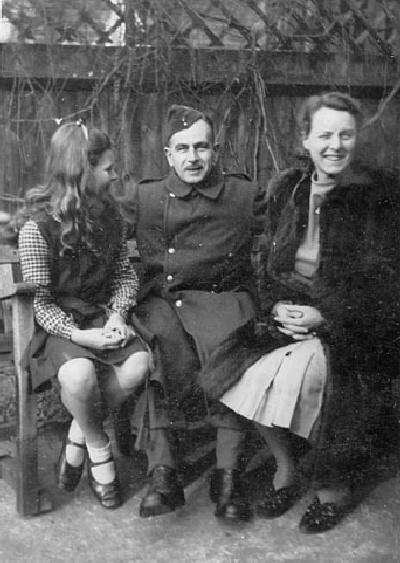
HBC contributor William Ferguson tells us, "I visited the Imperial War Museum in London during June 2005. They had a fascinating exhibition called ‘The Children’s War’. It is based on a book by Juliet Gardner who describes how British children were involved in and affected by World War II. This is my recollection of the themes the exhibition dealt with. It effectively highlights how British children were involved in the War. For children in Britain September 1939 was a warm sunny month. It was the end of the summer and the start of things to come. Sunday September 3 was the start of the Second World War. Most families were at home that Sunday listening to the radio. They were listening to the voice of Neville Chamberlain, the then British Prime Minister; tell the nation that Britain was at war with NAZI Germany. The War would last until 1945 but nobody knew that then. In the Second World War, British children found that they were in the front line of the war. They had to endure nightly bombing raids in which their homes were destroyed, family members and neighbours injured or killed. The first big trauma for children though was being evacuation from manufacturing towns and cities.
September 1939 was a warm sunny month. It was the end of the summer and the start of things to come. Sunday September 3 was the start of the Second World War. Most families were at home that Sunday listening to the radio. They were listening to the voice of Neville Chamberlain, the then British Prime Minister; tell the nation that Britain was at war with NAZI Germany. The War would last until 1945 but nobody knew that then. In the Second World War, British children found that they were in the front line of the war. They had to endure nightly bombing raids in which their homes were destroyed, family members and neighbors injured or killed.
The first big trauma for children though was being evacuation from manufacturing towns and cities. This begb in late Agust 1939 as it became clear the NAZIs were going to invade Poland. There were subsequent smaller evacuations as the War progressed. Some children attended schools, which relocated to a safer place. Many children were taken to safer towns and village. The British rail network was used to transport children away from towns and cities to safe coastal villages and countryside towns and villages. Adults at the relocatioin sites were encouraged to be foster parents. Children assembled at their schools and before going to the railway station to take a train to their new homes. It was the largest movement of children in British history. Many children found it an adventure to live in the countryside and see animals that they had never seen before. Other children had a miserable time because they missed being with their parents. The people who took children in were shocked at the dirty, scruffy children from the poor areas of inner cities. Children from wealthier homes were uncomfortable to live in houses that had no running water or electricity.
The British evacuated some children to America, Canada, Australia, New Zealand and South Africa. This was done mostly after the fall of France when it looked like the Germans would seal their victory in the west with the a cross Channel invasion of Britain. Ocean going liners were the transportation for the overseas relocations. Sea travel was dangerous but the large passenger ships looked safe and welcoming. The children on them looked forward to a comfortable voyage. Some 16,000 children were sent to overseas countries. The S.S Samaria like many other liners with evacuee children passengers, did have safe journey America. A photograph taken on the ship shows children who had climbed the rigging for a view of New York Harbour. A HBC reader tells us that his school, a theatrical orphanage was evacuated to America. They were chosen in part so it could not be said that only children from wealthy families were sent overseas for safety. Sadly some ships were sunk by German U-boats. The Dutch liner, S.S Volendam carried 321 evacuee children. During the voyage the ship was torpedoed. All the children got off in the lifeboats and were saved. Worse was to come with the sinking of the liner S.S City of Benares, an Ellerman liner. (Sir John Reeves Ellerman, the first Baronet, (1862–1933) was a major English shipowner and investor and one of the most notable entrepreneurs in British history.) There were 90 evacuee children onboard the Benares. The ship was 4 days out and experiencing a force 8 gale when at 10:30 on September 17, 1940 a U-boat hit it with a torpedo. About 30 minutes later the ship had sunk in the rough seas. Many made it into the lifeboats, however, by the morning a horrifying number had perished because of the rough sea and the cold weather. One lifeboat containing 48 people including 6 evacuee boys and 2 of their teachers was adrift for 8 days. A teacher named Mary Cornish had kept everyone’s spirits up. Her action helped them to stay alive. Eight days later a Sunderland Flying boat spotted them and HMS Anthony came to their rescue. British authorities after the Benares tragedy, haulted further overseas evacuations. By this time as a result of the RAF victory in the Battle of Britain, the danger of iminent German invasion had passed. I am not sure yet about the mumber of children evacuated oversea. Nor do we have much information yet on their experiences.
Many children’s toys and games had a wartime theme. There were model kits about British aircraft and jigsaw puzzles when assembled had showed a picture about the war. There was a playing card game called ‘Evacuation.’ This was based on the game called ‘Happy Families.’ Some toys were home-made by adults for children to play with. These were wooden and metal toys as well as cuddly toys depicting military personnel Books and comics were available for children to read but publication was limited to a quota system. Biggles books were popular reading by boys. The Beano was a popular comic but some comics ceased publication when they could not obtain paper. Outside children enjoyed street games. Those in the countryside had plenty of space to play while those in the town found bomb-sites good places to play. However there were dangers from objects found while playing. Some of these were unexploded devices killed the children who picked up the object. There were dangers at the seaside from mines, which children found. This was a danger came when beaches were opened again for bathing after the War had finished. Many boys collected debris from downed aircraft or looked for shrapnel and other war-time artefacts. Traditional celebrations such as Mayday were still celebrated by communities and children and adults took part in parades and festive activities. Holidays to the seaside occurred but many children found they could not play on the beach or swim in the sea because barred wire defences had been built. The lucky ones found places to bathe and enjoy seaside places.
British children contrubuted to the war effort in a number of ways. Probably the most important was helping out around the home. With dad away at the front, everything fell on mother's shoulders. And in many cases mum either worked in war industries or did a wide range of volunteer work. Thus children commonly pitched into do chores around the home including cooking, house keeping, and laundry which they would probably not have done before the War. Many children knitted at home as they did in World War I. This time, the Army for 2 years was in the Western Desert rather thgan France. Children outside of the big cities might have worked in gardens. There were also efforts to help with the harvests. Older boys in London and the other cities might serve as special messengers. This was common during the Blitz. Schools had a variety of activities. Youth grouos such as the Scouts and Guides had special programs. Young women served in the Women's Land Army or military auxilieries. Princerss Elizibeth volunteered as an ambulance driver.
The schools were an important part of the war experiences of British children. Major changes were planned in Britain after World War I (1914-18). For a range of reasons, inckluding the cost of the war and the Depression, these chsnges never took place. As a result, Btiish schools when World War II broke out were little changed from World War I. Two areas which had improved was nutritional programs (School lunches and milk) and medical checks which were especially imprtnt for children from low-income families. Most British children still finished their education wuth primary education at about the age of 13 years. A minority, mostly middle-class children went on to seconadry school. The Governmebnt planned o begin a major expansiion of the secondary system (1939). That action again had to be postooned when Hitler abd Stalin lunched World War II. What happened in 1839 that about half of the country's school children were evacuated from the cities to the countryside out of fear of Germ air and gas attacks. It was a phenomenal operation. Nothing like it had ever tried before. The gas attacks never came, the areial bombing or Blitz did come. nd the children would be observers of the first great air offensive of history.
Many British people thought naively that there would never be another war. The rise of Fascism on the continent, especially the NAZIs in Germany gradually changed this outlook. Unfortunately the public mood and the outlook of the politicans did not change fast enough for Britain to prepare aequantely for war. The Hermans launched a massive rearmament program. When Germany invaded Poland, an unprepared Britain declared war on Germany (1939). In less than a year, the Germans had defeated France and the panzers stood at the Channel preparing to invade Britain. The Cadet Forces with only limited Governmnt support aided the Home Guard during the early part of World War when for a time it looked like a German invasion was iminent. The British National Cadet Association supported the Home Guard as a possible German invasion loomed. The Government as a result of the War decided to reestablish the ACF (1942). We do not yet have a good history of the Cadets. We have the impression that it was no longer a force reserved to secondary schools or even an entirely school based effort. Rather it was a kind of community based force like the Home Guards. Unlike the school based program of World War I, it does not seem to have been an officer training program. The boys at age 17 jound the Home Guard and at 18 the regular Army. Here we need to finf a serious history. Our understanding is that boys could join when they reach 13 1/2 years. There was a lot of marching and once Britain with american aid was rearmed they got gtheir hands on real weapins, including rifles and Bren Guns and eventually artillry pieces.
Raymond Steed was 14. In World War II was a galley boy serving with the Merchant Navy. His ship was off the coast of North Africa when on April 26, 1943 it hit a mine. Raymond died in this incident. He was Britain’s youngest boy to die on active service in World War II. The Imperial War Museum quotes this figure of 3,597 as being mainly boys under the age of 18 who died on active service.
Parliament passed a Bill for limited conscription (April 1939). Britain's left-wing unions had opposed conscription because of the huge losses of World war I, but in the deepening European crisis the Trade Union Council agreed to support the Governments conscription plans (May 1939). Parliament extended conscription to all men age 19-41 (December 2, 1939). Parliament extended conscription for men and added women 20-30 years of age (March 5, 1942). Women were not used in combat, but served in a range of non-combat functions. This is an example of the extent of the British war effort. The NAZIs in Germany never drafted women for military service. Younger boys could enlist. Here I am not sure of the age limits in place during the War. I believe the Royal Navy was accepting boys at age 15 years. I'm notv sure about the Army or Royal Air Force. The Merchant Navy apparently accepted boys at age 14 years. Raymond Steed a galley boy served with the Merchant Navy at age 14. Perhaps he did not give his correct age. His ship hit a mine off the coast of North Africa when on April 26th 1943 it hit a mine. Raymond died in this incident. He was Britain's youngest boy to die on active service during the WAr. He was one of 3,597 boys under the age of 18 to die on active service.
Many British children died from enemy action in World War II. I expect the primary enemy activity was bombing British towns and cities. The total number of children killed in this way was 7,736. The youngest was a baby just a few months old. After the initial evacuation (August-September 1939), there was no extensive military operations in the West. As a result many children came home. Then after the fall of France (June 1940), the Battle of Britain began and the children who returned home were in danger. Once children moved back to their homes in industrial towns they were in danger from bombings. Sometimes schools were hit in bombing raids and if this was in lesson time then often children were casualties. The worst incident happened in Catford (south of London) in 1943 when a bomb hit a school and 38 children were killed and 60 were injured. Other accidents sometimes occurred when aircraft crashed into schools. This happened to a Lancashire school in 1944.
Clothing was in short supply. It was rationed in June 1941. Often clothes did not fit children properly or clothes had gone from one child to another as the garment was out grown. Eventually extra clothing coupons were given to children to help them get the shoes and clothes they needed. Food was rationed and candy, chocolate and fresh fruit were difficult to obtain. Bananas were not again seen in Britain until well into the 1950s. Children had a weekly sweet ration of 57g. This was one small packet of sweets. The government encouraged the growing of food. Digging for victory became a popular slogan in growing vegetables. This was an activity that children did as well as adults. Children had supplementary rations of milk and orange juice. Cod liver oil was given to children but it was not well liked and taken under sufferance.
Unlike the situation since the English Civil Wars (17th century), British civilians and their homes were on the front line of World War II and targeted by Herr Hitler. This of course includedBritish childre, many of whom were not evacuated. During bombing raids many homes were destroyed. After the Luftwaffe shifted to nighttime raids, specidic targts could no longer be hit. This left whole cities, British homes, as the primary target. And inevitably, there were substantial casualties, both children and parents. Many families were saved by shelters, both public and home shelters. Children after the raids, helped their mums salvage their possessions. Most men except for grandads were away, at various military postings. Bombed out civilians were moved to other places to live if family was not available to take them in. The Germans damaged 4.5 million houses and destroyed 0.2 million. Many children had moved house many times by the time the war ended. Beyond the civilian suffering, it was a highly inefficent use of the Luftwaffe and later the huge resources devoted to the V-1 and V-2 progrms. Wars are not won by destroying houses. And this was especially the case for Britain. Unlike the situation in Germany. the British did not live in largemulti-story apartment buildigs. Most families, including working-class families, lived in single-family dwelings. Thius British cities grew out, not up. Thus London and other cities were a dauting target for the Luftwaffe, espoecially given the strength of the Royal Air Force. The impact of the Blitz was not tonimpair the British wr effort, but primarily to stiffen resisrace and crete a demand for retribution. And unlike most other contries, the Churchill at the time of the Blitz was building RAF Bomber Command into an instrument that could carry out just such retribution in the way that the Luftwaffe could not. .
The most tragic victims of the Bliz were the children that lost their parents. We believe that the largest numbers of these children were orphaned diring the noths that Hitler turned the Luftwaffe from RAF forward airfields in Kent to London and the industrial Midlands (September 1940). The attack on RAF airfields resulted in relative few civilian csualties. The Blitz was a very different matter. Because of high daytime losses, this quickly became nightime bombing. It continued for several months until the Spring when the Luftwaffe was moved in force to the East to prepare for Barbarossa (April-May 1941). There were other raids, especially the V-1 and V-2 campaigns (1944-45), but the largest numbers of civilian casualties occurred during the Bliz. And by the V-1 and V-2 cmpaigns, most of the children were back with their parents in the cities. This it was during the Blitz (1940-41) when many evcuated children lost their parents. We are not sure what the numbers involved were. Perhaps readers will know more or can suggest a useful source. We think that the children were well cared for in homes, but not a great deal of information is available. On how many orphans there were and how many were adopted. An internet searchbeings up primarily children sent to Australia. We are not sure what proportion of the war orphans were sent to Australia after the war. These orphan transportss began even before World War I. We do not know if they wre increased as a result of World War II. A British reader points out that extended families were another factor here.
We are archiving individual accounts about Britsh children during the War. Like their parents, the eperiences were many and varied.
Gardner, Juliet. The Children’s War (Portrait, 2005). Garder's book was the basis for the Imperial War Museum.

Navigate the Boys' Historical Clothing Web Site:
[Return to World War II: England page]
[Return to Battle of Britain page]
[Biographies]
[Campaigns]
[Children]
[Countries]
[Deciding factors]
[Diplomacy]
[Geo-political crisis]
[Economics]
[Home front]
[Intelligence]
[POWs]
[Resistance]
[Race]
[Refugees]
[Technology]
[Totalitarian powers]
[Bibliographies]
[Contributions]
[FAQs]
[Images]
[Links]
[Registration]
[Tools]
[Return to Main World War II page]
[Return to Main war essay page]