|
Strategic materials played a critical role in World War II, in both the desire to launch the War and in the ability to wage an extended conflict. Only one country at the outbreak of World War II had the industrial and agricultural capacity as well as the resource base to wage world war and that was the United States which had no desire to wage another world war. The Soviet Union had significantly expanded the Russian industrial base, but weakened the country's agricultural base through enducung the Ukranian famine and collectivzing agriculture. Like the United States, the Soviets posessed enormous natural resources and like Germany, they has desisns on neigboring countries. Britain was less well situated. It had a substantial industrial and scientific base, but except for coal and iron, limited domestic resources. And it had to import large quantities of food. Those resources, however, existed in the Empire and overseas trading partners like America. The Royal Navy existed to ensure access to those resources in time of War, but had been allowed to decline in strength during the inter-War period. France was better situated in terms of Britain as to food production and as a result of its navy and alliance with Britain was guaranteed access to needed raw materials in its colonies and trading partners. The Axis powers were less favorably positioned for War in ters of raw materials. Germany was an important industrial and scientific power, but could neither feed itself nor possessed the strategic resources needed for industrial world war. The one critical resource Germany possessed in abundance was coal. Other important strategic materials would have to be imported. This made Germany vulnerable to blockade and as in World War I, Germany did not have the naval power to contest a Royal Navy blockade. Germany was particularly defecient in access to petroleum, a necesity for the modern mechnized war in planned to wage. Germany's answer to this was a sunthetic petroleum industry, but this did not even meet the country's need in peace time. The limited resource base was why Hitler in his strategic thinking from a very early stage looked east to the copious resources of the Soviet Union--resources that were not subject to a Royal Navy blockade. Italy was the least prepared country of all the major beligerants. Italy had neither the industrial base nor the raw materials to wage a protracted war. Japan was the most industrialized country in Asia, but its industrial base was small in comparison to America. The Home Islands had almost no natural resources, but Japan had acquired some in Korea and Manchuria. Like Germany, Japan had virtually no petroleum and imported most of its needs from the United States, making it even more vulnerable than Germany.
Food is not an obvious military weapon, but no coutry can wage war without food. Food shortages had severely hampered the Central Powers in World War I. The German World War I effort had been seriously compromosed virtually at the onset because of its food policies in Belgium, helping to back the Allied narative of a brutal rapacious aggressort nation. And ovr the long run, food shortages at home undermined national morale. Seizing the agricultural land of the East was a primary German goal. The desire to increase control over food producing areas was a key consideration of all three major Axis powes. Food resources were not just important, but asolutely vital. None were self sufficent in food production nor had the capability of increasing food production. The desire to increase control over food producing areas was a key consideration of all three major Axis powers. Control of the seas gave the British the ability to import needed resources which was readily available in America and Canada. The U-boat campaign in the North Atlantic attempted to cut the supply of these raw materials to Britain. The American submarine campaign in the Pacific suceeded in cutting the Japanese Home Islands off from their Southern Resource Area. The Germans used food as a deadly weapon, adopting the Hunger Plan and killing millions of innocent civilians. The Japanese also killed millions because of their food policy, but this was more a matter of rapaciouness and incomprtence thn an actuial hunger plan. Britain depended on the Dominions and America for food. The Soviet war effort could have been crippled because the Germans seized so much agricultural land. America through Lend Lease helped feed the Red Army. American ageiculure which substantially increased production was a vitl part of the Allied war effor. While the German Operation Barbarossa failed to destroy the Red Army, it did give them control of the richest Black Soil area of the Siviet Union.and compromised the Soviets ability to feed thir people and the Red Army. The Japanese also killed millions because of their food policy, but this was more a matter of rapaciouness and incomprtence than an actual hunger plan. Britain depended on the Dominions and America for food. The Soviet war effort could have been crippled because the Germans seized so much agricultural land. America as in World War I significantly expanded agricultural production for its own war effort as well as through Lend Lease helped feed its allies, including the Soviet Red Army. American agriculure which substantiall\y increased production was a vital part of the Allied war effort.
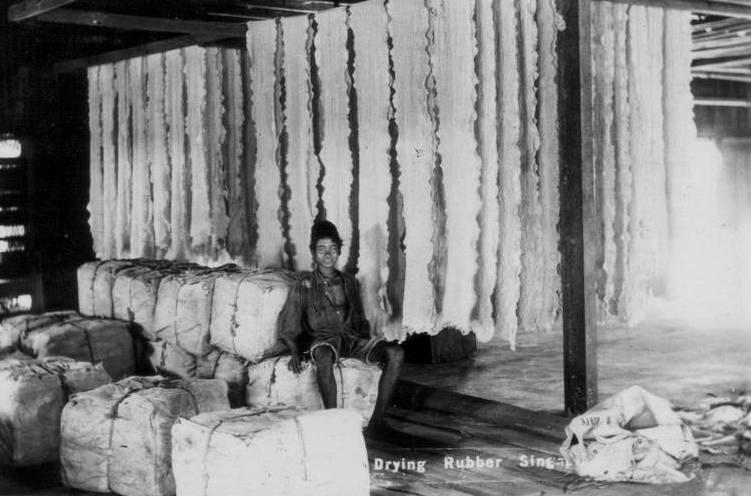
Strategic materials played a critical role in World War II, in both the desire to launch the War and in the ability to wage an extended conflict. World War II was an industrial war dominated by modern new weapons produced by industry. And to produce those weapons, raw materials were needed. Several materials were especialy important. The key resource was oil. Modern mechanized war is simply impossible without oil. It was need for land war, naval war, and the air war. The Allies, especially the United Sates, had huge petroleum rescource. The Germans were gained control of the Romanian Ploesti oil fields. They also had a synthetic fuel industry. At the beginning of the War, the Soviets supplied large quantities of oil and other critical resources to Germany, After the German invasion, oil became an increasingly severe problem for the Germans. Other key resources included chrome, copper, iron, nickle, rubber, and other materials. This list is very similar to that of World War I, although oil and rubber were much more important. A new metal became verey important--aluminium. An unfamiliar new material was added to the list--uranium. Food resources were also important. Food shortages had severely hampered the Central Powers in World War I. The desire to increase control over food producing areas was a key consideration of all three major Axis powes. Control of the seas gave the Allies the ability to import needed resources. Many were available in the United States and Canada. The U-boat campaign in the North Atlantic attempted to cut the supply of these raw matweials to Britain. The American submarine campaign in the Pacific suceeded in cutting the Japanese Home Islands off from their Southern Resource Area. Rubber became a problem for the Allies after the Japanese seized Malaya and Borneo where much of the world's rubbef was produced. The United States launched a crash program to produce synthetic rubber. Almost all of the rubber used by Germany was synthetic.
The Allies at the start of World War II controlled the overwealming portion of the world's raw materials, especially the most critical ones like petroleum and rubber. They also controlled enormous areas of productive agricultural land. Not only did they control significant sources of raw material, but they had the naval power to obtain raw materials from countries they did not control and deny those resources to the Axis countries. Here the Axis powers were in a very poor situation. This put them at a disadvantage in waging any extended war. But it also created an incentive to launch a war to seize those resources. Britain and France because of their empires also had vast resources. The Soviet Union also had vast resources of oil and minerals as well as significant agricultural potential. As a consequence of conquest, the Axis powers attrmpted to increased their access to needed raw materials. The Germans improved their situation, but actually reduced their access to oil and many other minerals the Soviets had been delivering to them. If the Germans would have completed ther conquest of the Soviet Union they would have had the resources they needed. The Japananese did much better. They seized control of the resources they needed in ther Southern Resource area. The Allies had not realised the extent of Japanese naval power. Nor did the Japanese fully appreciate the American reaction and the rapidity with which American industry could redress the naval balance. While the Japanese seized control of the resources they needed. They would find getting those resources back to the factories on the Home Islands a much more difficult proposition.

Navigate the CIH World War II Section:
[Return to Main World War II economics page]
[Return to Main World War page]
[About Us]
[Biographies]
[Campaigns]
[Children]
[Countries]
[Deciding factors]
[Diplomacy]
[Geo-political crisis]
[Economics]
[Home front]
[Intelligence]
[Logistics]
[POWs]
[Resistance]
[Race]
[Refugees]
[Technology]
[Totalitarian powers]
[Bibliographies]
[Contributions]
[FAQs]
[Images]
[Links]
[Registration]
[Search]
[Tools]
[Return to Main World War II page]
[Return to Main war essay page]
[Return to CIH Home page]