|
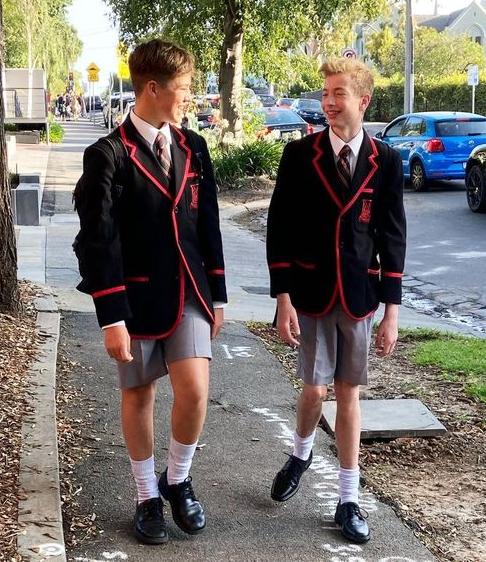
School shorts were first widely worn in England, but soon spread to the British Empire countries which like England also commonly required children to wear school uniforms. Booys in France, Germany, Italy, and other Europan countfies also commonly wore short pants to school. Most schools in these countries did not require uniforms. English boys commonly wore shorts to school even to schools where there was no required uniforms. Until after World WarII (1939-45), it was only the private schools in England and the grammer schools (secondary schools) that required uniforms. Many primary schools began adopting uniforms in the 1960s and this often included short pants. About this time the older boys began expressing a desire to wear long pants. Uniforms are still commonly required in England, although only the younger boys wear shorts. French boys commonly wore shorts to school, although not as part of a uniform. Like English boys they began wearing longs to school after the 1960s. New Zealand boys still commonly wear shorts while Australian schools have extremely varied school regulations. Many American elementary schools have begin setting a voluntary uniform policy and many boys and girls wear shorts in the warmer Summer months.
Australian schools followed British school fashions closely through the 1960s. Since then schools have adopted more casual styles, but still showing the British influence. Many schools now have the boys wear longs during the winter and shorts in the summer.
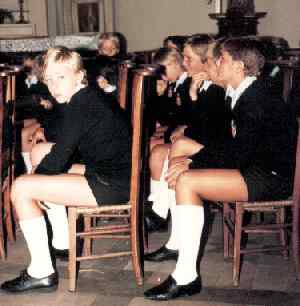
Belgian, like French, school boys comminly wore smocks since the 1870s, mostly with kneepants. After World War I boys continued to wear smocks, but increasingly with short pants. Uniforms were not common in Belgium, but many Catholic schools did introduce them. The most common were blue shorts and white knee socks.
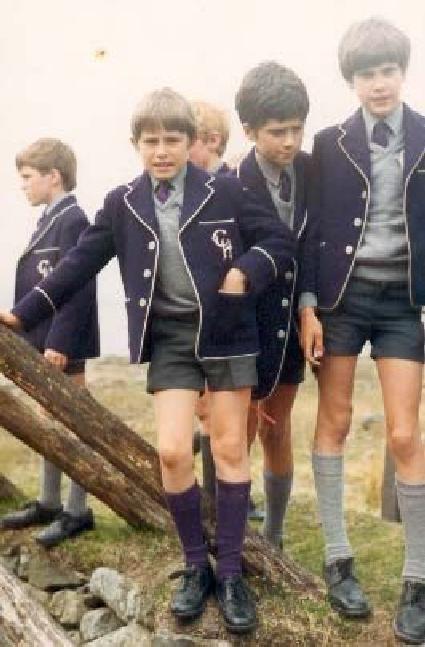
English boys after World War I began to commonly wear shortpants and knee socks as part of their school uniform. Knickers were still worn in the 1920s, but became less common by the 1930s. The shorts were mostly grey and worn with kneesocks, often with colored tops. Shorts were commonly worn through the 1950s by elementary-age school boys and even by some secondary-level boys. Initially most shorts were grey flannel. After World War II (1939-45) several schools adopted corduroy shorts, but most schools by the 1950s were replacing grey flannel with grey Rayon or eventually Terylene worsted. The long baggy style gradually gave way to more trim-fitted, shorter shorts with Continental styling. Many older boys began to insist on long pants in the 1960s. By the 1980s, even the traditionally minded prep schools, with a few exceptions, had shifted to long trousers--except for the younger boys. Many prep and primary schools, however, now wear shorts during the warmer summer term. The long baggy style is becoming increasingly common.
|
French school boys comminly wore smocks since the 1870s, mostly with kneepants. Short pants appeared at school after the turn-of-the 20th century evoling from knee pants. After World War I boys continued to wear smocks, but increasingly with short pants. Short pants After World War I had mostly replaced knickers, except for older boys. The first shorts were long, like knee pnts but wihout the decreative knee hem buttons. Smocks were very common in the late-19th and early-20th century so it is not always possiblke to see the kinds of mostly short pants being worn, often with knee socks. There were all kind of diffeent short pants. Suspender shorts were very common in France. This was the general case on the Continent. Younger boys might wear bib-front shorts. We see quite a number of school portaits with many younger boys wearing bib-front shorts. They replaced bib-front rompers when the boys began primary school. The bib-front shorts seem to be most common in schools where smocks were not worn. We note boys wearing shorter-cut shorts as the inter-War era progressed. Uniforms were not common in France, but many Catholic schools did introduce them. The most common were blue shorts and white kneesocks. Many schools had blue cord shorts which were also widely used for Scouting in France. We see some Catholic schools after World War II adopting uniforms with blue cord shorts and white knee socks. Boys in the 20th century commonly wore shorts with school smocks. So we can often not tell what kind of pants the boy was Wearing unless he was wearing long pants which was not common until the late-1950s. Boys commonly wore shjorts even in the winter. Kneesocks were common in the colder months. French boys commonly wore short pants through the 1950s and even the early 60s. Younger boys commonly wore suspender shorts and also bib-front shorts. After World War II (1939-45), shorts became shorter and began to be worn mostly by younger boys. Short pants were very common in Frenh schools after the War. We begin to see more long pants by the 1960s and also longer-cut shorts began to appear in the late-1970s. By this time, however, we see fewer French boys wearing shorts to school.
We see German boys wearing a variety of pants to school in the late-19th and early-20th century, including knee pants. We do not see short pants until the 20th century, especially after World War I in the 1920s. Gradually after World War I, short pants became more and more common in Germanh. Older boys wore long pants to school. The age at which boys shifted from short to long pants varied over time. Some times teenagers had knickers has a kind of transition. The schools did not play a role here. They did not set rules. This was essentially a family decession. We note that in the 1920s and 30s boys often began to shift to long pants a school a a about age 15. Some boys began wearing longs earlier, others later. In some cases boys wore knickers in between the transition from short to long pants. By the 1930s seasonality began to become an issue with some mothers allowing boys to wear long pants in cold weather, Until the 1950s, however, shorts were more common. We see different kinds of short pants. Lederhosen were popular in southern Germanyy. Some German readers tells us that even if parents allowed boys to wear long trousers to school at age 14 or 15, they often wanted the boys to wear short trousers at home and to church until at least 16. Again this varied from family to family. Short pants were very popular for school wear through the 1950s. With the 1960s, shorts began to be seen as casual seasonal clothing and began to be less commonly worn in school. This trend was particularly pronounced by the 1980s.
Italian boys also commonly wore short pants to school. Most boys wore shorts under there school smocks. Beginning in the 1960s some boys began wearing long pants with smocks, but shorts were more common until the 1980s.
|
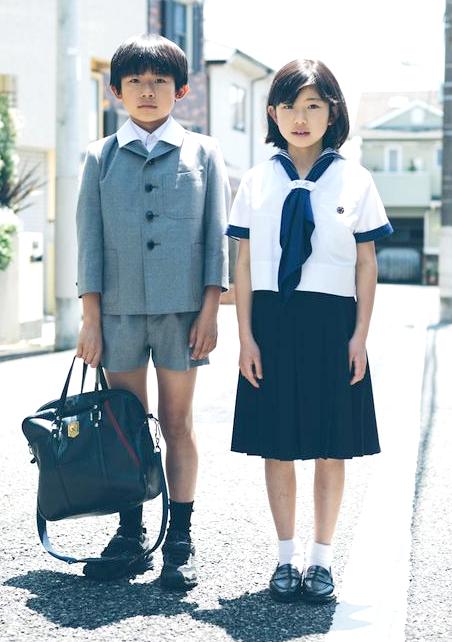
We are not sure just when elementary boys began wearing short pants, but the earlist photographs I have seen date to the 1930s and almost all of the boys appear to be wearing shorts, albeit rather long, knee-length shorts--sometimes rather baggy. I'm not sure to what extent they were required by the schools. After the Second World War, many schools adopted school uniforms, although I am not sure precisely when this ocuured. By the 1960s, however, Japanese schools boys were wearing trim fitting short pants, showing a European style. The most common shorts were blue and were often worn with white kneesocks. Beginning in the 1950s, many school adopted much shorter length, trim fitting shorts. Mny boys wore short pants all year round, even in the cold winter months. This continued through the 1970s becoming a national standard. It only began to change in the 1980s as many primary boys began wearing long trousers, especially during the winter months. More change took place in the 1990s as the longer, baggy shorts popular in America and Euope also began to appear in Japan. This was especially true at non-uniform schools. The uniformed schools tended to retain the shorter, trim fitting shorts. After boys graduated from elementary school they would rarely wear shorts--except for scouts, even for casual wear. Although this began changing in the early 1980s as shorts became popular among older boys for casual, hot weather wear--but not to school.
New Zealand schools generally followed English styles and intermediate and secondary schools generally have uniforms with short pants. Some schools adopted the Scottish blue shorts. Many schools have have distinctive summer and winter shorts. While secondary schools in England generally dropped short pants requirements in the 1960s or early 70s, New Zealand schools did not. New Zealand school boys through the 1980s generally wore short pants uniforms to school, with kneesocks in the winter and sandals in the summer. Many schools in the 1990s have begun allowing boys to wear long pants, especially during the winter.
|
Scottish boys, like English school boys, after the First World War began to commonly wear short pants, or short trousers as the British call them. I think that before the First World War that boys more commonly worn knickers or knickerbockers as the British call them. Short pants were commonly worn by European school boys, but not commonly as part of uniforms as in England and Scotland. In fact Scotland has the distinction of being the most northerly situated country in which short pants were commonly worn--even during the winter months. School uniform in Scotland was quite similar to England. In fact, Scotland is a very traditional part of the UnitedvKingdom. Traditiinal schoolwear continued there for several years after it had mostly disappeared in England to the south. There were few exceptions. Scottish boys often wore kilts, especially for dresswear. One major difference with school shorts was that several public (exclusive private school) adopted blue or black shorts instead of the standard grey English shorts. Also some private schools adopted colored knee socks instead of the standard grey color so common in England.
American school boys commonly wore knickers to school after World War I, but only the youngest boys wore shorts. Public schools did not require uniforms, but parochial schools did. By the 1950s almost all boys wore long pants to school. Some private schools had uniforms requiring short pants. The crisis in public education has caused many elementary schools to introduce uniforms during the 1990s. Most schools allow the boys to wear shorts during the summer as part of the uniform.
Some personal experiences associated with school shorts:
England: New school shorts
Related Links: Careful this will exit you from the Boys' Historical Clothing web site, but both sites are highly recommended
Apertures Press New Zealand book: New E-book on New Zealand schools available
School Uniform Web Site: Informative review of British school uniforms with some excellent photographs
Boys' Preparatory Schools: Photographic essay available on British preparatory school during the 1980s
Traditional school uniform: How to purchase a traditional British school uniform

Navigate the Historic Boys' Clothing Web Site:
[Return to the Nain school shiorts page]
[Return to the Main school uniform garment page]
[Return to the Main school shorts page]
[Introduction]
[Activities]
[Biographies]
[Chronology]
[Clothing styles]
[Countries]
[Bibliographies]
[Contributions]
[FAQs]
[Glossaries]
[Images]
[Links]
[Registration]
[Tools]
[Boys' Clothing Home]