
French Smocks: Chronology
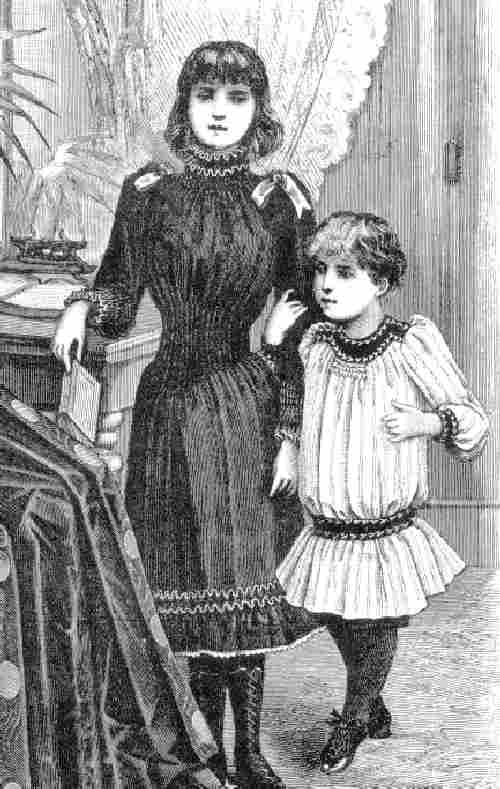
Figure 1.--"La mode illustré" in 1892 described this a blouse for a 3 to 5 year old boy. French publications often used the term "blouse" to describe a smock, although it had other meanings as well. Notice the stylish low waist of the smock. The boy seems to be weating his smock over bloomer knickers, long dark stockings, and low-cut shoes with bows. Notice the bows on the girl's shoulders. Those stmbolized the leading strings once worn on girl's dresses.
|
|
HBC does not yet have detailed information on the chronology of French smocks. We know that they were mandated by the Third Republic for schoolwear in the early 1870s. We do not know, however, if smocks were being worn by boys for school before the 1870s and the Third Republic was adopting an already popular style or if smocks were rarely worn by boys and the Third Republic was introducing a largely new garment. The adoption of smocks, however, suggests that it is a garment that was being worn. HBC at this time does not have information on smocks being worn in the mid-19th century. We do have some images from the 1890s, but almost certainly French boys were wearing smocks at home well before the 1890s. Smocks from the 1870s through the 1950s were weidely worn by French boys at school, we have less information on homewear, but a few images from the 1900s suggest that some French mothers had their boys wear smocks as play garment. We do not know, however, how long this was a common fashion. Available omages from the 1940s and 50s suggest that most boys would take their smocks off as soon as they came home from school.
The 19th Century
HBC does not yet have detailed information on the French smocks in the 19th century. Smocks from the 1870s through the 1950s were weidely worn by French boys at school, we have less information on homewear, especially in the 19th century.
Early 19th century (1800-40)
We have little information currently available. We do note the Hugo children wearing what look to be smocks at home in an intimate family setting.
Mid-19th century (1840-70)
HBC has no information on French smocks in the mid-19th century, but we believe that boys did wear them. How common they were, the styles, the ages of the boys, and other details are not yet available.
Late 19th century (1870-1900)
France was disastrously defeated by the Germans in the 1870-71 Franco-Prussian War. The Germans annexed Alsace-Lorraine and levied a massive indeminity. A new Government, the Third Republic repaced the Emperor Napoleon III. The Third Republic adopted many far reaching reforms, including educagional reforms. One of these was introducing smocks for school children in the early 1870s. This was a democratic reform designed to make all children in French schools more equal, regardless of their family back ground. We do not know, however, if smocks were being worn by boys for school before the 1870s and the Third Republic was adopting an already popular style or if smocks were rarely worn by boys and the Third Republic was introducing a largely new garment. The adoption of smocks, however, suggests that it is a garment that was being worn. HBC at this time does not have information on smocks being worn in the mid-19th century. We do not have any photographs of boys wearing smocks except for school school smocks. They do appear in paintings such as the Edmond Castan painting of peasant children playing. It is not clear, however, if the smocks the boys are wearing are school smocks or everday wear. We do have some images from the 1890s, but almost certainly French boys were wearing smocks at home well before the 1890s. We suspect that this was very common, but just do not have details to conform this.
HBC still has relatively limited information on smocks for homewear in the 20th century. We suspect that smocks worn at home was fairly common in the early-20th century. We see both snapshots and commrcial postcards. Snapshots are of coure a much better indivator of actual prevaleve than commercial postcards. This seems to have been common in the the early-20th century at least among affluent famlies. We are not sure about gender conventios. We see no evidence that home smocks were was common among working-class families. But we do not have many working-class family images to substantiate this. This is not to say that working-class boys did not wear smocks. They were standard wear at French schools both before and after the turn-of-the 20th century. A private schools were not as common in France as in America and Britain. Boys from affluent families were mich more likely toatend public schools. Both boys and girls wore them. We no longer see French boys wearing smocks st home after World War I. Our French archive is limited, but we believe we have enough images to make a preliminary assessment. We see smocks continue to be commonly worn at French schools througout the 1930s and into the 1940s. Teyseen especially common in rural ares. For some reason they begin to decline after World War II (1939-45). They have not totlly dsapprared, but are now not very common.
HBC

Navigate the Boys' Historical Clothing Smock-related pages:
[Return to the Main national smock page]
[Pinafores]
[Fauntleroy suits]
[Fauntleroy dresses]
[Sailor hats]
[Park outings]
[French page]
[Renoir page]
[School smocks]
Navigate the Boys' Historical Clothing Web Site:
[About Us]
[Return to the Main French smock page]
[Introduction]
[Activities]
[Biographies]
[Bibliographies]
[Chronology]
[Clothing styles]
[Countries]
[Contributions]
[FAQs]
[Glossaries]
[Images]
[Links]
[Registration]
[Tools]
[Boys' Clothing Home]
Created: October 22, 2001
Last updated: 9:26 PM 10/31/2019