|
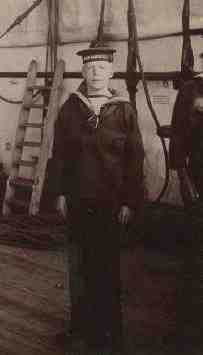
Children before our modern era commonly joined the military. Boys served a drummer boys during the Civil War. Young boys entered the British navy as ensigns leading to a commission and as powder boys leading to service as seamen. The use of boys continue through the 19th Century. While this seem cruel to our modern sensibilities, the use of child labor was also extensive. The life of boys, even quite youg ones could be very difficult. Boys from working class families often had short childhoods. Read about the boys that worked in mines, for examole, such as the "breaker boys" in coal mines. When one reads about the use of child labor into the 20th cerntury, the use of boy soldiers can be seen in better perspdevctive. These boys wore unforms just like adults. Even today in the interminable conflicts in developing countries, especially, Africa, often boys are actively involved.
We do not have a lot of historical information about boys in wars of history. We think this may be a realtively recent development related to the development of weapons. Weapns until modern times were heavy and most required considerable strength and skill. David and the sling shot was an anamoaly. This meant that boys until they reached the upper teens were basically excluded from combat. We here of boys at an eraly age training to be soldiers, but actually engaged in combat is anither matter. A boy in the Greek Hoplite or a Roman Legion line of battle would be a weak point. Swotds, spears, lances, maces, battle axes, etc. reqired eeal strength to wield. A bow was not heavy, but strengthen was needed to draw it. A Medieval knights might have squires, but the squires were not involved in combat. We note that the Mongols began training children to ride at age 3 years. We are noit sure at whay age they became actual soldiers. Advances in weaponry mean that less training and strength was involved to become a competent soldier. A soldier could be more easily trained to nuse a gun, especially as they got lighter and more powerful. The Navy is a little different as there were roles for very young and small boys--namely powder monkies. The developoment of small, poweful weapon is is why child soldiers are such a problem today. We do not hear of boys appearing in historic armies until the about the 18th century. This could have been earlier as we are just beginniung to develop this section and we welcome raader input. The boys we most commonly hear about in historical eras a drummer boys and mnuscians in general. Not ll drummers were boys, but as armies got larger (18th century) we begin to hear accounts of boy drumers. Drums were especially suited for boys. Theu could make a lot of noise--which at the time was very important. And you did not need to be adukt to generate the needed volume of sound. Bugles required adult or near adult lung power. Drums and bugles at the time were not just ceremonial. They conveyed important information before the advent of modern communications as to how military units moved.
HBC has collected some limited infornmation concerning children involved in military service in a few countries, although our information at this time is very limited. It appears to have been a common practice during the 19th century, especially for mussicians. This was generally phased out in the early 20th century. Many youth still served in the military, but you no longer saw pre-teens are very young teenagers.
We are collecting information on boys serving in specific conflicts throughout history. We do not yet have much information on the use of boys in ancient amd medieval militaries. We do have some information on more modern times. Boys were extensively use by both the Union and Confederacy as drummer boys during the Civil War (1861-65). Boys were also used by the U.S. Navy and presumably the Confederate Navy during the Civil war as ships' boys and powder monkeys. I do not recall seeing drummer boys in the Spanish American War (1898-99), although I am unsure about just what the regulations were. For the most part, European countries began phasing boys out of the military by the time of the Franco-Prussian War (1870-71), but there were still some boys in the military at the turn of the 20th century.We do see them being used by the British during the Bioer War fought at about the same time. We are we familair with U.S. naval regulations concerning the age of service. This practice declines in Europe anf North America in more modern times. HBC does not yet have details on the actual regulations in each country. The NAZIs were an exception to this trend. They made sunstantial use of children during the War, especially thec final years of the War. That does not mean that children were no longer used in armies during recent years. We boys being used extensively in the Vietnam War and numerous war being fought in developing countries. This varied sibstantially. Some African countries kidnapped children. In southern Sudan, African boys had to either fight or be killed or sold into slavery by the Arab Sudanese Army.
Thousands of children were directly involved in the Civil War. Older boys served as soldiers. Many younger boys were also invoved, some boys as young as 11 years old. The younger boys generlly served as drummer or bugle boys. Commonly the drummer and bugle boys were 13-15 years of age. Both the Confederate and Union soldiers tried to look after the younger boys. In major engagements they were often sent to the rear when charges into fortifications were planned. In some cases they had to be forced to the rear crying. Such a scene is portrayed in the movie Glory. In addition, over 1 million boys of 17 or under served in the Federal Army alone. Beyond the use of very young boys as deummer boys and bbugle boys, about 1 million boys 16 and 17 years of age fought with the Federal Army alone. Almost surely very large numbers of similsrly aged boys fpught with the Conderacy, although actual records are less available. So many boys served in both the Federal and Confederate Army that one author has suggested calling the American Civil War the Boys' War.
Until the 20th century, boys have been involved in major wars. A major shift occurred at the onset of the 20th century. Thus boys played a smaller role in World War I than in 19th century wars. This continued to be the case in World War II, except for two counries, NAZI Germany and Soviet Russia. Boys were were active in many other countries, but more commonly in non-combat roles. An area in which boys were involved in many other countries was the Resistance.
We note them being used extensively in the Vietnam War and numerous war being fought in developing countries. This varied sibstantially. Some African countries kidnapped children. In souther Sudan, African boys had to either fight or be killed or sold into slavery by the Arab Sudanese Army.
Islamicists have made a major use of boys in pursuing their agenda, Here the madrasas and other schools have played an important role.
The most important military-style uniform influincing boys clothes, of course, was the sailor suit and sailor hat popularized by Queen Victoria when she began dressing the young princes in them during the mid-19th century.

Navigate the Historic Boys' Clothing Web Site:
[Return to the Main uniform page]
[Return to the Main military page]
[Introduction]
[Activities]
[Biographies]
[Chronologies]
[Countries]
[Style Index]
[Bibliographies]
[Contributions]
[Frequently Asked Questions]
[Glossaries]
[Images]
[Links]
[Registration]
[Tools]
[Boys' Clothing Home]