|
Boys from the dawn of time have been involved in war fare and military organizations. Our information on ancient armies is limited, but we have more infornmation about modern times. Boys have actually been in the military. President Andrew Jackson as a boy of 12 was taken prisioner by the British in the Revoluntionary War. Through the American Civil War boys served as drummer boys. Modern militaries in the 20th century began to reduce the use of boys. An exception was the NHAZIs. While modern armjies non longer accept boys, there is etensive use of boys throughout the Third World. This is especially the case with the many rebel groups. Many countries have military schools. Such schools are particularly popular in the United States. Various countries have set up cadet or ROTC programs for boys interested in the military. Military uniforms have had a great influence on boys clothing. Besides actual service, military styles havde had a tremendous influence on both men's and boys clothing.
Military uniforms have had an important impact on boys clothes. Often there were differences between what the parents, especially the mother, wanted their sons to wear and what the boys themselves wanted to wear. The use of military styles for boys appears to have bridged that gap, at least until the mid-20th century when sailor suits became associated with very young children or even girls--making them unacceptable to most boys. Some styles like sailor suits were actual military styles. Other non-military styles had elements like double breasted styling or epaulettes that were inspired by military uniforms.
Boys have served in military organizations and worn military uniforms in a variety of groups. Boys have actually sereved in the military. This was by far in hostorical terms the primary uniformed groups in which boys have served. This only began to change significantly in the 19th century. We see boys in school and cadet groups. Youth groups began o appear in the late-19h century. Many youth groups also had military-inspired uniforms. Boys also wore uniforms or more commonly uniform garments even though they were not in the military or a uniformed youth group.
Military schools have been operated in many European countries and America. We have relatively little information on them, especially before the 20th century. We do know that some were operating in the 17th century, but a few may have been founded earlier. The fact that many officers bought their commissions meant that military scools in the modern sence were not needed. The development of more professional armies using increasingly sophisticated technology eventually mean that schools to train officers were needed. The schools developed in different countries were often quite different. The age of the boys and conditions varied substantially from to school. Interestingly, military schools becane important in America during the 19th century, the country least involved with military arms raves until the Cold War.
British schools and schools in their colonies had a cadet program. American schools had comparable programs, the Junior Reserve Officer Training Corps (JROTC). I do not yet have detail on the creation and organization of these programs. Some information is available on their uniforms. HBC has included in this category all school military ptograms and not just those formally known as cadet groups.
Children before our modern era commonly joined the military. Boys served a drummer boys during the Civil War. Young boys entered the British navy as ensigns leading to a commission and as powder boys leading to service as seamen. The use of boys continue through the 19th Century. While this seem cruel to our modern sensibilities, the use of child labor was also extensive. The life of boys, even quite youg ones could be very difficult. Boys from working class families often had short childhoods. Read about the boys that worked in mines, for examole, such as the "breaker boys" in coal mines. When one reads about the use of child labor into the 20th cerntury, the use of boy soldiers can be seen in better perspdevctive. These boys wore unforms just like adults. Even today in the interminable conflicts in developing countries, especially, Africa, often boys are actively involved.
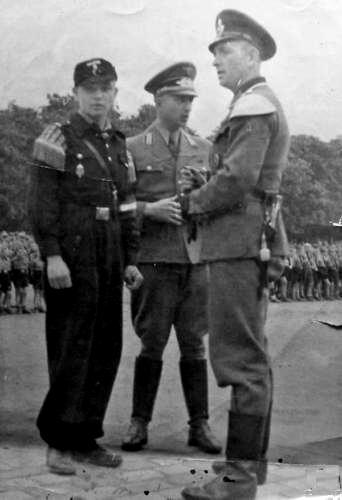
A wide variety of youth groups in the 20th century have adopted a great diversity of uniforms. Most youth groups have had militarily-inspired uniforms. This was certainly true of the Boys' Brigade, Boy Scouts, Hitler Youth, as well as many others. An exception here was the German Wandervogel.Some of these organizations have achieved enormous renouwn for the positive, character building experiences they have provided boys. The first group, the Boys' Brigade, was founded at the end of the 19th century and had a central Christian focus. The most significant was the Scouts which was founded after the turn of the century. Comparable organizations were founded for girls. Many of these organizations were founded in Britain and the British penchant for uniforms have greatly influenced the adoption of uniforms for the boys. Uniforms came to be a key element for these groups. Many other organizations were founded , some with sinister histories like the Hitler Youth. This web site seeks to provide a historical background on these organizations and a look at the uniforms worn by the boys over time.
Boys also wore uniforms or more commonly uniform garments even though they were not in the military or a uniformed youth group. Many military garments have become popular boy's garments. The most obvious of course is the sailor suit and the many garments (cap, middy blouse, reefer jacket, ect.) associated with it worn by boys. Other popular items included the balaclava, various navy and army caps, aviator cap, bomber jacket, duffle coat, poncho, and a variety of other items. Camouflage garments became popular in the 1990s.
We have primarily looked at the types of military organizations in which boys have served. Our information is still limited, but we want to eventually cross index these pages by country.
An American reader writes, "One thing I notice that seems to be missing (although I might have missed it) are the "military" boys' groups that are loosely connected with the actual armed forces. In the United States we have the Sea Cadets and the Young Marines. Neither is officially part of the Navy or the Marine Corps, but the Navy and Marine Corps provide support, and military personnel serve as leaders in their off-duty time. These groups wear modifed Navy or Marine uniforms.
I think, but I'm not sure, that the Civil Air Patrol is an equivalent Air Force Program, although I think it's for older teenagers. When I was in the Marines, I recall groups of Young Marines at Camp Pendleton in California. We called them "Devil Pups" as a variation on the US Marine nickname of "Devil Dog". I was connected with a Sea Cadet group a few years ago which actually used an old Navy 80-foot yard patrol boat." [Reed]
Girls have not been historically unvolved with the military, although there have been some exceptions. , primatrily reltives of powerful leaders. Military uniform styles did have some imoact on girls' and wonen's fashions. This did not change significantly until the 20th century. This began when young women began to be used as military nurses (late-19th century). Girls' youth groups began to appear in the early-20th century. We see women playing a role in World War I, but often in unofficial capacities. This changed during World War II and the role of wome in military services has only increased since then. Military schools and cadet programs began acceoting girls (1960s). We do not know, however, of any all girl military schools.
There are quite a large number of images throughout HBC showing individual boys wearing clothing with obvious military styling. This includes boys of all ages. We note even younger boys wearing skirted garments and boys with long ringlet curls that had clothes with military detailing. Here we are not talking about uniforms, but regulat clothes with military styling.
Skirted suit: United States, 1862
Kneepants suit: England, 1903
Reed, Mark. E-mail message, July 6, 2005.

Navigate the Historic Boys' Clothing Web Site:
[Return to the Main uniform page]
[Introduction]
[Activities]
[Biographies]
[Chronology]
[Clothing styles]
[Countries]
[Bibliographies]
[Contributions]
[FAQs]
[Glossary]
[Images]
[Links]
[Registration]
[Tools]
[Boys' Clothing Home]