
Native American Civilizations: Ice Age Migration
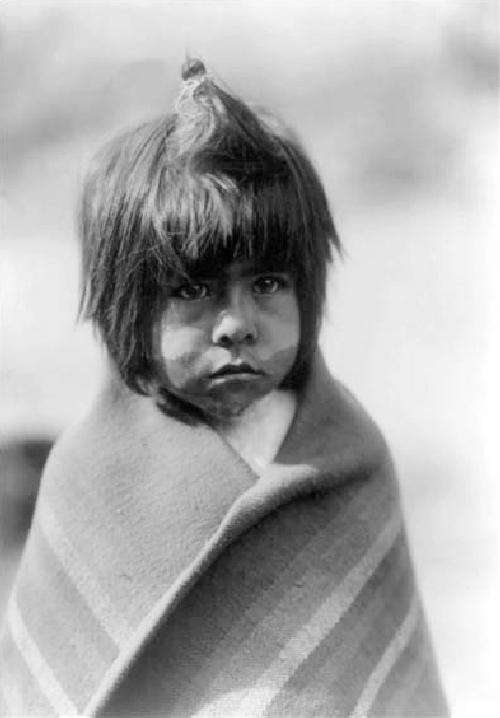
Figure 1.--Researchers for decades accepted the Clovis First theory as to how Native Americans peopled the continent beginning about 11,500 BC. That theory has now been questioned by both archeological finds and DNA evidence. And our understanding of the peopleing of the Americas is today in a state of flux. An increasing number of scholars are coming to the comclusion that a much earlier first crossing occurred, something like 25,000 BC.
This photograph depicts a Chemehuevi Indian boy from Arizona. The portrait was taken by Edward Sheriff Curtis in 1907. Curtis is widely regarded as perhaps the most celebrated photographer of Native American people and culture. Over a 30 year period, he created a scholarly and artistic body of work that would document the ceremonies, beliefs, customs, daily life, and leaders of more than 80 Native American tribes. His monumental North American Indian project contained a set of 20 volumes of ethnographic text illustrated with 2,200 high quality images and is considered the most significant record of Native American peoples and traditions.
|
|
The Native American people are primarily descended from Siberian peoples that crossed the Bearing Straits land-ice bridge created by the Ice Age. They were nomadic hunter-gatherers probably followng migrating heards. The where of the crossing is widely accepted by the scientific community. Virtually everything else about proto-Native Americans is a matter of dispute. The history of native Americans is hotly debated by archeologists, anthropologists, geneticists, and linguists. Joining the robust debate are Native Americans themselves who have many legitimate grevinces with the archeologists. Entering the scientific debate are charges of white racism and the counter charge that political correctness is inhibiting science. The problem is that archeologists and anthroplogists which have dominated the study of Native Americans have so often been wrong, often disasterosly wrong. And the new sciences entering the field (genetics and linguistics) are resented by the older experts and just beginning to develop the tools needed to decisively add to the debate. Archeologists once almost unanimously dated this crossing at about 13,500 years ago (11,500 BC). Most modern archeologists grew up at a time when there was a solid consensus among archeologists that Siberian hunters crossed Bearing Sea ice bridge and that they moved through an ice free corridor and desimated the mega-fauna of the Western Hemisphere. The discovery of Clovis-point spearheads was deemed to confirm this chronology. Now almost everything about this consensus has been questioned. Today there is mounting evidence that the crossing occurred earlier--much earlier. We see more and more reports using the apprximate date of about 25,000 BP and quite a number using even earlier dates. Another major question is how much time the migrants spent in Beringia, blocked by the immense North America Ice Sheet. It also appears to have occurred in a series of waves, although it is not at all clear if these were waves crossing the Bearing Straits or waves of migration south from Alaska.
After crossing the Bearing Sea ice land-bridge, the Native American people moved south and east. Here there is also controversy. An ice-free corridor through the North American ice shelf was once widely accepted, but today this has come into question. Increasing acceptance is developed for a coastal migration by boats. Actual evidence for either both possibilities, however, is very limited. We know that somehow prop-Indians did get south and eventually populated the entire Western Hemsphere as far south as Tierra de Fuego in South America.
The new evidence includes DNA studies and raises many questions about the previously accepted Clovis First theory. This has complicated Native American anthropolgical studies. We now know that migration continued well after development of indignous socities in both North and South America. This means that migrations took place well after civilizations for which we have archeolgical evidence. This had confused early anthrpologists who assumed that the migrations preceeded the early cultures which they found such as the Clovis Point people. The stone tools found at Clovis, New Mexico are believed to date to about 9,000 BC. The Clovis Point people were once thought to be the earlist American culture. Other cultures in recent have sence been found much further south in South America. [Koppel] Clovis-First adherents question the dating of these findings. Linguists has entered the debate. They point out that the language diversity in the Americas is much greater than in the Old World. This suggests a far longer history than allowed by Clovis First adherents. But there are differences of opinion among theorists as well. While the debate rages, there is a growing consensus that Native American occupation of the Americas occurred much earlier than at first believed. There is no consenus on this, but estimates within 20,000-30,000 years are being cited by an increasing number of experts in the widening field of North American studies.
Human African Origins
Native Americans like all humans are of African discent. For years archeologists have been wrestling with bones and artifacts to trace humnman origins. Linguistic studies have also provided useful information. The modern science of DNA has revolutionized the study of pre-history. There is now general agreement that anatomically modern humans evolved in Africa (about 200,000 BP). Behavioral modernity, however, is more recent. It involves related changes in Homo sapiens both behavior and cognition (abstract thinking, deep planning, symbolic behavior (art, ornamentation and music), exploitation of large game and blade technology (40,000–50,000 BP). Migratory movements of early man were once seen as lost to history. Modern DNA studies have in recent years provided increasingly accurate accounts of the migrations and genentic relationships of different peoples. From Africa man gradually peopled the other continents. Man spread fastest east along the coast of south Asia, reaching Australia (about 70,000 BP). Man did not spread directly north to Europe or even through Turkey into the Balkans. Rather DNA studies suggest that in a subsequent wave, man spread from Africa into Central Asia. Most modern humans have descended from these Africans who migrated into Central Asia, presumably following game onto the vast Central Asian grasslands. Here humanity divided. This divergence occurred (about 40,000 BP. Those that moved west became Europeans. Those that moved east became Chinese. Others moving south encountrered the population of the first coastal migratry route and became Indians (South Asians). A smaller group moved northeast into the harsh, forbidding reaches of modern Siberia. It is from this group that Native American peoples have descended.
Siberian Settlement
There has been some discussion among archologists as to when human settlement began in the Artic regions of Siberia. This dating is of interest because these are the people who eventually made the Bearing Sea crossing to the Americas. Archeologists had believed that human settlement in the upper reaches of the Siberian Arctic began about 15,000 years ago. [Science] Russian researchers reported in 2004 that Siberian settlement may have occurred much earlier, around 30,000-35,000 years ago. The researchers found evidence of human settlement along the Yana River. This was an interesting discovery so far north because the climate was colder at the time. One especially interesting find was a spear foreshaft made from rhinocerous ivory has a remarable resemblance to similar shafts made by the Clovis people in North America. [Science] This raises the possibility is the Yana River people may have been involved in the Bearing Sea Crossing to North America. The latest research on Native Americans may appeared about 30,000 years ago or even earlier. [Dillehay] So it seems increasingly probable that the first Siberian settlement may be much earlier than currently thought.
Beringia
The current debate over climate change should be put into an historical context. Geologists have found that over geological time, sea levels have risen and fell many times. Many of these shifts have been very significant, resulting in spectacular geological changes. We of course in our assessment of Native American migrations are interested in the most recent ice age. The last Ice Age occurred around 12,000-15,000 years ago. At this time, massive volumes of water were precipated on land in the form of ice and snow. Over time this tied up a substantial portion of the earth's water in deep glacial ice that extended deep into the North American, European, and Asian land masses. As a result, sea levels dropped significantly, estimate suggest anout 100 meters. Shallow seas separate Asia from North America near the present day Bering Strait. As a result when sea levels dropped, a land bridge was created between Asia (Siberia) and North Ameruca (Alaska). This land bridge was not a narrow strip, but rather a 1,000 mile wide grassland steppe. The Bearing Sea land bridge created a relatively warm environment to the south, at least along the coast because it cut off the flow of cold Arctic Water south. The land bridge permitted the movement of animals, plants, and also Siberian humans. These became proto-Indians. P. Sushkin and E. Hulten created the term 'Beringia to describe the geographic area. The name is derived from Vitus Bering, the Danish explorer who expolored the area for Tsarist Russia (18th century). The term continues to be used for a extensive area between the Kolyma River in the Russian Far East to the Mackenzie River in the Northwest Territories of Canada. The U.S. National Park Service administers a Shared Beringian Heritage Program and is promoting the establishment of a Beringian Heritage International Park. Discoveries of skeletel remains of these nomadic people are very rare. But DNA studies of the small number if finds (such as Upward Sun) have begun to suggest that populations moved from Siberia into Alaska at a much earlier date than previously thought. Some researchers are beginning to postualte that Siberians nomads made the crossing 30,000 BP. And there are estimates of as early as 60,000 BP. A major issue is just how much time the Siberian migrants spent in Beringia before moving south. The Bereingia Sandstill issue is a major controversy in Native American studies. Some believe that the Siberian Migrants were stuck in Beringia until the Last Glacial Maxiimum began to reced (about 17,000 BP). Bluefield Caves on the Alaskan-Yukon border i at the center of this controvesy. It was escavated (1970s-80s) and was an early indicator that the Bering Sea crossing took place earlier than believed. Recent evaluation of the bone fragments found human habitation may have encompased an extended period (24,000-12,000 BP). [Burgeopn] Abother indicator is that while various groups over time migrated into Beringia, the people who migrated out of Beringia had the same genetic makeup. Many that the groups who migrated in intermarried and produced a new people. We know that because all the Native American people who populated the Americas have the same genetic makeup. One of the earliest finds is Anzick Boy in Montana.
Coastal Routes South
The Clovis First theory postualted that the first humans reached the North American heartland when the warming Interglacial Period created a ice-free corrdidor from Beringia. This may have occurred, but it is becoming increasingly clear that the migration south from Beringia did not begin with Interglacial Warming nor was it necesarily the primary route. Rather there must have been a coastal migration south along the coast sromd the glacial ice sheet. The coast was warmed by the Bearing Sea Land bridge which blocked off cold Arctic Water and directed warming ocean currents. This first became suspected with the findings at Monte Verde in Chile. [Dillehay] This work was first rejected by the Clovis First adherents, but has been confirned by a series of studies by independent groups. The Clovis people emerged in what is now the United States southwest (about 11,000 BP). Many interet sites are confusing because they use the term 'years ago' and we are not always sure if they are referring to BC or BP. Several other pre-Clovis sites have been found in North America, inclding all the way east to the Atlanticc coast, including Meddowcroft Rock Shelter--Pennsylvania (19,000-16,000 BP), Cactus Hill--Virginia (15,000 BP), and Paisley Cave--Oregon (14,290 BP). The work at these North Americam sites, however, is not yet as well vetted as the work at Monte Verde. But new additional pre-Clovis sites continued to be found, including more ites in South America. Another new site has been identified in Arroyo Seco 2 in northeastern Argentina which has been provisionally dated (12,000 BP). Along with Native America stone tools were interesting megafauna bones that they were hunting like giant sloths and rhino-like hoved animals.
Interglacial Period: Ice Free Corridor/Coastal Sea Route
The Pleistocene has lasted 2.5 million years, essentially covering the entire life span of Homionids. Numerous glacials, advances of continental ice sheets in North America and Europe have been reportd at intervals of about 40,000 to 100,000 years. These extended glacial periods were separated by more temperate and shorter interglacial peiods. These causes of these eras of climate change are basically due to fluctuations in the Earth's orbit. There are three major fluctuatiins. First is changes in the Earth's orbit around the sun, referred to as eccentricity. When the obliquity is subtantial, seasonal changes can be extreme. Second is changes in the tilt of the Earth's axis, referred to as obliquity. This can excentuate hemispheric differences. Third is wobbling motion of Earth's axis, referred to as precession. During the Pleistocene Ice Age, great sheets of ice up to two miles thick covered most of Greenland, Canada, and the northern United States as well as northern Europe and Russia. All of this ice lowered sea levels creating the Bearing Sea land bridge. This allowed Siberian nomads to cross into western Alaska. The ice sheets, however blocked overland travel into the North American heartland.
The most recent glacial period ended about 12,000-15,000 BP. This caused sea levels to rise, blocking further Siberian crossings. Those who had alreadt crossed were trapped in Beringia. Anthripologists for many years favored an ice-free land corridor theory as allowing the peole of Beringia to move south into North America and eventially South America. Increasingly today, many Anthropoligists are moving toward a coastal sea route south out of Beringia.
Early European Thought
The history of the archeological study of Native Americans has been one of constantly pushing back the time-line at which proto-Indians peopled the continent. This whole process of dating proto-Indians began with Columbus' initial voyage. Columbus to his death insisted he had reached Asia. Very quickly other explorers realized that they had discovered a new continent. This raised a very serious problem for the Church. Christian theologists had determined that the Great Flood had destroyed all mankind and land animal life except for what Noah cramed into his ark. Thus the Church had to explain where Native Americans came from and how they got to the New World. This required some imaginative thought. The general consensus was at first the Lost Tribe of Israel. Another early problem was explaining how the Isrealites got to the Americas. Timing was another problem and early estimates were quite low in terms of the actual chronology. Eventually Bishop James Ussher, Primate of all Ireland, provided a detailed time line based on the Old Testament chronicles dating creation at 4004 BC (17th century). This was basically the same as determined by other earlier and contemprary Bible-based estimates (Jose ben Halafta, Bede, Scaliger, Kepler, and Sir Isaac Newton. This dating for centuries dominated European thought. Darwin's publication of The Origin of the Species opened up the science-based study of many questions, including among them was Native-American origins.
Native Americans Origns
Native American peoples are primarily descended from Siberian peoples who crossed the Bearing Straits. Archeologists for some time have been convinced that Natve Americans are of Asiatic origins that migrated from Siberia. The Native American people are primarily descended from Siberian peoples that crossed the Bearing Land Bridge created by the Ice Age. They were nomadic hunter-gatherers presumably following animal heards. This is widely accepted by the scientific community. Virtually everything else about Native Americans is a matter of dispute. The history of native Americans is hotly debated by archeologists, anthropologists, geneticists, and linguists. Joining the heated and wide-ranging debate are Native Americans themselves who have many legitimate grevinces with archeeologists. Modern DNA studies have confirmed the Asiatic origins of modern Native Americans. There is a lingering debate, however, as to other peoples who may have also reached the Americas. While Native Americans are clearly of Asiatic origins, just when they crossed the Bearing Sea Land Bridge and how they moved south is the subject of intense academic debate. And many long-established theories are collapsing--especially the once widly accepted Clovis First dotrine.
The Siberians who migrated to North America were nomadic hunter-gatherers who crossed the Bering Land Bridge. This is one of the few events that archeologists agree about. During the Ice Age sea levels were lower, much lower. So much water was tied up in the Northern Hemisphere ice cap, that sea levels may have been an incredible 100-150 meters lower than today. This created a land bridge over what is now the shallow but forbidding Bearing Straits. Prescisely when this crossing took place, however, is a matter of considerable controversy. For years Archeologists based on the Clovis First theory dated the crossing at about 13,500 years ago. This was the time when the glacial ice of the Ice Age was believed to have receeded and a ice free-corridor appeared south from Alaska into the Noth American heartland. There is now, however, considerble disagreement among Native American specialists as to just when these crossings began. how they were made, and how long they continued. Some scientists now believe that Ice Age people arrived in North America over the Bering Sea land bridge much earlier, perhaps 20,000-30,000 years ago or even earlier. Archeologists for the most part clung to Clovis First. Other specialists, however, raised some chincks in the Clovis First orthodoxy. Preliminary DNA studies suggest that these migrations took place in multiple, perhaps three waves. These estimates are based on recent DNA studies assessing when Asians and Native Americans diverged genetically. Not all researchers working with DNA agree as to the dates involved. Some also suggest that it was about 15,000 years ago. One study suggest that the first crossing was made by extrenmely small groups, perhaps only 10-20 people. Then the linguists chimed in to the debate. They noted an incredible linguistic diversity, far greater than the Old World. This suggested a much earlier initial crossing than estimated by the Clovis First theorists. These new contributors to the subject were not invested in Clovis First like the archeological community.
Migration South
Anthropologists differ on the process of the miration south. The problem here is that there is so little archaeological evidence. There is no real doubt that Asiatic migrations took place. (Some suggest European or Polynesian migrations, but the archeolgical evidence as well as DNA traces do not exist.) While the Bering Sea crossing is accepted by most all sereious archaeologists, the precise timing and process of these migrations is a matter of considerable scientific debate. After crossing the Bearing Sea Land Bridge, the Native American people moved south and east until eventually populating the entire Western Hemisphere as far south as Tierra de Fuego at the tip of South America. This is certainly the case. There is considerable difference, however, as to just how the Siberians nomads after crossing to Neringia began their journey and the routes south. There seems to be two competing theories, 1) a coastal sea route and 2) an ice free interior corridor. Some of the coastal movement may have been by boats or rafts. These anthropologists believe that the migrants moved south along the coast of Alaska along an ice free coastal corridor armed because the Land Bridge blocked cold Arttic waters from entering the North Pacific. Some archeeologists to support this theory report a human presence in coastal Oregon about 12,000 BC. [Jenkins] They could have come along a coastal route or arrived by sea. Rising sealevels with the retreat of the ice sheet may have covered over archaeological evidence. Other archaeologists challege this theory and suggest an ice free corridor east of the Rocky mountains. This route appears to have oened around 11000-10000 BC and led to the high planes of North America. Modern research seems to be leading toward the coastal route.
Migrational Jackpot
Native Americans, however, the migration south managed to enter the North American heartland. And amist theheated debate as to their route, one fact is indesutable. The nomadic Siberian hunters hit the migrational jackpot. Their ancestors had eaked out a meager existence in the harsh conditions of northeastern Siberia. This had kept their population small. Which is why when we talk about their movements we are discussing the movements of very small bands people, one of several reason that the have not found an archaeological trail. Moving south they encountered an uninhabited land of unimaginable riches. Migrations did not always end well. Some early men in the first migration out of Africa ended up in the harsh arid conditions of Australia. Others ended up in the frigid reaches of northwestern Siberia. No so the small migrant band that entered the heartland of North America.
Successive Waves
It now appears that there were several successive waves of migrations. DNA work suggesrs that there was one wave that crossed the Straits. [Schroeder} That does not mean, however, that they all moved south at the same time or along the same route. The now probable successive migrations have complicated Native American anthropolgical studies. We now know that migration continued well after development of indignous socities in both North and South America. This means that migrations took place well after civilizations for which we have archeolgical evidence. This seems to have had confused early anthrpologists who assumed that the migrations preceeded the early cultures which they found such as the Clovis Point people. Undoubtedly the increasing sophistication of DNA studies will eventually tell us much more about migratory patterns within the Americas.
Protoindians are not well understood. The stone tools found at Clovis, New Mexico are believed to date to about 9000-11000 BC. The Clovis Point is esentially a elgantly flutted stone spearhead that was a major technological advance. As late as the 1980s there was a neat, widely accepted theory as to the peoplong of the Americas. The Clovis Point people were thought to be the earlist American culture. For many years this Clovis First theory dominated the anthropological view of the peopleing of the Americas. Anthropolgists theorized that as the Ice Age receeded, a corridor opened for Asian nomads to penetrate into the heart of North America. The disappearance of the mega-fauna of North America at this time seemed to confirm that these nomads armed with Clovis Point weapons were responsible. (the fact that Clovic points appeared, the ice sheets receeded and the mega-fauna disappeared at the same time about 13,500 years ago seemed to confirm the theory, but their could be environmental factors at play as well.) Modern anthropological work has brought this theory into question. One problem is that nomadic tribes in Siberia did not have Clovis Point weapons. Some anthropologists have noted similar technology in Europe pointing to Ice Age Solutrians. Other arcelogists see a link between Solutrian and Clovis technology in artifacts found at Medow Lark that date to about 15,000 years ago. Other finds have been dated to as far back as 22,000 years ago. DNA studies have found evidence of non-Asian bloodlines, but there is no known Solutrian DNA signature yet to confirm it was the Solutrians involved. One journalist looking into the Solutrians tells, us that the problem with using DNA to assess Solutrian settlementof the Americ "is that the geneticists don't have a genetic signature for what a Solutrean's DNA should look like. So they don't know what to look for in native Americans." [Vastag] Comparisons have been made between native Americans and the people of northeast Asia - and from that, it is clear that northeast Asians left a lasting genetic legacy in the Americas. The question Dennis Stanford is exploring is whether another group got here first - and possible contributed a genetic legacy as well. The answer to that seems to be 'maybe'. Another complication is that archeological finds in South America suggest human settlement much earlier of the Clovis Point people. Cultures have sence been found in South America that significant pre-date the Clovis people of North America. [Koppel] There have also been earlier discoveries in North America such as along the coast of Oregon. [Jenkins] These discoveries have, however, been questioned and the debates over Clovis First continue. Many archeologists still clining to the Clovis First theory are dubious about reports of much earlier settlement. Further complicating the story, anthropolgists disagree as to weather the spread of Clovis Point technology chroicles the migration of a people or a technology accorss different people. These issues are the subject of enormous debate among archeologists and anthropolgists which will probably take a geneation to resolve.
Sea Route
Archeologists have found sites in South America that throw established migration routes and chronologies including Clovis First in doubt. This suggests that the first Native americans reached South ameruica by sea. A Thor Hendrdal-type arrival is unlikely. Both the barrier of the wide Pacific even allowing for iskand hopping and DNA evidence arrgue against it. More likely is that migrants followed the coastline south. Here thy could have avoided the ice shelf and lived off marine life on route south. Land migrants may have reached South America later. These sea migrants did not have large ocean-going rafts, but could have made short steps south following the cot. There is no archeological evidence for this, but most of their settlements would today be underwater. [Koppel] The migratory origins of the varius people of South america is not well worked out yet, but arceologists are working on this. Many archeologists now believe, for example, that the Nazca people of the southern Peruvian coast arrived by sea. These of course are the people who created the famous desert lines.
Solutrian Heresy
The Clovis First theroy became the established doctrine of modern archeologists. Some archeologists now believe that Europeans participated in the early peopling of America, although this idea has been dismissed by many archeologists. Not only do some archeologists believe that Europeans entered North America in pre-historic times, but that this occurred earlier than the Bearing Sea land bridge crossing, something like 22,000 yers ago. They apparently paddeled along the retreating ice shelf subsistuing on seals and fish. The people involved are believed to be the little-knownm Solutrians from the Iberian Peninsula and southern France. [Stanford] Archelogists have found evidence which they claim point to the Solutrians in North America. One of the most important find was a mastodon tusk and an associated stone tool hawled up by a Virginia scllop fisherman in 1970. One has to ask, however, how a people with such advanced technology could have left such a smal genetic imprint. Some anthropolgists believe that the invention of the Clovis Point was the first major technological invention in the Americas. The numbers of early Americans were relatively small. It is possible that an environmental event severly affected the Solutrian population if indeed they reached the Americas.
DNA Research
DNA research has suceeded in revealing an enormous anount of informationn about pre-history. We now have a great deal of information about human migratory patterns out of Africa and the peopling of Eurasia. This is a rapidly unfolding field. Every month more studies appear filling in areas that until a few years ago, historinas belived to unknowable developments in pre-history. Much less work has been done in the Americas. And here the time frame is much shorter than is the case for the migration out of Africa. DNA studis have cinfirmed the Bearing Sea land bridge as the mechanism for humans reaching the Americas. And we now know that a single ancestral group was involved. For two decades after the appearance of DNA research, scientists have been studying a growing volume of genetic data to debate whether Siberians emigrated to the America in one or successive waves. And whether they came from one ancestral Asian population or a several different populations. Now it has become increasingly substantiated by the expanding DNA work that the research evidence supports the single ancestral population theory.
An internatiinal team of researchers reports, "Our work provides strong evidence that, in general, Native Americans are more closely related to each other than to any other existing Asian populations, except those that live at the very edge of the Bering Strait.” [Schroeder] What researchers have not yet determined, however, is just how the Americas were populated. We do not know, for example, why the oldest Native ameriva find is in all places, southern Chile (Monte Verde). And we have no idea how Amazonia Native American populations fit into the process. We know a great deal about early settlements along the northern coast of Peru. But the arid conditions there are ideal for preserving human artifacts. And the condition in the Amazon are just the opposite. And there is evidence of cultural difusiin from the Amazon over the Andes to coastal Peru. Potery is one such example. One researcher working on South amerivan Native american civilizations tells us, "I'd love to see some studies
of Amazonian genetic origins, but I haven't seen any to date." [Barnhart]
Sources
Barnhart, Edwin. University of Texas at Austin, E-mail, January 12, 2014.
Bourgeon, Lauriane. University of Montreal. Findings discussed in 'Standing still in Beringia," Archaelogy (May-June 2017), p. 19.
Dillehay, Tom. Dillehay's work at Monte Verde in Chile was once resisted, but dates of 14,900 BP at MV II are now widely accepted. Dillehay's work at MV II is now recording dates of 33,000 BP. Many question such an early date, but there is growing acceptance of his work. And DNA work is now suggsting an earlier crossing into Beringia than once believed.
Jenkins, Dennis. University of Oregon.
Koppel, Tom. Lost World: Prehostopry--How New Science is Tracing America's Ice Age Mariners (Atria, 2003), 288p.
Schroeder, Kari Britt, et. al. Article in Molecular Biology and Evolution (May 2009).
Sushkin, P. and E. Hulten
Stanford, Dennis. Smithsonian Institution.
Vastag, Brian. E-mail message, March 6, 2012.
Science, January 2, 2004.
CIH

Navigate the Children in History Website:
[Return to the Main Native American page]
[About Us]
[Introduction]
[Biographies]
[Chronology]
[Climatology]
[Clothing]
[Disease and Health]
[Economics]
[Freedom]
[Geography]
[History]
[Human Nature]
[Ideology]
[Law]
[Nationalism]
[Presidents]
[Religion]
[Royalty]
[Science]
[Social Class]
[Bibliographies]
[Contributions]
[FAQs]
[Glossaries]
[Images]
[Links]
[Registration]
[Tools]
[Children in History Home]
Created: January 19, 2004
Last updated: 5:15 AM 1/31/2019