|
Native American civilizations are difficult to arrange chronologically. The three best known civilizations (Maya, Aztec, and Inca) are contemporaneous with Medieval Europe. There were civilizations that were ancient at the time these and other civilizations flourished. Teotihuacan was an ancient ruin at the time of the Aztec. While the chronology of the Maya, Aztec, and Inca are fairly well developed, the dating of the early civilizations and the early history of human settlement of the Americas is a matter of some controversy. The Native Americans civilizations of the New World are unique in that they developed in isolation from the other great world civilizations. Some of the great Old World civilizations had extensive contacts. Others had only minimal contact, but contact nevertheless. The contact with the Europeans beginning in 1492 was in many ways to Native Americans like visitors from outer space would seem to our modern world. [West]
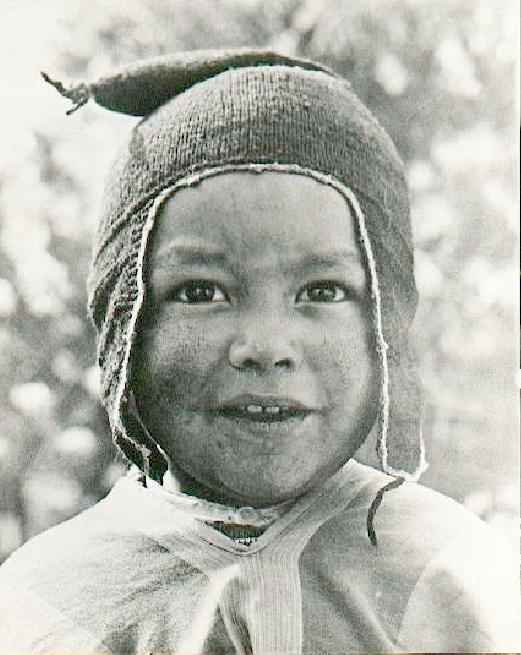
Some early attempts at racial classifications identified Amerindians as a separate racial group. There is now no doubt that Amer-indians are a Mongoloid sub-group, having crossed over the Bearing Sea ice bridge (about 15,500-11,000 years ago with other waves following). Siberian hunter-gather tribes migrated over the ice bridge to what is now Alaska. Then with rising temperatures became isolated in the Americas. (Interestingly, horses made the reverse journey.) Some of these proto-Indians stayed in the Arctic (the modern Inuits and Eskimos), but others moved south into milder more productive areas. Here there is considerable debate as to just how because the Ice Age shelf blocked their passage south for some time. The original proto-Indians left no archeological evidence of this crossing. There were hunter-gather people ad the ice-bridge is now under water. DNA evidence, however, confirms the Asian origins of the vast majority of Native American people. The issue, however, is more complicated. And the formerly widely accepted assessment of the peopling of America has been called into question with findings of very early Amerindian sites, including site in southern Argentina and Chile. Some DNA studies have also complicated the story of the peopling of the Americas. Researchers have detected some Caucasoid elements. This is largely unexplained, but presumably relates to the Caucasoid populations which at the time of the Bearing Sea crossing dominated Central Asia, although there are other possibilities. We have also notice claims that Polynesian elements have been detected. Both of these non-East Asian elements are still being assessed, but they do not alter the fact that Native Americans are fundamentally a Mongoloid people. Th DNA evidence, however, can offer valuable insights into the process of peopling the Americas a process for which there is little or no archeological evidence. Another interesting aspect of Native American people. We note tribes with different physical characteristics and features. This may related to the various levels of Caucasoid and Polynesian admixtures as well as the characteristics of the tribal peoples who made the crossings. One author writes, "The common argument is that When I look at the various pictures of Native Americans, however, most of them do not look like neo-mongoloids found in Honshu Japan, Korea, northern China, Mongolia, and Siberia. Their faces look like archaic mongoloids who have still significantly retained old Caucasoid-like features (especially North American natives)." Environmental adaptions may be even more important. The Native American people of the Andes like Peruvian/Bolivian Quechua and Aymara look like Tibetans, with obvious adaptation to living at high altitudes. Some go on to say that that they have "more Central Asian features (Turkmen, Uzbek, and others). While the Amazonian Indians resemble Southeast Asian pale-mongoloid tribal populations." We are less sure about that, but DNA work may eventual provide insights that can identify just how the America were peopled.
Our understanding of history gradually unfolds over time. It is commonly true that what seems very obvious to contemporary people looks very different a generation later. We often change our views with the benefits of hindsight. Improved historical methods have also assisted us. No where is this more true than the historical assessment of Native Americans. Virtually everything we thought we knew about Native Americans a generation ago has been proved wrong. And here we are not talking about Hollywood depictions. We are talking about the work of respected archaeologists and anthropologists who dominated Native American studies. In the past two decades we have found that Native Americans have been present in the Western Hemisphere far longer than previously thought and had developed a far more sophisticated and complex societies than previously believed. The pre-Colombian population was also much larger than previously believed, although there is still intense differences as to actual population levels. But the most serious mistake in our assessment of Native Americans has been the commonly held belief that they lacked agency and had little impact on the environment. The ruins studded throughout Meso-America and the Peruvian Andes stand in testimony to those achievements.
Achievements in agriculture, astronomy, engineering, mathematics, textiles, and writing, are impressive. Surely one of the most significant accomplishments of any society over time was the domestication of corn and the potato. These two accomplishments changed Europe more than any other technological achievement making possible a population explosion. Europeans were so amazed by the technological achievements, especially the n monumental architecture of Native Americans, that a long series of popular authors have ascribed these achievements to other peoples including aliens. HBC is not prone to politically correct group speak, but this idea that Native Americans were incapable of high-cultural achievements is pure and simply racist. There is a corollary line of thought. That Native Americans live in harmony with their environment without harming it or leaving a significant footprint. This line of thought has a long history, symbolized by Rousseau's noble savage. We now know that Native Americans significantly shaped their environment. Some believe that the Great American prairie was significantly expanded by Native American use of fire. And in some cases Native American cultures perished because they did mot manage their environment well. The current theories on the collapse of Teotihuacan and the Maya are essentially environmental mismanagement and scientists studying many other Native American cultures are coming up with similar theories.
The Native American people are of Asiatic descent. They were nomadic hunter-gatherers who migrated to the American continent over a Bearing Sea land-ice bridge at the end of the last Ice Age probably about 12,000 years ago. After crossing the Bearing Sea ice bridge, the Native American people moved south and east until populating the entire Western Hemisphere as far south as Tierra del Fuego in South America. Some archaeologists believe that the migrants moved south along the coast of Alaska through an ice free coastal corridor. Other archaeologists challenge this theory. There is no real doubt that Asiatic migrations took place. (Some suggest European or Polynesian migrations, but the archeological evidence is virtually nil.) While the Bearing Sea crossing is accepted by most all serious archaeologists, the precise timing and process of these migrations is a matter of considerable scientific debate. Some contend that the migrations may have begun as early as 15,000-20,000 years ago and may have involved people that moved by sea as well as by land. These mariners did not have large raft, but could have made short hops in small craft from island to island as they moved south. There is little archaeological evidence for this, but most of their settlements would today be underwater. [Koppel] It now appears that there were several successive waves of migrations. This has complicated Native American anthropological studies. We now know that migration continued well after development of indigenous societies in both North and South America. This means that migrations took place well after civilizations for which we have archaeological evidence. This had confused early anthropologists who assumed that the migrations preceded the early cultures which they found such as the Clovis Point people. The stone tools found at Clovis, New Mexico are believed to fate to about 9000 BC. The Clovis Point people were once thought to be the earliest American culture. Other cultures have since been found much further south in South America. [Koppel]
The Archaic period in Native American culture is much shorter than the the Paleo or Proto-Indian era, although this is debated depending on just when the Bearing Sea crossing is dated. The Archaic stage can roughly be dated with the disappearance of the Clovis people (roughly 9,000 years ago. We know, however, much more about them because of the greater number of archeological sites . The Proto-Indians lived in a still rather cold environment with the Ice Age even as the glacial/ice sheet coverage began to recede. Archaic Indians experienced with the end if the Ice Age a changing environment featuring a warmer, but more more arid climate. They also had to adapt to the disappearance of the last mega fauna. ['Blame ...'] This required a major cultural adaptation. With the rise of sea levels rose, river deltas became flooded providing new resources to exploit. With the warmer, drier climate, vegetation changed which led to more change. As the Pro-Indians adopted to these changes they became what is not described as Archaic-Indians. Archeologists estimate the time frame from about 8,00-1,500 BC. Most Native American people at this time continued to be mobile hunter-gatherers, but individual groups began to work with resources available locally rather than following migratory herds.
Over time distinct regional patterns (Southwest, Arctic, Poverty, Dalton and Plano traditions) developed.
And such regional cultural adaptations became standard. Hunter and gathering did not disappear, but mixed economic activity appeared, utilizing small game, fish, seasonally wild vegetables and a range of plant foods. [Fiedel] This varied greatly from group to group and regionally as did the local resources to exploit.
Many groups continued to primarily exist on big game hunting, but hunting traditions evolved. Hunting became more varied and hunting more sophisticated. [Pielou] And there is evidence of increasingly sophisticated cultural organization. Archeologists have found some artifacts and materials in burial sites suggesting definite social differentiation based upon status. [Imbries] And by the end if the Anarchic stage the cultural advances had already begun in the major centers of advanced cultural development, socially Meso-America and the Andes. It is from Anarchic Indians that the modern tribes evolved that the Europeans encountered beginning with Columbus' voyage (1492).
It is difficult to build a time line for Native American peoples. This is because stone age people at the hunter gatherer sthge left so little datable material and were often bery small populations. It is possible to date most settled civilizations, although the Amazonian people are proving to be a challenge. Anthropolgists studing Native American prople are now reaching a concensus as to win Sobrian hunters crossed the Bearing Sea land bridge. It is now belived to have been abour 21,000 BC with a still debated stay in Beringia. Only a generation ago, archeologists thought they had the whole chronology of New World well documented based on the Clovis First theory. But now the history of proto-induans is about about 10,000 years longer than ealier believed. The chronology of most of the major civilizations are now fairly well established. What is not well know and prbably largekly unknowable in any detail as what happened after Siberian hunters crossed over and how North and South America populated. Considerable work in Meso-America developed a good understanding of the many different civilizations. Teotihuacan was an ancient ruin at the time of the Aztecs. While the chronology of the Maya, Aztec, and Inca are fairly well developed, the dating of the early civilizations and the early history of human settlement of the Americas is a matter of some controversy. Information is especially limited on the Olmec which appears to have been an early civilization of great importance. Particularly unsettling in dating Native American people is the discovery of an earlier dated human settlement in southern Chile near Puerto Montt--Monte Verde. And there are other unexpected sites being found. And if that was no bad enough, the whole issue of Amazonian settlement has hardly been touched. A good deal is know about Meso-America. The earliest known civilizations in South America appeared along the coast in northern Peru--surprising because the area is so arid. And from an early point we notice Amazonian influences, although next to nothing is known about advanced civilizations in the Amazon.
Many Native Americans never evolved beyond the hunter-gather stage. Others civilizations developed sedentary agriculture. The first evidence of settled habitation is first noted in modern Mexico during the Archaic period 5000-1500 BC. Here we note corn cultivation, pottery and stone tools. The first sophisticated civilization in Meso-America was the rise of the Olmecs around 1500 BC - 300 AD during what is known as the Pre-Classical period. The Olmecs settled on the Gulf of Mexico Coast of central Mexico. Very little information has, however, been learned about them as is the case of other early Meso-American civilizations. . Many archaeologists believe that it is the Olmecs that developed many of the characteristics features of Meso-American cultures, including sophisticated calendars and hieroglyphic writing. Archaeologists have not definitively developed the relationship between the Olmec culture and the Maya and other Meso-American peoples. The three best known of these agricultural civilizations (Maya, Aztec, and Inca) were contemporaneous with Medieval Europe. These civilizations are well known because they are the civilizations that the Spanish encountered. The three great civilizations were brought to am abrupt end in the early 15th century by Spanish Conquistadors.
Native Americans, even the great civilizations of Meso-America and the Andes, were stone age people. This is no to denigrate these people and their achievements, it is simply a statement of fact. This made their phenomenal achievements even more remarkable. The stone age is usually defined as the era of human development in which stone tools and weapons were used. Many advances could be made during the stone age, including achievements in fields often associate with more technologically advanced eras. The key technological development leasing to more advanced periods is metallurgy. And here the technological advance was the ability to generate high temperatures. The first step was the Bronze Age and finally the Iron age. Native American peoples had begun to make some achievements in metallurgy, but primarily work in precious metals like gold and silver, metals with low melting points. They were on the cusp of the Bronze Age, but never made this vital transition. This is astonishing because the agricultural societies of the Old World had all emerged from the Stone age by 2000 BC. Academicians tend to stress the achievements of Native Americans, especially because its fits the modern ideological doctrines of cultural relativity and resistance to recognizing the achievements of the West. And thus the failures of Native American civilization such as the continued use of crude stone tools, limited metallurgical technology, failure to develop the wheel, and lack of any movement toward scientific discipline. Rather than trying to make the cultural relativity case, the question that should be asked was why Native Americans were so far behind the Old world (both the West and China). We suspect that the reason so many scholars fail to ask this question is that it leads to answers that do not ideological conform to the desire to undermine the great achievements of the West. And part of this answer is isolation.
The Native American civilizations of the New World are unique in that they developed in isolation from the other great world civilizations. Some of the great Old World civilizations had extensive contacts. Others had only minimal contact, but contact nevertheless. Some archeologists have postulated contacts with Polynesians and or Africans and there are some intriguing indicators, but these contacts have yet been proved with DNA evidence. Whether there were such contacts, it is clear that Native Americans of the New World were largely isolated from the Old World. The contact with the Europeans beginning in 1492 was in many ways to Native Americans like visitors from outer space would seem to our modern world. [West] The Native American civilizations of the Americas lived in almost complete isolation from the rest of the world. This was true to such an extent that many Native Americans thought the Spanish might even been gods. One of the many fascinating questions of history is how Cortez, Pizarro, and other Conquistadores defeated empires with millions of inhabitants with pitifully small armies. One reason is the cultural isolation of Native Americans. One historian writes, "Isolation insulates a culture from a wider field of competition and stimulus; and in the long run this is unlikely to be in its advantage." [Cook] Here the danger in part biological. Isolated communities do develop resistance to major disease. The European Conquistadors brought with them diseases like smallpox that proved more deadly than the European plagues of the 14th century. Another matter is technology. The technological progress in human civilizations do not follow a prescripted pattern. A society my be advanced in some areas and very primitive in others. The Native Americans had sophisticated mathematics and calendars, but did not develop the wheel. Europe on the other hand shared technological advances directly or indirectly with other civilizations (especially the Arabs ad China). While the contacts might be tenuous, such as over the Silk Road, might have been tenuous, but it existed. The contribution of Chinese technology to European history and civilization is astonishing. The isolation of Native Americans put them at a great disadvantage to the Spanish. As a result, the Native Americans could not match the technology of the Europeans.
A stunning characteristic of Native Americans is their cultural differences. Perhaps this is a reflection of the relatively small numbers of Native Americans in a vast territory. There were densely settled areas that did produce high culture, but the general pattern was sparse settlements in a vast landscape. There was more cultural differences in the Americas than was the case of the New World. Language is a good reflection of culture. Much of the world population speak Indo-European languages which developed from a common source. There is no such dominant language among Native Americans, perhaps a reflection of waves of migration. Rather there are many language families in both North and South America. Ethnologists have written at length of this cultural diversity. Some authors have found common threads among Native Americans. One, Some see a pervasive spirituality among Native American peoples. Two, Some see a different attitude toward nature. Europeans wanted to harness nature. Native Americans lived in harmony with nature. Native Americans also did not have a concept of land ownership. Three, The Native Americans were decidedly ethnocentric. Often their names were "The People". There was no concept of racism, but there was cultural chauvinism. Whiles and blacks could be accepted into the tribes if the new comers accepted the tribal culture.
The Native American civilizations were brought into contact with Europe beginning in the late 15th century by the European explorers . Christopher Columbus was the first in 1492. The initial impetus was trade with the Spice Islands and China, but as rumors of a fabulous cities of gold circulated in Europe, gold became an increasing allure. While there was no El Dorado, Conquistadors found civilizations with great quantities of the precious metal.The great European voyages of discovery of the 15th and 16th centuries were fundamentally economic enterprises. They were conducted by the European countries of the Atlantic coasts to establish direct trade contacts with China and the Spice Islands (Indonesia) that was being blocked by Byzantium/Venice and the Arabs. At the time, trade in silk, porcelain, and spices from the East carried over the Silk Road had to pass through Turkish, Arab, Byzantine, and Italian middleman, making them enormously expensive. The crusaders failed to break the Islamic wall separating still primitive Europe from the riches of the East. Circumventing the land Silk Road and the sea Spice Route would have profound economic consequences for Europe and the world.
The voyages of Columbus and the other European Voyages of Discovery had profound consequences for both Europe and the world. Following on Columbus' voyages, Spain rapidly began establishing colonies. At first Columbus and the Spanish did not realize that they had chanced upon an entirely new continent--the Americas. They thought it was India and thus called it the Indies and the Caribbean Islands have become known to us as the West Indies. Spanish colonization was at first in the Caribbean and extraordinarily brutal. The native Americans on the islands were for the most part exterminated. Next the Spanish looked to the mainland where rumors described Native American civilizations of vast wealth. This led to Diego Cortez's Conquest of Mexico. Balboa had earlier found the Pacific across the Isthmus of Panama. This led to Hernando Pizarro's Conquest of Peru. The gold and silver flowing from the Americas made Spain a European super-power and financed the Great Armada. The most significant impact of the conquests, however, may well have been the introduction of the humble potato to Europe from Peru.
The population of the Americas before the European conquest is unknown. It is also a hotly debated subject in ethology. There are widely divergent estimates. These estimates vary from about 15 million to as much as 150-200 million people. For many years, historians tended to favor very low estimates of the pre-Conquest native American population. Modern historians are likely to adopt the middle ground of about 80-100 million people, but many still accept the lower range if the estimates. There is at this time no real definitive evidence as to the pre-Conquest population of the Americas. This is interesting, because a population of that magnitude would approximately equal that of Europe at the time.
Each of the three great Native American civilizations were conquered with surprising speed by the Spanish Conquistadors. Even so, the civilizations had profound and offered ignored impact on Europe. The gold and silver which flooded into Europe in the 16th century had a major impact on the European economy. Many new agricultural products including cacao, corn, potatoes, tomatoes, and others were introduced to Europe. Many of these crops or products are of considerable importance. The lowly potato, however, had a huge impact on European society. Farmers found that the amount of food produced per hectare with potatoes was far greater than with any other crop. This meant that European agriculture could support a much larger population and was a major factor in the growth of European populations after the 16th century. Another major crop was corn, although the full potential of this crop only came to fruition in the 20th century.
The Spanish destroyed vast quantities of art work for religious reasons. This significantly limits the amount of contemporary images. There are many images from the Native American civilizations. Beautiful Maya murals have been found in tombs that the Spanish never found. There are also metal objects and pottery. We have been unable to find contemporary Native American art depicting children and their clothing. There are modern recreations, but as always there is the problem of historical accuracy.
Besides the Inca, there were many other Native American tribes in South America. Many were centered in the Andes or along the narrow coastal plain to the west of the Andes. he Inca highly civilized. The Inca conquered many of the tribes in or along the Andes from Colombia south to Chile. There were also tribes to the east of the Andes. The primitive tribes in the Amazon still exist, although there numbers are now very small. One such group is the Enawene-Nawe. One ongoing mystery is that Spanish sources report a very substantial population in the Amazon basin during the 16th century. Francisco de Orellana set out on a quest for gold and soon found himself just trying to survive. He was the first European to travel the entire length of the Amazon and he reported a huge population of very productive farmers. Historians at first dismissed the Spanish account as fanciful. Modern anthropologists have begun to reassess this judgment. Some believe there indeed once was a very large population in the Amazon basin practicing sophisticated agriculture.
Central America in geographic terms is part of North America. Ethnographic studies of North America commonly focus primarily on American and Canadian tribes and those of northern Mexico. Central America is often not considered. This is in part because American anthropologists have focused primarily on those tribes found within the United States. Also the Maya dominated much of northern Central America. The Central American tribes south of the Mayan areas in the north were relatively small and primitive. Most disappeared as a result of Spanish slave raiding and exposure to European diseases. This was the same fate as the Arawaks and Caribs in the Caribbean. One of the few tribes to survive are the Cuna. Unlike Central America, the Maya never settled the Caribbean, although they are known to have traded with the people of western Cuba. The Caribbean were heavily settled by the Arawaks, Caribs, and to a lesser extent the Chiboneys. Historians debate the relationship between the Arawaks and Caribs. Some theorize that the differences between the two people were a Spanish colonial convention rather than real differences. These people were decimated by the Spanish early in the colonial era through both ill-treatment and disease.
The Spanish encountered the great Native American civilizations in Meso-America and the Andes. There were many other Native American cultures in North America. These tribes were mostly nomadic hunter gatherers, but some practiced agriculture to varying degrees. Native Americans, in part because of the horrendous treatment by white Americans as well as the exposure to European diseases, now comprise only a small part of the American mosaic. It is a rich, colorful tradition, no matter how small. Native American dress is showcased at powwows and other gatherings held annually throughout America.
The term holocaust is today most commonly used to describe the NAZI genocide of European Jews and plans to murder much larger bnumbers of other targetted peoples. There have been other terrible holocausts in history and not all of them manmade. There have been terrible epidemics, the most familiar to Western historians is the bubonic flu epidemics (Black Death) which ravaged medieval Europe. Perhaps the most deadly disease epidemics in history occurred in the Americas in the which began with the European conquests. By a quirk of evolutionary history, Native Americans had no resistance to many of the most deadly human diseases. This was because of the Great Extinction of the Pleistocene Era, the America were left without large mammals which could be domesticated even though some like horses had originated in the Americas. In Europe and Asia, the advent of civilization brought domestication of many mammals (cats, dogs, cows, goats, horses, oxen, pigs, sheep, etc). People thus lived in close proximity to these mammals. Peasant family might actually live with livestock. Most of the most deadly diseases are caused by organisms which have mutated from animal diseases to human diseases (influenza, measles, smallpox, and others). Over time Asians and Europeans developed a partial immunity to these diseases, but Native Americans without these large domesticated mammals did not. Thus when the diseases were introduced by the Europeans, Native American populations were ravaged. Such diseases were, for example, a principal reason in the Cortez's defeat of the Aztecs. Historians believe that as much as 90-95 percent of the Native American population perished. Anthropologists vary greatly on what the indigenous population was before Columbus. There are estimates as low as 10 milliion people. Low estimates were in nfact because Native American populatiins were so low when many nauthors addressed the topic. Modern estimates are much higher. We have seen estimates as high as 150 million. There is a great deal of historical evidene of disasterous epidemnics. One of great mysteries of American history is where are all victims. Archeologiusts have not found mass graves. [Brown]
Clothing varied dramatically among the different Native American peoples. The variations are such that it is difficult to describe any garments that were shared among Native Americans. There were garments that were widely worn regionally such as moccasins in North America and ponchos in the Andes. Thus we have attempted to address clothing either regionally or on the individual tribal pages. Perhaps the most common element was animal products for decoration such as teeth and feathers. But this was not distinctive to Native Americans, these items were also used by stone age people on other continents. There were no garments common among all Native American peoples. The reason for that is that Native Americans were tremendously diverse culturally. Some Native Americans did not wear clothes such as the Tainos that Columbus first encountered in the Bahamas (Lucayas). The Taino on Hispaniola were somewhat more advanced, but clothing was still very basic if worn at all. In contrast the Inca produced some of the finest woven textiles imaginable. The Spanish were shocked by the lack of clothing among the Taino. And along with Christianizing them attempted to get them to wear clothing. Missionaries on Hawaii and elsewhere in Polynesia attempted to do the same. Christian missions played an important role for the spreading of European clothing and sense of modesty. In spite of his effort, clothing was seen as something unconnected with the local culture. Their success in large measure reflected the degree of control. Thus the Spanish with the Native Americans organized into ecomiendas could require Native Americans to adopt Western clothing. The Native Americans isolated in remote areas of the Amazon were able to maintain their cultural patterns.
"Blame North America megafauna extinction on climate change, not human ancestors," Science Daily. (2001). The debate over the extinction of the megafauna cintinues. Certainly climate change is a possibility as is the arrival of Proto-Indians. Unfortunately these assessments have to betreated with caution. Climate change is the flavor of the day and some academics have allowed their passion for fighting climate change to affect their academic commitment to dispassionately assess evidence. Readers thus need to use some caution in reading these assessments.
Brown, Marley. "Conquistador contagion," Archeology (May-June 2019), pp. 9-10. Brown describes a grave with 29 skeletal remains found in a Mixtic village in Oaxaca, Mexico from a 1545 epedimic which may have killed tens of millions. DNA work have found the pathogen was a bacterium which causes paratyphoid fever (Salmonella enbterica).
Imbrie, J. and K.P.Imbrie. Ice Ages: Solving the Mystery (Short Hills NJ: Enslow Publishers, 1979).
Koppel, Tom. Lost World: Prehistory--How New Science is Tracing America's Ice Age Mariners (Atria, 2003), 288p.
Pielou, E.C. After the Ice Age : The Return of Life to Glaciated North America (University Of Chicago Press, 1991).
West, Rebecca. Survivors in Mexico (Yale University Press, 2003), 264p.

Navigate the Children in History Website:
[Return to the Main history chronologies page]
[Return to the Main chronologies page]
[About Us]
[Introduction]
[Biographies]
[Chronology]
[Climatology]
[Clothing]
[Disease and Health]
[Economics]
[Geography]
[History]
[Human Nature]
[Law]
[Nationalism]
[Presidents]
[Religion]
[Royalty]
[Science]
[Social Class]
[Bibliographies]
[Contributions]
[FAQs]
[Glossaries]
[Images]
[Links]
[Registration]
[Tools]
[Children in History Home]