|
HBC has at this time only limited information on hair styles worn by German boys. German boys have worn a variety of hair styles. Virtually no information is available on early 19th century styles. In the late 19th century, many school boys appeared to have had their hair shaved. We notice numerous photographs of German boys with shaved heads or very short hair. HBC has noted that this style continued into the early 20th century, especially in the era during and before World War I (1914-18) often wore closely cropped hair. This style continued somewhat into the 1920s, but was little seen by the 1930s. Apparently this rather military-inspired style was not of intetest to the NAZIs. Perhaps for the same reason that they did not introduce school uniforms. Many photos of the Hitler Youth show boys with rather short hair on side and back, but fairly long on
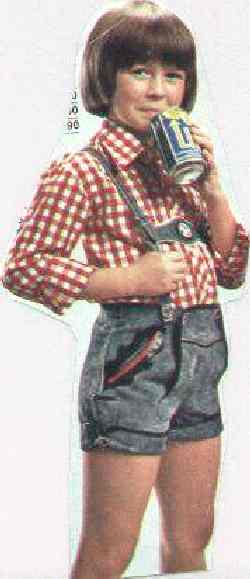
top. We have not noted photographs of Hityler Youth boys with shaved heads. The long hair styles worn by some French and American boys do not seem to have been as popular in Germany. This is not to say, however, that no German boys had long hair in the late-19th and early-20th centuty. This would not have been favored by the NAZIs and even younger boys during the NAZI era had short hair. In the early 20th century, Dutch boy bangs (probably called page boy cuts) were popular for younger boys. This style appeared again in the 1970s--perhaps one of the many cultural impacts of the Beatles.
HBC has at this time only limited information on hair styles worn by German boys over time. German boys have worn a variety of hair styles. HBC has obtained virtually no information is available on early 19th century styles. In the late 19th century, many school boys appeared to have had their hair shaved. This style appaers to have persisted into the early 20th century. We still notice it in the early 1920s, but much less commonly. It was not a style approved by the NAZIs in the 1930s. A miliatry cut with hair of normal length on top, but quite short at the back and sides was the standard. After the War, German boys generally followed hair style trends common in the rest of Europe. Short hair was common in the 1950s, although we do not notice many Americam-style crew cuts. This began to change in the 1960s and by the 1970s many boys were wearing quite long hair--in some cases shoulder length. In the 1980s the popularity of long hair declined, but we notice a great varirty of stkles and lengths.
We have relatively limited information on the hair syles worn by German boy, but we have begun to collect some information. BC notices numerous photographs of German boys with shaved heads or very short hair. HBC has noted that this style continued into the early 20th century, especially in the era during and before World War I (1914-18) often wore closely cropped hair. This was a very common fashion for younger boys. I'm not sure why this was so common in Germny. The long hair styles worn by some French and American boys do not seem to have been as popular in Germany, although our information is quite limited. We notice very few images of boys with ringlet curls, but some German boy did wear them. HBC has noted German boys wearing bangs, but we do not yet know how common this hair style was and how it has varied over time in Germany. We note German boys wearing bangs in both the 19th and 20th century. In the early 20th century, Dutch boy bangs (probably called page boy cuts) were popular for through their early teens. The Germans use "pony" or "ponies" terms of course derived from English. According to a dictionary, the word is used for the hair cut, because a pony has a similar fringed mane.
An imprtant element of any hair style is the part and where it is placed. Sometimes there is no part such, primarily with shaved heads and very short cuts. Or the part is not readily apparent such as bangs, a popular style in Germany. When the hair was enough enough to comb there were three basic opotions, a left, center, or right part. The left and right parts varied depnding on how far down toward the ears the part was made. Some were only a little off center while others were more down toward the side. Given that quite a few boys had short back and sides, the hair might be combed on top, but essentialy cropped bellow where a part might go. The prevalence of parts varied, especially because cropped hair was so common in the 19th century. Center parts do not seem as common as in America, but we do seem some. We are not sure ey about the chronology of hair parts, but hope to work this oiut as our archive expands.
Many German boys, especially in the late 19th and early 20th century, had short--often cropped or even shaved heads. While German girls never had shaved heads, we have noted portaits of German girls with quite short hair. Some of the stykes, especialy short hair with bangs, were worn by both boys and girls. Long hair was not unknown for German boys, but the photographic record suggests that it was much less common than was the case in many other countries in the late 19th century.
Parents commonly use noth age and gender conventions in selecting haor styles. These convention have changed over time. Often with large families the younger children will have similar hair styles. This is true for both boys and girls. Some parents dress the younger children in identical or similar styles. Very often children dressed identically will have the same hair styles. This is of course mosrtt common with same-gender siblings. While these are the general conventions we do notice exceptions. Clothing and hair styles we have found are endlessly variable. These conventions are the same as with other European countries and not just in Germany.
One interesting topic is when boys begin to comb and take care of their own hair. We believe that boys begin to do this at a fairly early age. Or at least attempting to do so with varying results. There are a number of issues involved here. First are the physical abilities of young children to comb hair, similar to the issues incolved with dressing, such as going buttons and tieing shoe laces. We suspect that boys by about 5 or 6 years are able to comb their own hair, although it probably takes a little longer for them to learn to get the part reasonabbly straight. For this to be done
correctly, they need mom's help for a few more years. And for special occassions, when mom wants the hair combed just right, she may step in well after the boy is able to do it himself. Of course in Germany, for many years this was not an issue as many boys in the 19th and early-20th centuries had close cropped hair that need to be combed. Another issue is that many boys are not all that interested in their appearance. This varies from boy to boy, but little girlsd tend tio be much more interested in clothes and hair styling than little boys. This is in part the result of their upbrinning at home, but much of it has tio do with the variable interests of individual boys.

Navigate the Boys' Historical Clothing National Hair Style pages:
[Return to the Main National Boys Hair Style page]
[Dutch hair styles]
[French hair styles]
[]
Navigate the Boys' Historical Clothing German pages:
[Return to the Main German page]
[German choirs]
[German school uniforms]
[German royalty]
[German youth groups]
[German sailor suits]
[Lederhosen]
[Ethnic]
[Tights]
[Long stockings]
Navigate the Boys' Historical Clothing Web Site:
[Introduction]
[Activities]
[Biographies]
[Chronology]
[Clothing styles]
[Countries]
[Bibliographies]
[Contributions]
[FAQs]
[Glossaries]
[Images]
[Links]
[Registration]
[Boys' Clothing Home]