**
boys clothes: German family trends 19th century
German Boys Clothes: Family Trends--The 19th Century
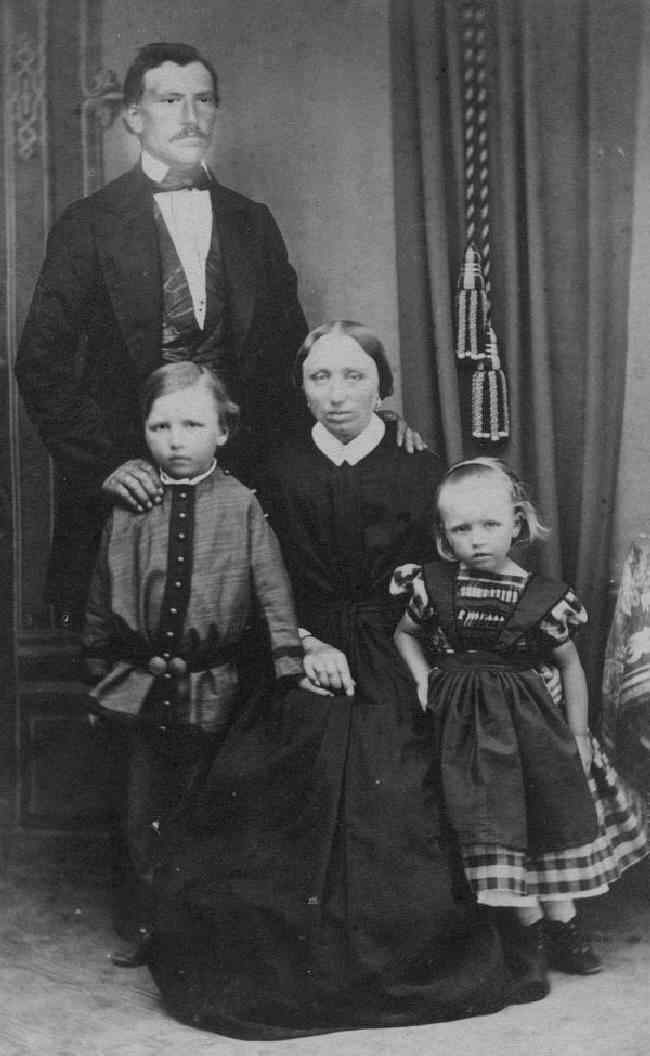
Figure 1.--Here we have a portrait from a German family of the 1860s. The portrit
was taken in Rinteln or Bad Nenndorf which are located rather close to each other. The little girl's name was Marie. The boy is August who sadly died at the young age of 9 years due to thyphus. Unfortunately we do not know their family name. Image courtesy of the BP collection.
We have little information on German families during the early 19th century. With the invention of photography, much more information becomes available on the second half of the 19th century. We are just beginning to archive the 19th century family pages we have found and begin to assess the paterns illustrated by the photographs. Througout the decade younger boys wore dresses. This varied greatly from family to family. At mid-century we see men in frock coats and women in voluminous dresses. Boys has longish over the ears hair and wore tunic suits. Girls wore dress with pinafores. Gradually as the century progressed. Bboys began to wear their hair cropped. Younger boys still wore dresses. We still boys wearing belted tunics in the 1890s, but the cut-away jackets were no longer very common. The sailor suit had become san important style in Germany by the 1890s. Boys more commonly wore kneepants. Younger boys commonly wore shrt-cropped hair. Girls dresses had tight neck collars.
The 1800s-30s
The 1840s-50s
The Daguerreotype was the first commercially viable photographic process. It was invented in France (1839). We see large numbers of American Dags, Ambrotypes, and tintypes dyring the 1840s and 50s. We are able to hroughly illustrate both decades. European including German portraits are much much less common. We are not sure just why that is. We believe that economics was a major factor. Americans were increasingly better off. And the prices fir a daguerreotype portit was less in America. Thus we have few family portaits from the 1840s and 50s. A wonderdul example is an Adolf Henning portrait of the sons and daughters of the Berlin court jeweller Reiss (1843). We do not know his full name or ant other infornation about the family. We think that they have been a Jewish family. They certainly look assimilated. We do note that there was a wealthy Jewish jeweler in Berlin at the time named Reiss. And we note American jewelry concerns named Reiss apparently beginning after World War II in New York.
At mid-century we see men in frock coats and women in voluminous dresses. Boys has longish over the ears hair. Very young boys wore dresses. Tunic suits with military styling such as decorative belts and buttons were popular for boys. The styling of the yunics varied widely. They were mostly long sleeve, but we see short sleeves as well. The tunics were commonly cut short, rather like shirts. They were mostly worn with long pants. Blouses had small collars or none at all. We see some sailor suits, but they do not seem very common. We also notice cut-away jackets with vests and small collars. Boys mostly wore long pants. We see some younger boys wearing knee pants or bloomer knickers, but only very young bys and this was not very common. Older boys wore sack suits, with lapel jackets and vests. Girls wore dresses with pinafores and patalettes. Like their mothers, the dresses were often voluminous.
Younger boys wore dresses. After breeching, cut-away jackets with vests and small collars continued to be popular. Some boys wore small bows. Younger boys might wear bloomer knickers, but were long pants were still common. We notice some expensive suits done in velvet. Younger boys wore suit styles that were quite varied. We note suits with military styling. Collars as in the 1860s tended to be small and bows and other neckwear realtively restrained. Girls wore print dresses. Plaid seems to have been popular. Skirt lengths for younger girls tended to be well above the ankles. Some mothers liked to dress the children alike. We notice several portraits with the children all dressed alike. Boys hair styles might be longish, but by the end of the decade shorter cuts were more common.
Here is a studio portrit of three boys, certainly brothers, from Karlsruhe, Germany.
The boys names are Fritz, Heinrich and Adolf. Unfortunately we do not havetheir family name.
The portrait is undated, but looks to have been taken in the 1880s. The boys are dressed in virtually identical velvet suits. There are only two differences. The older boy looks to have a double-breasdted suit. The younger boys wear single breasted suits. Also the collars are different. The younger boys wear lace collars. The older boys has a plain white collar looking somewhat similar to an Eton collar. The different collars are an obvuius example of age grrading. Lace collars wre seen as more appropriate for younger boys. I'm not sure if the double-breasted suit also had age cnnotations. Also notice the hair styles. Note the long-length of the knee paants. This was common in the 1880s, although the younger boy seems to have slightly shorter knee pants. Here all three boys have identically styles hair. Long hair like this was not common among German boys at the time, but it was not unknown.
A cooperating web master has found a nice bundle of seven CDVs. The portraits were undated, but look to be taken in the 1890s, perhaps some in the 1880s. All photos were taken in G�rlitz, Germany and have inscriptions on the back increasing curiosity. The family name was "Mager" and were born in the years: 1881, 1884 and 1886. Thechildren are: Konrad, Else and Fritz. Unfortunately on one backside is to read that Fritz passed away aged only 7 years.
Younger German boys still wore dresses in the 1890s. We still boys wearing belted tunics, but the cut-away jackets were no longer very common. The sailor suit had become an important style in Germany by the 1890s. Boys more commonly wore kneepants. Younger boys commonly wore shrt-cropped hair. Knee pants became standard for boys in the 1890s, but some were cut well below the knees. Girls dresses had tight neck collars. Some dresses were sleeveless. Long stockings were very commonly worn by both boys and girls. Girls might wear white stockings.