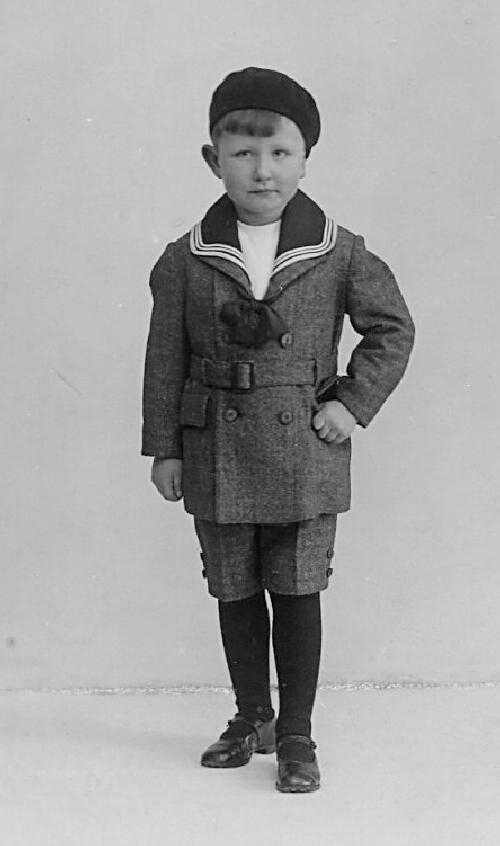
Figure 1.--Tis little German boy clearly had a stylish mother. He wears a beret with his sailor suit. We do not know where in Germany the snapshot was tajken, but it was dated 1933. |

|
We have little chronological information, but have begun to collect some information. Hopefully this will allow us to develop some insights on chronolgical trends. We have noted several images of boys wearing berets in the 1920s and early 1930s. One example is a Berlin school photograph which looks to have been taken about 1930. They declined in popularity during the NAZI era. We have, however, noted them in the immediate post-World War II era. We note photographs of German boys wearing berets in the 1940s (figure 1), but they are not common. A French reader writes, "The beret was not common in either Austria or Germany. After the World War II, German families were so desperate that many children had to make do with clothing donated from other countries. Probably is the case about this poor boy shows on the image." Perhaps, but the boy seen here, although not elegantly dressed, does not look all that poor to HBC. He has warm clothes, study shoes, and does not look poorly fed. [HBC note: Our French reader is certainly correct here that after the War Germany was devestated. Parents had great difficulty feeding and clothing their families. Ar this time, however, we have little information on assistance programs for Germany. One might have assumed a beret may have come from France, but did the the French provide such assistance to the Germans so soon after the War. Here we do not know, but is an interesting question. Such assistance is more likely to have come from America. Now American boys in the 1940s, except for very little ones did not wear berets, but American girls did wear them.] Also we note some images of German boys even in the 1950s, when the economic recovery was well under way, wearing berets. We note a few other images of German boys wearing berets during the 1950s. There is a photograph for example, a boy in the GFR (West Germany) rural village wearing a beret in 1955. Berets are no longer worn by German boys, except perhaps some Scout groups. A factor here may be the adoption of the beret as part of the Scout movement which was reestablished in Germany in the 1940s. We also note boys in the DDR (East Germany) wearing berets in the 1950s. One pjotograph shows a mother with her children in a East Berlin shoe store. We no longer by the 1960s notice German boys wearing berets, except for Scouts.
We have noted several images of boys wearing berets in the 1920s.
We also see German boys wearing berets during the 1930s. In fact we have found more German boys weafuing berets during the 1930s than any other decade. One example is a Berlin school photograph which looks to have been taken about 1930. Here we see a younger boy very smartly done up by his mother. He is wearing a bertet with a sailor outfit (figure 1). Many of the images we have found, however, are undated. Thus we are unsure if the popularity of berets changed over the decade. Actually we were a little surprised to find German boys wearing berets, especially during the 1930s. This of course was a decade of hyoper-nationalism. Germany was highly nationalistic even before the NAZIs seized power. Under NAZI rule, nationalism reached the limits of what might is called xenephobia. And un-German elements in society were purged. This of course was most directly aimed at racial groups, especially the Jews, but also Blacks and Asians. Jazz in particular was rediculed because of the asociatiuion with Afro-Americans. But the culture of other European nations was also denegrated, especially the World War II adversaeies, Britain and France. And the beret was assopciated with the French. Perhaps because it was a child's garment it fell under the radar of NAZi sensabilities. We believe that the populsrity of berets did decline dufing the NAZI era, but we do see berets thriughout the decade. Thus it will take some time before we can fully assess our initial assessment.
We have, however, noted them in the immediate post-World War II era. We note photographs of German boys wearing berets in the 1940s (figure 1), but they are not common. A French reader writes, "The beret was not common in either Austria or Germany. After the World War II, German families were so desperate that many children had to make do with clothing donated from other countries. Probably is the case about this poor boy shows on the image." Perhaps, but the boy seen here, although not elegantly dressed, does not look all that poor to HBC. He has warm clothes, study shoes, and does not look poorly fed. [HBC note: Our French reader is certainly correct here that after the War Germany was devestated. Parents had great difficulty feeding and clothing their families. Ar this time, however, we have little information on assistance programs for Germany. One might have assumed a beret may have come from France, but did the the French provide such assistance to the Germans so soon after the War. Here we do not know, but is an interesting question. Such assistance is more likely to have come from America. Now American boys in the 1940s, except for very little ones did not wear berets, but American girls did wear them.]
Also we note some images of German boys even in the 1950s, when the economic recovery was well under way, wearing berets. We note a few other images of German boys wearing berets during the 1950s. There is a photograph for example, a boy in the GFR (West Germany) rural village wearing a beret in 1955. Berets are no longer worn by German boys, except perhaps some Scout groups. A factor here may be the adoption of the beret as part of the Scout movement which was reestablished in Germany in the 1940s. We also note boys in the DDR (East Germany) wearing berets in the 1950s. One pjotograph shows a mother with her children in a East Berlin shoe store. We no longer by the 1960s notice German boys wearing berets, except for Scouts.

Navigate the Boys' Historical Clothing German pages:
[Main German beret page]
[Main German headwear page]
[Main national beret page]
[German art]
[German catalogs]
[German choirs]
[German movies]
[German royalty]
[German youth groups]
[German school uniforms]
[German sailor suits]
[Lederhosen]
[Ethnic]
[Tights]
[Long stockings]
Navigate the Boys' Historical Clothing Web Site:
[Introduction]
[Activities]
[Biographies]
[Chronology]
[Clothing styles]
[Countries]
[Bibliographies]
[Contributions]
[FAQs]
[German glossary]
[Images]
[Links]
[Registration]
[Tools]
[Boys' Clothing Home]