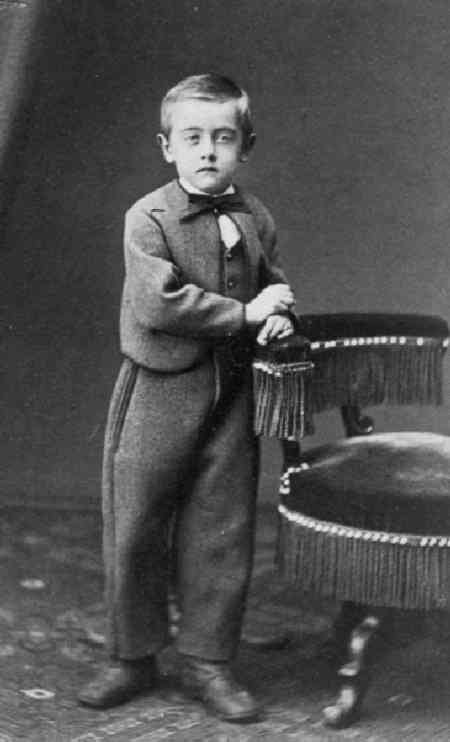
Figure 1.--HBC has little information about this portrait, except that it was taken in Flawyl, a small town of swiss canton St-Gall. HBC believes the portrait was taken in the 1860s. Note the small, short jacket and the long trousers. |

|
HBC at this time has only sketcy information on the chronology of boys' clothing trends in Switzerland. Younger boys as in other European countries wore dresses. Suit styles for younger boys followed fashiins in Germany, France, and Italy. Long pants suits were common through the the 1860s. Kneepants became increasingly popular in the 1870s. HBC is uncertain when boys began to wear smocks, but this may have began in the 1870s following the adoption of smocks for schools by the French Third Republic thus promoting this style. Presumaby French-speaking Swiss woul have been influenced by French fashion trends. Short pants and kneesocks became increasing popular by the 1910s an by the 1920s most younger Swiss boys wore shorts. Leferhosen, or leather shorts, appear to have develope earlier out of folk dress and were more popular with German than French speaking families. Suring the winter they might wear knickers or continuing wearing shorts, but with long over the knee stickings. Tights appeared in the 1950s. Boys increasingly wore long pants by the 1960s. Today Swiss boys clothes is similar to the pan-European styles now prevalent.
HBC at this time has only sketchy information on the chronology of boys' clothing trends in Switzerland. HBC has little ingormation on the 19th century. Younger boys as in other European countries wore dresses. Suit styles for younger boys followed fashiins in Germany, France, and Italy. Long pants suits were common through the the 1860s. Kneepants became increasingly popular in the 1870s. HBC is uncertain when boys began to wear smocks, but this may have began in the 1870s following the adoption of smocks for schools by the French Third Republic thus promoting this style. Presumaby French-speaking Swiss woul have been influenced by French fashion trends. Sailor suits presumably became popular in the 1870s an were worn with both keepants and longpants. HBC is not sure if Fauntleroy suits were worn in Switzerland. Probably they were worn by French-Swiss boys, but less commonly by German-Swiss boys.
Our infirmation on Swiss boys clothes in the 20th century is also limited. We do not have a large Swiss archive. And we are unsure out Swiss style in the early-20 century. We think that they were basically the same as French and German styles, but do not yet have the images to confirm thus. Short pants and knee socks became increasing popular by the 1920s. The developing Scout movement may have been a factor here. By the 1920s most younger Swiss boys wore short panrs, often with long stockings at least during the winter. Lederhosen, or leather shorts, appear to have develope earlier out of folk dress and were more popular with German than French speaking families. During the winter they might wear knickers or continuing wearing shorts, but with long over the knee stockings to keep warm. French-speaking boys in the 1940s an 50s still commonly wore smocks an shorts to school. Smocks were not, however, commonly worn by German-speaking boys. We see this dichotomy in school portraits. Knickers were worn by some older boys. Tights appeared in the 1950s. Short pants wre still common in the 195os. Boys increasingly wore long pants by the 1960s as American styles like jeans began to take hold. Fewer and fewer boys by the 1960s were wearing smocks and shorts to school. Today Swiss boys clothes is similar to the pan-European styles now prevalent.

Navigate the Boys' Historical Clothing Swiss pages:
[Return to the Main Swiss page]
[Swiss school uniforms]
[Swiss Scouts]
[Swiss choirs]
Navigate the Boys' Historical Clothing Web Site:
[Return to the Main Swiss Country page]
[About Us]
[Introduction]
[Activities]
[Biographies]
[Chronology]
[Cloth and textiles]
[Garments]
[Countries]
[Topics]
[Bibliographies]
[Contributions]
[FAQs]
[Glossaries]
[Images]
[Links]
[Registration]
[Tools]
[Boys' Clothing Home]