|
As in Europe, it was very common for boys in America to wear dresses when young, although conventios varied greatly from family to family. Much of the HBC overall discussion of dresses and other skirted garments has dealt primarily with America. This is due primarily on HBC's greater access to information and images about America. Thus much of our information on American dresses worn by boys is in the overall dress section. One important development in America was the appearance of boy-styled dresses in the late 19th century, especially by the 1880s. HBC assumes that similar developments occurred in European countries, but can not conform this at this time. We have only begun to archive some specifically American information here.
As we have only begun to archive some specifically American information here, we suggest that readers interested in this fashion of outfitting younger boys in dresses go the main HBC dresses page where most of our American information at this time is archived. As with many HBC page, we first began working with primarily American images and information. Thus most of the images in the general dress garment section are American at this time.
We believe that American mothers followed the same chronlogy of outfitting boys in dresses as was the case in Europe, especially Britain. American boys for much of the 19th century wore dresses as was the fashion in Europe. The styles worn were quite similar ro the styles worn by heir sisters in the 18th and much of the 19th century. This began to change in the mid/late 19th century when plainer styled boy dresses began to appear. Military styling was also more commonly incorporated into boy dresses. This was an exremely common fashion throughout the 19th century which only began to change after the turn of the 20th century, the 1910s. The reason that mothers stopped dressing their sons in dresses is not all together understood, but must have been essentially the same in America and Europe as the same changes were taking place in European countries as it occurred in America.
We have noted American boys wearing dresses over a wide range of ages from infancy into school years. This has varied chronologically. We see boys of different ages, including school-age boys, wearing dresses in the 19th century. We do not have a lot of information on the early 19th century, but with the development of photography we have a much better understanding of the mid- and late-19th century. The conventions of wearing dresses declined in the late 1890s and after the turn of the 20th century it became less common for boys to wear dresses, especially after World War I (1914-18). We also begin to see mostly very young boys wearing dresses. Our assessment is somewhat complicated by the failure of many parents to date and identify photographic images. But we can roughly estimate the age of children in many portraits as well as the approximate dates they were taken. Here readers are invited to comment if they have any insights on these old photographs.
A substantial number of the portraits we have noted with boys wearing skirted garments involve skirt/kilt outfits rather than one piece dresses. It is not always possible to tell wether boys are wearing skirts/kilts rather than dresses, but it often is possible. Kilt suits were especially popular in America. We note boys wearing various styles of dresses, but they seem less common than the kilt outfits. Boys in the early 19th centurywore dresses styled much like their sisters. By the late 19th century destinctive boys styles appeared. Not all mothers selected these styles, but it became increasingly common. Boy styles were more olain than those worn by girls. We note dresses made with defined waists and dresses made without waists.
A dress has several different contruction elements. These include among others the neckline, collar, sleeves, yoke, bodice, waitline, and skirt. The style of these various elements might be adopted for gender differences, although boys also wore the same dresses as their sisters. This caried from family to family and chronologically. We will attempt to assess the various construction elements to determine gender-based differences if any. The problem for HBC is that we just do not know very much about dress styles. We will work on styles that occur to us, but if HBC readers who are more acquainted with dress styles have any suggestions here, we would appreciate your insights. Hopefully as we archive more images we can develop more information on gender differences.
We have only little information about colors and patterns. Much of the information we have gathered comes from our photographic archive. This provides information on patterns, but unfortunlely the black and white photography of the day gives us few clues about color. nother oroblem is that been dresses were sewn at home. Thus catalogs are not as helpful as are the case with other garments. In addition catalogs are less available before the 1890s which was when dresses were more common for boys. One of the patterns we tend to note for boy dresses is plaid. Here the connection with plaid kilts worn by men and boys presumably was a factor.
We notice a range of decorative trim used on dresses. Many boy dresses were plain, utilitarian garments, but we also see fancy and highly decorated dresses as well. The popularity of the various trims used for drresses caried over time, We hope to develop information on both the types and trim as well as the chronological and gender trends. One popular trim in the 1880s anf 90s was lace trim, the same trimed used in Fauntleroy suits. We also notice velvet trim. Ribbons and bows were also popular decorative trim items.
We see American bo boys wearing dresses with varying hem lengths. As far as we know, hem lengths for noys and girls were similar, although we have yet to definitely confirm this. We need to invesyigate girls' dresses to make sure of this. We note hem lengths which varied from just below the knee to long ankle lengths. We do not see higher lengrgs becuse they were not worn at the time boys wore dresses. Fashion may be a factor here, but we are not sure how important this was. This varied somewhat over time, but we suspect that they often reflected the proclivitie of the mother who may have had other thoughs that fashion in mind. The really long hems look rather unusual. Long hems were worn for women both for modesty and fashion. Both of these factors woukd seem less importnt for little boys. A mother might dress a younger boys in a dress with a long hem line thinking that the boy could wear the dess as he got older. And of course there are always hand-me-downs which might reflect older fashions and may likely come from an older boy or girl. This is difficult to assess, but we can gather information on the various lenhths snd chronology. We find the same pattern in the other skirted garments boys wore.
We are not yet entirely sure about the extent of the practice of outfitting boys in dresses, especially svhoolage boys. It seems fairly wide spread for pre-school boys upto about 5 years of age. One reader suggests that the custom may have been concentartaed in scatters/isolated neighborhoods of cities , perhaps even small towns and rutrak areas, but no existent in rural areas. A factor here may have been family traditions and conventions and upper-cklass or affluent middle-class mothers who socialized with each other and excahanged ideas about fashion and child rearing. Boys who saw other boys wearing dresses were unlikely toquestion the pratice. This would ecebtually be affected by the growth od mass media, ready-made clothes, and the public schools in the late-19th century. One reader suggests, "perhaps some boys wore dresses or other skirted garments outside of school hours." This we think was unlikely. Once a boy was breeched and attending school with other boys wering pants, we think it is unlikely that mother could hve gooten him back into dresses, even in the 19th century when parental authority was much stronger.
We are not sure at this time if there were any regionjsl patterns concerning boys wearing dresses. We think that itvis fairly clear that the practice was fairly common throughout the country. We are not sure if the practice of boys wearing dresses was more common in some areas or if the instabnces of boys wearing dresses into school ages was more common in certain areas. Hopefully we can develop some insights on this as our HBC pages commonly list the photographer and city of images. A HBC reader tells us that older boys wearing dresses seem highly concentrated in the Northeast and Midwest. He writes, "In looking over the images archived on HBC, I have found that custom of delaying bereaching seems to have been most proniubced in a band from Boston werst through Massachusettes through Conmnecticut, southern New York, Pennsu\ylvania and continuing into the Midwest.through to Missori and the Mississippi River. We see far fewer in the Southern states and west of Kansas City. San Francisco may be an exception." HBC can not yet confirm this, but it is an interesting thesis to assess.
We notice a range of accessories worn with desses. We are not sure about the headwear. We notice some headwear styles, but do not have a complete idea of the different styles worn. For some reason the headwear is rarely pictured in portraits. We note some younger boys wearing fancy bonets. Plainer sailor hats were also worn. We notice a range of collars and neckwear. Lockets were common. Some dresses were worn with decoraive sashes, sometimes tied in big bows at the back. Leading strings were once common, but not generally seen in the 19th century. Long stoickings were commonly worn with long stockings. Footwear varied. We note both high-top shos and strap shoes. One popular accessory was a 'reticule'. This was a young girl's 'drawing room' handbag. It was in what the young ladies of the day kept their necessaries - glasses, hankerchiefs, handwork etc. It was an indoor accessory. It had loops sometimes decorated with bows through which a drawstring was used to close it. We do not commonly note boys photographed with these reticules. For that matter girls were not commonly photographed with them. The only boy one we have noted with one is Frank, who wears a summer dress and matching reticule.
|
Parents over time have liked dressing their children in identical and coordinated outfits. The popularity of this practice has varied over time. Other factors involved are coutries, age, and gender. Some styles like sailor suits have been especially popular for dressing children alike. Dresses were not as popular. This because only younger boys tended to wear dresses and after the turn of the 20th century we tend to see fewer boys wearing dresses, even younger boys. Even so we do see some families with the younger children all wearing dresses, often identical dresses. It is often not possible to determine the gender of these children, unless they are unidentified by name. Unfortunately many of the images we have found are not identified. We are not entirely sure how common this was, but we have found a number of portraits.
Pantalettes were commonly worn by American boys, especially boys still wearing dresses and younger boys wearing tunics during the first half of the 19th Century. Older boys wearing tunics would wear long trousers. Of course boys wearing dresses never wore trousers under them. Boys in skeleton suits also occasionally wore pantalettes. I believe the American fashion trends with pantalettes were mostly a reflection of European styles, probably English or perhaps French. Pantalettes were still worn after mid-century, but they became less increasingly less common. In the latter oart of the Century the boys still wearing pantalettes were boys wearing dresses are the increasingly common kilt suits and other kilted outfits. There are many literary references to pantalettes in America. A good example is Mark Twain's description of Becky Thacher. Almost always they are described as part of a girl's outfit. Tom Sawyer of course would not have been caught dead in them. We know from available images, however, that they were worn by American boys as well as girls. There appear to have been social class and regional differences associated with pantalettes. Boys in wealthy families were most likely to wear them, especially the fancier styles. In addition they were most common in the more urbanized Eastern seaboard cities. The work of American primitive art, however, claerly shows that pantalettes were also worn in more rural areas, but the plainer styles appear nost common there. Many of the images showing boys wearing pantalettes loaded in the pantalette section are American boys. This is not because pantalettes were more common in America, but rather because of HBC's greater access to American materials.
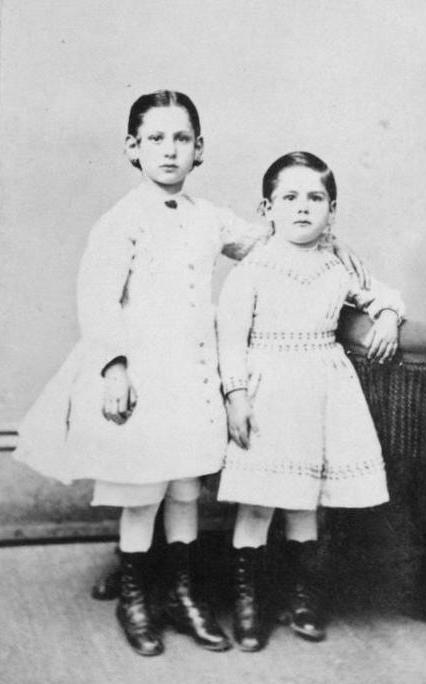
There are many examples of American boys wearing dresses archived on HBC. We have only begun to build links to them here. Many are not preciesly dresses. Most of the skirted outfits worn by boys in the early 19th century were dressess. This began to change after mid-century. By the mid-19th century a variety of skirted outfits are more common, especially skirt/kilt suits. But quite a number are actual dresses as well, like the dress the boy shown here is wearing (figure 1).
Period fashion magazines provide a great deal of useful information about fashion trends and conventions. The fashion writers in Harper's Bazaar provided some advice to mothers about boys' dresses and kilts--"Small boy's clothes" (1877).
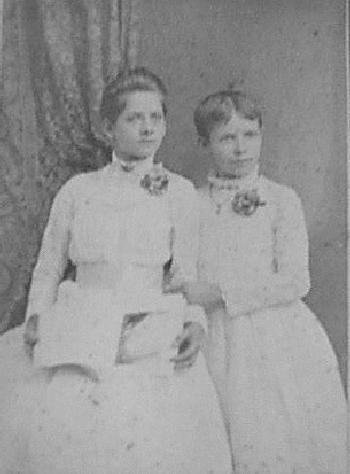
We have a major problem in assessing dresses worn by boys in that so many of the old photgraphs available are not identified. Thus we have no way of knowing if the child photographed is a boy or girl. This really complicates our ability to understand the trends. Many of the portraits provide clues that are useful in making educated guesses. Props can be helpful, but are not definitive. Other photogra[hs have no clues what so ever. We are left to assess the faces which is problematic at best.
Thank you for your interest in our site. If using any of our material, partially or in full, we ask that you always provide an active hyperlink to the pages that you have consulted.

Navigate the Historic Boys' Clothing Web dress pages:
[Return to the Main national dress page]
[Return to the Main U.S. garment page]
[Pinafores]
[Ringlet curls]
[Smocks]
[Bodice kilts]
[Kilts]
[Fauntleroy dresses]
[Sailor dresses]
[Fancy dresses]
[Dresses: 16th-18th centuries]
[Dresses: Early-Mid-19th century]
[Dresses: Late-19th century]
[Dresses: Early 20th century]
[Difficult images]
[Movie dresses]
Navigate the Boys' Historical Clothing Web Site:
[Introduction]
[Activities]
[Biographies]
[Chronology]
[Clothing styles]
[Countries]
[Bibliographies]
[Contributions]
[Essays]
[FAQs]
[Glossaries]
[Images]
[Links]
[Registration]
[Tools]
[Boys' Clothing Home]