|
Lead Lease was primarily designed to assist Britain in its fight with NAZI Germany, but Nationalist China also received shipments to assist with its defense against Japan. Eventually 38 different countries (accounts differ slightly on this number) received Lend Lease assistance. While Lend Lease aid went to a large number of countries, the two critical countries were Britain and the Soviet Union. Without these two countries, the United States would have been unable to have effectively engaged the Germans in Europe. Lend Lease was critical to the war-effort of both coutries. The Soviet Union had been essentially a parter with the NAZIs until Hitler ordered an invasion (June 1941). The Soviet Union was subsequently added to the list of Lend Lease recipients (November 1941). Aid to the Soviets was more contencious than to other countries, but had a stron advocate in Hopkins. [McJimsey, pp. 293-294] Eventually almost all the allied nations were declared eligible for lend-lease aid. A series of Lend Lease agreements were signed with the participating countries. Reciprocal aid agreements with Britain, Australia, New Zealand, and the Free French were negotiated (1942). These agreements provided for "reverse Lend Lease" involving goods, services, shipping, and military installations provided American forces stationed overseas. Other Allied nations in which U.S. forces were stationed adhered to the same provisions. Lend Lease assistance totaled about $49 billion (1941-45 collars) by the time the program was ended at the end of the War (August 1945).
Lend-Lease was the principal means for providing U.S. military aid to foreign contries fighting the Axis powers, esecially Germany. President Roosevelt began supporting Britain and France even before the outbreak of the war. But as the War developed, the Allies were limited by the 'cash and carry' provisons of the Neutrality Acts. This became a major problem after the fall of France and Britain was left to fight the Germans alone. From the beginning, Britain was the major recipient of American aid as part of the greatest alliance in history. The Lend Lease Act authorized President Roosevelt to transfer arms and supplies to 'the government of any country whose defense the President deems vital to the defense of the United States.' President Roosevelt conceived the Act to assist Britain, but the Soviet Union, the Dominions, China, France, Brazil, and many other countries received weapons and material under the law. The Act authorized the transfer of war materiel to a beseiged Britain without payment as required by the Neutrality Acts. This enabled the British to continur proccuting the War when it was essentiallh bankrupt and even before America entered the War. Congress had some soubt about aiding the Soviet Union gtr Hitler invaded, but the Soviet Union was cental in the defeat of NAZI Germany and American aid played a critical role in converting the lumbering Red Army colums into a modern jugernaught. It also acirumvented the contentious issue of unpaid World War I debts which was disrupting aid efforts.
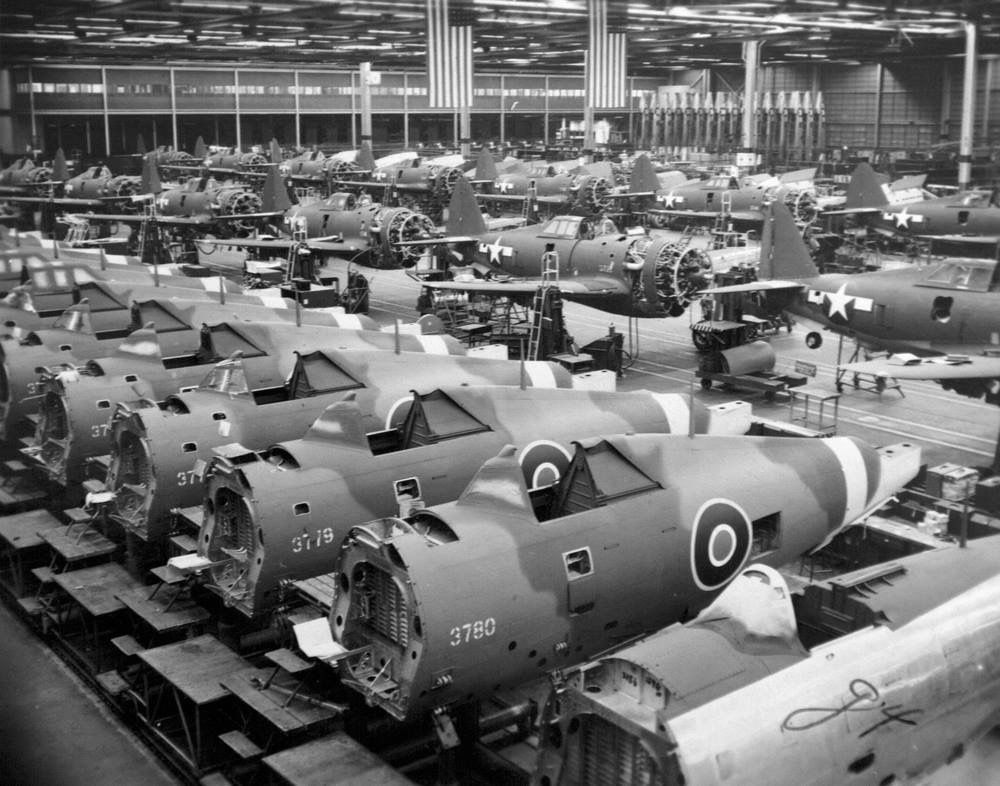
Lead Lease was primarily designed by President Roosevelt to assist Britain in its fight with NAZI Germany. Lend Lease was created in 1941 because Britain had essentially gone bankrupt fighting the NAZIs (December 1940). t the time, Britain and the Dominions were the only countries still fighting the NAZIs. Ther Act was specifically designd to aid Britain. Germany was financing the War by brutally exploiting the occupied countries, including the use of slave labor. America in 1941 was just beginning to convert the economy to war production. Thus there was only limited actual arms that could be delivered to Britain in 1941. The initial Lend Lease shipments, were food and industrial commodities. They were badly needed. The shipments arrived at a time when the German U-boat blockade was close to starving out the British. Prime-minister Churchill in a speech at the Mansion House stated, "Then came the majestic policy of the President and Congress of the United States in passing the Lease-Lend Bill, under which, in two successive enactments, about £3,000,000,000 was dedicated to the cause of world freedom, without -- mark this, because it is unique -- without the setting up of any account in money. Never again let us hear the taunt that money is the ruling power in the hearts and thoughts of the American democracy. The Lease-Lend Bill must be regarded without question as the most unsordid act in the whole of recorded history" (November 10, 1940). As a result Lend Lease was in existence when the NAZIs invaded the Soviet Union. The propgram was quickly extended tyo the Sovires. President Roosevelt used Lend Lease to justify American North Atalntic convoy escorts. The President would eventualluy expanded this into an undeclared (an unannounced) naval war against Germany in the North Atlantic (September 1941). American by late-1942 war production was beginning to reach substantial levels. The first American tanks and planes reached the British Eighth Armny in time to be used in the Battle of El Alamein (October 1942). The British got the new Sherman tanks berfore the American Army. Britain without Lend Lease could not have continued the War. The Lend Lease Act was essentially giving the British a blank check. It allowed President Roosevelt to transfer war materiel to battered Britain without the payments required by the Neutrality Act of 1939. This enabled Britain to continue the fight until the United States would actually enter the War. And it managed to skirt the complicated issue of World War I debts. Britain was by far the major recipiant of Lend Lease aid. The decisive victory at El Alamain could not have been achieved without Lend Lease. America eventually provided The British Empire over $31 billion in Lend Lease assistance (in 1941-45 dollars). Britain itself was the major recipient. Britain eventually paid back about $0.7 billion, but much more in Reverse Lend Lease. Britain also surrendered posible rights and royalties to many important British technological achievements.
Nationalist China also received shipments to assist with its defense against Japan. Lend Lease was entended to China (April 1941). Lend Lease had been designed to aid Britain and the victims of NAZI aggression. The United States had been concerned about Japanee aggression in China for a decade. Assistance to China and finally an oil embargo are what caused the fateful Japanese attack on Pearl Harbor (December 1941). China was perhaps the most difficult country to assist. Japan had seized Chinese ports and controlled the western Pacific making maritime deliveries impossible after they also cut the Burma Road (February 1942). For 3 years the only way the United states had to aid China was to fly supplies in from bases in India over The Hump. Tis severely limited the untities delivered. Only late in the War were land deliveries possible over the Ledo Road hook p with the old Burma Road (February 1945). Even the truck deliveries limited quantities. The logistics required the expenditure of vast quanties of fuel, eqyuiment, and manpower. Really large deliveries required a seaport. Lend Lease delivries totaled $0.6 billion during the War. Much more would follow after the War.
The United States upon the outbreak of World War II assisted France within the limitations of the Neutrality Acts. The Roosevelt Administration moved to amend rhe Acts and a new law was passed (1939). This meant that France could purchase arms, equipment, and supplies in America, but on a cash and carry basis. The German invasion and fall of France came before the American industrial capacity could have an impact. The Free French were dependendant on Lend Lease. With France occupied or under Vichy control, the Free French had no armaments industry to supply them. Britain could not fully supply its own forces. Thus Lend Lease material equipped the Free French. This became possible after the Allied Torch lamdings in North Africa (November 1942). Free French units at first had ti fight the Germans with obsolete equipment, but eebtually received American arms and supplies. And then after the Normandy D-Day landings, the United States set aboit equipping a new French Army which in a few months formed the right flank of the Allied armies forming along the Rgine to invade the Reich. Lend Lease aid to France totaled $0.6 billion
Soviet participation in the land campaign against Germany was critical. Without the Red Army engaging the Wehrmacht in the East, an Allied invasion of France would have never been possible. America extended Lend Lease to the Soviet Union (September 1941). Lend Lease proved critical to the Soviet war effort. This should not be over emphasized. The Red Army stopped the Wehrmacht at Lenningrad and Moscow (December 1941) before Lend Lease aid had begun to arrive in any quantity. The Soviets had a massive arms industry that out produced the Germans in many areas. [Dunn] Many of their weapons were of a high quality--especially the T-34 tank which was superior to the American Sherman tank. The Soviets had moved their armaments plants back to and beyond the Urals after the NAZI invasion. By 1942 those plants were back in opperation. Still wars are won by marshalling superior resources. After the War, Stalin down-played the importance of Lend Lease. Most historians, however, report that Lend Lease played a critical role in the Soviet war effort. The Red Air Force had been largely destroyed in the first weeks of the German invasion. The United States commitment to supply 400 planes a month to the Soviets was a critical factor in the rebuilding of the Red Air Force. Lend Lease not only provided weapons including high performance aircraft, but many oyher key materials. American trucks and locomotives played a key role in the logistics neeed to support Red Army offenses. Other materials such as blankets and canned meat were very imporyant tothe Red Ary. The Soviet Union had been essentially a parter with the NAZIs until Hitler ordered an invasion (June 1941). Aid to the Soviets was more contencious than to other countries, but had a stron advocate in Hopkins. [McJimsey, pp. 293-294] Some Americans wanted to restrict aid to the Soviets on ideological grounds. Some like Ambassador Standley also understood the evil nature of the Soviet regime. Here a case can be made that Ameruca erred in so copiously supplying the Soviets. Certainly the trucks which America supplied the Soviets to fight the Wehrmacht were later used to cart unknown numbers of people off to the Gulag. These arguments can safely made today after the NAZIs were defeated. That defeat was, however, much less certain in 1941-43. One of the considerations to bear in mind was that Stalin and joined Hitler once, in part because he thought the Allies were intent on weakening the Soviet Union by sitting out the war and having the Soviets and NAZIs destroy each other. After the cross-Channel invasion was postponed in 1942 (Sledgehammer) and especially in 1943 (Roundup). Stalin was enraged. There were Soviet and NAZI peace feelers. [Mastny, p. 1378. and Karpov] Historians debate as to how serious these feelers were, in part becuse Stalin to suppress all evidence after the War. Hopkins argued with considerable force that after the postponment of the cross-Channel invasion in 1943 that full scale Lead Lease aid was necessary to convince Stalin of the Westen Allies sincerity and commitment. [McJimsey, pp. 292-294.]
Many Latin american countries declared war on Germany and participated in various ways. The principal contrbutiin was supplying needed ra wmaterials. Atlantic coast countries and colonies participated in the all-important Battle of the Atlantic against the Gerrman U-boats. Lend Lease aid to Latin America totaled $0.4 billion. The major recipient was Brazil not only played an important role in the Battle of the atlantic, but committed combat troops to the Italian campaign.
There was also so-called "reverse lend-lease." This was primarily material assisance to U.S. troops stationed abroad. It was primarily British support and amounted to about $8 billion.
American authorities denined several countries Lend Lease aid. The most notable was Ireland. The Royal Navy was able to use Irish poers to fight the German U-boat menace during World War I. This was important because Ireland fronts the North Atlantic to a far greater degree than England. The Irish declared themselves neutral at the outbreak of world War II. This mean that Irush ports ere close to the Royal Navy. And even more importatntly refused to make air bases available to the Brirish. Air cover was indispenable in fighting the U-boats and Irish air bases would have been very helpful. The Irish were very interested in Lend Lease aid. Being a relatively poor country, they had only limited funds to arm their military. President Roosevelt was, however, disturbed not with President De Valera not only iver the use of Irish ports, but an intervention in American politics supporting the Isolationists. This essentially prevented any American aid to Ireland during the war. Anothr notable couuntry denied Lend Lease aid was Argentina. The country at the time of world War I was on the brink of becoming a modern, industial country. Populist politics, however, undemined the capitalist system that might have Argentina a prosperous nation. Col. Juan Peron riding the populist wave seized power in Argentina. He was deeply impressed with Benito Mussolini. Argentina also had an influential German community, especially within the military. Thus the country while neutral, was sympathetic to the Axis throughout the war. Argentina thus did not receive Lend Lease aid unlike many other Latin American countries.
Alberti, Fedor (Deputy Head of Moscow State Civil Aviation Engineering University). "Lend-Lese Air Ferries", AeroSpace Journal (1997).
Dunn Jr., Walter S. The Soviet Economy and the Red Army, 1930-1945 (Westport, CT: Praeger, 1995).
Karpov, Vladimir. Generalissimo.
Kimball, W.F. The Most Unsordid Act (1969).
McJimsey, George. Harry Hopkins: Ally of the Poor and Defender of Liberty (Harvard University Press: Cambridge, 1987), 474p.
Mastny, V. "Soviet war aims at the Moscow and Teheran conferences," Journal of Modern History (1975).

Navigate the CIH World War II Section:
[Return to Main Lend Lease page]
[Return to Main Arsenal of Democracy--inter-war page]
[Return to Main World War II American isolation page]
[Return to Main World War II page]
[About Us]
[Biographies]
[Campaigns]
[Children]
[Countries]
[Deciding factors]
[Diplomacy]
[Geo-political crisis]
[Economics]
[Home front]
[Intelligence]
[POWs]
[Resistance]
[Race]
[Refugees]
[Technology]
[Totalitarian powers]
[Bibliographies]
[Contributions]
[FAQs]
[Images]
[Links]
[Registration]
[Tools]
[Return to Main World War II page]
[Return to Main war essay page]
[Return to CIH Home page]