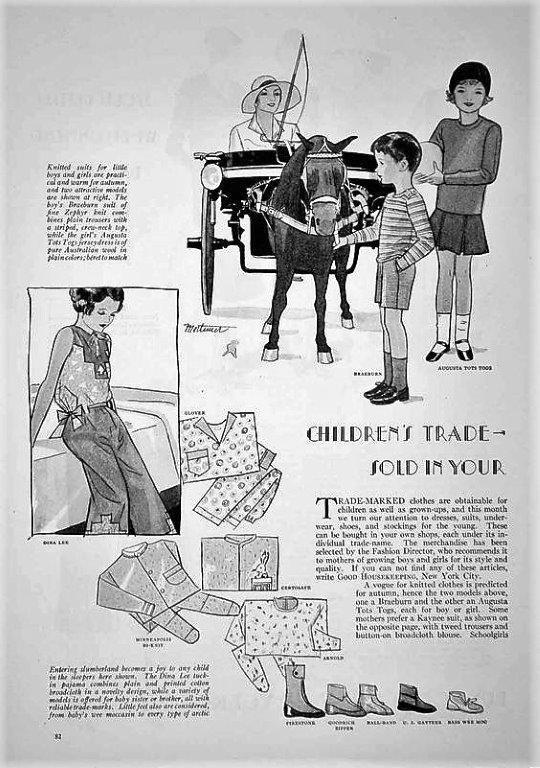
Figure 1.-- This Fall 1929 'Good Housekeeping' ad highlights trademarked (branded clothing), emphasizing knits. Many manufacturers advertised in this popular mass circulation magazine. The ad includes clothes, underwear, and sleepwear. Presumably these are many of the brands that were advertising in the magazine. It is a little difficult to read the small print, but several brands are mentioned, including: Augusta Tot Togs, Kaynee, Jack Tar Togs, L'Alghos, Minneapolis, Crtosafe, Arnold Stencil, Glover. Some of these we are familar with, others are new to us. Click on the image to see the second page.
HBC has not yet qcquired much information on clothing manufacturers This is in part because much of the available information comes from retail catalogs rather than adverisements from manufacturers. We have noted some advertisements by manufacturers, often in women's magazines. There was also some advertising in up-scale magazines like New Yorker. Retailing advertisemrents in newspapers and mail order catalogs, however, were much more common. We woulf like to expand this section, but todate have had litt,e success in obtaining information. There are some complications here. Some large retailers like Sears would promote brand names such as Pilgrims. Sears did not actually do the manufacturing, but contracted the actual production with manufacturers and exclisively marketed the various brands. Another complication is the increaasing trend among companis in the United States and Europe to focus on marketing, creating brand awarness. Comanies like Nike then cointract out the acyual manufacturing in low wage countries. As a result, it becomes difficult to destinguish between brands and manufacturers. Some companies may own multiple brabds. Basically we have decided not to dstinguish between brabnds and manufactueres. For HBC's purposes, the design and marketing aspect is more important than the actual manufacturing operation.
Clothing Manufacturers
Here are manufactirers of children clothing that we have found information about their activities. This is a little complicated as initially the companoes were manufacturrs. But overtime the design companies began farming out the actal mabufactieing provcess. Thus in modern times, sesigners is peobanly a better term than manufacturer.
Here we are taking about regular clothes and outwear and not underwear or footwear, for which there are separate lists. We are hoping that HBC readers will assist us with this effort.
A
(Hanna) Andersson (United States)
We at first thought that Hanna Anderson was a Swedish company. Actually it was an American company. The founder, Gunn, is from Sweden, and named the company after her grandmother. Being frustrated with the quality of clothing offered here in the states compared to her European roots,
she found some companies to make soft, yet durable clothing in styles and colors rarely seen here before. The company was founded in 1983. A reader is very impressed with thequality of the company clothes. Sge shars a letter to the company with us, "May I tell you how fabulous are your clothes. When my daughter was young, we used to dress her with Oilily. But prices were extremely
high and with a girl 8-9 y.o., it was not always in her taste because too different from other girls who were jealous. I fell it is different with Hanna Andersson. Hoping you will still do
nice things which make children so nice. I bought many things and I will do in the coming years."
We note an advertisement from the back page of an old "Donald Duck" comic book published in Sweden. The ad is from August 1969 and shows the fashion that was coming that fall! The manufacturer was Algots, which was the biggest company in Sweden for children's clothes. They disapeared during the 1970s, when it became unprofitable to make clothes in Sweden and cheaper to import them from Korea and elsewhere! The boy with the very red jacket shows a very popular garment, even though that type of red wasn't too popular! A reader writes, "I remember them myself - I had a similar one (I was 14 years old that summer!), but in blue! The material was some kind of synthetic fabric, almost like vinyl-coating or PVC! Since we are almost at the beginning of the 70s, boys and girls are dressed almost the same, as you can see! The word was "uni-sex fashion"! At the bottom of the ad you can also see the Royal crest, showing that they were delivering clothes to the Royal family.
We noticed a catalog published by Mrs. C. Atsma aparently in 1901. We thought that it was a small business, because we cannot find a trace on the internet. There may be a misunderstanding, One source suggests that there were 160 pages, but this may be a reference to catalog no. 160 seen here. Atsma was an established company selling clothes and patterns for younger children in the 1890s and 1900s. It had a narrow range of clothing--Baby's dainty and children's pretty clothing. 'Pretty' suggests girls clothing, but can also describe clothes for younger boys. The company was established in 1892, but Mrs. Atsma had been manufacturing and dealing since about 1880. She claims to have 'supplied over 1 million young mothers with my patterns and baby clothes'. She was located in Newark, New Jersey, formrly in Bayone.
B
BHS (United Kingdom)
The British chain store BHS had their own brands of schoolwear.
Banner (United Kingdom)
A British reader recalls some advertisements from the 1950s for Banner schoolwear. A British reader recalls adverts from the 1960s and 70s. One advert read, "Banner shirts in regulation school greys". "These were more expensive clothes than the chain stores - and boys at my secondary school in the 1970s did have them." Another reader writes, "Other than chain-store own brands in the 1960s and 70s Trutex and Banner were the big two manufacturers as far as schoolwear goes - and they're still going. The newspaper ads I remember were from the chain stores. Banner and Trutex would advertise in more upmarket glossy magazines. The company has acquired Beau Brummel.
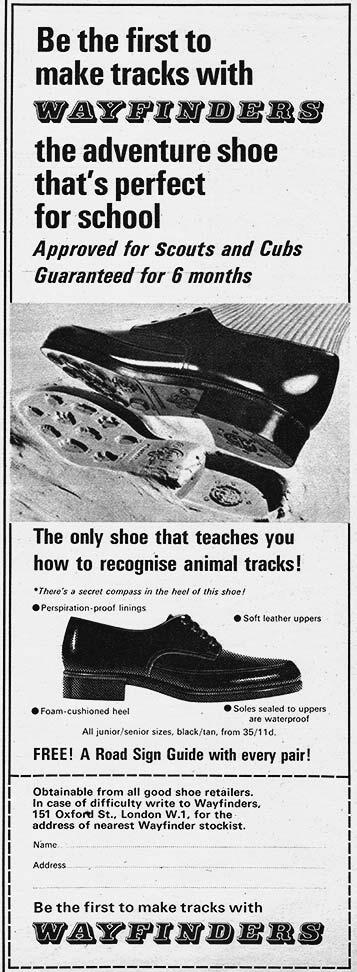
Figure 2.--Bata pioneered the boy's school shoe with animal footprints raised on the sole and a compass in a recess in the heel. The brandname was Wayfinders and were marketed to younger boys, meaning primary-age boys including Cubs. Note that while it looked like a dress shoe that the sole made animal tracks, some thing thast might asppeal to Cubs in particular. Both Scouts and Cubs dressed up for meetings through the 1960s which is why the shoe has a dressy look.
Bata Shoes (Czechoslovakia/Canada)
Bata is a family shoe shop founded in what is now te Czech Republic, but was at the time the Czech lsands of the Austro-Hungarian Empire. After World War I, Czechoslovakia became independent. Bata developed foreign msrkets ad became a major European shoe manufacturer with a trong presence throughout Eastern Europe, except the Soviet Union. . When Communist Governments began nationalisung Bata plants in Eastern Europe, the company continued to operte from its Western European plants. Thomas Bata, the founder's son, and 100 families emigrated from Czechoslovakia to Canada and founded the Bata Shoe Company of Canada. Operations in Britain and the rest of Western Europe continued. Bata pioneered the boy's school shoe with animal footprints raised on the sole and a compass in a recess in the heel (figure 2). The brandname was Wayfinders and were marketed to younger boys, meaning primary-age boys including Cubs. Interestingly they looked like a dress shoe.
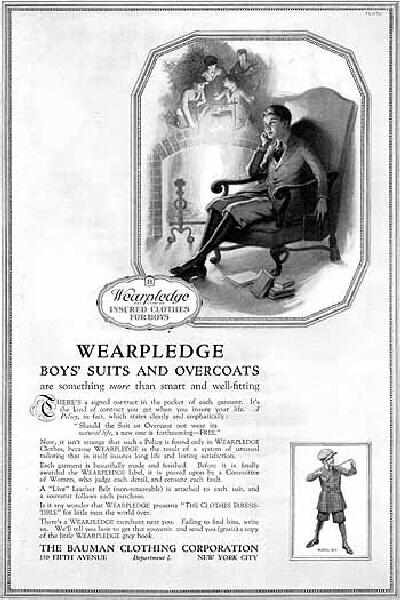
Figure 3.-- We do not know much about this American manufacturer of boys's clothing--Bauman Clothing. We know they were operating in 1919 and located in New York. Their brand name was Wearpledge which they marketed a insured clothes for boys--a novel marketing approach given how boys wear clothes. The company guaranted garments over their "reasonable life".
We do not know much about this American manufactrer of boys's clothing. We know they were operating in 1919 and located in New York. Their brand name was Wearpledge which they marketed a insured clothes for boys--a novel marketing approach given how boys wear clothes. The company guaranted garments over their "reasonable life". Bauman offered to actually replace garments. Bauman offered a range of garments for boys 1 1/2 to 18 years of age.
Beau Brummell (United Kingdom)
Beau Brummell (a British firm now owned by Banner) manufacturered good quality schoolwear such as blazers, jackets, trousers and skirts etc. A British reader writes, "I remember some of my own school clothes had this label, particularly my last four pairs of short trousers. Beau Brummell were a little on the expensive side and this is because of the excellent quality of both the material and the tailoring of the garment. I seem to recall when my shorts were given away, they were still wearable for sometime after I stopped wearing them. They were very comfortable and like all short trousers made around the 1950s they were cotton lined and had the Beau Brummell label sewn onto the lining."
We notice Black Bear long stockings for children in the 1900s. We have found a vintage pair of grey long stockings. We also notice small tiwn newspaper advertising in the early 1900s. We are not sure, however, about the name of the company. Blacl Bear seems more of a brand name, but it could be the company name. Given the low-budget advertising campaign, the company seems like a minor hosiery company which just operated for a few years at theturn of the 20th century.
Bleyle was one of the best known German manufacturers of children's clothes. The company was founded by Wilhelm Bleyle in Stuttgart. The company specialized in knitting, especially for childrens' clothes. It was especially well lnown for its sailor suits ( �Matrosenanzug� ).
Bleyle made the standard sailor suits that German boys wore before World War II.
The federal state of Baden-Württemberg celebrated in 2002 its 50th anniversary. Bleyle was mentioned in many events related to this anniversary together with such globally known companies as Daimler, Bosch, Voith etc.
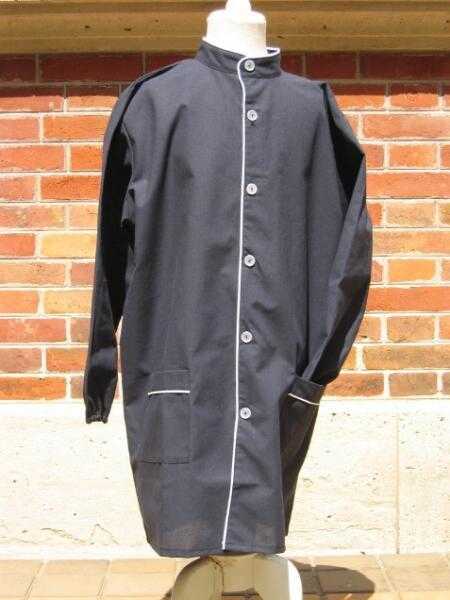
Figure 4.-- Bobine means bobin in English. The Bobine company was founded by three young mothers, They saw a need to offer mothers traditional clothing with modern styling. They founded the company in 1989. Here is a school smocvk offered in 2005.
Bobine means bobin in English. The Bobine company was founded by three young mothers, They saw a need to offer mothers traditional clothing with modern styling. They founded the company in 1989. Bobine creates, constructs and markets a complete collection of clothing for children from 3 month to 14 years of age. The clothing line includes clothing designed for healthy wear with needed accessories. They also offer school smocks. The company is a family concern created by two sisters and a cousin. Bobine uses quality raw material to create clothing of reasonable cost. The company sells both to individuals and stores. The smocks are sold to schools which have reportedly had trouble finding smocks.
Bradford Textile (United Kingdom)
We note a 1950s advert from Bradford textile for school clothing and clothing for physical training. A British reader writes, "Bradford was a big clothing manufacturing city near Leeds - my duffle coat, that my Grandparents bought me came from there - it had a label 'Made in Bradford' but I'm not sure if it was the same firm."
Brownstein and Lewis
A reader asks, "Have you heard of a Blue Jean manufacturing company called Brownstein and Lewis? I was told that Charlie
Chaplin was endorsed by them. The appeal to denim and Charlie Chaplin on the time table does not seem to coincide, unless these were the jeans he wore in "The Gold Rush", and I was wondering if you had any knowledge of the company. I have been searching multiple sources and unless I can find the correct spelling of the company, time period in which they manufactured jeans or even if they were an American company, or any other information my research will be
incomplete."
Buster Brown was a popular comic strip character in the early 20th century. His creator was a marketing genius. Many companies were licensed go use the Buster Brown character. It was shoes that became the best known use of the Buster Brown character for marketing. Beginning at the World's Fair in 1904, Buster Brown became a household name in children's footwear. John A. Bush, a sales executive with Brown Shoe Company, came up with the idea that Buster Brown would be a perfect symbol for the compny's line of children's shoes. Brown Shoe Company was named for the company's founder George Warren Brown and not Buster. Bush persuaded the company to purchase the rights to the name from Outcault. The company then introduced Buster Brown Shoes to the public in 1904 during the St. Louis World's Fair. Bush went on to become president of the firm in 1915 and Chairman of the Board in 1948. Bush promoted the brand with national print, radio, outdoor, and eventually television advertising. The company eventually came out with a line of sturdy oxfords for boys. They named the strap shoes that both Buster and Mary Jane wore as "Mary Janes". I am not sure just when they did this. The name stuck with the public and Mary Janes became an American term for strap shoes and a staple in any well-dressed little girl's wardrobe. Today, Buster Brown remains one of the most recognized children's footwear brands, and is featured at mid-tier and department stores across the United States. It was not just Buster Brown shoes that were sold, but related products like socks and stocking supporters. Buster Brown shoes were produced by Frank Maynard. A recent introduction of a new logo and related promotional programs continue Buster Brown's reputation as one of the most famous brands of children's footwear in the United States.
C
Cash's Woven Name Tapes (United Kingdom)
Cherub (United Kingdom)
A British reder writes, "The Yorkshire firm that made the underwear my grandmother bought us was called "Cherub" - or that may have been a brand name - again I don't recall that in London - why it stuck out.
Clarks Shoe Company (United Kingdom)
The Clark Shoe company was founded by two Quaker brothers; Cyrus and James Clark in Street, a small village in Somerset which is in South West England. Initially they made sheepskin rugs and carpet slippers. Clarks became particularly well known for making school sandals. Now it is a global shoe company with operations in Britain, Europe, the United States, and the Far East. We notice a Clarks advertisement in 1971. At the time the company was still using their Flouroscopes.
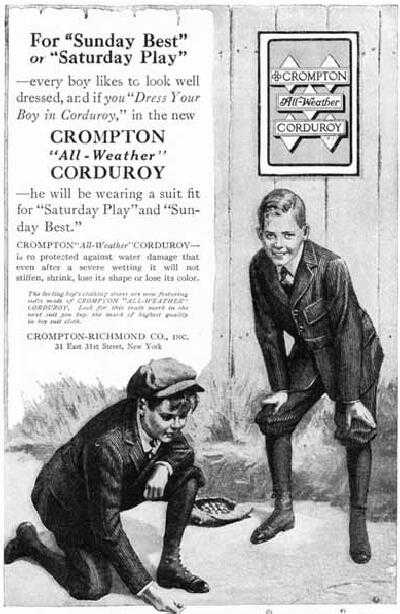
Figure 5.-- Crompton-Richmond placed this ad in 1919, we think in the "Ladies Home Journal". Crompton was the major American producer of corduroy and here is proimoting the use of corduroy. Note the boys are wearing suits eve though they are playing masrbles, prwesumablky after school.
The Crompton Mill was located in Crompton, Rhode Island. Crompton is located in West Warwick. Large numbers of Irish immmigrants settled in Crompton during the mid-19th century. As a result the city is the location of the first Catholic Church in Rhode Island--St. Mary's Church. The Irish were drawn by jobs in the mill. After the Civil War the Irish were followed in the late-19th century by many Poles and smaller numbers of Swedes. The most important business in Crompton was Crompton Mill. It was part of the early industrial developnment of the United Staes. The Crompton Mill was built in 1807. The Crompton Mill was a substantial granite building. It is notable as the first mill to produce both velvet and corduroy in the United States, althoough we are not sure whe production began. As a result, Crompton for a time was called the Velvet Village. Crompton is located in West Warwick. The Crompton Mill was awarded a golden medal at the Pan American Expedition in Buffalo, New York for making the best velvet and corduroy (1901). Atvthe time more than 50 people worked in the mill. The mill was highly mechanized. There were 30-35 machines on each floor and 3-5 floors. The Crompton Mill was called the Stone Jug Mill, a name related to an ealier historical period. The Crompton Mill was the first textile plant in the United States to make the cordury and velvet. [Lauren, Katelyn, Debra, and Brian] We are noit sure when Crompton began advertising. We note ads in the 1910s. The ad here was placed in 1926 (figure 1). We note Crompton placing corduroy ads into the 1940s.
D
Denbirayne (Scotland?)
Denbirayne made macintoshes. A British reader writes, "My brother and I had rubberized macs. I don't recall this firm - Denbirayne - there would be a lot of manufacturers as everyone had them and there were regional variations."
An advertisement for E-Z Waist Suits in Parents' Magazine [October, 1930, p. 72.] Note that the girl's suit is sleeveless
while the boy's suit has short sleeves. I believe, however, that both styles
are for either boys or girls. These suits appear to have no reinforcement
straps and are therefore, strictly speaking, untaped union suits rather than
waist union suits. See the Hanes advertisement in the Parents' Magazine
group, which gives options for both waist union suits with strap reinforcements and untaped union suits.
Florence Eiseman (1899-1988) was one of America's most notable and creative childwear visionaries. Her story is that of an untrained seamstress creating a high-end children's clothing line in a manufacturing city (Milwaukee). She launched what would become the leading high-end children's clothing line in the United States (1945). She played a major role al in fashioning the fashionable look for the Post-War American child. Her eponymous brand influenced how Princess Grace of Monaco, Elizabeth Taylor, Debbie Reynolds, the Kennedys, and the Rockefellers dressed their younger children. Many well-to-do Americans were attracted to Europoean styles. Eiseman created competitice American styles. One fashion expert notes, "It was an East Coast thing. People were surprised to know it was created and designed in the Midwest." Her first big order was for pinafores. Her signature pieces for girls were jumpers (gym slips) with bold appliqué like flowers. She also liked sailor styles. She favored A-line silhouettes and as known for pinafores that could be buttoned to the front of dresses. For little boys she favored shoralls, sailor suits, and Eton suits. Eiseman's clean, bright and whimsical clothing became a signature look of childhood. Seersucker and corduroy were Eiseman's signature fabrics. Her creations sold at high-end department stores Neiman Marcus, Saks Fifth Avenue, Bergdorf Goodman, and Barneys. Eiseman wanted to dress children like children. Her dresses and shirt patterns came in basic, geometric shapes. She didn't believe children have waistlines or bellies. Each outfit came in bright, vivid colors. The garments moved and were comfortable enough for play. A Florence Eiseman made a child look like a child. Another fashion expert explained Eiseman's impact, "It came to define the look of an ideal childhood." Eiseman grments were well-crafted, quality garment. Little children grow so apidy that wjile they grow out of their clothes, they rarely werar them out. An Eiseman garment could be passed down from big to little sister. She was noted for designing coordinating outfits for little brothers and sisters. A fashion historian suggests that this reflecting society's turn toward family life during the baby boom following World War II. Eisman saw children as precious objects. Some of her Eiseman dresses made little girls look like 'presents wrapped up with a red bow'. More than anything she believed that children should look like children. She was highly critical of some other high-end lines whose outfits she thought turned children into miniature adults.
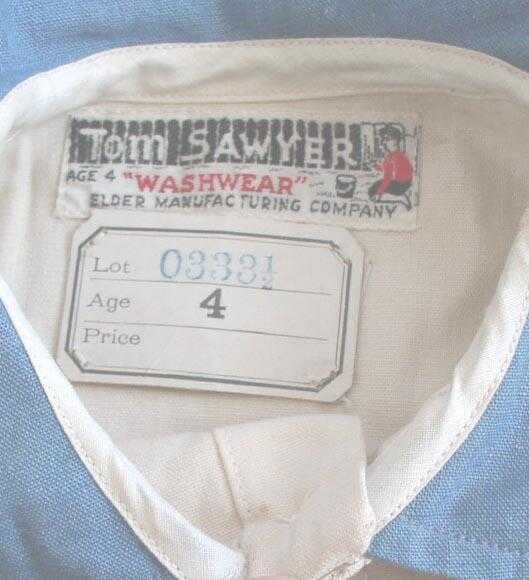
Figure 6.-- Tom Sawyer was a popular brand of stylish boys' clothing in the 1920s and 30s. It was a brand of the Elder Manufacturing Company. This is a boy's playsuit.
The Elder Manufacturing Company, Inc. began producing clothing in 1916. We note the company producing children's clothing from the very beginning. Tom Sawyer was a brand name for the Elder Manufacturing Company boys' clothes. The garments came with a guarantee tag that says that Tom Sawyer clothes are made for "real boys". The brand ws a popular brand in the 1920s. We have noted ads for Tom Sawyer clothing in magazines at the time. Today the company is best known for school uniforms. The company now has a family of brands, including Becky Thatcher, Tom Sawyer, Mark Twain and School Days. Elder todays offers school uniforms in
K-12 sizes. Bruxton Career Clothing offers clothing for business settings.
The company reports, "Elder products include features that make them great values for the consumer - durable brass zippers, reinforced stitching, double knees (on selected models) and DuPont Teflon soil and stain release finish to provide a school year's worth of wear. Our garments are fashion forward in design and styling, pleasing the most finicky student and their parents. Additionally, features such as the "grow" waistband and generous hem allowances ensure the growing child will be able to wear the same uniform throughout the school year."
Ergee was a Germam hosiery manufacturer. The firm made popular children's tights and stockings with a synthetic wool-like yarn called "Ergolon" which boys and girls liked because it did not scratch like earlier wool tights and stockings. Here you see the popular logo of the "chick" which the boy is holding--a way of advertising the softness of the yarn. These tights were obviously available in various bright colors which appealed to younger boys and girls. Ergolon was a synthetic yarn made from polyamide and polacrylics. The brightly colored tights were apparently designed for younger boys as well as girls. The older boys would presumably have preferred darker colors. Some boys wore tights without shorts or long trousers at home for purposes of playing or just relaxing. Normally they wore shorts, knickers, or long trousers over the tights for school or other outside activities.
F
G
H
Hart, Schnaffer & Marx Suits (United States)
We have very little information on the company at this time. We do note a 1922 advertisement.
Holeproof Hosiery (Australia, Canada, and the United States)
Carl Freschl founded Holeproof Hosiery. He began experimenting with hosiery in his family store which was located in Kalamazoo, Michigan (1872). He moved his store to Milwaukee, Wisconsin. His efforts were successful and the store became well estanished with areputation for high-quality, light, and durable hosiery. The Holeproof Hosiery Company was located in Milwaukee, Wisconsin. There were also subsidiaries in Sydney, Australia and Ontario, Canada. We do not know a great deal about the company, but it advertized widely during the 1920s. We note an advertisment in the St. Nicholas Advertisement during 1921. We note another advertisement in an unidentified magazine during 1924. The advertisements we have found show long stockings, but that the company had a much wider product line.
I
Izod
Vin Draddy, an American tourist, in the mid-1900s whilev visiting London stumbled across an elegant tailor shop named "Jack IZOD's". Vin was from New York and the president of David Crystal Co., which for some reason did not make crystal, but high-quality women's dresses. Vin was impressed with Izod's work. He made custom shirts for King George VI of England and other royalty. Jack IZOD's tailor shop was quite exclusive and Vin Draddy was both impressed an enchanted with Jack's unique surname and meritorious positioning. Every shirt Jack made had his name and the phrase "By appointment. Shirtmaker to the King." on the label. Vin had just began to divrsify by beginning a mens apparel business. He still had not settled in the name. He wanted a destinctive name to associate with the quality merchandise he was offering. Jack Izod was an elderly gentlemen thinking about retirement. Vin offered to purchase the rights for the exclusive use of the IZOD name and Izod accepted.
I believe that Vin began Izod clothing in the 1940s, presumably after the War. The company specialized in sports and casual clothes. It is one of the best known American brands. Izod became associated with quality knit sport shirts. Famed tennis player Rene' Lacoste partnered with the David Crystal Co in 1951 to market a tennis shirt made of a new pique knit. This was at the same time that preppy fashions becae very popilar. The knit shirt, often clled a polo shirt (but not by Izod), was a instanteous success and adopted as a preppy standard. A good example of a Izod clothing is a tennis outfit offered in 1977. The jknit shirt was a particularly important item.
One company specializing in children's clothing during the 1920s was Kaynee. We do not yet know much about the company. We notice an advertisement for boys' school clothes in Good Housekeeping Magazine (September, 1927, p. 234). Interestingly the younger boy wears shorts with knee socks while the older boy wears knickers with what look like black long stockings.
Kenosha Hosiery Company
Another manufacturers' brand name for boys' clothing sold throughout the U.S. was Black Cat. It was a brand of the Chicago-based Kenosha Hosiery Company. They made "Black Cat" stockings for boys and also for adults. They advertised in Good Housekeeping Magazine during the 1920s.
King Gee (United Kingdom)
King Gee appears to be anothrer Australian manufacturer of school uniforms.
The Ladybird clothing for younger children was available in a wide range of clothing stores. There were shops that specialised in this company's outfits for boys and girls. I do not know if this range of clothing is still available. Freemans appears to be promoting the Ladybird brand. All their clothes had a label with a picture of ladybug on it. I'm wasn't sure at first why they weren't called Ladybug. [HBC note: It turns out that ladybugs are called ladybirds in Britain] There was also the usual information: size, washing instuctions etc. I'm sure Woolworths stocked their clothes as well as other stores and mail order catologues like Freemans here. They were at the cheaper end of the market, I think. A reader writes, "I recall having ladybird pyjamas and underwear." For a while they produced a free comic book for children. The Ladybird comic came as a supplement to the Ladybird catologue - kids would think it "cool" (they hoped) to wear clothes like those in the comic. And guess what? - those very clothes were included in the new ladybird catalogue which you could pick up in stores. The stories always featured children having various adventures--and of course showed them dressed in ladybird clothing. One story I remember featured a group of children being swept out to sea on a raft they'd made but as one of the boys was wearing a brightly coloured Ladybird vest they were able to hoist it up the mast and so get spotted by a passing liner!. I wonder if anyone still has any of these comics? Tthey were well-produced with quite realistic illustrations. There were a famous series of children's books called Ladybird Books--always with text on one page and illustrations on the other. These were very well illustrated. There were geared to very young readers with titles like "Going to School" and "Cubs" as well as a host of others. Their books were used as graded reading courses by some schools. I'm not sure if these were linked to the clothing manufacturer or not - I don't think they were.
Levis (United States)
Levis was suvch a dominant company for so many years that Levis became a term for jeans.
We do not know when the company was estanlished, but the catalog here shows that it was an established company in the 1880s. We notice pages from a J.B. Lewis Boot and Shoe Company catalog for 1887-88. The catalog included school shoes. The company was a manufacture. It was located in Boston and had a manufacturing plant in Abington. We know nothing more about the company at this time.
Lord Anthony (United Kingdom)
Lord Anthony was the most popular brand of snorkel parkas.
McCawley was an American clothing manufacturer. We do not know much about the company other than their offices were located in New York and manufacturing facilities in Baltimore. Nothing comes up on internet searches. We do know that they had a line of playclothes for younger children marketed under the Slipova brand. This also produces nothing on internet seaches othr than sample advertisements. We do note a music piece, but are unsure if they are related. We believe Slipova that was meant to convey 'slip over' clothes which made dressing younger chidrn easy. We note advertisements during the 1920s for rompers, sleepers, and play clothes for younger children from 2-8 years of age. Some were beautiful color ads in major magazines like Ladies Home Journal. They were some of the earliest major color advertisement for children's clothing that we have noted. The company also made middy blouses. The 2-8 year age range meant clothes for todler, pre-schiilers, and early-primary children, We do not have further inforation on Slipova and only notice their ads in the 1920s.
Dr. Martens Shoes and Boots
MP Denmark (Denmark)
We do no know a great deal about this company. Presumably it is a Danish company. We know they make hosiery, including children's tights. They report in 2004 that they are going to bring out a line of boys' tughts. "We have some boy's tights from MP. They will be on our site in August 2004. Mp used to make the Oilily tights and still makes Hannah's ,so that is why you recognize the quality." We are not sure if their products are actually manufactured in Denmark or outsourced to lower cost plants in other countries.
Midford (Australia)
Midford was an Australian manufacturer of schoolwear.
The Minneapolis Kinitting Works after World War I developed new styles of underwar for children. An ad in Parents' Magazine read, "Minneapolis "M" garments are universally accepted as the correct underdressing in juvenile styles. The fashionable French Type (short trunk) garments illustrated above are made for both boys and girls in all popular fabrics." The advertisement appeared in Parents Magazine during September, 1930, p. 45. This Minneapolis Knitting Works advertisement, timed obviously for mothers who were shopping for their school children at the beginning of the school year, advertises principally waists suits. The ad shows a wide range of underwear garments.
N
National Cloak and Suit Company (United States)
The National Cloak and Suit Company was based in New York and Kansas City. National Cloak and Suit was founded around (1888). It was reorganized as the National Bellas Hess Company (1910). They had a very subtantial 7 story building in Kansas City. It was built (1919). One report indicates, "Two thousand people are employed in this building, which also contains a thoroughly modern hospital, cafeteria, recreation room, ball grounds, tennis courts, etc. " The company relocated to Armor Road in North Kansas City (1927). . Bellas Hess was one of the top five mail order companies in the country, generating sales of more than $250 million a year through the mailing of 25 million catalogs. The compny declared bankruptcy (1970s). Former employees attribute the company’s demise to losing focus on the mail order business in favor of discount retail stores and supermarkets. Their 1922 catalog was subsatial. We have a page offering knicker suits (1922). It was a substantial cataloh. This was page 294.
We have little information about the Notaseme Hosiery Company at this time. The company name was also the brand or trade mark name. It apparently emphasized that their hosiery did not have seems. The corporate offices were located in Philadelphis, Pennsylvania. We have no information on the company's corportate history. As far as we know the product line was entirely or primarily hosiery. We know the company eass active in the 1910s, but we do not kjnow when it was founded or ceased doing business. Notaseme Hosiery Company is notable for bringing a suit which had an important impact on American trademark law. The company sought to restrain infringement of a trademark (1916). They charged unfair competition and sought to recover damages from Isador Straus and Nathan Straus, Trading and Doing Business under the Firm Name and Style of R. H. Macy & Co. The two companies had different trademarks (Notaseme and Irontex), but Macu's apparently used a label very similar to that used by Notaseme. Notaseme charged that this constituted fradulent intent.
The case reached the Supreme Court which decided in Straus v. Notaseme Hosiery Co., 240 U.S. 179 (1916), "While one using an unregistered design similar to that adopted earlier by another may be enjoined from further use thereof, he may not be charged with profits if it appear that the original imitation was unintentional, that no deceit or substitution of goods was accomplished in fact, and that no considerable part of the business was due to his goods' being supposed to be those of the earlier user of the design. One innocently adopting an unregistered design and continuing to use the same after notice, not for the purpose of stealing the goodwill of the earlier user, but of preserving his own business, held, in this case, not to be charged with profits not shown to have been obtained by sales of articles supposed to be those of the earlier user. Relief for unfair competition not given, as the supposed unfairness consisted mainly in the use of a device that the earlier user sought to have registered, but was refused."
Patons & Baldwins Ltd. Woollen Mills were located in Launceston, Tasmania, Australia due to the abundance of fine quality wool available locally as well as a fine clean water supply. They were a major employer of labour - mainly female - for many years after WWII, until the parent company in England amalgamated with J.P. Coats (an English cotton thread manufacturer and supplier). The business was
re-named Coats Patons (Aust.) Ltd. and continued on until the late 1990's. The hand knitting wool section of the business had gone into the doldrums when cheap imports became prevalent and many of the staff were paid off but a small amount of manufacturing yarn was being made for other local garment knitting mills in the city. When these small mills were forced out of business by Government tariff
rationalisation, Coats Patons closed its Launceston plant. I'm sure there is information on the Web about this.
Peek & Clopenburg (Germany and neighboring countries)
Peek & Cloppenburg is a German-based international chain of clothing stores. The chain consists of two separate groups, Peek & Cloppenburg KG Düsseldorf (P&C West) and Peek & Cloppenburg KG Hamburg (P&C North). They grew out of the original P&C company which family members split. They now operate independently. The founders wereDutch merchants active in Germany. Johann Theodor Peek (1845-1907) and Heinrich Anton Adolph Cloppenburg (1844-1922) founded Peek et Cloppenburg GmbH in Düsseldorf, Germany (1900). The two partners desired to offer high-quality men's fashion at a reasonable price. The larger German market offered greater [rospects thn the relatively small Dutch market. Their first store proved successful. Cloppenburg's son, James, opened the companies second store in Berlin the very next year (1901). Both P&C compnies offer designer and own-brand fashion for men, women, teens. and children. Both companies survived the two world wars. The brands McNeal (men's fashion) and Review (young fashion for men and women) have ties to the P&C West. he two sub-brands are also sold outside of P&C, including competitors'. They have their own shops in Germany, Austria, and Croatia. Several P&C catalog pages are archibed in HBC, including a page for children's clothes, a boy's grey short pants suit suits and brighly patterened girls' dresses (Fall and Winter 1955).
Pilgrims (United States)
Pilgrim was a Sears store brand of hosiery. For a sample add for Pilgrim brand hosiery see a catalog page for long stockings in 1940.
We note the Reliance Manufacturing Company producing Honor Bright children's blouses, shirts, and playwear in the 1920s. We do not know much about the company. We do note an ad for boy's blouses--from The Youth's Companion (June 15, 1922,
p. 347). This ad appeared just as school was letting out in mid-June and appeals to boys and mothers who want to put their boys in blouses that will stand up under the strain of the activity of summer play. Notice that the boy in the illustration is running with his school books after being released from school. He wears a tie with his blouse, a striped blouse, above-the-knee knickers, and long black stockings.
Roots was aa imortant manufacturer of children's underwear in the early 20th century. The company was located in New York. The copy in a Root's ad read, "Root's Underwear is a comfort and a luxury at reasonable price. Made only from the best of the world's materials by the best American skill. No dye-stuffs. It is the perfect underclothing for the health of your children. It is made in different weights and to fit all sizes of people, from babies to
giants. Sold by principal dealers in New York and all large cities. If not by yours, write to Root's Underwear, 1 Greene St., New York."
Rock Rib (United States)
A reader writes, "I found in Minnesota long stockings for children sold by a lady who bought them in a State fair. The brand name is Rock Rib. Those tan stockings seemed to be widely used in this region. Also in Iowa and Ohio." HBC knows nothing about the company at this time.
The Willy Schoenis & Co began producig tights to replace long stockings in Germany (1952). This was one of the first manufacturers. The advertisement from Willy Schoeneis & Co. in Gottingen is quite revealing. It is an appeal to mothers to switch from dressing their boys and girls in long stockings to dressing them in the more convenient and better-fitting tights. Note that the ad juxtaposes two images showing the old-fashioned long stockings, worn by the boy, with the innovation of tights, worn by the girl. The boy has one of his stockings down because the clasp on one of his hose supporters has apparently come undone, whereas this problem doesn't exist with the new invention of tights for children.
Sexton Manufacturing Co was a major manufacture of underwear in the United States. Sexton often advertized in Good Housekeeping Magazine. The company was locted in Fairfield, Illinois.
(Ben) Sherman
Ben Shearman was the maker of the iconic shirts that skin heads wore.
Right-Posture was a brand of boys clothing for the Snellenburg Clothing Co., a Wisconsin manufacturer. We note in the 1920s that Right-Posture offed a full range of clothing, including boys' and girls' clothes. We do not know a lot about the company yet. They apparetly advertised in major magazines. The destinctive illustrations were done by JC Leyendecker who also did illustrations for Kuppenheimer, Arrow Shirts, and other manufacturers. Here are some of the children's clothes they offered in 1921:
Boys' and Girls' Ribbed Cotton Stockings 35� Wisconsin 1921
Girls Bob Evens Middy Blouses $2.75 Wisconsin 1921
Boys Cotton Sweaters 95� Wisconsin 1921
Wool Sweaters or Coats $1.98 Wisconsin 1921
Girls' Serge Dresses (Wood Peter Tom Dresses, Navy, Braid Trimmed) $4.75 Wisconsin 1921
Zepher Yarn Sweaters $5.98 Wisconsin 1921
Children's All Wool Sweaters $4.98 Wisconsin 1921
Children's Black Sateen Bloomers 48� Wisconsin 1921
Children's Union Suits 98� Wisconsin 1921
Childrn's Union Suits 1.25� Wisconsin 1921
Boys' Heavy Fleece Lined Underwear 98� Wisconsin 1921
Boys' Part Wool Ribbed Untion Stuts $1.98 Wisconsin 1921
Children's Vests and Pants 68� Wisconsin 1921
Children's Black Cat School Stockings (Heavy Ribbed Cotton) 25� Wisconsin 1921
Boys Wool Tweed Two-Pants Suits $7.45 to $7.95 Wisconsin 1921
Boys' Right-Posture Suits $12.98 to $16.50 Wisconsin 1921
Two-Piece Pant Navy Serge Pant Suits $8.95 Wisconsin 1921
Tweed Knickers (for 8 to 18 yrs.) $1.55 Wisconsin 1921
Boys' Blouses (Various materials and styles) 69 � and 98 � Wisconsin 1921
Boys' Knickers $1.48, $2.48, and $2.98 Wisconsin 1921
Velvet and Serge Suits (Oliver Twist and Middy Styles) $3.50, $5.00, and $5.95 Wisconsin 1921
Boys' Shoes Dark Brown, Double-Wear Soled English Walker, Various Sizes From $2.65, Wisconsin 1921
Girls' Calf Skin Shoes (Various Sizes) From $1.45, Wisconsin 1921
Children's Pantyhose (Fine Combed Egyptian Yarn) 25� Wisconsin 1921
Children's Hats $2.95 Wisconsin 1921
Children's All Wool Sweaters $1.98 Wisconsin 1921
Girls' Pure Worsted Zephyer Sweaters $4.98 Wisconsin 1921
Children's Black Sateen Bloomers 48� Wisconsin 1921
Start-rite is one of the best known British manufacturers of children's shoes. The company has a long history going back to
James Smith was a cordwainer (leather worker) who opened a small shop behind Norwich market (18th century). He was the first shoemaker in Britain to come up with the idea of ready-made footwear. At the time footwear was bespoke or ordered made to measure. Footwear made this way was expensive. Ready-made, off-the-peg footwear, could be made less expensively. Smith's grandson Charles Winter joined the family business. Like many entrpreneuers at the time, he developed commercial applications for newly created machinery. In his case, he adopted the new sewing machines to stitching leather uppers to the soles. This was a critical step in the mass production of footwar and thus offering low-cost shoes to the public (19th century). James Southall, Charles Winter's grandson by marriage, in the difficult economic environment following World War I, opened a modern factory outside Norwich--Southalls. Up until the 20th century, children's footwear was basically the same as adult footwear. We see some children wearing strap shoes, but this was primary very young children from affluent families. By the 20th century, there was increasing public belief that children's clothing and footwear. Production at Southalls included footwear for children which had an entirely different shape to that made for adults at the time. A key element was that the footwear allowed room for growth. An important part of the production was closed-toe sandals which proved popular with both boys abd girls. The trade name "Start-rite" was first used by Quant & Son, a shoe retailer in Bury St Edmunds. Southalls purchased the exclusive right to the name (1921). The company decided to launch a major mrketing and advertisement campaign, including an effort to expand sales in London. A special emphasis was given to the company's Start-rite children's brand. Southalls was the first footwear factory to make a practical contribution to the prevention of damage to young feet. The company commissioned a medica, investigation into school children's feet to confirm their belief that children's footwear should be designed differently than adult footwear. After World War II, the company decided to exclusively focus on children's foowear.
Stein (United States)
The Stein Co. made Hickory Garters.
Hickory Garters were widely used by American children to hold up their long stockings. Hickory was a national brand name. They were sold all over the country in various stores and were widely advertised in magazines. They advertized extensively in Parents' Magazine. The fact that they were also sold by Sears doesn't rule them out.
Stoic (United Kingdom)
A British reader recalls Dtoic flannel shorts in the 1950s and 60s. A British reader tells us, "Stoic is a Leeds firm - I can't recall that label in London - the firm could have gone bust - many did in the 60s/70s due to chain store own-brand competition.You can tell this is pre-60s as flannel school shorts were dying out."
Louis Eisendrath was born in Laet Germany (1853). He was educated at a college in Germany. We are not sure when he emiigrated to America. He married Hannah Strouss in Chicago (1874). They had two children. Eisendrath began working as a traveling salesman (early-1870s). He was a member of the firm Kahn, Nusbaum & Co. He organized his own firm, Strouss, Eisendrath & Co. (1885). This is interesting because forms were noy usually named for husband and wife. It could have been that his wife's family contributed to the capital needed to found the firm. The company manufactured ladies and children clothes. The company along with other concerns supported the annual Chicago Fashion Show. We do not know a great deal about the company, but we notice they were active in Chicago during the 1910s. We note a well-produced color catalog (suggesting a substantial firm) in the 1910s. The family was active in Jewish charitable activities.
We do not know a lot about Stubbies. We believe it was a brand of school and other children's clothes. Some of our Australian readers have mentioned Stubbies to us. Stubbies in Australia is a term used to mean short pants or bottles of beer. I am not sure if this usage appeared before or after the company. I believe the brand and the name of the company was the same. Hopefully our Australian readers can tell us more.
Townsend-Ueberchein was a clothing manufacturing company located in St. Joseph, Missouri. We know very little about the company at this time, except that they were an official Boy Scout outfitter. We have seen their promotional comic magazine "The Knicker". We also have some infornmation on their product line in 1931.
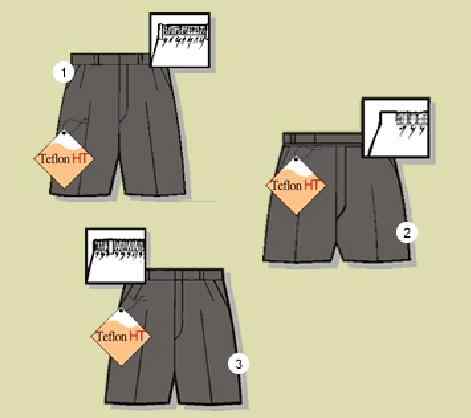
Figure 7.--Trutex offered there styles of grey school shorts. They were: 1) Bermuda, 2) Dorset. and 3) Essex. Click on the images for details about the three styles. I understand the term Bermuda, it was a reconizeable style of shorts--somewhat longer than regulr school shorts. I am not sure why the other two were called Dorset and Essex.
Trutex was one of the primary manufacturers of schoolwear in Britain. A British reader tells us, "I remember Trutex only from posters put up in shop windows.This was a more expensive range and was not sold in chain stores like BHS but through smaller menswear/boyswear shops (some of which also stocked the specialised items like blazers for individual schools that chain stores didn't sell). Trutex also did not advertise in the tabloid press like BHS did so these adverts also probably appeared in the more upmarket woman's magazines. They also did not sell through catalogues such as Freemans or Littlewoods. As you can see, Trutex tried to be a bit more 'fashionable' than the chain stores. [HBC note: See a 1969 advertisement.] HBC pointed out on the English school uniform page the waist tab feature of the shorts here. Another innovation was the round-collared (or penny-collared) shirts. BHS did not catch on to this style until a couple of years later when everyone wanted them rather then pointed-collar shirts."
One of the iconic English shoe compnies of the 1960s were Tuf shoes. They sold their shoes under several diffeent brands. While the firm that made them may not have been the first to produce a vulcanised rubber sole which was welded on to the body of the shoe, it was the first to market and advertise them aggressively. They made an effort to appeal to boyss by molding sole designs that wiuld interest boys. Unsurprisingly, the company produced a hard-wearing school shoe for both girls and boys, of which both thrifty parents and sensible schools approved, often mentioning the brand by name on their school uniform requirements. A reader writes, "My style of my first pair of Tufs was the absolutely standard mudguard design under the name Pacesetter, which my grandmother bought for me. I suppose I must have been 13 years old. At the time many shoe shops, particularly ones in department stores, had an x-ray machine so you could check the fit of your shoes by seeing your skeletal foot within them. No such luck this time. Tufs were widely distributed in shoe shops across the land, both the national chains and family-owned stores. We went to a small shop in the high street and the assistant responded to the request for school shoes by a strong recommendation for Tuf shoes. "
We do not know much about Twika, except that it was a Dutch manufcturer, spdcializing we believe in woolen garmants. We note a Twika magazine ad, probanly from the early 50s. Tweka is a brand name. Tweka products are made by the Van Heek company in Holland. Dutch reades tell us that Van Heek was a quality brand name note for making durable, hard wearing clothing.
We do not know a great deal about Otto Versand at this time. We believe that they are a major manufacturer of hosiery in Germany. We know that they market hosiery. They may well now manufacturer in other countries, but we have no details about this. They may produce more than just hosiery, but the products we have noted are prikmarily hosiery. Hioefully our German readers will provide some information about this company.
We have very limited information on the O. Williamson company.
It was located in Bor�s. The city of Bor�s was (and still is, but to a much smaller extent) the main place for manufacturing clothes in Sweden. It is situated about 30 min. to the east of Gothenburg in South-western Sweden. Today it is the dominating place of mail order catalogs. All we know for sure about the company at this time is that they were manufacturing sailor suits at the turn of the 20th century.
HBC has begun to develop information on the companies manufacturing and marketing underwear. Here the situation is somewhat complicated by the fact that companies had a variety of brands and major retailers like Sears have marketed house or store brands. Several companies have specialized in underwear. Many countries have companies that have focused on underwear, both in their own country and foreign markets. Much of our infornation at this time comes from the United States. The principal companies in America are today Haines and Fruit of the Loom. Haines has been given considerable visibility as a result of television ads featuring basketball star Michael Jordan. There have been several other American companies we have noted in the early 20th century. We have less information on the 19th century. The advertisement here is from the Minnesota Kniting Company (figure 1). We do not yet have detailed information on foreign companies.
Footwear Manufacturers
We have not yet developed much information on footwear manufactyrers. A HBC reader tells us, "Probably the most well known brand of kids' shoes in the United States, was "Buster Brown Shoes". The Brown Shoe Company was named after the founder, but decided to base base the name of their line of kids' shoes on the famous "Buster Brown" comic strip. Buster Brown Shoes were quite well known to millions of Americans. By the 1940s, there was also a Buster Brown radio program, and the short subject at the Saturday afternoon matinee would often be a Buster Brown cartoon." An English readees tells us about the the Bata Company and Wayfarer brand. "Wayfarers were the animal footprint shoes with a compass in the heal. They also branched out into moonscape soles, presumably to coincide with the landing on the moon (1969). The animal print ones were introduced earlier and a must have for boys of a certain age and very hard wearing, so approved of by their mums. I was a bit old for them, although the standard Tuf school shoe was of an almost identical design, but without the footprints and compass, and just as hard wearing. Wayfarers were made by Bata"
Sources
Lauren, Katelyn, Debra, and Brian. "Crompton". This was a school research project by children in Crompton.