|
It is notable that the images of orphanages in the mind of most Americans are English images--usually Dicksonian characters like Oliver Twist. The image of an orphange in America is overwealming negative. The conventional image of American orphanages is one of abuse directed against the helpless, with government negligence allowing cold, abusive institutions to operate. Thankfully the actual experiences of orphans in America is much more positive. Many good orphanages existed and provided both material and spiritual support for America's orphans. Most orphans were well fed and received basic clothing. Many orphand were better off materially than poor children with their parents. Discipline was often strict, but not unreasonable. Most orphans got a sound basic education, again often better than many poor children. There were also bad orphanages, but horific tales from these facilities have often obsured the largely positive role that most of these institutions played.
Orphanages were one approach to caring for abandoned children. There is a tendcy to associate abandoned children with industrializatuin. Here we can thank Charkes Dickens and the impact of Marx and Socialism on social thought. Researchers have found, howwever, that child abandonment and unwanted children was "... was both a rueral and urban one that transcended gepographical and national boundaries . Across countries and centuries, some women have always wanted, or found it necessary, to part with their babies. " [Fuchs, p. 55.] The growth of European populations, in large measure due to the introifuction of the potato (16th century) and groth of cities increased the number of children and concentrated them in cities where the problem was more visible. And obviously visibility is not a valid measure of actual prevalence. The exisence of orpganages shows that there were abandoned childrn in America. We have, however, not been able to find much informatgion on abandoned children in America before the 20th century. Much of the information we have found concern Europe. We are not sure why we have found less information about abandoned American children. Perhaps this was less of a problem in America, but if so we are not sure why. It my be that the problem was less visible as Americaa was still alarfgely rural socety in the first half of the 19th century. The problem masy have been dealt with by families and local communities and or churches. Hopefully we will be able to find an academic assessment of the problem in America.
English images of orphanges are perhaps important in America because there are no such notabe images of orphans in American literature. The two most notable prphans are girls: Polyana and Little Orphan Annie. Pollyana did not live in an orphanage, but there as one in the town which did not seem such a bad place. Annie of course exprienced a dreadful orphanage.
Orphages developed out of the industral revolution. With the increasing urbanization of society camne a break down in the family and community networks that cared for abandoned children. The answer was a new institution--the orphanage. I think they first appeared in Britain which of course is where the indutrial revolution began. We know less about continental developments. Orphanages in America are largely 19th century institutiions which endured through the first half of the 20th century. Orphanages became the primarily way of caring for indigent children from the mid-19th century to the mid-20th century. By the second half of the 20th century foster homes and small instituions like group hommes had largely replaced the orphanage.
Colonial America implement British poor law policies placing nedy children in nw homes. There were also the creation of alms or poor houses. After the Revolution, this continued, but assessment revealed the faiure abd mny abuses of this system As a result, during the Antebellum, Americans cimmunities turned to orphnages. [Carp, 'The history ..."p. 43.] They wre often call orphan asylums. The same was happening in Britain. Because of Chrles Dickens, orphanges have a terrible reputation. In reality, nothing can replace loving and caring families, especuially a two parent family. This can be seen in modern America with large numbers of children (especially minority children) being raised in one parent families. Wharever theuir failings, for the most part, American orphns were reasovably housed, fed, and clothed and offered a sound basic education. And American orphanages were primarily founded and supported by religious groups, but there wre alsoi some social or franteral organizations, or private endowment. Of course private endownment suppored many orphanages established by churches. Large numbers of orphanages were established in the Ante-Bellum pertiod, mosly by churcges. One source notes that private charitable groups established some 56 child care institutions. [Bremner, p. 2] The Catholic and Litherran churchs were especially imporant. An example is the Lutheran supported Tressler Orphans Home in Pnnsylvania. These efforts relied heavily on charitable giving. One estimate suggested that local and state governments cared for only about 10 percent of American orphans. This of course varied over time. We suspect it was the case in the 19th century, but by the 20th century, state oprphanages had become increasingly imprtant. .
Child welfare systems varied greatly from state to state. Some northern states devoted considerable resources to the problem. Often Southern states had notably poor facilities.
Indiana sponsored small facilities throughout the state. These small homes were often supported by the local community and the children well and humanely cared for, although much depended on the individual care givers. Similar arrangements were made throughout the Midwest. The smaller size and rural location of county homes often made them more humane facilities than larger, more impersonal urban homes, but again the character of the individual care givers was crirical.
Massachusetts was the first state to endorse "placing out" over institutions. Although there were many private orphanages in Massachusetts, they did not receive public
funding and by mid-century the state had established its own "state schools."
New York: was the state with the largest number of children in orphanages.
The New York legislature subsidized private institutions rather than building its own.
Pennsylvania: Pennsylania with its Quaker traditions had a history of providing for orphans and other indigent children. The Civil War with the inprecedented loss of life resulted in large numbers of orphaned children. The state of Pennsylvania established an extensive system of orphan schools and homes to care for, educate the children of fallen soldiers. The State for many years published annual reports that contained information about the orphans at each of these schools.
A wide variety of institutions have been referred to as orphanages. An assessment of orphanages in America needs to separate these different kinds of facilities. Most orphanages (but not reformatories) saw themselves as "second homes" which provided
children with food, clothing, shelter, and education until they were placed in families as adolescents ready to learn trades and contribute to the household economy. But the traditional practice of individuals, philanthropists, organizations, and
public welfare workers placing young orphaned children in families as "boarders" or indentured servants also continued throughout the 19th century. These two approaches coexisted as alternatives.
Colorado Institution for Dependants: This Institution was in fact an orphanage, but they also took children whose parents were still alive but could not care for their children. I'm not sure when it was founded, but the boy appear to have worn rough working clothes as everyday clothes.
New York Juvenile Asylum: This institution was, from the moment of its incorporation in 1850, intended for potential delinquents rather than poor orphans.
Orphan Asylum of the City of New York: This was a nonsectarian Protestant orphanage founded by women in 1807.
Many orphanage managers were interested in preserving the child's connection with his or her family of origin. Some historians report that Catholic orphanages were especially interested in maintaining family ties. Most Protestant and Jewish children placed in institutions after 1850 also eventually returned to their surviving parents, siblings, or
other relatives. In fact, by the end of the 19th century, many children who entered orphanages were not orphans at all; they were the children of families in crisis. Parents began using orphanages whichbwere becoming increasingly available for temporary care. One observer notes that parents used the Albany Orphan Asylum for temporary emergency child care (sometimes repeatedly). [Judith Dulberger, Mother Donit for the Best]
By the turn ofvthe 20th century, long-term asylum inmates often had no families to return to or were "diagnosed" with physical, mental, or behavioral problems.
Fraternal societies started 71 orphanages for deceased members from 1890 to 1922. Most of these orphanages apparently received no government subsidy and were funded solely from dues and contributions from each society, which included the Odd Fellows, the Masons, and B'nai B'rith. These orphanages stressed discipline and tough love; rules for the students were sometimes petty and rigorously enforced. A few orphans, in fact, left
as soon as they could. But still, the warmth, affection, and permanent ties received by these homeless children usually prepared them well for later life. Beito cited one study in particular that showed male and female
graduates of Mooseheart's orphanage were much better educated, better paid, and more stable as adults than their counterparts in society.
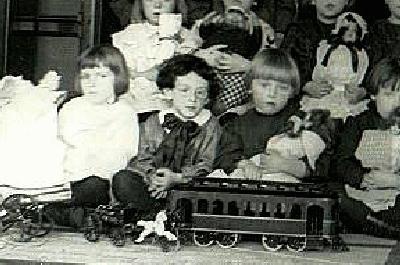
Clothes worn by orphans have generally reflected clothes worn by children from families with moderate means. In America this meant that actual uniforms were unusual. Often children brought clothes with them or clothes were supplied by relatives. One visitor who was in an Indiana orphanage during the 1920s tells me that the lady running the orphanage would buy clothes on sale in local stores. The children could select clothes from a large box. At other orphanages there may have been more similarity as clothes were often bought in large lots by the various state homes. THis we see orohanages with children wariung a wide a variety of clothing and others with the children similarly dressed. Little boys at the turn of the century would often wear blouses, large bows, and knee pants with long stockings. Girls commomly dresses. Pinafores were commonm for a time. There wre no destinctuve orpohanage clothing. Induviuduals would not sdtandf out, buty of course a large groups all dressed similart=trly would stand outy. Infants and toddlers were less commonly found in the orphanages as they were easier to place for adoption. We note what may be an orphanage group on a beach outing at the turn-of-the 20th century. The boys are all wearing identical hats and dark smocks.
Government authorities in recent years have tended to favor foster care and group homes as an alternative over institutional care as offered by orphanages. Social reformers increasingly criticized the impact of institutional regimentation on the personalities of children. Interestingly some of the sane criticisms could be leveled at high-priced private boarding schools attended by the children of affluent parents. The criticisms of orphanages led to the creation of such bodies as the Child Welfare League of America whuch ficused ion ways of eliminating the harmful effects of institutional life. One of the approaches pursued was the organization of orphanages in a "cottage" system in which the children live together in small "family" groups under the care if a house mother or in some cases a husband-wife team. This is similar in some ways to the house system in English boarding sdchools. In Americam cottage-style orphanages, ordinary clothing is worn instead of an institutional uniform. Efforts or made to integrate the children into the life of the surrounding community.
Orphanages were establishe througout the United States in the late 19th centutry. The Civil War (1861-65) in partiulksar created an unprecedented need for these insitutions. Many orphanages were founded with the expressed purose of caring for soldiers killed iun the War. We have collected some information about specific American orphanages in various parts of cthe ountry.. Here we have some details, but in other instances have little more than an image. Orphanages were sponsored by both state officials and religious authorities.
Some useful sources an American orphanages include:
Bremner, Robert, et aI., eds. Children and Youth in America: A Documentary History (Cambridge, Mass.: Harvard University Press, 1970).
Brown, Dorothy M. and Elizabeth KcKeown, The Poor Belong to Us, Catholic Charities and American Welfare (Cambridge: Harvard University Press, 1997).
Carp, E. Wayne. "The history of orphans and orphanages in the United States," Adoption & Culture Vol. 4 (2014), pp. 43-51.
Carp, E. Wayne. "Orphanages vs. Adoption: The Triumph of Biological Kinship, 1800-1933," in With Us Always: A History of Private Charity and Public Welfare, Donald T. Critchlow and Charles H. Parker, eds. (Lanham, MD: Rowman and Littlefield, 1999).
Crenson, Matthew A. Building the Invisible Orphanage, A Prehistory of the American Welfare System (Cambridge, Mass.: Harvard University Press, 1998).
Dulberger, Judith A. "Mother Donit for the Best," Correspondence of a Nineteenth-Century Orphan Asylum (Syracuse: Syracuse University Press, 1996).
Fuchs, Rachel G. "Legislation, poverty, and child-abandonment in nineteeth-century Paris," Journal of Interdisciplinary Histoty Vol. 18, No. 1 (Summer 1987), pp. 55-80.
Hasci, Timothy A. Second Home, Orphan Asylums and Poor Families in America (Cambridge: Harvard University Press, 1997).

Navigate the Historic Boys' Clothing orphanage pages:
[Return to the Main orphanage page]
[]
[Australian]
[Canadian]
[English]
[French]
[Greek]
[Polish]
[Russian]
Navigate the Children in History Website:
[Return to the Main American institutiinal page]
[Introduction]
[Biographies]
[Chronology]
[Climatology]
[Clothing]
[Disease and Health]
[Economics]
[Geography]
[History]
[Human Nature]
[Law]
[Nationalism]
[Presidents]
[Religion]
[Royalty]
[Science]
[Social Class]
[Bibliographies]
[Contributions]
[FAQs]
[Glossaries]
[Images]
[Links]
[Registration]
[Tools]
[Children in History Home]