|
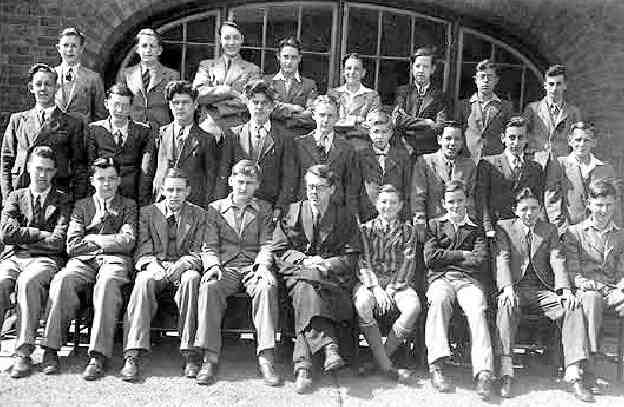
The British school uniform as we now know it became widely worn in the 1920s as soft collars and ties replaced Eton collars. These basic styles have been little changed since the 1920s. The styles were primarily set at the prestigious public schools and followed at state schools. Primary schools did not require uniforms, but clothing styles were strongly affected by hat was being worn at Public and prepartory schools. State secondary schools were still relatively limited until after World War I. Many of the schools that did exist began requiring uniforms, usually following styles adopted at the public schools. While the styles adopted by schools in the 1920s continue to be worn today, there have been some changes. The peaked caps once so common are now little worn. The school sandals once worn with a narrow center strap now mostly have wide straps and look more like shoes. The major change has been in the trousers worn by boys. Short pants once so common are in the 1990s much less commonly worn, but there are still some schools that continue to require them for the younger boys.
Boys at public schools and prep schools continued wearing the styles set in the late 19th century boys commonly wore peaked caps and Eton collars. Blazers were still mostly sports war. Knickers began to decline in popularity and were replaced by knee pants and long stockings. By the 1910s the short pants and kneesocks introduced by Lord Baden Powell's nasent Boy Scout movement had begun to make inroads at prep schools. State prinmary schools still did not require uniforms. State secondary schools, many of which required fees, did require uniforms, but tended to follow the styles popular at the prestigious public schools. The British school uniform as we now know it became widely worn in the 1920s as soft collars and ties replaced Eton collars. These basic styles have been little changed since the 1920s. The styles were primarily set at the prestigious public schools and followed at state schools. Primary schools did not require uniforms, but clothing styles were strongly affected by hat was being worn at Public and prepartory schools. Boys at state primary schools began wearing the closed-toe sandals to school that had become popular after World War I. State secondary schools were still relatively limited until after World War I. Many of the schools that did exist began requiring uniforms, usually following styles adopted at the public schools. The British school uniform as we now know it became widely worn in the 1920s as soft collars and ties replaced Eton collars. These basic styles have been little changed since the 1920s. The styles were primarily set at the prestigious public schools and followed at state schools. Primary schools did not require uniforms, but clothing styles were strongly affected by hat was being worn at Public and prepartory schools. Boys at state primary schools began wearing the closed-toe sandals to school that had become popular after World War I. State secondary schools were still relatively limited until after World War I. Many of the schools that did exist began requiring uniforms, usually following styles adopted at the public schools. While the styles adopted by schools in the 1920s continue to be worn in the late 20th century, there have been some changes. The peaked caps once so common virtually disappeared. The school sandals once worn with a narrow center strap now mostly have wide straps and look more like shoes. The major change was in the trousers worn by boys. The baggy shorts still common in the 1950s had by the 1970s become much shorter and trim fitting. While secondary schools generally dropped requirements that boys wear shorts, they were still widely worn in preparatory and primary schools. Many of these schools in the 1980s, however, dropped the short pants requirement intirely or at least for older boys. Short pants by the 1990s much less commonly worn, but there are still some schools that continue to require them for the younger boys. The shorts that are worn by the mid-1990s had become longer. One destinctive characteristic of the 1970s was the long hair that was popular.
|
The primary school levels are pre-school, primary, secondary, and tertiary school. Pre-schools commonly did not require uniforms, even the pre-school section ar schools that did have uniforms. School uniforms were primarily worn at the primary and secondary levels. This depended somewhat on the type of school. Uniforms were not common at the state primary schools until after World War II and even then only some primaries adopted uniforms. The state suported religious schools like the Anglican primaries commonly adopted uniforms. Uniforms were standard at secondaty schools, basically following the tradition of the public (elite private boarding schools) schools. The Government did not play the central role in secondary education until after World War II. Almost all of the new secondary schools adopted school uniforms. The private schools with few exceptions required uniforms for children at both the primary and secondary level. Here the age dividing line between primary and secondary was a little different.
Many of the modern school types were in place by the early-20th century, although some new types appeared after World War II, the most important being the comprehensive school. The two major types of schools were the state and private schools. The state schools included primary and secondary schools. The types of both varied over time. Uniforms varied at different types of schools. There were some differences between state and private schools. Denominational schools differed from state schools, at least at the private level. Private schools included both preparatory schools for the younger children and public (elite private boarding) schools for the older boys. The parivate schools tended to put a greater emphasis on uniforms than the state schools. The grammar schools which were a kind of private-state mix being something of an exception. Grammar schools at mid-century had the choice of being part of the statevsystem or becoming private schools. Private schools declined as a result of the economic problens following World War II. Many private schools were lost in the 1970s, but the sector in recent years has been rebounding as parents became concerned about discipline standards at state schools. At the same kind mothers were concerned about boarding and as a result most of these schools put morevempahsize on the day non-boarding group. Many of the boys' shifted over to coeducation.
Some personal accounts are available describing the uniforms worn as schoolboys:

Related Chronolgy Pages in the Boys' Historical Web Site
[Main Chronology Page]
[The 1880s]
[The 1930s]
[The 1940s]
[The 1950s]
[The 1960s]
[The 1970s]
[The 1980s]
Related Style Pages in the Boys' Historical Web Site
[Retuen to the Main English school chronological page]
[Return to the Main school uniform page]
[Long pants suits]
[Short pants suits]
[Socks]
[Eton suits]
[Jacket and trousers]
[Blazer
[School sandals]
Navigate the HBC School Section:
[Return to the Main School Uniform Page]
[Australia]
[England]
[France]
[Germany]
[Italy]
[Japan]
[New Zealand]
[Scotland]
[United States]
Navigate the HBC School Section:
[About Us]
[Activities]
[Chronology]
[Clothing styles]
[Countries]
[Debate]
[Economics]
[Garment]
[Gender]
[Hair]
[History]
[Home trends]
[Literary characters]
[School types]
[Significance]
[Transport and travel
[Uniform regulations]
[Year level]
[Other topics]
[Images]
[Links]
[Registration]
[Tools]
[Return to the Historic Boys' School Home]