
Russian Blouse Garments
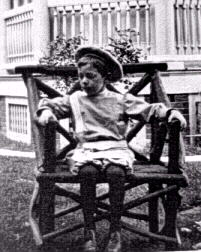
Figure 1.--Russian blouse tunics were usually worn with bloomer style, above the knee pants were popular for boys at the turn of the century. They were generally worn with long stockings. Note that the photograph is a snapshot and not taken in a studio.
|
|
European and American boys at the turn of the 20th Century wore two garments in the Russian style, tunics and blouses both worn as part of a suit ensemble. The Russian tunic had existed for some time. The Russian
blouse suit was a new style. The Russian style came in two styles, a tightly buttoned at the neck style which appeared in the 1890s and an open square collared style which appeared after the turn of the century. The
open square collar was rather an informal style worn with short pants.
Russian styling in Western Europe appears to have first appeared in the 1860s in France. The chemise russe, or Russian blouse, was inspired by the loose fitting Russian peasant tunic with a high buttoning collar. It was first mentioned in the important Parisian fashion magazine, La Mode Ilustree during the 1860s and numerous references to clothing with Russian styling ensued. HBC is unsure as to just when mem and boys befgan wearing this costume but i9t may date from the middle ages.
Styling Details
The most destinctive feature of a garment with Russian styling was the destinctive collar types. There were two collar styles. One was a closed collar worn tight around the neck. The other was a wide,msquare cut open collar. The Russian garments were basically simple with little detail. Often there was enbroidery around the collar which might be repeated arounf the wrist cuffs and waist band.
Early versions of the Russian blouse was the one with a relatively close fitting collar, not the open collar version which was subsequently to become popular. The blouse was tied with a simple cord at the waist.
Gender and Age
The Russian blouse was an extremely adaptable style and widely worn by both boys and girls. Children as young as 1 might wear it. Boys generally wore it to the age of 11 or 12, but it was worn by older girls including young ladies. A typical entry in a French fashion magazine read, a "... blouse almost as long as a dress, ...gathered amply at the neck and tied at the waist with a loosely knotted cord." [La Mode Illustree, November 1888] The editor pronounced it becoming on little girls from 7 to 12 year of age.
Garments
Quite a range of garments were made with Russian styling. Russian blouses were the most common, but dresses, tunics, and blouse suits were also made with Russin styling. Some times tunics are seen as synonamous with tunics, but actually Russian-blouse stylingvwas just one style in which tunics were done. No detailed information is available on Russian blouse dresses at this time. They were worn by young boys as early as mid-century, especially in France. They were also popular in America, but I know less about other countries. The key feature was the collar, much of the rest of the dress incorporated features from other styles.While only young boys wore them, the Russian blouse dress was worn by girls of all ages. Tunics had been worn by European boys since early in the 19th Century. The Russian blouse style tunic was a loose roomy blouse or jacket based on the style worn by Russian peasants. The jacket would often come below the waist giving the impression of a smock-like garment. There were two styles of Russian tunics, an open and closed neck style. Open neck tunics were worn by European boys in the early 19th Century. Closed neck tunics became quite popular in the late 19th Century,
especially in America. Russian blouse tunics were a popular style for boys around the turn of the 20th Century. It was usually worn with above the knee bloomer style pants and long stockings. It was worn with a collar that buttoned around the neck.
Unlike many styles for boys at the time, there were no stiff large collars and no bows to be worn with it. We know this was a popular style at the turn-of-the 20th century, but have not yet acquired much information on it. It was a style for younger boys, probably up to about 8 years old. A small boy, however, might wear a
Russian blouse outfit for another year or two. Russian blouses were also made into one-piece short pants suits. These open, square collared suits were seasonal wear, usually worn during the summer. These one piece suits, like tunic suits, were usually belted garments, although the belt which might have a button or two, were usually purely ornamental. They were almost always short pants suits, rarely made with knee pants or knickers. An attached belt made as the same material as the suit was an important stylistic feature of these suits. Some suits had embroidered work. The material varied, but linen was popular. Dressy suits might be made of satin. The German crown princes were often dresses in this fashion. The sleeves were often cut short at the elbow. These suits were worn in both Europe and America from the late 1890s through the 1910s, although they appear to have been most popular in Europe. I'm not sure how these suits were put on. They appear to be one-piece suits. Perhaps there are buttons at the back, rather like a reverse jump suit.
No detailed information is available on Russian blouse dresses at this time. They were worn by young boys as early as mid-century, especially in France. They were also popular in America, but I know less about other countries. The key feature was the collar, much of the rest of the dress incorporated features from other styles.While only young boys wore them, the Russian blouse dress was worn by girls of all ages.
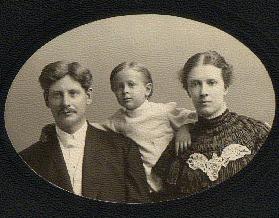
Figure 2.--Russian blouses did not require large collars and bows. It was an informal outfit, but could be used for semi-formal occasions.
|
|
Tunics had been worn by European boys since early in the 19th Century. The Russian blouse style tunic was a loose roomy blouse or jacket based on the style worn by Russian peasants. The jacket would often come below the waist giving the impression of a smock-like garment. There were two styles of Russian tunics, an open and closed neck style. Open neck tunics were worn by European boys in the early 19th Century. Closed neck tunics became quite popular in the late 19th Century,
especially in America. Russian blouse tunics were a popular style for boys around the turn of the 20th Century. It was usually worn with above the knee bloomer style pants and long stockings. It was worn with a collar that buttoned around the neck.
Unlike many styles for boys at the time, there were no stiff large collars and no bows to be worn with it. We know this was a popular style at the turn-of-the 20th century, but have not yet acquired much information on it. It was a style for younger boys, probably up to about 8 years old. A small boy, however, might wear a
Russian blouse outfit for another year or two. We are not sure how they buttoned. I think they were true to the Russian style and they did not button at the back or down the front center. Instead the buttons were offset to the right. Often some trim was added around the buttons. The trim was usually colored, although the less common dark-colored suits had white trim. We are also not sure why this style appeared around the turn of the century. I know it was an American style. I'm not sure, however, if it was as possible in Britain and the Continent. I believe it may have been primarily an American fashion--at least outside of Russia. Why it appeared at the turn of the century or why it was such a popular fashion in America I can not yet explain. Russian tunics were not as seasonal as the square necked Russian blouse. Boys wore Russian tunics in the winter with long stockings and in the summer with short stockings or even went barefoot. A HBC contributor points out that some Russian World War II soldiers wore a uniform with a high necked belted blouse. A Russian boy soldier (aged about 12) who is captured by the Germans in the movie Cross of Iron, for example, wears just such a uniform.
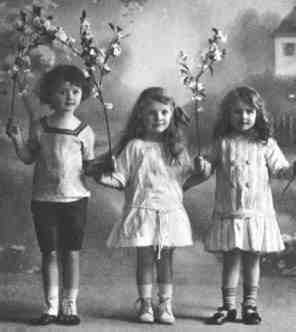
Figure 3.--The Russian blouse with a square collar was rather an informal style for boys worn during the summer.
|
|
Tunics were also available in open square colored pullover blouses, rather like some sailor middy blouses. This was an informal garment, worn rather like a modern boy wears a "t" shirt. Unlike the Russian tunics, this was a novel style that had not been worn previously. It was almost always worn with short pants. As it is a style appearing after the turn of the century, kneepants and long stockings were becoming less common, especially for summer wear. These blouses appear to have been more popular in Europe than America. Blouses of the same style were worn by sailors in the French and British navies. I believe that this was primarily a World War II era uniform, but at this stage this is just a guess on my part.
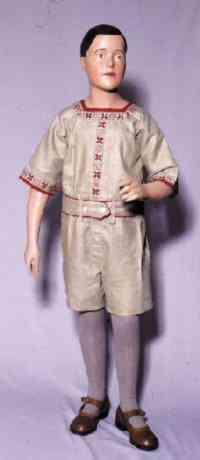
Figure 4.--Notice the comfortable open collar of this Russian blouse suit. Similar suits in cream satin were often worn by the sons of the German Crown Prince at the turn of the 20th Century.
|
|
Russian blouses were also made into one-piece short pants suits. These open, square collared suits were seasonal wear, usually worn during the summer. These one piece suits, like tunic suits, were usually belted garments, although the belt which might have a button or two, were usually purely ornamental. They were almost always short pants suits, rarely made with knee pants or knickers. An attached belt made as the same material as the suit was an important stylistic feature of these suits. Some suits had embroidered work. The material varied, but linen was popular. Dressy suits might be made of satin. The German crown princes were often dresses in this fashion. The sleeves were often cut short at the elbow. These suits were worn in both Europe and America from the late 1890s through the 1910s, although they appear to have been most popular in Europe. I'm not sure how these suits were put on. They appear to be one-piece suits. Perhaps there are buttons at the back, rather like a reverse jump suit.
We see Russian blouse styling in quite a number of countries. We note these styles in America, Germany, France, Russia and other countries. The origin of the style is of course Russia, but we have no idea why an esentially serf-style becme highly fashionable in America and Europe. We have the most information on America simply because our American archive is so extensive. It does not mean that Russian blouse styling was more popular in America than other countries. We think that may be the case, but we have to consider that our American archive is so much larger than that for any other country. For two decades we see large numbers of American boys wearing Russian blouse styled garments, both blouses and tunics. Tunics existed before the Russian blouse styling became popular. It just affected the styling of garments already being worn, although for some reason it increased the popularity of these garments. There was, however, other tunic styles. Sailor-style tunics were especially popular in America. As far as we can tell in all countries wear these Russian blouses were popular, they were a middle- and upper-class style. They were much less common among working class boys.
The Russian blouse was also worn, appropriately enough in Russia, as a folk costume. European continental choirs were not as focused on religious music as English choirs. Many European choirs gave considerable emphasis to folk music. To match thie folk musical theme, many choirs also adopted folk costumes. Some choirs used their folk costumes only for sprcial concerts. Other choirs primarily performed in their folk costumes.
They are worn by Russian choirs and other cultural ensembles.
Mbr>
Russian Influence
A reader asks, "Do you think the Crimean War (1854-56) had an impact on the popularity of tunics in Europe during the latter half of the 19th century? If you see Russian soldiers dressed in long tunic like garments with pants and boots underneath, there seems to be a similarity. And these might have later evolved into the 'Russian blouses' that were popular about the turn-of-the-20th century for boys." HBC doesm't think that the Crimean War influenced the tunic fashion. The tunic was a popular fashion in the early-19th century well before the War. This does raise the question of just how and why the Russian blouse became a poplar fashion in the early-20th century. We see large numbers of Russian blouses and Russian blouse suits in early-20th century catalogs. But this was several decades after the Crimean War. Another reader asks about large-scale Russian immigrarion in the late-19th century.
The origins of the Russian blouse fashion is is an intriguing question. And we do not yet know the answer, but we have a few thoughts. There is a big gap chronological between the Crimean War and large-scale Russian immigration to America. Much of the Russian emigration to America was Jewish and to a lesser extent Polish (Poland was part of the Russian Empire at the time). I am dubious that poor Jewish immigrants affected American dress styles at the turn-of-the 20th century. How many Americans at the time would have wanted to dress like poor Russian Jews? Americans as the Fauntleroy craze showed, wanted to dress like the ruch and affluent. More likely we think is wealthy Russians in France, they may have affected chic French fashions which were them adopted in America. Here we are just speculating and would appreciate any insights readers may have.
HBC

Navigate the Boys' Historical Clothing Web Site:
[Return to the Main blouse page]
[Introduction]
[Activities]
[Biographies]
[Chronology]
[Cloth and textiles]
[Garments]
[Countries]
[Topics]
[Bibliographies]
[Contributions]
[FAQs]
[Glossaries]
[Images]
[Links]
[Registration]
[Tools]
[Boys' Clothing Home]
Created: February 25, 1999
Spell checked: July 23, 1999
Last updated: 9:05 PM 6/5/2016