|
Major changes in clothing were underway as the new century arrived. The first decade of this century saw the important introduction of the sack suit, a style characterized by any shapeless coat without a waist seam, the body and skirt having been cut in one piece, and the Ivy League-style clothing from England. It was also during this period that certain other fashion innovations began to appear, such as the polo coat (introduced from England by Brooks Brothers around 1910) and the button-down collar (also introduced by John Brooks, in 1900, after he had discovered it being worn by polo players in England in order to prevent flapping during matches). We see the fresh air and sunshine movement having an increasinly important impact on fashion.
The 1900s was arosperous time in Europe and America. It was the last decade in which European monarchy dominated the world stage before World War I. Queen Victoria died in 1901 ending her long reign. Her son became king as Edward VII beginning the Edwardian age. His nephew, Kaiser Wilhelm II, continued to disrupt European affairs ith his unrestrained behvior and decession to build a highseas fleet. The Wright Brothers in the United States achieved the first heavier than a flight in 1903, but it was the naval arms race that dominated great power politics. The launching of HMS Dreadnought in 1906 brought on an unprescedented naval arms race. There were no major wars in the 1900s, but the British fought the Boer War in South Africa (1898-1902) making them very unpopular in Europe. The Boxer Rebellion flared in China during 1900. Women's sufferage became an important issues in the 1900s and progressives pressed for action on other issues such as child labor.
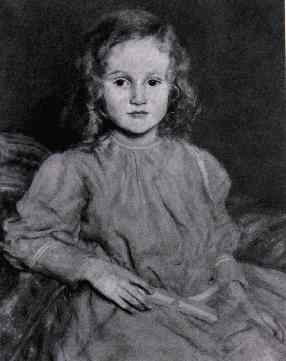
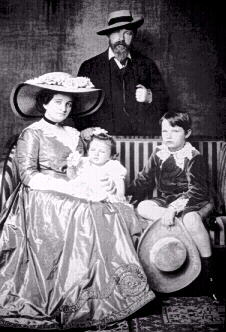
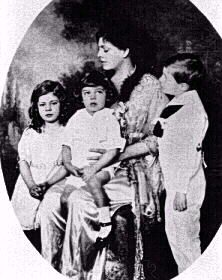
The prosperous 1900s was a time of great elegance. It was the short-lived Edswardian Age and Edward VII, other European royalty, and wealthy industrialists and their wives set the fashion standards. London for men and Pais for women dominated the fashion world. Women's elegant dresses weretrimmed with fur, feathers and jewelry. Children's clothes were still rather formal and frilly, but becoming somewhat looser with open collars beginning to chllenge the tightly buttoned collar and huge bow. Almost all boys wore kneepants or knickers. Although there were many similarities with the formal 1890s, major changes were underway in children's clothing. After the turn-of-the-century both girls and boys everyday wear became much easier to play and move in. The little boy's "Sunday Best" included many of the same styles common in the 1890s. There were of course smart sailor suits and hats with the familiar streamers, Russian blouses, tunics, and the still popular elegant velvet Little Lord Fauntleroy suits. Little boys still wore dresses. A popular fashion with many mothers for boys they did not feel quite ready for knee pants were tunics. These long frock-like garmets were usually worn with short knickers, drawn up above the knee. During the winter they were usually worn with long stockings. In the warmer weather they might be worn with short white socks and strap shoes or for play the boy might go barefoot. The fashion of distinctive clothing for children was well established and children's fashions did change with the new century. Children's dress was now specifically designed for them and theiractive play. There were a large variety of patterns. At last clothes were simple and childlike. One of the popular new fashions for little boys and girls were rompers for play, but some were dreassy little outfits. This was a significant improvement over the confining, formal clothes more common before the turn of the century. Any comparioson of the 1900s with modern fashion has to result in one over-riding impression, the formality of clothing styles. One HBC contributor reviwing the fashions worn by American college students was struck by the contrast with modern students. He remarks, "... the contrast in dress styles of today's college students, versus those of a century ago, is huge. In 1900, photos of Stanford's women students show them to be elegantly dressed, and Stanford's men typically wore suits to class. Today they're both commonly dressed in sweat suits or exceedling casual clothes. I guess this is true at most campuses."
|
Many of the older 19th Century clothes were worn in the 1900s, but several news styles appeared at the turn of the century. Clothing was still formal, but some more informal styles were appearing for children, especially boys. Boys wore a variety of skirted garments including dresses, skirts, kilts, tunics, smocks and pinafores in the 19th century. This had begun changing dramatically even before the turn of the 20th century. We still see some of these garments in the early-20th century, but the fashion of dressing yojunger boys in dresses had declined percipitously abd by the end of the decade wile it had noy=t disppeared, had dedeclined significantly. There were differences from country to country. Kilts were still wirn in scotlkanbd and to a lesser extent Englnd. and we see smocks in soime cininntal coyntries, especially for schoolwear. Tunics were popular in France and some Continental countries as well as America. A new fashion at the turn of the century was tunic suits. Boys wore several styles of tunics, Russian blouse, Buster Brown, and sailor tunics were the most common. A suit resembling the Russian blouse was the American Buster Brown tunic with wide starched collar and black silk scarf. Buster Brown was a popular, small hero of a Sunday newspaper serial which had quite a following among the youngsters. Caps coninued replacing hats as standard boys' headear. We notice several different popular styles. Boys continued wearing a range of shirt-like garments, including shirt-wausts, shirts, blouses. Detachgaable collars were still common for boys whn dressing up. Sweaters emerged as a major garment for boys in the 1900s. Some of the most important changes involved pants and trousers. Boys now wore shorter pants and knee or three quarter length socks, somtimes white socks, in addition to long over-the-knee stockings. Older boys wore the new double breasted jackets, matching knee length pants, shirt, and tie. Girl's also expeienced major changes. Dresses were without the layers and layers of petticoats and were designed with straighter lines. Despite these important changes in children's clothing, there were no fundamental changes in their father's clothes. Adult men's dress during the first decade of the 20th century did not change. Men continued to wear a black frock coat with gray striped trousers for formal day wear and a black tailcoat and trousers with a white waistcoat for evening wear if ladies were present, although in America the tuxedo, or dinner, jacket became popular. We see a variety of juvenile suits that were popular for younger boys. Fauntleroy suits were still worn in the 1900s, but their popularity was declining. The lace collars of the 1880s and 90s were replaced with still large ruffled collars. The sailor suit continued to be a very populkar style. The older boys wore knee pants with tunic or short jacket and Norfolk styling was becomingcreasongly popular. Most boys wore suit jackets with knee pants and white shirts. Collar and tie accompanied the Norfolk outfit. Eton collars were considered esential for proper dress in England. The Eton style was standard, but we see many other collar styles. It was customary for American boys to adopt long trousers in their late teens. Hosiery varied. In America we see decade long) ribbed, black stockings as the standard hosiery. Girls and younger boys might wear white long stockings. We also see this in Europe, but this varied substanialy contry by country. English boys might wear knee sicks., Long stovkings were more common in northern Europe while three-quatrersicks were more common in the south. There were some seasonal and age/gender vtitions. Boyth boys and girls wore high-top, laced, shoes. This was standard in America and Europe. we see some low-cut oxfords in Europe. We note sandals for the first time, but they were not yet very important.
|
It was in the hairdo that teen-agers went fancy free. With either
center or side part most young females wore long curls, flowing hair or
long braids or dressed the front hair into a pompadour and tied it with
a bowknot. And, on the subject of bowknots, wide ribbon was the thing
and often not just one bowknot but two big bows. It was not just girls
who wore hair bows. While rare in America and Britain, European boys
with long hair sometimes had it done up with bows. The French in
particular were parcial to hair bows for boys.
All this was followed by the Dutch cut with straight, trimmed bangs. Boys often wore long hair until they got their first hair cut at about 5 years, but in some cases at a much older age. The long Fauntleroy ringlet curls popular in America during the 1880s-90s became less common, although the fassion endured until after World War I.
Fabrics in use included natural fibers (linen, cotton, wool, and silk); cotton or linen was choice for
most boys' daily wear during the summer. Some dressier outfits might be made from batiste or opaque poplin. Dressier outfits might include silk satin. Wool was commonly used in suits and outerwear. Fancy trim meant status at this period, so trim was as excessive as possible on shoulders and even waist. Lace, embroidery, and ribbon were common trims. Tucks in
fabric provided less expensive decoration and were especially common in wide bands on the lower half of skirts stil worn by small boys.
We note considerable simililrities in how boys dressed in many countries during the 1900s. Some younger boys still wore dresses and kilt suits. We see some boys wearing fancy styles like Fauntleroy suits, but some newer more informal styles like tunics were increasinly popular The sailior suit was worn in just about every country, but there were differences. Sailor suits were more popular in some countries than others. They seemed to have been particularly popular in Germany. Styles also varied from country to country. Knee pants were very common. Younger boys might sear short socks, but long stockings were worn by older boys. This depednded somedwhat on climate, explaing some of the national differences. We note other variations. Kneepants seemed especially common in America, particularly for older boys. Also the shift to knickers had begun in America by the end of the decade. A similar shift did not occur in Europe.
A great deal of information is available on fashions during the 1900s from clothing catalogs and fashion magazines. We have 1900 country decade pages. We also have 1900s country pages for Canada, France, Germany, and the United States.
While HBC focuses on boys clothing, we have collectd considerable information on girls' clothinng as well. Here you can view some of the clothes worn by girls during the 1900s. George Eastman introduced the Kodak Brownie in 1900. This revolutionalized photography. The average person could now take photographs anywhere he wanted, around home or on vacation. This moved photograpy out of the studio.
Thus in the 1900s we not only have studio portraits, but increasing numbers of amatuer family snapshots showing children in more more animated poses and natural settings. Girls wore white dresses as well as colored ones. Many girls
wore pinnies. Hairbows were very popular and sometimes quite large. For the most part gurls still only wore dresses.
German doctors found the cause of tuberculosis and developed the closed institution or sanatoriia approach to treating the disease (1880s). And a central focus was exposing the suferers with a healthful environment including fresh air and sushine. This was a major shift as until the 1880s the general approach was to wrap up children from head to toe. A factor here was modesty, but protecting children from both fresh air and sunshine was also a factor. Slowly we begin to see attitudes toward fresh air and sunnshine changing and those attitudes beginning to affect fashions. This was notable in the 1890s. We note, for example, more boys wearing knee pants, cut shorter, and to an older age. And in Europe, fewer boys wearing long stockings with knee pants. Swimsuits begin to become more sensible. This varied from country to country. The impact on fashion in the 1890s was still limited, but we begin to see the beginning of important fashion shifts. Other related dsevelopments can also be seen such as the summer camp movement in America which was an effort to get kids out of the polluted cities abd into the fresh air and sunshine of thge countryside. These trends were even more pronounced by tge 1900s even though there was still a pronounced foirmality in dress. The Scouts appeared in the 1900s were an effort to get youth involved in outdoor activities. We also see the appearance of barefoot sandals.
Careful, this will exit you from Boys' Historical Clothes
Canadian fashions: A look at Canadian
children's fashions
Mom: A look at
how mom dressed at the turn of the century.

Navigate the Historic Boys' Clothing Web Site:
[Introduction]
[Activities]
[Biographies]
[Chronologies]
[Countries]
[Essays]
[Literary]
[Style Index]
[Bibliographies]
[Contributions]
[FAQs]
[Glossary]
[Images]
[Links]
[Registration]
[Tools]
[Boys' Clothing Home]
Navigate the Historic Boys' Clothing Web chronological pages:
[Return to the Main 20th century chronology page]
[Return to the Main chronology page]
[The 1800s]
[The 1840s]
[The 1870s]
[The 1880s]
[The 1890s]
[]
[The 1910s]
[The 1920s]
[The 1930s]
[The 1940s]
[The 1950s]
[The 1960s]
[The 1970s]
[The 1980s]