|
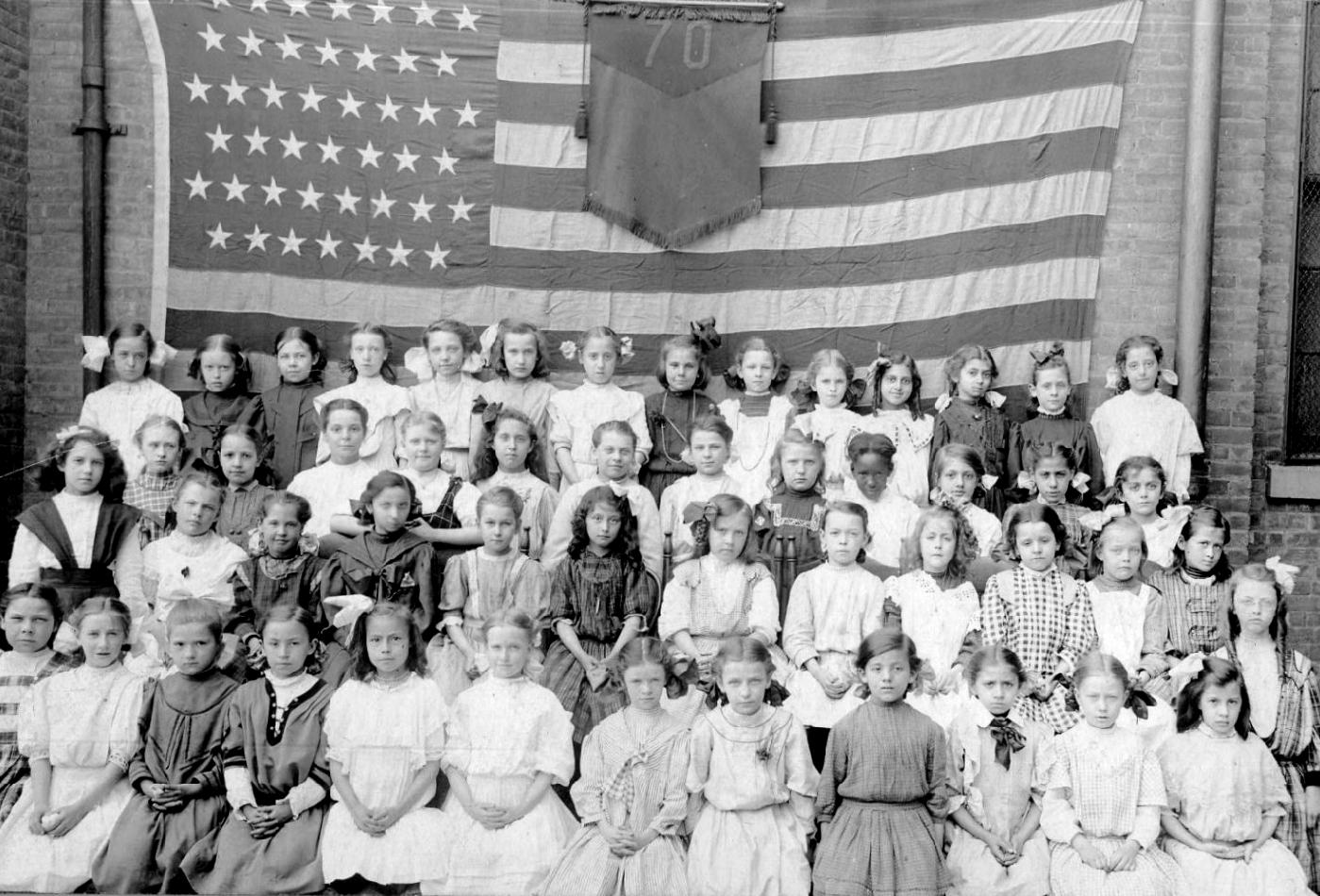
Something very interesting was happening in American schools during the the late-19th century which was still apparent in the 1900s ecade. Since formal education first appeared in the ancient world, schools and education meant educating boys, exclusively boys. The idea of educating girls was limited to wealthy families hiring tutors. The tutors even then were usually hired for the boys of the family, but girls often joined in fir the tutoring. This did not change until the rise of the West. (Something that gender studies professors commonly hide from their students.) The Protestant Reformation changed everything (16th century). Luther and other Protestant luminaries differed on a great deal, but one rock solid tenant throughout all Protestant churches was the importance of Bible studies. This mean that literacy needed to be expanded. And of course women were half of the populate. In addition women needed to be literate because hey were important for teaching young children, especially before public schools. This is why when public schools finally appeared, it was first in Protestant states (Germany and America). This is when the wide spread education of girls actually began. Public schools were primarily primary schools. And in both America and Germany girls tended to attend school in roughly the same extent as boys. In America the schools were usually coed. In Germany village schools were coed, but city schools were commonly single gender. This is commonly seen as a major step in mass education, which it was. Often ignored, however, is that for the first time in history, girl were receiving the same education as boys--at least at the primary level. Fast forward to the late-19th century. A strange phenomenon occurred in America. As America and Europe began building secondary school systems, a starveling disparity occurred. In Europe , most students at secondary schools were boys, but in America, there were more girls than boys. About 60 percent of high school diplomas were award to girls (1900). This was because, boys by about 13 or 14 years olds were expected to begin earning a living. meaning that most working-class boys ended their education at about age 13 (8th grade) when they finished primary school. My dad (born 1903) had to run away from home so he could attend high school. (His father wanted him to work on the farm.) Actually, boys in rural America (the majority of the population until the 1920s) often took longer to finish primary school because they missed extended periods during the harvest and planting seasons. Now the predominance of girls in secondary schools did not carry over into university for some time. But it was true of secondary schools.

Related Chronolgy Pages in the Boys' Historical Web Site
[Return to the Main American 1900s School Page]
[Return to the Main American 1900s Page]
[Return to the Main Chronology Page]
[The 1900s]
[The 1910s]
[The 1920s]
[The 1930s]
[The 1940s]
[The 1950s]
[The 1960s]
[The 1970s]
[The 1980s]
[The 1990s]
[The 2000s]
Navigate the Relate Boys Historical Clothing Style Pages
[Return to the Main U.S. country page]
[Long pants suits]
[Short pants suits]
[Lederhosen]
[Kneesocks]
[Eton suits]
[Jacket and trousers]
[Blazer
[School sandals]
Navigate the HBC Coutry School Pages
[Return to the Main U.S. School 1900s Age/Grade Page]
[Return to the Main U.S. School 1900s Page]
[Return to the Main U.S. School 20th century Chronology Page]
[Return to the Main U.S. School Chronology Page]
[Return to the Main U.S. School Page]
[Return to the Main National School Page]
[Australia]
[England]
[France]
[Germany]
[Ireland]
[Italy]
[Japan]
[New Zealand]
[Poland]
[Singapore]
[Scotland]
[Singapore]
Navigate the HBC School Section
[About Us]
[Activities]
[Chronology]
[Clothing styles]
[Countries]
[Debate]
[Economics]
[Garment]
[Gender]
[Hair]
[History]
[Home trends]
[Literary characters]
[School types]
[Significance]
[Transport and travel
[Uniform regulations]
[Year level]
[Other topics]
[Images]
[Links]
[Registration]
[Tools]
[Return to the Historic Boys' School Home]