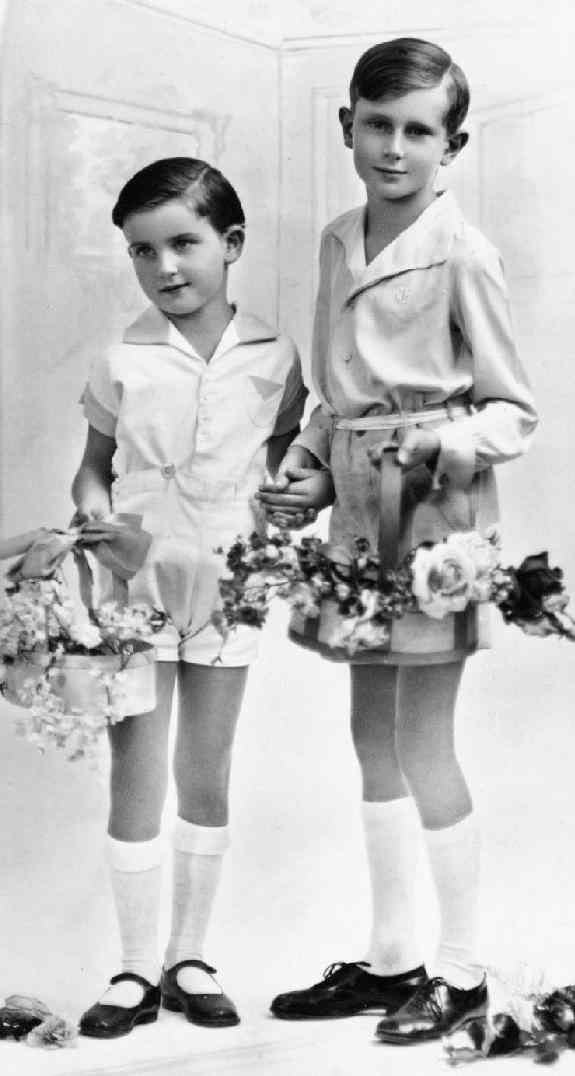
Figure 1.--This French postcard, probably from about 1930 illustrates what the Frech at the time would have referred to as "Garçons Modèles". Younger boys would have worn rompers. Image courtesy of the MD collection. |

|
HBC has noted the term used in France " enfants modèles " and " garçon modèles ". This translates as model child and boy. A French reader strsses, however, that this basic definition does not really capture the true mening of the term. We have noted that rompers are one of the outfits used for what the French call "garçons modèles" or particularly well behave and dressed boys. One French reader stresses that this concept of a beautifully behaved and dressed boy was particularly prevalent for French mothers in the 1940s and 50s. Perhaps the disaster of World War II caused mothers to treat their children even more carefully and mother them more than in past generations. Thus fashions for boys emphasizing their innonsence and youth were very popular. A "garçon modèles" was expected to be obdedient and polite as well as clean and neat. He was also expected to be well dressed. HBC has noted several garments that are often associated with a "garçon modèles". The two most important are rompers and short pants, but there were other garments as well.
This vogue has born after World War I and had in part as origin the romantic novels s of the Comtesse de Segur. Which tell with much morality and French sensibility the life of Petites filles modèles. And by extension the French mothers used as soon this term toward their sons. This vogue has been commun in fashion during 50 years long !The Countess de Ségur is one of the most famous of all French authors of children's books. De Ségur's books were so widely read that they helped set the standard foe well behaved children, especially girls, in the 19th century. Her term " petites filles modèles " entered the French language to described a well behaved and mannered little girl. Some mothers also used it to describe their sons as " petites garçones modèles ".
After World War I French attitudes toward bringing up children changed. Children wre expected to have excellent manners and were often very carefully dresses. The style petites filles modèles corresponded to the desire of the mothers; quickly it was also applied for the boys. A French reader writes, "The nature of the relationship between adult and children had change substantially in France since the Revolution. It was a exemple copied by the mostly world countries. The principal idee of this change , was that the children must be respected for their specific nature, that means they have right to the protection, affection, education; school compulsory without exception for all; child labor laws. Before World War I, the French children were well behaved and well dressed as well. The change in this attitude came after World War I. France during the War supported a terrible disaster, several millions killed nd even more injured. Large numbers of children were orphaned. Our country was for a time in the hands of women. The children
problems took one of the principal place in our sociaty. Child labor was forbidden, despite the economic difficulties. It was devolopped the idee that the children might be raising as children in their education, attitude, and clothing. And the result was that the women considered finaly their children as dolis. The innocence; the affection; the juvenile look were the rules, Till the 1970s these rules were respected here, in a certain way these rules are still in large part in the French mentality to day.
HBC defines garçon modèle as a model or ideal child. A French reader writes, "The French term " petit garçon modèle " or " enfants modèles " has two meanings. First it can mean enfants modèles for catalogues, and we say " modèle garçon modèle fille ". Second it can mean an ideal child according old french concept. We we say " petit garçon modèle ; petite fille modèle ". Notice to avoid confusion , we add " petit " . These terms are always used to day, and perfectly understood. These terms were invented by Madame la Comtesse de Ségur in 19th century. This concept way for boy was in fashion after World War I until the end of the 1950s. The principal meaning is that of a perfect, ideal, or dream child. This means a boy who is well behaved, innocent, and delicate. He is dressed with a fancy and juvenil look. He is always perfectly clean and well groomed." Our French reader adds, "This is of course quite different than what we find today! Such boys in France are very rare." HBC thinks that model or ideal are adequate literal translations. We do think, however, that there ardifferences in what is considerd a model child. Of course this varies from person to person. The concept of an ideal child in America would not include the delicay our French reader mentions. An ideal American boy might be more in the line of Tom Sawyer who migjht be just alittle bit naughty--in a boyish sence. Here a mother and father migh have slightly different concepts and of course such concepts change over time. Our reader adds, "We don't say the term : ' Garçon modèle ' which has another meaning in French. one must say ' Petit garçon modèle ' and ' Petite fille modèle '. Nowadays this term is still used and perfectly understand as reference of ideal children. One can hear it in the street, television, fashion magasines. I have to add, unfortunatly the Petits garçons modèles are rare to day. although the Petites filles modèles can be still seen here or there."
A french reader tells us, "This vogue was very popular after World War I, from the 1920s to the end of the 1950s. By instance inside a French familly all the children couldn't have this look. This choice was only decided by the mother or Grand mother. The mother was alone to decide about her children garments, even when the child was teenager. The main work for a French mother was to hold her home and to take care of the children. In this matter the husband
had not word to say. The men had for principal job to bring money at the house and to look after a good family home. He watched the upbringing the children. This vogue touched all class of the society, even in the French colonies." The samw was similar in America, al least for younger children. The father often began to get involved as the boy reached his teens. Our French reader tells us that French mothers continued to have aole even for boys in their teens.
The Petits garçons modèles are boys between 5 to 12 years old. They have a juvenil look, must be perfectly well behaved. The mostly of the time they were photographed with flowers. They never wore berets. Many especially the younger boys Wore their hair long. They were dressed in Were dressed with rompers, short pants, fancy blouses,Wore white
sandalettes or souliers. Also wore very often their gold wrist chain and medal of their baptism.
The french concept of a enfant modèle was not just a family concept. It was promoted in the schools. There were many reference in children's literatue. There were also historical references.
Opposite to the enfant modèle in France was " Les poulbots de Paris " a term appearing during the French Revolution. These boys had a similar look to Huckleberry Finn.
These children lived freely in the street, either as orphans or neglected by their parents. They commonly wore long pants and their hair was uncombed. They were often depicted as juveniledlinquents and did not respect the bonnes manières.
A "garçon modèles" was expected to be well dressed. HBC has noted several garments that are often associated with a "garçon modèles". The two most important are rompers and short pants, but there were other garments as well. A French reader tells HBC that most parents no longer dress children in the fashionanle clothes once worn by a "garçons modèle". The children have more say in what they wear and have adopted a kind of international style. I note that sometimes parents bring back the old, traditiional fashions for the baptism or other special occassions. For instance, boys commonly wear "culotte anglaise" (English short pants) for weddings. A French reader writes, "The chooce about the ideal juvenile look was not given to the Fauntleroy style , but the dressy very short dresses for girls and fancy very short pant suit for boys. After the 1930 , the fancy very puffed rompers were also adopted for the petits garçons modèles of 4-7 years."
Perhaps the most popular garment for younger "garçons modèles" during the 1930s-early 50s was the romper or "barboteuse". All kinds of rompers might be worn, including both one-piece suits and suspender and button-on romper bottoms. The one-pice rompers might have especially long waise sashes that could be ties in big bows in the back. The one-piece romper was seen as suitable for the younger boy and the suspender or button-on romper bottoms, worn with fancy blouses, as more appropriate for the older boy. In earlier generations boys were dressed in other fancy outfits and were a particularly popular sunject on French postcards. We do not know if the term "garçons modèles" was then in term. Along with rompers boy might wear smocked blouses with puff sleeves, white kneesocks, strap shoes, and white gloves.
Rompers were popular for younger garçon modèles, especially before entering school. Once school began, most suuh boys would wear short pants. A well dressed boy would wear a short pants suit. Yonger primary school children might wear shorts with a dressy blouse, in some cases the smocked blouses with puff sleeves and Peter Pan collars that might have been worn with suspender rompoer bottoms. The style for the shorts worn by these boys boys were commonly short cut and trim fitting. A French reader writes, "For us French, 'Les petits garçons modèles' today means the same as 'Les garçons en culottes courtes' (boys in short pants)".
HBC has noted several other garments often associated with garçon modèles. One sich garment was a dressy blouse. Some such blouses worn by younger boys with both suspender rompers and short pants. In some cases the smocked blouses with puff sleeves and Peter Pan collars, but many other styles were worn as well. Other garments included white gloves, white kneesocks, and strap shoes or closed-toe sandals. I do not know of any cap that was associated with these outfits. Certainly it was not the béret which was considered to be rather backward and common.
A reader mentions keep-sake jewlery that younger boys might wear. Thiswas espcially true for garçon modèle as well as the garconets. This included gold bracelrts which traditionally worn on the right wrist. There were also baptismal medals. The baptism gold chaim is a gourmette de baptème and the neck small chain a chaine de baptème.
French children recive these two presents for their baptism, it is a tradition even to this day. The mothers put away their wrist braclets for school so they would not get losr, but they were commonly worn when dressing up, especially for church on Sunday. Tgey might even be woen when playing around the home.
The Petits garçons modèles might have a juvenil look with quite long hairs. The 'choupette' was often used for yuoungr boys. .
There were similar traditions for little girls -- 'Petites filles modèles'. They also were dressed in juvenile styles. They had a tradition rather like those described by Madame de Sévigné. This was a 17th century French aristocrat, remembered for her witty letter-writing, nost of which were written to her daughter.
A French "garçon modèle" was expected to be obdedient and polite as well as clean and neat.
Good manners in French are called "L'éducation soignée des enfants". And one describes a child respecting these rules as "c'est un enfant à l'éducation soignée." And a child with good manners and well dressed still to day one says " C'est un enfant soigné" or "C'est un enfant modèle". A French reader complains wissfully, "Unfortunetly there are not many French children today that fit this description and before long this expression may disappear." AFrench reader writes, "Personnaly I know well what were the good manners who were demanded to the children living into French bourgeoisie class. For us children this life was happy. And we hadn't no opinion about our outfits. I remember I liked my living condition. I know too, what was the life of the workers children. My father had an ordinary origin and had never been accepted by my mother family . My Grand-parents didn't like him." We notice several elements involved here, including obedience, nanners, speech, and clenliness/neatness.
The French also had rather formalized rules concerning how adults should act around 'garçon modèles'. A French reader tells us that in polite society it was not permited for guests to touch a child without ask the permission to the parent. So a lady would say, ' Chère amie puis-je donner un baiser à Charles ?' The others person made a slight and quick move of their head and said, "Bonjour Charles" and even "Bonjour mon chéri" for the close relatives. When a family had invited guests, it was not permit for a child to speak first. His answers had to end by the nature of the person addressed. For instance:
" Oui madame" "Non mon oncle" " oui papa" that was compulsory. Our French reade tells us that these rules were the same in Austria.
A French HBC reader asks, "I don't know , what the American can thought about our petits garçons modèles? Here ; never a petit garçon modèle was teased ; we found this attitude normal ; even when the child spook with his proper language." Hard to say precisely. Certainly many mothers would have wnted a son like this and to dress him in attractve clothing. We would say that such a boy woukd not be popular in either America or England. There is no precice term for a Garçons Modèles in America. An American boy might be called a Garçons Modèles a Little Lord Fauntleroy by the other boys and treased about their clothing and behavior. English boys would have had the same opinion. There are examples in English literature of such encounters. William from Just William in particular was dismissive of such well dressed and well behaved boys--especially Georgie Murdoch.
A French reader writes in 2004, "About the ' petits garçons modèles '
This morning I went to the Mass in Paris ( Notre Dame de la Croix ) and they were two smartly dressed little boys 6-9 years old dressed this typic style. It is quite rare to day. They wore a wool short pants navy blue suit with a white shirt round collar; white knee stocking , some shiny black souliers. They also wore very short navy coats. Both had a hairstyle ' coupe anglaise '. They were probably brothers or relatives. There were other boys in short pants. It is quite common to see older boy in short pants, but not in this style. Here a little boy can be dressed in sailor suit, short pants suits, and fancy clothes with Smocking. Less common today are boys wearing puffed rompers."
Post cards were very popular in thefirst half of the 20th century. They were used both for correspondence, collecting, and scrapbooks. They were done on ak\ll kinds of subjects. One popular topic was children. We note numerous French post cards depicting what we assume would be seen as petits garçons modèles. We see some similar postcards in some other European countries, especially Belgium and the Netherlands, ut nothing on the scale of France. And such cards are completely absent in America. We are not entirely sure how to assess these cards. The fact that there are so many of them suggests to us that they wetre popular. Now we hve no way of knowing who purchased them, but we suspect it was primarily mothers. We think that this is an indicator that the petits garçons modèle was a very popular ideal which appealed to large numbers of French mothers. Not all mothers could raise their son as a petits garçons modèle. This may have been a financial matter or perhaps fathers had differentb ideas. Or perhaps the boy was not very well behaved. But sany nother could afford to buy a postcard. And the large numbers of these cards produced and purchased seems to illustrate a French fashion sensability. The children are commonly pictured in fancy blouses, short pants, rompers, white socks, and strap shoes.

Navigate the Historic Boys' Clothing Web Site:
[Return to the Main French dressy romper page]
[Return to the Main French fashion attitude page]
[Introduction]
[Activities]
[Biographies]
[Chronologies]
[Countries]
[Style Index]
[Bibliographies]
[Contributions]
[Frequently Asked Questions]
[French Glossary]
[Images]
[Links]
[Registration]
[Tools]
[Main HBC page]
Navigate the Historic Boys' Clothing Web chronological pages:
[The 1890s]
[The 1900s]
[The 1910s]
[The 1920s]
[The 1930s]
[The 1940s]
[The 1950s]
Navigate the Historic Boys' Clothing Web style pages:
[Dresses]
[Smocks]
[Bodice kilts]
[Kilts]
[Sailor suits]
[Sailor hats]
[Ring bearer/page costumes]
[Shortalls]
[Rompers]
[Blouses]
[Velvet suits]
[French catalog pages]